

The blockchain industry’s long-standing struggle with the "trilemma"—the challenge of balancing security, scalability, and decentralization—reached a new point of contention during the Consensus Hong Kong conference in February 2026. The event, which drew thousands of developers, investors, and policymakers to the Asian financial hub, became the stage for a high-stakes debate regarding the role of centralized "hyperscalers" like Google Cloud, Amazon Web Services (AWS), and Microsoft Azure in the future of Web3. At the center of this controversy was Charles Hoskinson, the founder of Cardano and CEO of IOG, who found himself defending the pragmatism of big-tech partnerships against a backdrop of increasing scrutiny from decentralization purists.
The debate was ignited following a series of public exchanges where critics, including the leadership of hardware-acceleration firm Cysic, challenged the long-term implications of hosting decentralized protocols on centralized infrastructure. The core of the disagreement rests on whether the efficiency and computational power provided by global cloud providers represent an existential threat to the "trustless" nature of blockchain or if they are a necessary bridge to mass adoption.
Chronology of the 2026 Infrastructure Debate
The tension regarding cloud dependency has been building for several years, but the 2026 Consensus event served as a focal point for several reasons. In the years leading up to the conference, the industry saw a significant migration of validator nodes to centralized data centers. By late 2025, industry reports suggested that over 60% of Ethereum nodes and a similar percentage of Cardano and Solana infrastructure were hosted on just three providers: AWS, Google Cloud, and Hetzner.
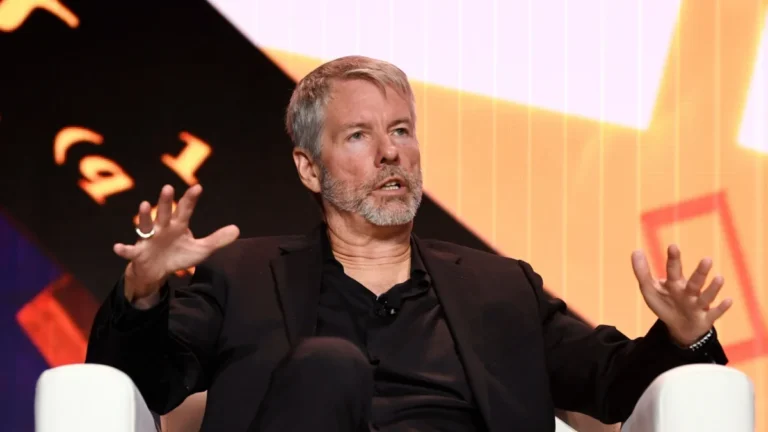
The timeline of the Hong Kong debate began on the first day of the conference during a keynote panel. Hoskinson was asked to address concerns that big-tech partnerships could lead to "chokepoints" where governments or corporations could exert pressure on decentralized networks. Throughout the session, Hoskinson maintained a defensive yet pragmatic stance, arguing that the sheer scale of global compute requirements necessitates the use of established hyperscalers.
The confrontation peaked during a Q&A session when representatives from Cysic challenged the Cardano founder on the "decentralization ethos." The argument from the floor was that by relying on these giants, the industry was merely recreating the centralized web (Web2) with a cryptographic layer on top. Hoskinson countered by citing the "cryptographic neutrality" of modern protocols, suggesting that as long as the data is obfuscated, the host is irrelevant. However, the session ended abruptly due to time constraints, leaving the industry to parse the implications of his "if the cloud cannot see the data, the cloud cannot control the system" defense.
Supporting Data: The Reality of Node Centralization
To understand the weight of this debate, one must look at the data regarding current blockchain infrastructure. As of early 2026, the distribution of nodes across the major Layer 1 (L1) networks remains heavily skewed toward a few geographic regions and providers.
Data from infrastructure monitoring tools indicates that:
- AWS and Google Cloud account for approximately 45% of all hosted blockchain nodes globally.
- Geographic Concentration: Over 50% of the hosted nodes for major networks are located in the United States and Germany, making them susceptible to local regulatory shifts.
- Cost of Entry: The hardware requirements for running a competitive validator on high-throughput networks have risen by 40% year-over-year, driving independent operators away from "home-staking" and toward the subsidized environments of hyperscalers.
These statistics provide the empirical foundation for the concerns raised in Hong Kong. While Hoskinson argues that the protocol remains neutral, the data suggests that the physical layer of the internet is becoming increasingly consolidated, creating a "participation gate" that favors large-scale institutional players over the original vision of a peer-to-peer network.
Technical Analysis: MPC and the Limits of Confidential Computing
A primary pillar of the argument in favor of hyperscalers is the advancement of Multi-Party Computation (MPC) and Trusted Execution Environments (TEEs). These technologies are designed to ensure that even if a node is running on a Google or Microsoft server, the provider cannot "peek" into the sensitive data or manipulate the execution.
MPC works by distributing key material across multiple parties. In theory, no single participant—including the cloud provider—can reconstruct the secret. This significantly reduces the risk of a single point of failure at the data level. However, technical analysts point out that this does not eliminate the "distributed trust surface." The coordination layer and the communication channels between these parties remain vulnerable to latency issues, throughput throttling, or coordinated shutdowns by the providers themselves.
Confidential computing and TEEs, such as Intel SGX or ARM TrustZone, offer another layer of protection by encrypting data while it is being processed in the CPU. While powerful, these are not infallible. Academic research from 2023 to 2025 has repeatedly identified "side-channel" and architectural vulnerabilities in enclave technologies. Vulnerabilities such as "SGAxe" and "AEP" have shown that sophisticated actors can sometimes bypass these hardware protections.
More importantly, if an infrastructure provider controls the physical machine, they retain operational leverage. They can cut the power, restrict bandwidth, or deny access to the hardware entirely based on policy changes or government mandates. In this context, cryptography protects the privacy of the data, but it does not guarantee the availability or persistence of the network.
The Global Compute Argument: L1 Limitations vs. Off-Chain Needs
During his defense, Hoskinson made the notable point that "no single Layer 1 can handle the computational demands of global systems." He referenced the trillions of dollars invested over decades to build the massive data centers operated by today’s hyperscalers.
This is a fact-based reality that the industry must confront. Layer 1 networks were designed for consensus and state transition verification, not for heavy-duty tasks like training Large Language Models (LLMs), executing high-frequency trading engines, or managing complex enterprise analytics. For a blockchain to scale to billions of users, much of the heavy lifting must happen "off-chain."
The emergence of Rollups, Zero-Knowledge (ZK) proofs, and Verifiable Compute Networks (VCNs) reflects this shift. In these systems, the computation happens elsewhere, and only a proof of the result is posted to the L1. While this solves the scalability issue for the blockchain itself, it shifts the dependency to the infrastructure where the proofs are generated. If those proofs are generated exclusively on AWS, the system inherits the centralized failure modes of the cloud provider. The challenge, therefore, is not whether L1s can handle the compute, but whether the off-chain environment can be as decentralized as the on-chain settlement layer.
Specialization vs. Generalization in Compute Markets
An emerging counter-narrative to the hyperscaler necessity is the rise of specialized compute networks. Hyperscalers like AWS are "generalists"; they optimize for flexibility, offering a wide array of services from web hosting to database management. This flexibility comes with significant overhead in terms of virtualization layers and enterprise compliance tooling.
In contrast, tasks like ZK-proving and verifiable computation are highly deterministic and hardware-intensive. They benefit from "specialization." A purpose-built proving network can optimize for "proof per dollar" or "proof per watt" in ways that a general-purpose cloud provider cannot. By vertically integrating the hardware, the prover software, and the circuit design, these specialized networks can theoretically outperform AWS for specific Web3 workloads.
This economic shift suggests that the competition between Web3 and Big Tech is not just about scale, but about structural efficiency. While AWS offers "optionality" and "burst capacity," a decentralized network of specialized provers can offer "sustained throughput" at a lower cost for the specific needs of cryptographic protocols.
Industry Reactions and Official Responses
The debate in Hong Kong has elicited a range of responses from across the ecosystem. While some Ethereum developers have expressed a similar "pragmatic" view to Hoskinson’s—acknowledging that cloud services are a necessary evil for the current stage of growth—others have been more critical.
Representatives from the decentralized storage and compute sector (such as Protocol Labs or Akash Network) have argued that the industry’s reliance on hyperscalers is a "ticking time bomb." In a statement following the event, one infrastructure lead noted: "The goal of Web3 was to remove the chokepoints. If we simply move the chokepoint from a bank to a cloud provider, we haven’t actually changed the power dynamics of the internet."
Conversely, spokespeople from the major cloud providers have increasingly positioned themselves as "Web3-friendly." Google Cloud, for instance, has launched dedicated blockchain node-hosting services and joined the governance councils of several major protocols. Their stance is that they are providing the "industrial-grade reliability" that enterprise-level blockchain applications require.
Broader Impact and the Future of Sovereign Infrastructure
The outcome of this debate will likely determine the "resilience profile" of the next generation of financial and social infrastructure. If the industry continues to lean into hyperscalers, it gains speed and professionalization but remains tethered to the policy and operational whims of a few global corporations.
A middle-ground approach, which many experts are now advocating, is the "hybrid" model. In this scenario, hyperscalers are used for "burst capacity" and geographic reach, but the core "settlement" and "critical artifacts" of the network are hosted on independent, diversified hardware. The goal is to ensure that if a major cloud provider were to disappear or exit a market tomorrow, the network would not collapse but merely slow down.
As the industry moves toward 2027, the focus is shifting from "cryptographic neutrality" to "participation neutrality." This requires not just fair rules in the code, but a physical layer of hardware that is as distributed and diverse as the community it serves. The Consensus Hong Kong 2026 debate may be remembered as the moment the industry realized that while the cloud is a powerful tool, true decentralization cannot be rented.