


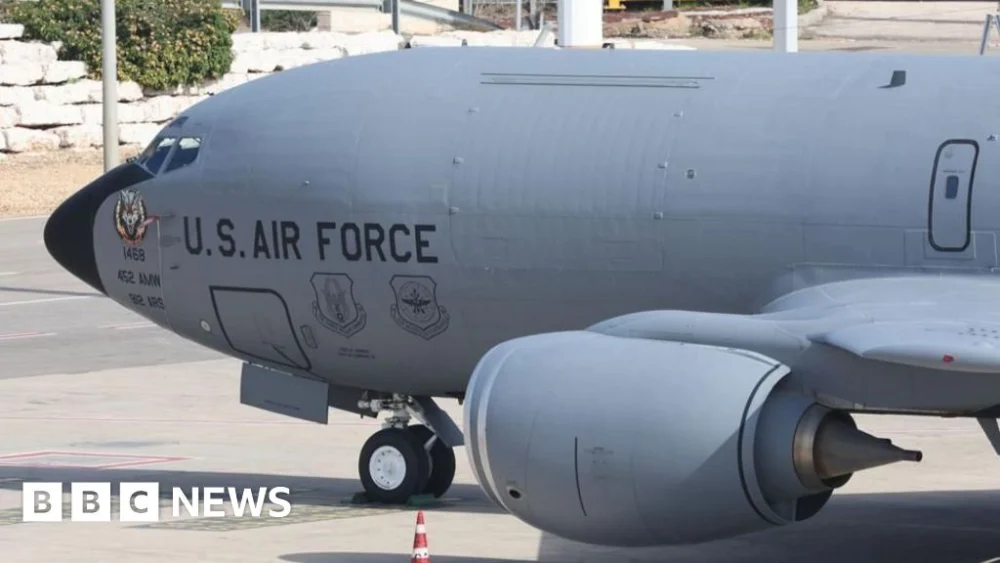
The United States military has officially released the names of the six brave service members who tragically lost their lives when their KC-135 Stratotanker aerial refuelling aircraft crashed in western Iraq on Thursday. The incident, which also marks a significant increase in the official U.S. military death toll within a recently escalated regional conflict described as a "US-Israel war with Iran," has prompted an intensive investigation into its precise cause.
Identifying the Fallen: A Nation Mourns
The Pentagon, in a solemn announcement, identified the airmen aboard the ill-fated KC-135 aircraft as:
- Captain John Klinner, 33, from Alabama
- First Lieutenant Ariana Savino, 31, from Washington
- Staff Sergeant Ashley Pruitt, 34, from Kentucky
- Master Sergeant Seth Koval, 38, from Indiana
- Technical Sergeant Curtis Angst, 30, from Ohio
- Senior Airman Tyler Simmons, 28, also from Ohio
Captains Klinner, Savino, and Staff Sergeant Pruitt were active-duty personnel of the United States Air Force, dedicating their lives to the nation’s defence. Master Sergeant Koval, Technical Sergeant Angst, and Senior Airman Simmons served with distinction in the National Guard, representing the vital dual role of citizen-soldiers who contribute significantly to both federal missions and state-level emergencies. The diverse origins of these service members, hailing from various states across the nation, underscore the broad commitment of American families to military service. Their untimely deaths are a profound loss not only to their families and friends but also to their units and the nation as a whole.
US Defense Secretary Pete Hegseth quickly issued a statement, hailing the aircraft’s crew members as "American heroes." He conveyed his deepest condolences to the families, expressing the nation’s gratitude for their sacrifice. "These brave men and women embodied the selfless spirit of our armed forces," Secretary Hegseth stated. "Their dedication to duty, even in the face of immense danger, ensures the safety and security of our personnel and our allies. We mourn their loss and will honour their memory." Flags at military installations across the country were ordered to fly at half-mast in tribute to the fallen.
The Ill-Fated Mission and the Crash Details

The KC-135 Stratotanker was reportedly on a critical combat mission as part of ongoing U.S. operations against Iran, specifically within the context of the aforementioned "US-Israel war with Iran," which commenced approximately two weeks prior to the crash. The aircraft was one of two planes involved in the incident; thankfully, the second aircraft managed to land safely, averting further tragedy.
Initial assessments from the U.S. military indicated that neither hostile nor friendly fire was involved in the loss of the plane. This early exclusion of external hostile action immediately directed the focus of investigators towards other potential causes. Officials speaking to CBS News, a U.S. partner of the BBC, suggested that the incident may have involved a midair collision. This hypothesis, if confirmed, would point to an extremely rare and devastating operational accident, highlighting the inherent risks involved in complex aerial maneuvers, particularly during combat support missions. U.S. Central Command (CENTCOM) further clarified that the crash occurred over "friendly airspace," near Turaibil, a strategically significant location on the Iraqi-Jordanian border in western Iraq.
Despite the U.S. military’s preliminary findings, Iran’s state television reported claims from its military that an allied group had targeted the plane with a missile. This assertion stands in stark contrast to the Pentagon’s statements and adds a layer of geopolitical complexity and disinformation to the unfolding narrative. While pro-Iranian militias are known to operate in western Iraq, the U.S. has consistently maintained that there was no indication of enemy fire. The ongoing investigation is expected to meticulously examine all available evidence, including flight data recorders and witness accounts, to provide a definitive conclusion and refute or confirm any conflicting claims.
The Broader Context: A New Regional Conflict
The tragic crash of the KC-135 Stratotanker unfolds against a backdrop of significantly heightened tensions and military engagements in the Middle East, which the original report starkly terms a "US-Israel war with Iran." According to the provided information, this conflict officially began a fortnight prior to the crash, following a series of "US and Israeli strikes on Iran on 28 February." This escalation marks a dangerous new phase in the long-standing shadow war between the U.S., its allies, and Iran and its proxy forces across the region.
The genesis of this "war" on February 28, with combined U.S. and Israeli strikes on Iranian targets, represents a profound shift from retaliatory strikes against specific proxy attacks to a broader, more assertive engagement. While details on the exact nature and targets of these initial strikes remain limited in public discourse, their initiation has clearly triggered a retaliatory cycle, leading to the current state of conflict. This new phase has seen an alarming increase in military casualties and equipment losses for the U.S. military.
The Cumulative Toll of the Conflict
Thursday’s crash tragically elevates the official U.S. military death toll in this new "US-Israel war with Iran" to 13 service members. Beyond the six airmen lost in Iraq, the conflict has claimed the lives of six more soldiers in Kuwait and one additional service member in Saudi Arabia. These casualties underscore the widespread geographical reach and intensity of the current hostilities, affecting various U.S. operational bases and personnel across the Gulf region.
In addition to human lives, the U.S. military has also sustained significant equipment losses. To date, at least four aircraft have been lost since the war commenced on February 28. While specific details about these other aircraft and the circumstances of their loss have not been fully disclosed, such incidents represent not only a material cost but also a potential impact on operational capabilities and morale within the deployed forces. The loss of multiple assets in a short timeframe signals the severity and unpredictable nature of the current operational environment.
The KC-135 Stratotanker: A Workhorse of Air Power
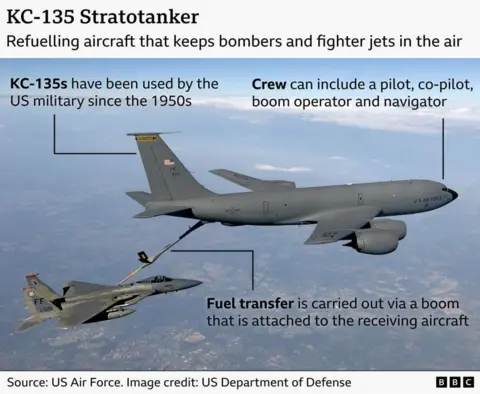
The Boeing KC-135 Stratotanker, the aircraft involved in the crash, is a venerable and indispensable component of the U.S. military’s global reach capabilities. Manufactured by Boeing between the mid-1950s and early 1960s, the KC-135 fleet has served as the backbone of the U.S. Air Force’s aerial refuelling operations for over six decades. Its longevity is a testament to its robust design and adaptability, allowing it to remain operationally relevant through numerous conflicts and technological advancements.
The primary role of the KC-135 is to extend the endurance and range of combat aircraft by providing in-flight refuelling. This capability is absolutely critical for modern air power, enabling fighter jets, bombers, and reconnaissance aircraft to conduct longer missions without needing to return to base for fuel. This significantly enhances their operational flexibility, allows for deeper penetration into enemy territory, and sustains continuous air patrols, which are vital for maintaining air superiority and providing close air support. A typical KC-135 crew can include a pilot, co-pilot, and a boom operator, with a navigator often also present depending on the mission. Fuel transfer is meticulously carried out via a telescopic boom extended from the rear of the tanker, which connects precisely to a receptacle on the receiving aircraft, often at high altitudes and speeds.
Despite numerous upgrades over the decades, including new engines, avionics, and structural enhancements, the KC-135 fleet is aging. While it remains highly effective, the operational demands of continuous deployments in challenging environments place considerable stress on these legacy aircraft. The U.S. Air Force has been working on transitioning to newer refuelling platforms, such as the KC-46 Pegasus, but the KC-135 continues to shoulder a significant portion of the refuelling burden globally. Its service record is unparalleled, having supported every major U.S. military operation from the Vietnam War to the present day. The loss of a KC-135, therefore, is not just the loss of an aircraft but also a temporary reduction in a critical force multiplier.
The Ongoing Investigation and Regional Implications
The investigation into the KC-135 crash is expected to be thorough and complex, involving experts from various military branches, aviation safety specialists, and potentially civilian agencies. The U.S. Air Force’s Air Mobility Command, which oversees refuelling operations, will undoubtedly lead the inquiry, focusing on factors such as mechanical failure, human error, environmental conditions, and the midair collision hypothesis. The sensitive geopolitical context, with conflicting claims from Iran, adds pressure for a transparent and definitive outcome.
The crash and the escalating casualty count will undoubtedly have significant implications. Domestically, it will heighten public awareness and scrutiny of U.S. military involvement in the Middle East, particularly concerning the newly declared "US-Israel war with Iran." For military families, each casualty is a stark reminder of the sacrifices made in service.
Regionally, such incidents contribute to the overall instability. While the U.S. maintains a strong military presence in Iraq, aimed at supporting Iraqi security forces and countering residual threats, the operations are often contested by various non-state actors, many with ties to Iran. The presence of pro-Iranian militias in western Iraq, where the crash occurred, underscores the complex and volatile security landscape. Any perceived vulnerability or setback for U.S. forces could be exploited by these groups, further complicating efforts to de-escalate tensions.
The incident also highlights the inherent dangers of military operations, even in non-combat roles, within active conflict zones. Aerial refuelling, while routine, requires immense precision and coordination, and any deviation can have catastrophic consequences. As the investigation proceeds, the U.S. military will be keen to learn from this tragedy to prevent future occurrences, while simultaneously navigating the precarious geopolitical situation that continues to unfold in the Middle East. The memory of the six fallen airmen will serve as a poignant reminder of the high cost of ongoing military engagement in a region fraught with enduring challenges.