

The 23rd edition of the Copenhagen International Documentary Film Festival (CPH:DOX) is set to host the world premiere of "Something Familiar," the debut feature-length documentary from British Romanian filmmaker and academic Rachel Taparjan. Scheduled for Tuesday, March 17, the film enters the festival’s main competition, marking a significant milestone for Taparjan, who currently serves as a senior lecturer in social work at Teesside University in North East England. While her previous work has focused on documentary shorts, "Something Familiar" represents a deeply personal and ambitious foray into feature filmmaking.
The documentary embarks on a poignant journey as Taparjan accompanies Mihaela, a woman searching for her birth mother in Romania. Their quest leads them to the very orphanage from which both women were adopted. This exploration of Mihaela’s past unexpectedly draws Taparjan into the complex tapestry of her own family history, confronting her with the lingering specter of intergenerational trauma and a painful legacy that has cast a long shadow over the women in her family.
A Multifaceted Narrative of Search and Self-Discovery
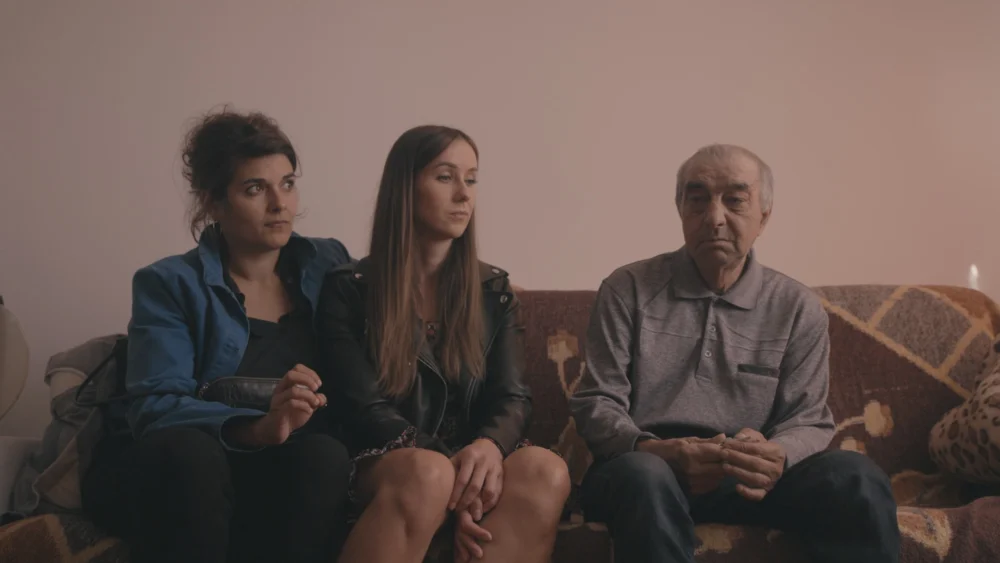
"Something Familiar" masterfully interweaves Mihaela’s search with Taparjan’s own introspective process. The film employs a unique cinematic device where Taparjan enlists actresses to portray her mother, a figure she never truly knew. These staged conversations, with actresses seated opposite the director, serve as a powerful visual metaphor for the gaps in her maternal relationship and her attempt to reconstruct a sense of maternal presence. This narrative strategy allows for an exploration of absence, maternal bonds, and the profound impact of unaddressed family history.
At its core, "Something Familiar" delves into themes of family connection, the enduring pain of absence, and the pervasive nature of trauma. However, the film also champions the concept of self-authorship, posing a fundamental question: can we actively rewrite the narratives that have shaped us? This inquiry into agency and the power of narrative reclamation forms a central pillar of the documentary’s thematic landscape.
The film is a collaborative effort, produced by Monica Lăzurean-Gorgan and Elena Martin of Manifest Film in Romania, alongside Aleksandra Bilic of My Accomplice in the U.K. Dermot O’Dempsey served as co-producer in association with Shudder Films. The visual narrative is crafted by cinematographer Andrei Oană, with editing by Alice Powell. International sales are being managed by Stranger Films Sales, indicating significant anticipation for the film’s global reach.
In an exclusive interview with The Hollywood Reporter, Taparjan shared profound insights into the arduous yet rewarding process of creating "Something Familiar." She elaborated on the multifaceted meanings embedded within the film’s title, her determination to challenge prevailing narratives surrounding Romanian orphans, and her conviction that a trauma-informed approach is not only beneficial but essential in documentary filmmaking.

Navigating the Dual Role of Director and Subject
When asked about the most challenging aspect of making "Something Familiar," Taparjan candidly admitted the profound complexity of simultaneously occupying the roles of director and subject. "Oh God, how long have you got?!" she exclaimed, highlighting the immense emotional and psychological demands. "Being a director and a subject in a film, I think, is quite a unique challenge. You’re wearing two hats, and you’ve got this split psychological experience all the time."
Adding to this already daunting task was Taparjan’s status as a first-time feature documentary director. She described the endeavor as "virtually impossible," involving the disclosure of deeply personal and difficult truths. Despite the initial hesitations, which she attributes to a confluence of inexperience and perhaps gender-based considerations, Taparjan found strength throughout the filmmaking process. "I feel I became stronger in terms of steering the ship as we went on," she stated.
An Ethics of Care and Trauma-Informed Practice
A cornerstone of Taparjan’s filmmaking philosophy, particularly evident in "Something Familiar," is a commitment to an "ethics of care." This approach was paramount in ensuring the well-being of those involved, especially Mihaela, whose bravery in confronting her past was deeply admired by the director. "Mihaela was so definite that she wanted to do this, and she was so brave and so cool about it all," Taparjan recalled. "But I wanted there to be that support system for her when the cameras weren’t rolling."
This commitment extended to her sister’s testimony, which Taparjan insisted be approached with a trauma-informed methodology. "She’s had to endure such a difficult life, so I insisted on a trauma-informed practice," she explained. Taparjan’s expertise in this area, stemming from her academic work, informed the film’s production.
To facilitate this, a psychological consultant worked with both Taparjan and Mihaela. Later in the production, a qualified therapist was brought in to provide dedicated support to Taparjan’s sister before, during, and after a particularly sensitive interview.
Empowering Participants Through Swapping Roles

Taparjan advocates for innovative approaches to empower film participants, emphasizing the importance of giving subjects "more power, choice and control." A striking example of this in "Something Familiar" involved a deliberate inversion of the typical director-subject dynamic. While only a brief glimpse of this appears on screen, Taparjan and her sister literally swapped seats. In these moments, her sister took on the director’s role, posing questions to Taparjan, who then became the subject. "Even if it doesn’t appear on screen, I would recommend that to filmmakers," Taparjan urged. "Trauma-informed practice in terms of filmmaking is such an area with room for development. You really do want to look after the people we’re putting in front of us. We have to." This practice underscores a profound respect for the vulnerability of individuals sharing their stories on screen.
The Lingering Echoes of Intergenerational Trauma
The film grapples with the profound way trauma can permeate family structures and impact subsequent generations. Taparjan views "Something Familiar" as a journey towards "alchemizing trauma and overcoming trauma." While initial themes of identity and belonging are evident in the search for birth mothers, the documentary delves deeper into the "intergenerational, almost mysterious, transmission of trauma."
Taparjan expresses a particular fascination with how these narratives unfold within family systems. She highlights the often-simplistic stories provided about birth mothers and countries of origin. For Taparjan, the "Romanian orphan label" carried a significant stigma, a feeling she attributes not to innate characteristics but to societal narratives and external perceptions. "It’s something that’s coming from the culture. It’s coming from the stories I’ve been told," she stated.
Challenging Western Media Stereotypes
A significant driving force behind Taparjan’s approach was a desire to counter the often-negative and simplistic portrayals of Romania and its children in Western media. She describes these portrayals as an "antagonist in the back of my head," even though no explicit antagonist exists within the film itself. Taparjan criticizes the "white savior narrative" prevalent in many documentaries about Romanian orphans, which often depicted them as inherently "disturbed." Furthermore, she points out the mischaracterization of many adopted individuals as "orphans" when their parents were alive but unable to care for them.
"When it comes to foreign adoptions, the country of origin is quite often represented as a gutter, and the people going in to adopt are represented as saviors," Taparjan observed. "It is so much more complicated when it comes to human beings." This stark observation fueled her creative ambition to tell the story in a more nuanced, poetic, and playful manner, a style she felt was largely absent in existing documentaries about Romania.
The Influence of Hybrid Documentary Forms

Taparjan openly acknowledges the influence of hybrid documentary filmmakers such as those behind "Four Daughters," "Dick Johnson Is Dead," and "Casting JonBenet." These films, which often blend documentary elements with fiction, performance, and meta-narrative, have "been lurking in the back of my brain," she admitted. This suggests a deliberate artistic lineage and a willingness to experiment with the boundaries of documentary form.
The Poetic Exploration of Maternal Absence
The innovative approach of casting actresses to embody her absent mother stemmed from Taparjan’s own experiences. She described a recurring tendency, upon meeting Romanian women, to wonder if they might be related, particularly if they were older and bore a resemblance to her imagined mother. This realization, coupled with an experience at a film festival where she believed a fellow Romanian filmmaker could be her mother, sparked the idea: "I could have so many mothers. Why not play with this?"
This creative choice served a dual purpose: it mirrored the common experience of adopted individuals who often construct hypothetical maternal figures, and it provided Taparjan with an opportunity to "give myself the gift of the feminine energy and the archetypal mother," a presence notably absent in her immediate family, which consisted of a brother and an uncle.
The Evolution of the From "One of Us" to "Something Familiar"
The film’s working title was "One of Us," but it was later changed to "Something Familiar." This alteration was driven by both practical considerations, such as avoiding potential title conflicts, and a more profound artistic desire. Taparjan sought a title that was "more poetic with multiple meanings and multiple interpretations," and "Something Familiar" perfectly encapsulated the film’s exploration of recurring patterns, inherited traits, and the search for connection.
Addressing Dark Family Trauma with Delicacy
Taparjan approached the delicate task of broaching dark family trauma with considerable care, drawing a distinction between "Rachel the character" and "Rachel the person." She recognized the narrative relevance of her own experiences mirroring those of her sisters but maintained a firm boundary regarding the extent of personal disclosure. "As a person, I don’t want you raking over every trauma I’ve ever had in great detail," she stated. This nuanced approach underscores her understanding that individuals who have endured significant trauma require "loving people around who are the memory," fostering a "compassionate memory" that aids in healing. This ethical framework guides her directorial decisions, ensuring that the exploration of trauma is both revealing and respectful.