


The global aviation industry faced its most significant operational challenge since the 2020 pandemic this week as military strikes on Iran triggered an unprecedented closure of Middle Eastern airspace, leaving an estimated five million passengers stranded or delayed. On February 28, a series of coordinated U.S.-Israeli military strikes targeting strategic assets within Iran forced civil aviation authorities across the region to issue immediate Notices to Air Missions (NOTAMs), effectively severing the primary aerial corridor connecting Europe and North America to Asia and Oceania. This escalation comes exactly six years after the onset of the Covid-19 pandemic, serving as a sobering reminder of the fragility of global connectivity and raising critical questions about whether the travel industry is better prepared for systemic shocks than it was in 2020.
The Chronology of Airspace Paralysis
The crisis began in the early hours of February 28, following the first reports of kinetic activity over Iranian territory. Within ninety minutes of the initial strikes, the Iranian Civil Aviation Organization announced a total closure of its airspace to all civilian traffic. This move triggered a domino effect across the region. By 04:00 UTC, the aviation authorities of Iraq, Jordan, and Lebanon followed suit, citing safety concerns regarding potential retaliatory missile trajectories and the presence of high-altitude military assets.
The timing of the closures proved particularly catastrophic for the "night wave" of departures from major Gulf hubs. Dubai International (DXB), Doha’s Hamad International (DOH), and Abu Dhabi International (AUH)—which together handle hundreds of wide-body transitions during the early morning hours—found themselves at the center of a logistical bottleneck. Flights already in the air were forced to perform mid-flight U-turns or divert to secondary airports in Turkey, Egypt, and Saudi Arabia. By noon on February 28, the International Air Transport Association (IATA) reported that over 400 long-haul flights had been diverted, with thousands more canceled at their points of origin.
Mapping the Impact: Five Million Passengers in Limbo
The scale of the disruption is difficult to overstate. According to preliminary data from flight tracking services and industry analysts, approximately five million passengers were directly affected within the first 72 hours of the conflict. This figure includes passengers on canceled flights, those stranded at transit hubs, and travelers whose journeys were significantly lengthened by rerouting.
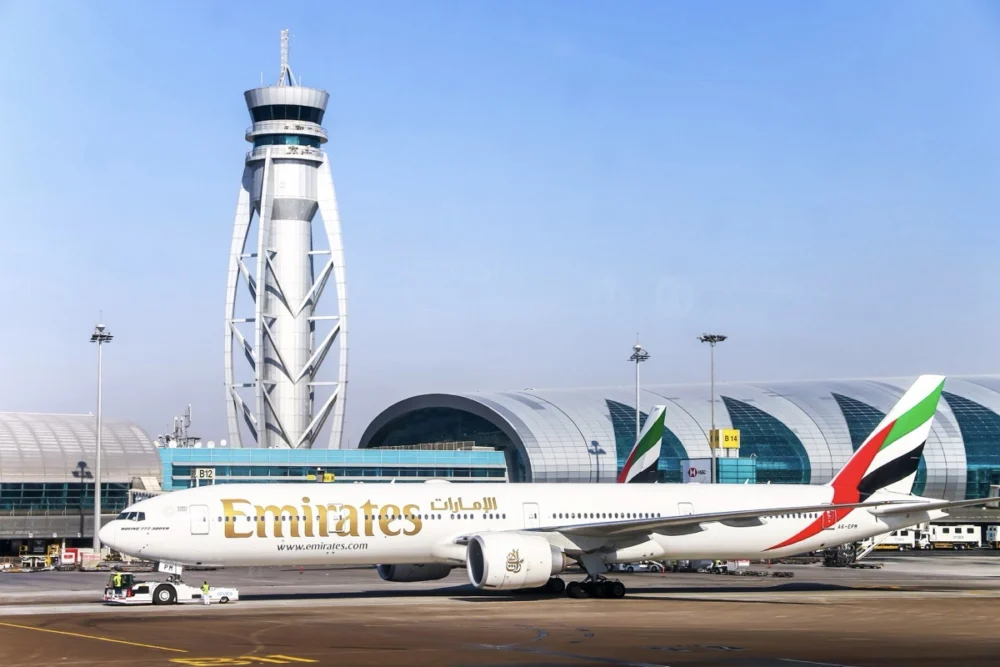
The United Arab Emirates, home to Emirates and Etihad Airways, saw the highest volume of affected travelers. As one of the world’s busiest international gateways, Dubai International faced a surge of nearly 250,000 stranded passengers within its terminals in the first 48 hours. The ripple effect extended far beyond the Middle East; major European hubs like London Heathrow, Frankfurt, and Paris Charles de Gaulle reported massive cancellations of eastbound flights, while Asian gateways like Singapore Changi and Hong Kong International struggled to manage the backlog of westbound traffic.
Supporting data suggests that the rerouting of flights to avoid the Middle Eastern "conflict zone" has added between three to six hours of flight time for routes such as London to Mumbai or New York to Delhi. This necessitated unplanned refueling stops in Central Asia or Northern Africa, further straining ground handling capacities at airports that are typically not equipped to manage dozens of diverted Boeing 777s and Airbus A380s simultaneously.
The Breakdown of the Digital Safety Net
One of the most striking findings from the week’s reporting was the near-total failure of the automated systems designed to handle such crises. In the years following the pandemic, airlines and Online Travel Agencies (OTAs) invested billions of dollars in Artificial Intelligence (AI) and automated customer service platforms. However, as the crisis unfolded, these systems largely "disappeared."
Passengers attempting to rebook via mobile apps or AI chatbots were met with error messages or circular logic loops. The complexity of the disruption—involving multiple airline partners, closed borders, and "force majeure" declarations—exceeded the current capabilities of most generative AI models used in travel tech. This forced millions of travelers to rely on traditional phone lines and physical service desks, which were quickly overwhelmed. In some instances, wait times for airline call centers exceeded 12 hours, leading to a resurgence of the "OTA rebooking mess" that plagued the industry in 2020.
Industry analysts point out that while AI can manage simple schedule changes, it lacks the nuanced decision-making required when entire regions are blacked out. The lack of human intervention in these automated chains led to a breakdown in communication, leaving passengers at the mercy of rapidly changing policies and fluctuating airfares.
Official Responses and Industry Reactions
The international response to the crisis has been a mixture of condemnation and urgent logistical coordination. IATA Director General Willie Walsh issued a statement calling for the immediate establishment of "safe corridors" for civilian aircraft, emphasizing that "aviation is a force for peace and connectivity that should never be targeted or caught in the crossfire of geopolitical conflict."
Airline executives have been more focused on the immediate bottom line. Emirates Airline issued a formal notice stating that while passenger safety remains the priority, the "extraordinary circumstances" of the airspace closure would limit the carrier’s liability for hotel accommodations and meal vouchers under certain jurisdictions. This has sparked a debate over passenger rights, particularly concerning EU261 regulations, which govern compensation for flight disruptions in Europe.
In Washington, the Department of Transportation (DOT) issued a temporary waiver for airlines regarding certain scheduling requirements but urged carriers to "exercise maximum flexibility" with rebooking fees. Meanwhile, the UAE’s General Civil Aviation Authority (GCAA) has been working around the clock to coordinate with Saudi and Omani authorities to expand southerly routes, though these paths are already reaching peak saturation.
Economic and Environmental Implications
The financial fallout of the February 28 strikes is expected to be measured in the billions. Beyond the immediate loss of ticket revenue and the cost of passenger care, airlines are facing a massive spike in operational expenses. Rerouting flights around Iranian and Iraqi airspace requires significantly more fuel. For a single long-haul flight, an additional four hours of flying time can cost an airline upwards of $80,000 in extra fuel and crew wages.
Furthermore, the environmental impact of the crisis is substantial. The "detour" routes are estimated to have increased carbon emissions from international aviation by 15% in a single week. As aircraft are forced to fly longer distances at lower, less efficient altitudes to avoid congested corridors, the industry’s "net zero" goals for the year have been dealt a significant setback.
Insurance premiums for aircraft operating in or near the Middle East have also skyrocketed. Lloyd’s of London underwriters indicated that "war risk" premiums for hull and liability insurance have increased by as much as 500% for certain regions, a cost that will inevitably be passed down to the consumer in the form of "war surcharges" or increased base fares.
Analysis: Have We Learned the Lessons of 2020?
The anniversary of the Covid-19 shutdowns provides a poignant backdrop for this new crisis. Six years ago, the industry swore it would build back better, focusing on resilience, flexibility, and customer-centric technology. However, the events of this week suggest that many of these improvements were superficial.
The primary lesson of the pandemic was the need for clear communication and "scalable" human support. Yet, the disappearance of AI tools during the Feb 28 crisis indicates that the industry may have over-leveraged automation at the expense of robust contingency planning. Furthermore, the "lean" operations adopted by many airlines to recover from pandemic losses have left them with little to no "slack" in the system to absorb a shock of this magnitude.
There is also the question of geopolitical risk assessment. While many carriers had avoided Ukrainian and Russian airspace since 2022, the Middle East remained the indispensable artery of global travel. The total closure of this corridor reveals a structural vulnerability in the "Hub and Spoke" model that has dominated aviation for three decades. If the "Super-Connectors" of the Gulf cannot operate reliably due to regional instability, the entire global network begins to unravel.
Looking Ahead: The New Reality of Global Travel
As of early March, the situation remains fluid. While some limited corridors have been reopened for daylight flights, the majority of Iranian and Iraqi airspace remains a no-fly zone for Western-affiliated carriers. The industry is now bracing for a prolonged period of disruption.
Travelers are being advised to expect higher airfares and longer travel times for the foreseeable future. The crisis has also triggered a shift in travel patterns, with a notable increase in bookings for "Polar routes" and trans-Pacific flights as travelers seek to bypass the Middle East entirely.
The events following the February 28 strikes have proven that while the world is more connected than ever, that connectivity is governed by the volatile realities of geography and politics. For the five million passengers caught in the chaos, the lesson is clear: in the modern era of travel, the distance between "business as usual" and "global crisis" is thinner than a cockpit’s windshield. The coming months will determine whether the aviation industry can truly adapt to this "new normal" or if it will remain perpetually reactive to the next inevitable shock.