


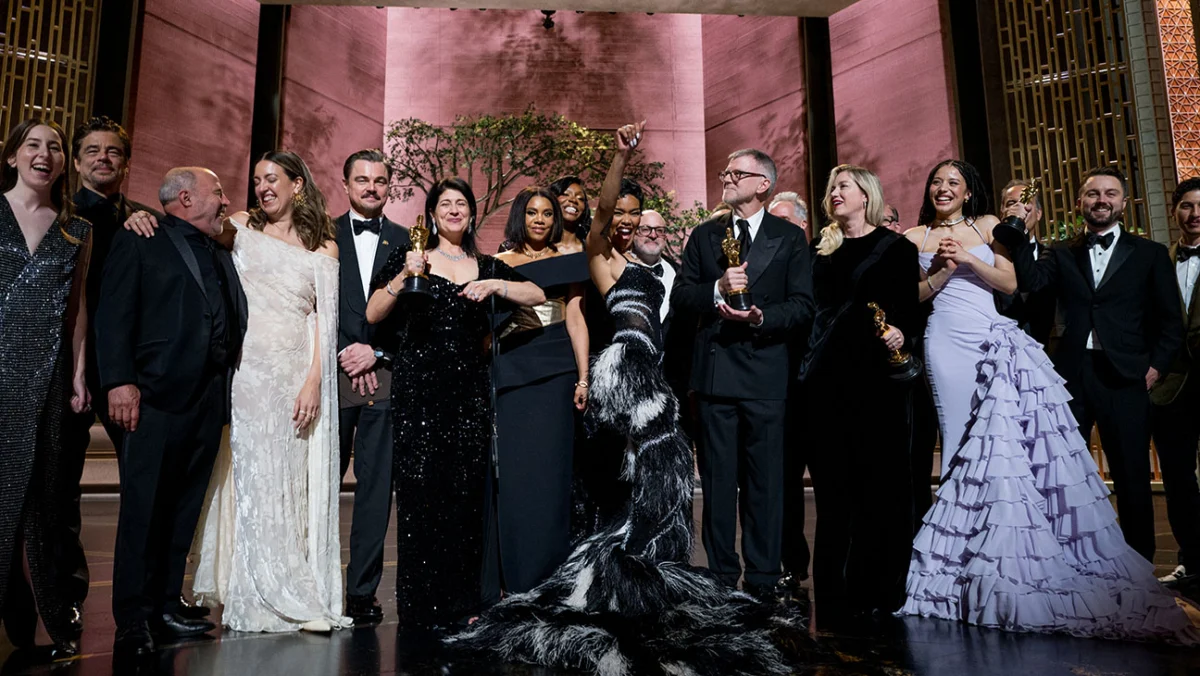
The 98th Academy Awards concluded Sunday evening at the Dolby Theatre in Hollywood, bringing to a close an awards season that was, by many accounts, a protracted and challenging journey. While the Academy’s membership has undergone significant diversification in the past decade, notably since the #OscarsSoWhite movement, the statistical indicators that have historically presaged Oscar outcomes proved remarkably consistent. Despite a late surge of momentum for the film Sinners, One Battle After Another ultimately secured the coveted Best Picture award, a triumph that mirrored its success across virtually every major precursor ceremony this season, from the Gotham Awards and Golden Globes to the various guild awards and major critics’ circles, with the notable exception of the Actor Awards (formerly the SAG Awards) held two weeks prior.
The win for One Battle After Another reaffirms the enduring power of established awards trajectories, even as the Academy strives for greater inclusivity. The recent #OscarsSoWhite controversy, which highlighted a lack of diversity in Academy membership and nominations, spurred significant changes. Over the past ten years, the Academy has actively worked to broaden its voting body, welcoming a more diverse cohort of members representing increased numbers of women, people of color, international filmmakers, and younger individuals. This demographic shift has, in theory, opened the door for a wider range of cinematic voices and styles to be recognized. However, the predictable sweep of One Battle After Another suggests that certain established pathways to Oscar glory remain highly influential.
The Predictable Sweep of One Battle After Another
The narrative of One Battle After Another‘s dominance was largely written long before the Dolby Theatre ceremony. Its victory at the 98th Academy Awards was the culmination of a near-unblemished run through the awards circuit. This pattern of consistent wins across diverse awarding bodies—critics’ groups, industry guilds, and international bodies like BAFTA—created an almost unassailable momentum. The only significant deviation from this trend was the win for Best Ensemble Cast at the Actor Awards, a victory that, while celebrated with palpable enthusiasm, ultimately proved to be a misleading indicator for the Best Picture race.
The Actor Awards Anomaly
The Best Ensemble Cast win for Sinners at the Actor Awards generated considerable excitement, fueled by an exuberant reaction within the ceremony. However, historical data suggests that this particular award has a historically weak correlation with predicting the Best Picture Oscar, having only aligned in roughly 15 out of the last 32 instances. While the Actor Awards’ Best Ensemble win has, in certain years, foreshadowed unexpected Best Picture upsets—citing examples like Shakespeare in Love, Crash, and Parasite—its timing this year, occurring during the final round of Oscar voting, unfortunately fostered a false sense of optimism among Sinners supporters. This highlights a persistent challenge in awards prognostication: balancing the excitement of individual wins with the statistical reality of predictive power.
Decoding the Sinners vs. One Battle Dynamic
The question of why Paul Thomas Anderson’s Sinners ultimately lost out to Ryan Coogler’s One Battle After Another for the Best Picture Oscar, especially given their shared status as Warner Bros. releases that bypassed the festival circuit, resonated with cinephiles. Both films garnered significant critical acclaim and audience favor. Furthermore, Sinners boasted a higher gross revenue and secured more Oscar nominations (16, a new all-time record) compared to One Battle After Another‘s 13. Unpacking this disparity reveals several key factors that likely influenced the Academy’s decision-making.
The Limited Significance of Most Nominations
While an abundance of nominations often signals a film’s broad appeal within the Academy, its predictive power for the ultimate Best Picture win has diminished over time. In the past decade alone, numerous films with the most nominations did not take home the top prize. Examples include Emilia Pérez losing to Anora, The Power of the Dog to CODA, Mank to Nomadland, Joker to Parasite, The Favourite and Roma to Green Book, La La Land to Moonlight, and The Revenant to Spotlight. This year, One Battle After Another did not compete in categories where Sinners received nominations, such as original song, makeup/hairstyling, and visual effects. Conversely, both films were nominated in nearly all categories for which they were realistically considered contenders, with the exception of One Battle After Another‘s newcomer Chase Infiniti being overlooked in the highly competitive Best Actress category.
Genre as a Factor in the Post-#OscarsSoWhite Era
The Academy’s increased embrace of a broader spectrum of films in the post-#OscarsSoWhite era has effectively rendered the concept of a singular "Oscar movie" obsolete. Awards like The Shape of Water, Parasite, and Everything Everywhere All at Once demonstrate a willingness to honor diverse genres. However, even within this more inclusive landscape, the genre of One Battle After Another, described as zombies-centric, may have presented a more palatable choice to a majority of voters than the dramedy/thriller stylings of Sinners. This suggests that while the Academy has broadened its horizons, certain genre preferences can still exert influence on the final outcome.
The "Overdue" Filmmaker Narrative
Perhaps the most significant factor contributing to One Battle After Another‘s victory was the narrative surrounding its director, Paul Thomas Anderson. Anderson is widely regarded as one of the most accomplished filmmakers of his generation, with a distinguished filmography including Boogie Nights, Magnolia, Punch-Drunk Love, There Will Be Blood, The Master, and Phantom Thread. Despite critical acclaim and numerous nominations, Anderson had previously gone 0-for-11 at the Oscars. One Battle After Another provided Academy voters with a compelling opportunity to recognize his considerable talent and address a perceived oversight in his career, akin to how Martin Scorsese’s win for The Departed or Christopher Nolan’s for Oppenheimer were seen as overdue accolades.
Early Indicators and the Shifting Tides of the Ceremony
As the 98th Academy Awards ceremony unfolded, early results provided clear indications of Sinners‘ faltering Best Picture prospects. The absence of a win for Sinners in the Best Supporting Actress category, where Wunmi Mosaku was a contender, signaled trouble. The subsequent loss of the inaugural Best Casting Oscar—an award widely predicted for Sinners but ultimately awarded to One Battle After Another—further solidified this trend. By the time Delroy Lindo of Sinners lost Best Supporting Actor to one of the two nominees from One Battle After Another, the outcome for Best Picture was largely considered a foregone conclusion.
A Shared Spotlight for Cinematic Visionaries
Despite the ultimate Best Picture outcome, the evening provided moments of recognition for the creative forces behind both films. Paul Thomas Anderson received the Best Adapted Screenplay award, and Ryan Coogler secured the Best Original Screenplay Oscar, followed by Anderson’s wins for Best Director and Best Picture. Both films also garnered acting and craft awards, with Sinners taking home Best Actor and One Battle After Another securing Best Supporting Actor. The final tally saw One Battle After Another with six wins and Sinners with four, reflecting a strong showing for both critically acclaimed productions.
The Acting Awards: A Concordance of Performance and Preference
The individual acting categories provided a fascinating point of convergence between the voting bodies of the Actor Awards and the Academy. Notably, the Actor Awards accurately predicted all four individual acting Oscar winners at the 98th Academy Awards: Jessie Buckley for Best Actress in Hamnet, Michael B. Jordan for Best Actor in Sinners, Amy Madigan for Best Supporting Actress in Weapons, and Sean Penn for Best Supporting Actor in One Battle After Another.
The Power of "Acting with a Capital A"
It is noteworthy that both the Actor Awards, voted on exclusively by SAG-AFTRA members, and the Academy, where actors constitute less than 12% of the electorate, recognized similar performances. These winning performances were characterized by what could be described as "Acting with a capital A," demanding significant emotional range and transformative portrayals. Buckley’s portrayal of a grieving mother, Jordan’s nuanced performance as twins with distinct personalities, Madigan’s flamboyant characterization in clown makeup, and Penn’s striking embodiment of his role all demanded a high level of craft.
Sean Penn’s Unconventional Path to a Third Oscar
Sean Penn’s journey to his third Best Actor Oscar was marked by a deliberate lack of traditional campaigning. He eschewed most awards ceremonies, with the exception of the Golden Globes, yet his compelling performance and his esteemed reputation as an actor propelled him to wins at the BAFTA Awards and the Actor Awards, ultimately leading to his Academy Award. This achievement places him among an elite group of actors with three or more male acting Oscars, joining Walter Brennan, Jack Nicholson, and Daniel Day-Lewis. However, his absence from the ceremony was noted, a missed opportunity to celebrate his significant achievement alongside his film and collaborators.
Penn faced formidable competition, including septuagenarian first-time nominees Stellan Skarsgård for Sentimental Value and Delroy Lindo for Sinners. However, performances not in English, like Skarsgård’s, and those not recognized by other major awards, as was the case with Lindo, often face an uphill battle. Lindo, in particular, hoped to emulate Marcia Gay Harden, the only performer to win a supporting Oscar without a preceding nomination from another major guild or critics’ group in the last 25 years.
Amy Madigan’s Enduring Career and Surprise Win
Amy Madigan’s Best Supporting Actress win for Weapons began early in the awards season with a surprise victory at the Critics Choice Awards, overshadowing earlier predictions for Ariana Grande. Her momentum continued through to the Actor Awards, where she secured another win. While Madigan was the sole nominee in her category whose film was not also nominated for Best Picture, her extensive career, a prior Oscar nomination 40 years ago, widespread industry recognition, and her status as part of a prominent Hollywood couple—drawing parallels to Ruth Gordon’s Oscar win for Rosemary’s Baby—likely contributed to her victory.
Michael B. Jordan’s Momentum Shift
Michael B. Jordan’s path to the Best Actor Oscar was not without its challenges. Initially, Timothée Chalamet of Marty Supreme appeared to be the frontrunner, having won at the Critics Choice and Golden Globe Awards. However, these awards are voted on by journalists, a demographic absent from the Academy. The Academy’s preference for Sinners over Marty Supreme, which ultimately received no Oscars, marked a significant divergence. Reports indicated that some Academy members were repelled by Chalamet’s character. Furthermore, the Best Actor race was reportedly influenced by Chalamet’s unconventional campaigning style and an unfortunate incident involving Jordan and Delroy Lindo at the BAFTA Awards, which garnered sympathy for Jordan. His win at the Actor Awards during the Oscar voting window provided a clear and compelling alternative for Academy voters.
Jessie Buckley’s Unanimous Acclaim
Jessie Buckley’s performance in Hamnet was considered a near certainty from its premiere at the Telluride Film Festival. Even those who disliked the film recognized the power of her portrayal. Buckley’s genuine demeanor and exceptional talent resonated throughout the season, making her a beloved figure. At 36, her Oscar win is likely the first of many accolades in what promises to be a distinguished career.
Netflix’s Strong Showing and Other Notable Wins
Beyond the major categories, Netflix demonstrated its continued influence in the industry. The Best Documentary Feature Oscar went to the team behind Kino Lorber’s Mr. Nobody Against Putin, triumphing over Netflix’s The Perfect Neighbor. However, Netflix dominated several other categories, securing wins for Best Costume Design, Makeup/Hairstyling, and Production Design for Frankenstein. Their original film KPop Demon Hunters earned accolades for Best Animated Feature and Original Song ("Golden"), while All the Empty Rooms won for Best Documentary Short. Netflix also acquired The Singers late in the season, which won Best Live Action Short in a tie. The streamer’s total of seven awards matched its previous best performance.
Reflections on the Telecast and the Season
The 98th Academy Awards telecast, hosted by Conan O’Brien, was generally considered a solid production, marked by his amiable hosting, a well-executed In Memoriam segment (despite the inexplicable omission of Brigitte Bardot), memorable musical performances from Sinners and KPop Demon Hunters, and the suspenseful presentation of major awards. Kumail Nanjiani’s adept handling of a rare tie in one of the short film categories was also a highlight.
However, some aspects of the telecast drew criticism. The much-hyped Marvel "reunion" felt underwhelming, featuring only Robert Downey Jr. and Chris Evans. The practice of "playing off" winners continued to be poorly managed for the second consecutive year. Several presenter choices also raised eyebrows. While Bill Pullman and Lewis Pullman are talented, their presence as presenters did not align with the established stature of past Oscar presenters. The selection of Robert Pattinson and Zendaya to present Best Director, rather than recent winner and Directors Guild president Christopher Nolan, was also questioned. Similarly, the presentation of Best Picture by Ewan McGregor and Nicole Kidman, celebrating the 25th anniversary of Moulin Rouge!, a film with only two Oscar wins, felt somewhat out of proportion.
Personal Reflections on the Season
From a personal perspective, the conclusion of the awards season brought a sense of accomplishment. The final Feinberg Forecast correctly predicted 21 out of 24 categories, including all of the major awards and the short films. The success of past guests from the Awards Chatter podcast—including Michael B. Jordan, Jessie Buckley, Sean Penn, Amy Madigan, Joachim Trier, Joshua Seftel, and EJAE—was particularly heartening. This season marked the 15th trip to the Oscars, a privilege not taken for granted, and the support from colleagues, industry partners, readers, listeners, friends, and family made the often-grueling journey a mostly enjoyable one. Now, it is time for a well-deserved rest.