


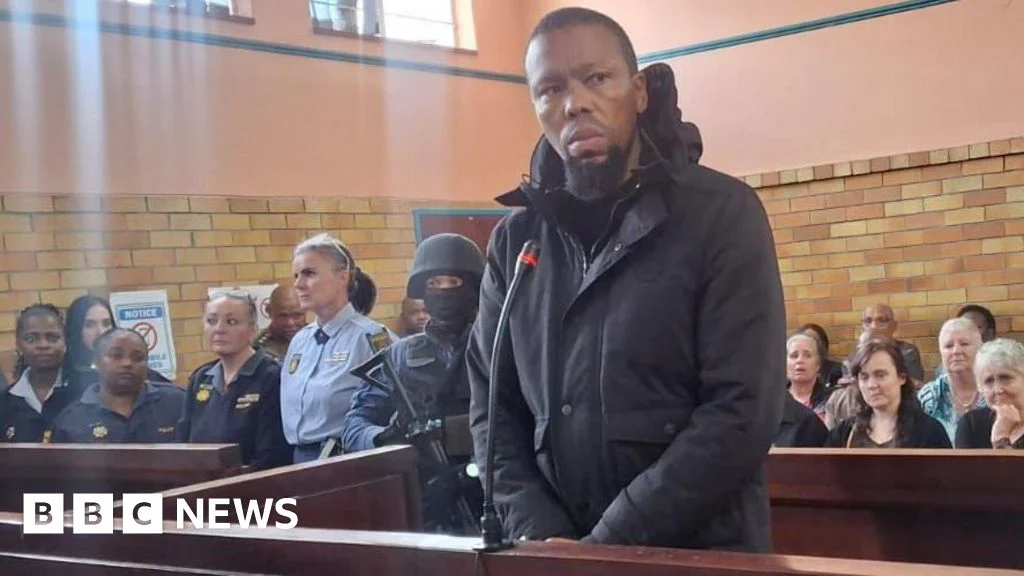
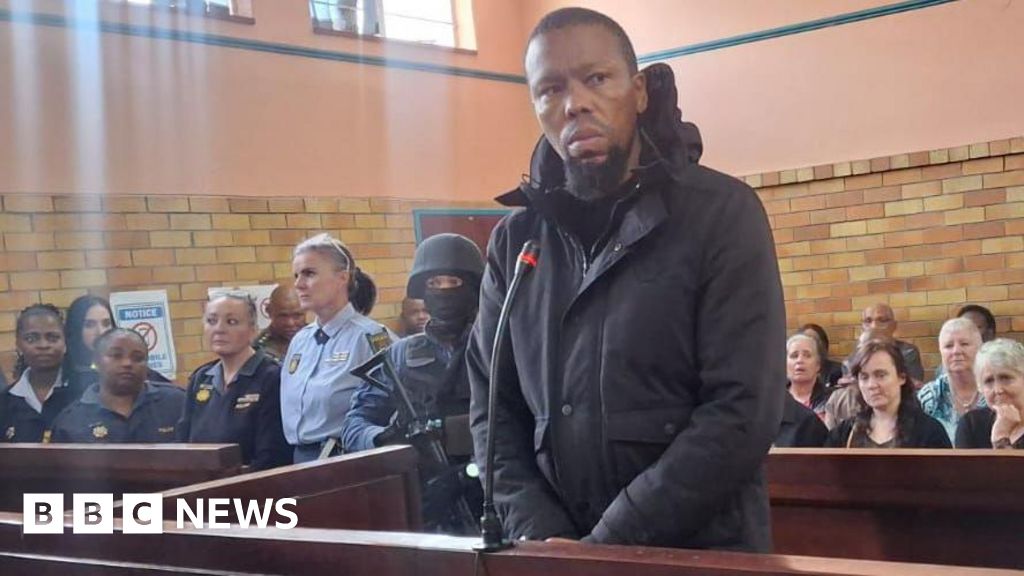
The arrest and subsequent charging of Matipandile Sotheni, a 41-year-old former member of an elite South African police unit, in connection with the assassination of whistleblower Marius van der Merwe, has sent shockwaves across the nation, exposing the perilous landscape faced by those who dare to expose corruption within the state apparatus. Sotheni appeared in court accused of the December murder of Van der Merwe, an act committed in full view of his family, which ignited national outrage and intensified scrutiny on the government’s commitment to protecting vital witnesses in its ongoing fight against systemic graft. While Sotheni has not yet commented on the charges, his alleged involvement underscores the deep infiltration of criminal elements, and potentially former state actors, into networks targeting those who threaten their illicit operations.
The Whistleblower’s Courageous Testimony and its Ramifications
Marius van der Merwe, publicly known only as "Witness D" during his appearance before the high-profile Madlanga commission, played a pivotal role in unmasking alleged atrocities within the South African Police Service (SAPS). His testimony implicated several police officials in the brutal torture and subsequent murder of a robbery suspect, Emmanuel Mbense, in April 2022. Van der Merwe’s detailed account, given under immense personal risk, painted a grim picture of unchecked power and impunity, revealing how he was allegedly ordered by local police chief Julius Mkhwanazi to dispose of Mbense’s body. Mkhwanazi has since been suspended over these accusations, which he denies, though no arrests have yet been made in connection with Mbense’s death.
Van der Merwe’s revelations were not merely an isolated incident; they were viewed as a critical moment that "blew the lid" off the extent of police corruption at a local level, particularly in the Eastern Cape region where many of these incidents are believed to have occurred. His testimony directly led to the suspension of several officers he had named, signaling a rare but significant step towards accountability within a system often perceived as resistant to internal cleansing. The bravery demonstrated by Van der Merwe, in testifying against his former colleagues, illuminated the urgent need for robust whistleblower protection mechanisms in a country grappling with endemic corruption.
The Madlanga Commission: A National Effort to Combat State Capture
The Madlanga commission, formally known as the Judicial Commission of Inquiry into Allegations of State Capture, Corruption and Fraud in the Public Sector, including Organs of State, was established by President Cyril Ramaphosa with a mandate to investigate widespread allegations of organised crime groups having infiltrated various levels of government. Its creation followed a period of intense public pressure and alarming revelations from a senior police officer regarding these criminal networks. The commission, named after its chairperson, Justice Mandlanga, is one of several such inquiries initiated by President Ramaphosa’s administration as part of a broader strategy to restore integrity and trust in state institutions following years of alleged "state capture."
The allegations heard at the commission, including those from Van der Merwe, have far-reaching political consequences. They led to the suspension of South Africa’s Police Minister Senzo Mchunu, who vehemently denies having any links to criminal gangs. Furthermore, South Africa’s parliament is actively investigating these grave allegations, underscoring the systemic nature of the challenge. The commission’s work is seen as crucial for the future of democratic governance in South Africa, aiming to dismantle the networks of corruption that have eroded public finances and confidence. The murder of a key witness like Van der Merwe, therefore, represents a direct assault on the very foundations of this critical national effort.
A Chilling Pattern: The Perilous Path of Whistleblowers
The assassination of Marius van der Merwe is not an isolated incident in the ongoing saga surrounding the Emmanuel Mbense murder and the subsequent Madlanga commission. Disturbingly, his death forms part of a grim pattern of retribution against those involved in the case. Police have confirmed that in addition to Van der Merwe, three of the twelve individuals implicated in Mbense’s killing have also met untimely ends. Two were shot dead, while another committed suicide. This alarming sequence of events strongly suggests a coordinated effort to silence witnesses and obstruct justice, sending a chilling message to anyone considering exposing wrongdoing.
The vulnerability of whistleblowers in South Africa has been a long-standing concern for human rights organisations and anti-corruption advocates. Despite the existence of the Protected Disclosures Act, which is intended to safeguard individuals who report unethical or illegal conduct, its practical implementation and enforcement often fall short. Whistleblowers frequently face threats, intimidation, job loss, and, as tragically demonstrated in this case, even death. The lack of robust, well-resourced protection programmes means that individuals like Van der Merwe are left exposed, often relying solely on their courage in the face of powerful and ruthless adversaries. This situation creates a profound chilling effect, discouraging others from coming forward and thereby allowing corruption to fester unchecked.
The Investigation and Arrest of Matipandile Sotheni
The arrest of Matipandile Sotheni over the past weekend marks a significant breakthrough in the investigation into Van der Merwe’s murder. Police spokesperson Brigadier Athlenda Mathe confirmed that Sotheni is believed to be the alleged hitman. The swift action by law enforcement, culminating in Sotheni’s court appearance, signals the seriousness with which authorities are treating this high-profile case.
According to police, Sotheni was one of three suspects identified in the murder plot. Another suspect, Wiandre Pretorius, believed to be the driver of the getaway vehicle used in the drive-by shooting, tragically took his own life. The police have successfully seized the car used during the heinous crime, which is a crucial piece of evidence. However, the firearm believed to have been used in the murder, an AK-47, is still being sought. The type of weapon, often associated with organised crime, further underscores the professional and premeditated nature of the attack.
In addition to the murder charge, Sotheni also faces charges of attempting to kill Van der Merwe’s wife and children, who were present during the horrific attack. This indicates a brazen and ruthless disregard for human life, aiming to eliminate not just the whistleblower but potentially his entire family to ensure silence. The case has been postponed to March 25 for a formal bail application, a hearing that will be closely watched by the public and civil society organisations. The outcome of this application will be critical, as many will argue against bail, citing the gravity of the charges and the potential for witness intimidation.
Broader Implications for South Africa’s Anti-Corruption Battle
The murder of Marius van der Merwe and the subsequent arrest of a former elite police officer as a suspect carry profound implications for South Africa’s ongoing struggle against corruption. Firstly, it sends a deeply disturbing message about the reach and ruthlessness of criminal syndicates operating within or alongside state institutions. The alleged involvement of a former officer from an elite unit highlights the internal challenges faced by the SAPS in rooting out corrupt elements from its own ranks. This can severely erode public trust in law enforcement agencies, whose primary mandate is to protect citizens and uphold the law.
Secondly, the incident creates a formidable deterrent for future whistleblowers. If those who bravely step forward to expose wrongdoing face such extreme and violent retribution, the wellspring of vital information needed to dismantle corruption networks could dry up. This chilling effect directly undermines President Ramaphosa’s commitment to transparency and accountability, making the fight against state capture exponentially more difficult. For a country that has been ravaged by corruption, the ability of whistleblowers to come forward without fear of reprisal is paramount to its recovery and democratic health.
Furthermore, this case places immense pressure on the justice system to deliver swift and impartial justice. The successful prosecution of Sotheni and any other individuals involved is crucial not only for the sake of Van der Merwe’s family but also to send an unequivocal message that attacks on those who expose corruption will not be tolerated. Failure to secure convictions in such high-profile cases risks perpetuating a cycle of impunity and further eroding faith in the rule of law.
Calls for Enhanced Whistleblower Protection and Institutional Reform
In the wake of Van der Merwe’s murder, there have been renewed calls from civil society organisations, opposition parties, and international bodies for the South African government to significantly strengthen its whistleblower protection mechanisms. Experts argue that the current legal framework, while existing, lacks sufficient practical support, including adequate funding for protection programmes, safe houses, psychological support, and legal assistance for whistleblowers and their families. There is a clear need for a dedicated, independent body with the mandate and resources to ensure the safety of individuals who put their lives on the line for the public good.
Beyond protection, the case also highlights the urgent need for comprehensive institutional reform within the SAPS and other state entities. The alleged involvement of a former elite officer in a whistleblower’s murder necessitates a deeper look into vetting processes, internal accountability mechanisms, and strategies to prevent corrupt elements from infiltrating or influencing law enforcement. Restoring public confidence requires not just prosecuting offenders but also proactively addressing the systemic vulnerabilities that allow such crimes to occur.
The trial of Matipandile Sotheni will undoubtedly be a defining moment for South Africa. It will serve as a litmus test for the nation’s resolve to fight corruption, protect its truth-tellers, and uphold the rule of law against powerful and dangerous adversaries. The memory of Marius van der Merwe, a brave whistleblower who paid the ultimate price, underscores the critical importance of ensuring that justice is served and that those who seek to silence the truth ultimately fail.