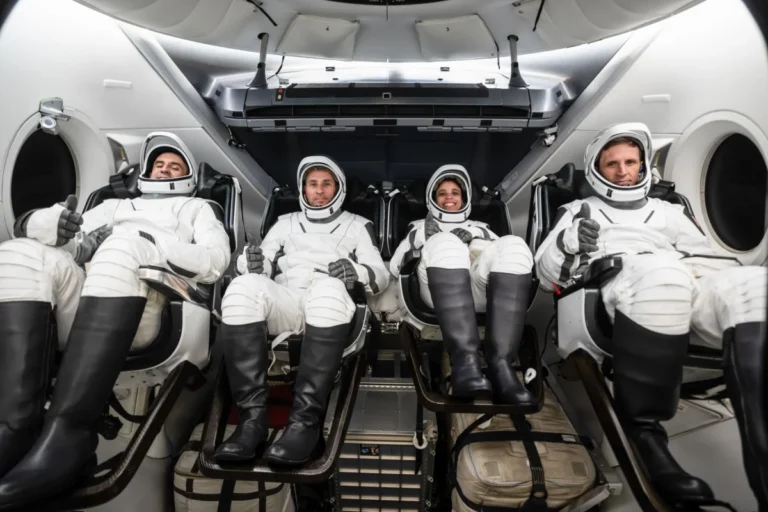


Eight minutes after the launch of Artemis II, the Orion spacecraft and its crew – NASA astronauts Reid Wiseman, Victor Glover, and Christina Koch, alongside CSA (Canadian Space Agency) astronaut Jeremy Hansen – will officially reach space. This pivotal, nearly 10-day test flight is meticulously planned, packed with critical activities as the astronauts embark on a journey around the Moon and back to Earth. Throughout the mission, ground control teams will rigorously verify Orion’s complex systems, ensuring its readiness for future deep-space endeavors. While daily adjustments to the crew’s schedule are possible based on operational developments, a comprehensive general plan has been established by ground personnel and the crew for each day of this historic mission.
The Genesis of a New Lunar Era: The Artemis Program
Artemis II represents a crucial step in NASA’s ambitious Artemis program, which aims to return humans to the lunar surface for the first time since Apollo 17 in 1972. The program’s broader vision includes establishing a sustainable human presence on and around the Moon, ultimately paving the way for human exploration of Mars. Artemis II follows the highly successful uncrewed Artemis I mission, which in late 2022 demonstrated the capability of the Space Launch System (SLS) rocket and the Orion spacecraft to travel to lunar orbit, perform a flyby, and safely return to Earth. Artemis I’s 25-day journey validated the heat shield, propulsion, and guidance systems under extreme conditions, setting a vital precedent for the crewed Artemis II mission. The primary objective of Artemis II is to validate the human-rated systems of Orion, demonstrating that the spacecraft is safe and habitable for astronauts on deep-space missions. This includes extensive testing of life support, communications, and propulsion systems with a human crew onboard, pushing the boundaries of human endurance and technological capability beyond low Earth orbit.
Flight Day 1: Entering Orbit and Initial Systems Validation
The journey begins with the thunderous ascent of the Space Launch System (SLS) rocket, the most powerful rocket ever built. Roughly eight minutes after liftoff, following the main engine cutoff (MECO) of the SLS core stage, the Orion spacecraft, still attached to the Interim Cryogenic Propulsion Stage (ICPS), will separate from the rest of the rocket. The ICPS, though smaller than the core stage, still has critical work ahead. Approximately 49 minutes post-launch, its single RL10 engine will ignite for the Perigee Raise Maneuver, a crucial burn designed to elevate the spacecraft’s perigee—the lowest point in its orbit—to a safe altitude of 160 kilometers (100 miles) above Earth. This initial burn prevents Orion from re-entering the atmosphere prematurely.
Roughly an hour later, as Orion reaches this new perigee, the ICPS will fire again for a second, more powerful burn to propel the spacecraft into a high Earth orbit. This maneuver is essential for setting the stage for the subsequent trans-lunar injection. Once in high Earth orbit, the crew will have approximately 23 hours to conduct an exhaustive verification of Orion’s intricate systems while still relatively close to Earth. This proximity allows for easier data transmission and potential abort scenarios if significant issues arise.
The astronauts will immediately begin testing critical life support systems. This includes the potable water dispenser, which will provide drinking water and rehydrate their packaged meals, as well as the advanced toilet system, a significant upgrade from previous generations of space lavatories. The carbon dioxide removal system, vital for maintaining breathable air in the sealed capsule, will also undergo thorough checks. After the intense initial phases, the crew will be able to shed their distinctive orange Orion Crew Survival System (OCSS) spacesuits, donned for launch safety, and transition into regular flight wear, signaling a shift from emergency preparedness to routine operations. A significant portion of this initial period will be dedicated to reconfiguring Orion’s interior, transforming it from a launch configuration into a functional living and working space for four floating individuals over the next ten days.
Approximately three hours into the mission, NASA will conduct critical tests on Orion’s handling characteristics. In future missions, Orion is designed to dock with other spacecraft, such as the Gateway lunar outpost. To verify safe docking capabilities, the spent ICPS will be ingeniously repurposed as a simulated docking target. Orion will separate from the ICPS, and the crew will practice piloting their spacecraft towards and around it in a demonstration of proximity operations. This exercise is vital for developing the manual control skills necessary for future rendezvous and docking maneuvers. Following this, the ICPS will execute a final orbital disposal burn, sending it on a controlled trajectory towards the Pacific Ocean, while Orion continues its journey in high Earth orbit.
After about eight and a half hours in space, the astronauts will have their first short sleep period. They will awaken after approximately four hours for an additional engine burn, precisely positioning Orion for its Trans-Lunar Injection (TLI) maneuver scheduled for Flight Day 2. This burn ensures the correct orbital geometry for the powerful TLI burn. During this wake period, they will also take the opportunity to perform a brief emergency communications check with the Deep Space Network (DSN) at the farthest point of their high Earth orbit, a necessary validation before committing to the TLI. Following these critical tasks, the astronauts will return to sleep for another four and a half hours, concluding the intense activities of Flight Day 1.
Flight Day 2: The Lunar Gateway – Trans-Lunar Injection
Flight Day 2 will begin with a focus on crew health and further system validation. Astronauts Wiseman and Glover will initiate the day by setting up and testing Orion’s flywheel exercise device, completing their first physical workouts of the mission. Koch and Hansen are scheduled for their exercise sessions later in the day. These morning workouts serve a dual purpose: maintaining astronaut fitness and providing another crucial test of Orion’s life support systems under metabolic load before the spacecraft departs Earth’s orbit.
The morning’s main focus for Christina Koch will be preparing for the day’s seminal event: the Trans-Lunar Injection (TLI) orbital maneuver. TLI is arguably the last major engine burn of the Artemis II mission, a powerful thrust that will propel Orion out of Earth’s orbit and set it on a definitive course towards the Moon. A key feature of Orion’s trajectory for Artemis II is its free-return path, meaning that once the TLI burn is complete, the spacecraft’s momentum and the gravitational forces of the Earth and Moon will naturally guide it around the far side of the Moon and back towards Earth, culminating in a return on Flight Day 10, even without further major propulsion.
Koch will meticulously configure Orion’s systems to execute this critical maneuver, which will be performed by the main engine housed within the spacecraft’s European Service Module (ESM). This engine, also known as the Orbital Maneuvering System (OMS) engine, is capable of generating up to 2,722 kilograms (6,000 pounds) of thrust – an impressive force capable of accelerating a car from zero to 96.5 km/h (60 mph) in a mere 2.7 seconds. The ESM, provided by the European Space Agency (ESA), is a vital component of Orion, supplying propulsion, power, air, and water to the crew module, underscoring the international collaborative nature of the Artemis program.
Following the successful TLI, the crew will experience a less demanding day, with dedicated time for acclimatization to the deep-space environment. This period is essential for their bodies to adjust to microgravity and the unique sensations of being so far from Earth. They will also have their first opportunity to engage in a space-to-ground video communication session, a planned feature throughout the mission. With the exception of Flight Day 7, designated as the crew’s free day, and the landing day, astronauts are expected to have one or two such communication opportunities daily, allowing them to connect with mission control, share their experiences, and participate in public outreach.
Flight Day 3: Trajectory Refinement and Medical Preparedness
Flight Day 3 marks the first of three smaller engine burns, known as Outbound Trajectory Correction maneuvers, designed to precisely keep Orion on its path around the Moon. This initial correction ensures that the spacecraft remains perfectly aligned for its circumlunar trajectory. In the morning, Jeremy Hansen will take the lead in preparing for this orbital maneuver, which is scheduled to occur shortly after the crew’s midday meal. These minor adjustments are critical for maintaining the free-return trajectory and ensuring a precise lunar flyby.
The remainder of Flight Day 3 will involve a variety of important checks and demonstrations. Astronauts Glover, Koch, and Hansen will perform a demonstration of cardiopulmonary resuscitation (CPR) procedures in space. This exercise is vital for practicing emergency medical responses in a microgravity environment, where techniques can differ significantly from those on Earth. Wiseman and Glover will also meticulously review portions of Orion’s comprehensive medical kit, which includes essential diagnostic tools such as a thermometer, blood pressure monitor, stethoscope, and otoscope. This review ensures familiarity with the equipment and confirms its functionality in space, preparing the crew for any potential medical contingencies.
Christina Koch has dedicated time in the latter half of the day to rigorously test Orion’s emergency communication system with the Deep Space Network. This repeated validation of critical communication links is paramount for deep-space missions where reliable contact with Earth is not always guaranteed. Finally, the entire crew will gather to rehearse the choreography for the scientific observation work they are scheduled to perform on Flight Day 6, when Orion makes its closest approach to the Moon. This rehearsal ensures they are prepared to maximize their scientific data collection during this unique opportunity.
Flight Day 4: Visualizing the Moon and Celestial Photography
On Flight Day 4, a second Outbound Trajectory Correction maneuver will further refine Orion’s path towards the Moon. These incremental adjustments underscore the precision required for deep-space navigation, ensuring the spacecraft remains on its optimal free-return trajectory. Concurrently, the crew will dedicate time to personal preparations for their upcoming lunar observations. Each astronaut will spend an hour reviewing specific geographical targets on the lunar surface that they will be tasked with imaging on Flight Day 6. Given that these targets can vary based on the exact launch time and day, this study period allows the crew to meticulously understand what they will be observing as they approach the lunar surface. While photography and videography from Orion’s windows are expected to be frequent occurrences throughout the mission, Flight Day 4 includes a specific 20-minute slot dedicated to capturing images of celestial bodies from the spacecraft’s windows, emphasizing the scientific and aesthetic aspects of their journey.
Flight Day 5: Entering Lunar Domain and Spacesuit Trials
Flight Day 5 marks a significant milestone as Orion enters the lunar sphere of influence. This is the point in space where the gravitational pull of the Moon becomes stronger than that of Earth, signifying a major transition in the spacecraft’s trajectory and the crew’s experience. As they formally enter the Moon’s gravitational domain, the crew will embark on a full day of activities, dedicating most of their morning to comprehensive testing of their spacesuits.
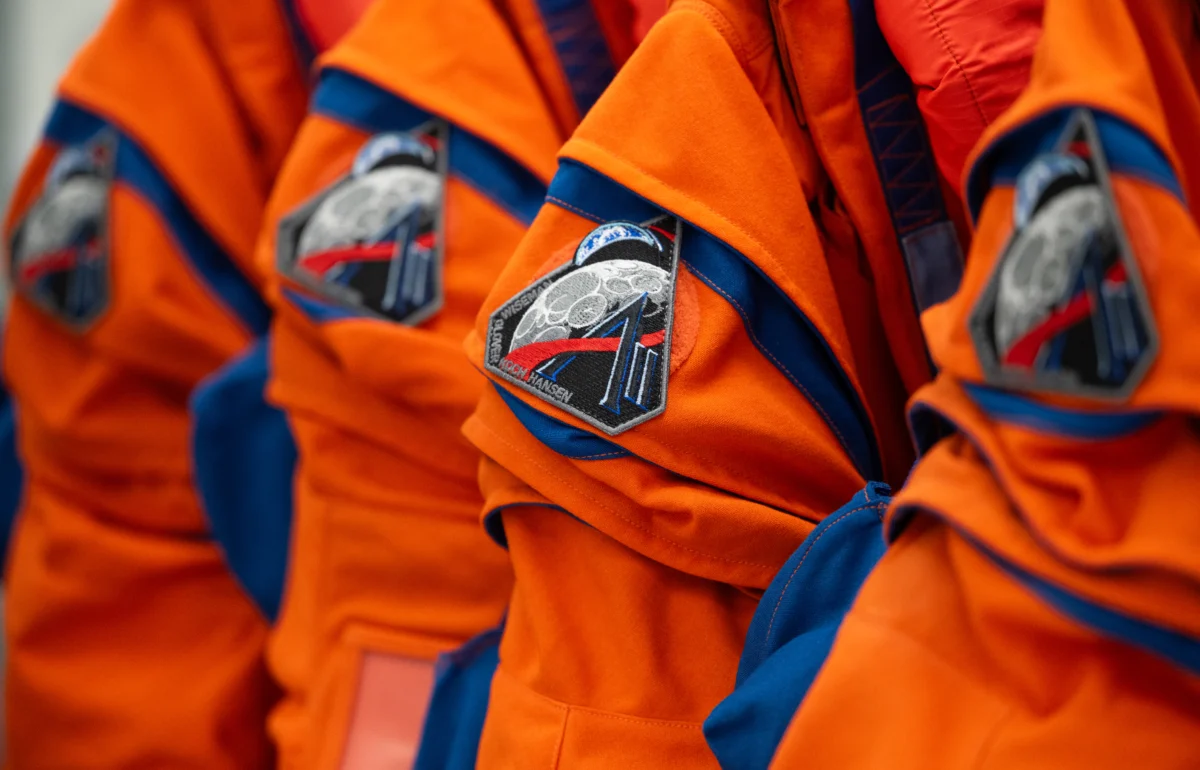
Officially known as the Orion Crew Survival System (OCSS) suits, these distinctive orange garments serve a critical protective role during launch and reentry. However, they are also engineered for emergency use, capable of providing each suited crew member with a breathable atmosphere for up to six days in the event of Orion’s depressurization. As the first astronauts to wear these new-generation suits in the vacuum of space, the Artemis II crew will put them through rigorous paces. This includes testing their ability to quickly don and pressurize the suits, install and sit in their seats while suited, and perform essential functions like eating and drinking through a specialized port in the helmet. These tests are paramount for validating the suits’ ergonomic design and life-sustaining capabilities, providing invaluable data for future deep-space missions. In the crew’s afternoon, the final Outbound Trajectory Correction maneuver will be executed, precisely setting Orion’s course for its close lunar flyby on Flight Day 6.
Flight Day 6: Lunar Flyby, Scientific Observations, and Record Potential
Flight Day 6 will be the mission’s dramatic apex, as the Artemis II crew reaches its closest point to the Moon while simultaneously traveling to its farthest point from Earth. Depending on the precise launch day, Artemis II could potentially set a new record for the maximum distance humans have ever traveled from Earth, surpassing the current record of 400,171 kilometers (248,655 miles) established in 1970 by the Apollo 13 crew. The exact distance achieved by the Artemis II crew will hinge on the specific day and time of their launch, highlighting the mission’s potential for breaking historical milestones.
Throughout this momentous day, the crew will be positioned between 6,400 and 9,700 kilometers (4,000 and 6,000 miles) from the lunar surface as they loop around the Moon’s far side. From this vantage point, the Moon will appear roughly the size of a basketball held at arm’s length. The majority of the day will be dedicated to capturing extensive photographs and videos of the Moon and meticulously recording their observations. The astronauts will become the first humans to visually observe certain parts of the Moon with their own eyes, providing unique perspectives on features previously only seen by robotic probes or from distant orbits.
The angle of the Sun on the Moon changes by almost a degree every two hours, meaning the crew will not know the exact lighting conditions awaiting them on the lunar surface until closer to launch. This variability offers unique observational opportunities. If the Sun is high in the lunar sky during the flyby, there will be minimal shadows, prompting the crew to search for subtle variations in color and surface texture. Conversely, if the Sun is lower on the horizon, long shadows will stretch across the surface, dramatically enhancing relief and revealing depths, ridges, slopes, and crater rims that are often difficult to discern under full illumination. If the Sun is directly overhead from Orion’s perspective, akin to midday on Earth, shadows will be sparse or non-existent, creating ideal lighting conditions for close-up imaging of specific lunar features. The crew will meticulously record their observations in real-time, synchronizing them with their photography and videography, even during the 30-to-50-minute period when they lose communication with Earth as Orion passes behind the Moon. This precise documentation will allow scientists on Earth to later correlate their verbal observations with the exact imagery obtained.
Flight Day 7: Departing Lunar Influence and Crew Recuperation
On the morning of Flight Day 7, Orion will officially exit the lunar sphere of influence, signifying the start of its homeward journey. Before the Artemis II crew travels too far from the Moon, ground scientists, eager to glean fresh insights while the experience is still vivid in the astronauts’ minds, will have a dedicated opportunity to communicate with the crew. This debriefing is crucial for capturing immediate impressions and preliminary scientific observations that can inform future missions.
In the latter half of the crew’s day, Orion’s engine will fire once again for the first of three Return Trajectory Correction maneuvers. These precise orbital adjustments are designed to fine-tune Orion’s trajectory, ensuring a safe and accurate return path to Earth. Recognizing the intensity of the preceding days, the crew will have much of the remainder of Flight Day 7 designated as free time. This period of rest and relaxation is vital for allowing the astronauts to recover, mentally and physically, before resuming their final tasks leading up to their return to Earth.
Flight Day 8: Radiation Protection and Manual Flight Controls
Flight Day 8 will feature two primary demonstrations crucial for validating Orion’s capabilities and crew safety in deep space. First, the crew will assess their ability to protect themselves from significant radiation events, such as solar flares. Using Orion’s onboard supplies and equipment, they will construct a makeshift shelter and practice taking cover. Radiation exposure remains a constant concern for human deep-space exploration, and various experiments will be conducted throughout the mission to collect critical data on radiation levels inside Orion, contributing to strategies for future long-duration missions to Mars and beyond.
Towards the end of the day, the crew will conduct a vital test of Orion’s manual piloting capabilities. They will steer the spacecraft through a series of tasks, focusing on a chosen target visible from Orion’s windows. They will then transition to a tail-to-sun orientation and perform orientation maneuvers relative to the flight plane, comparing the spacecraft’s six-degrees-of-freedom (6-DOF) and three-degrees-of-freedom (3-DOF) attitude control modes. This demonstration is critical for understanding how astronauts can manually control the spacecraft in various scenarios, providing essential backup to automated systems and enhancing mission safety and flexibility.
Flight Day 9: Reentry Preparations and Physiological Adjustments
The penultimate full day of Artemis II in space will begin with comprehensive preparations for the crew’s return to Earth. The astronauts will have dedicated time to study their reentry and splashdown procedures, engaging in detailed discussions with flight control personnel to ensure a complete understanding of this critical phase. Another Return Trajectory Correction maneuver will be performed to ensure the spacecraft remains precisely on course for its return.
The crew will also complete several additional demonstrations. This includes testing waste collection systems, designed as a contingency should Orion’s primary toilet system malfunction. They will also conduct fit checks for orthostatic intolerance garments. Orthostatic intolerance, which can cause symptoms such as dizziness and lightheadedness upon standing, is a common concern for astronauts returning to Earth as their bodies readjust to gravity’s effect on blood circulation. Compression garments, worn beneath their spacesuits, can significantly alleviate these symptoms. The crew members will don these garments, take body circumference measurements, and complete a questionnaire regarding the fit and ease of use, providing valuable data for improving future designs.
Flight Day 10: Earth Reentry and Pacific Splashdown
The final day of the Artemis II mission is entirely focused on safely bringing the crew back to Earth. A last Return Trajectory Correction maneuver will be executed to ensure Orion is on the precise trajectory for its splashdown. The crew will then return the cabin to its original launch configuration, stowing all equipment and securing their seats. They will once again don their iconic orange Orion Crew Survival System spacesuits, preparing for the intense experience of atmospheric reentry.
A critical event will be the separation of the Crew Module from the Service Module, which contains the engines that propelled them around the Moon and back to Earth. This separation exposes the Crew Module’s robust heat shield, a marvel of engineering designed to protect the spacecraft and its precious human cargo as they re-enter Earth’s atmosphere at blistering speeds, enduring temperatures up to an astonishing 1,650 degrees Celsius (3,000 degrees Fahrenheit).
Once the harrowing heat of reentry has been safely navigated, the forward bay cover, which protected the top of the spacecraft, will be jettisoned. This clears the way for the sequential deployment of Orion’s parachute system: two drogue parachutes will first deploy, rapidly reducing the capsule’s speed to approximately 494 kilometers per hour (307 miles per hour). These are followed by three pilot parachutes, which in turn deploy the three massive main parachutes. These colossal main parachutes will further decelerate Orion to a gentle 27 km/h (17 mph) for its targeted splashdown in the Pacific Ocean. Awaiting their arrival will be highly trained personnel from NASA and the United States Navy, ready to recover the crew and spacecraft, thereby concluding the monumental Artemis II mission and marking a triumphant step in humanity’s renewed journey to the Moon and beyond.
Broader Implications and the Future of Deep Space Exploration
The successful completion of Artemis II will have profound implications for the future of human space exploration. It will unequivocally validate the Orion spacecraft and the SLS rocket as reliable systems for transporting humans beyond low Earth orbit. This mission is a crucial precursor to the Artemis III mission, which aims to land astronauts on the lunar south pole. Furthermore, the data collected on human performance, radiation exposure, and life support systems will be instrumental in the development of the Gateway lunar outpost, a planned orbital station that will serve as a staging point for lunar surface missions and eventually as a stepping stone for journeys to Mars.
The manual piloting tests and systems checks provide vital insights into astronaut capabilities and spacecraft autonomy requirements for longer-duration missions. The international collaboration, particularly with the Canadian Space Agency and the European Space Agency, underscores a new era of global partnership in space exploration, sharing both the risks and the rewards of venturing into the cosmos. Artemis II is not just a test flight; it is an inspirational voyage that will rekindle humanity’s direct connection with the Moon, gather critical scientific data, and pave the way for a sustained human presence in deep space, ultimately bringing us closer to sending humans to Mars.