

March 16, 2026, marks a pivotal centennial in human history, commemorating 100 years since Dr. Robert H. Goddard successfully launched the world’s first liquid-fueled rocket. This seemingly modest feat, achieved on a quiet farm in Auburn, Massachusetts, ignited a technological revolution that would ultimately propel humanity to the Moon, enable global communication, and unlock unprecedented understanding of our planet and the cosmos beyond. From the intricate orbital mechanics governing our satellites to the audacious deep-space probes venturing billions of miles, the foundational principles demonstrated by Goddard’s pioneering work underpin nearly every aspect of modern space activity.
A Visionary’s Genesis: The Early Life and Theoretical Foundations of Dr. Robert H. Goddard
Long before his groundbreaking launch, Robert Hutchings Goddard harbored a profound fascination with space travel. Born in Worcester, Massachusetts, in 1882, Goddard’s imagination was captured early by H.G. Wells’ science fiction novel, War of the Worlds, and the prospect of interplanetary voyages. This youthful inspiration solidified into a lifelong scientific pursuit. Educated at Worcester Polytechnic Institute and Clark University, where he earned his Ph.D. in physics, Goddard quickly distinguished himself not just as a brilliant theoretician but also as a pragmatic inventor.
The prevailing scientific wisdom of the early 20th century largely dismissed the practicality of spaceflight, particularly the idea of rockets operating in a vacuum. Critics, notably from The New York Times, famously derided Goddard’s early proposals, asserting in 1920 that a rocket could not work in a vacuum because "there is nothing for it to push against." This widely publicized skepticism underscored the immense intellectual and societal barriers Goddard faced. Despite this, he pressed forward, meticulously developing the mathematical and theoretical underpinnings for rocketry.
Goddard’s seminal 1919 paper, "A Method of Reaching Extreme Altitudes," published by the Smithsonian Institution, laid out the fundamental principles of rocket propulsion and even discussed the theoretical possibility of reaching the Moon. While primarily a technical treatise, it ignited both curiosity and controversy, cementing his reputation as a visionary, albeit one often misunderstood. He secured two crucial U.S. patents in 1914: one for a multi-stage rocket and another for a liquid-fueled rocket, demonstrating his foresight into the future of rocketry years before its practical realization. These early theoretical and patent achievements provided the blueprint for his subsequent hands-on experimentation.
The Pivotal Day: March 16, 1926, and the Genesis of the Space Age
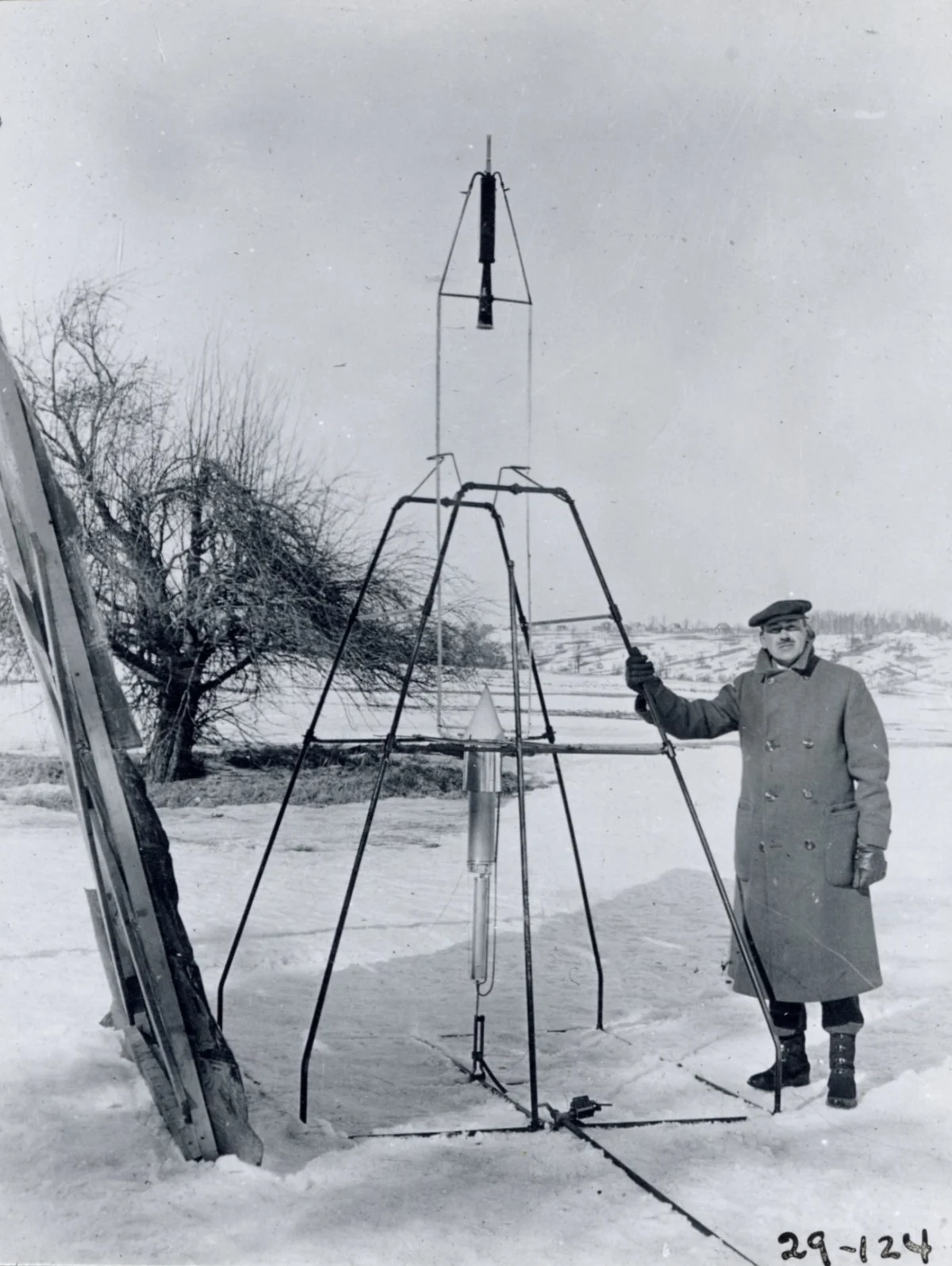
The culmination of years of tireless research, design, and experimentation arrived on a cold, blustery Tuesday, March 16, 1926. At his Aunt Effie’s farm in Auburn, Massachusetts, Goddard, aided by his wife Esther and a small team, prepared his latest creation. The rocket, affectionately nicknamed "Nell," was an unassuming contraption by modern standards: a slender, 10-foot-tall metal cylinder, weighing approximately 6 pounds (2.7 kg), mounted on a launch frame. Its innovative design placed the engine at the top and the fuel tanks below, a configuration that allowed for greater stability—a concept later adopted in various forms.
Unlike the solid-fueled rockets of the time, which had been used for centuries (dating back to ancient China for fireworks and warfare), Goddard’s design employed liquid oxygen as the oxidizer and gasoline as the fuel. This choice was revolutionary. Liquid propellants offered several distinct advantages: they could be throttled for controlled thrust, provided higher specific impulse (efficiency), and allowed for more precise control over the burn duration. However, they also presented significant engineering challenges, including cryogenic storage, complex pumping systems, and ignition sequences.
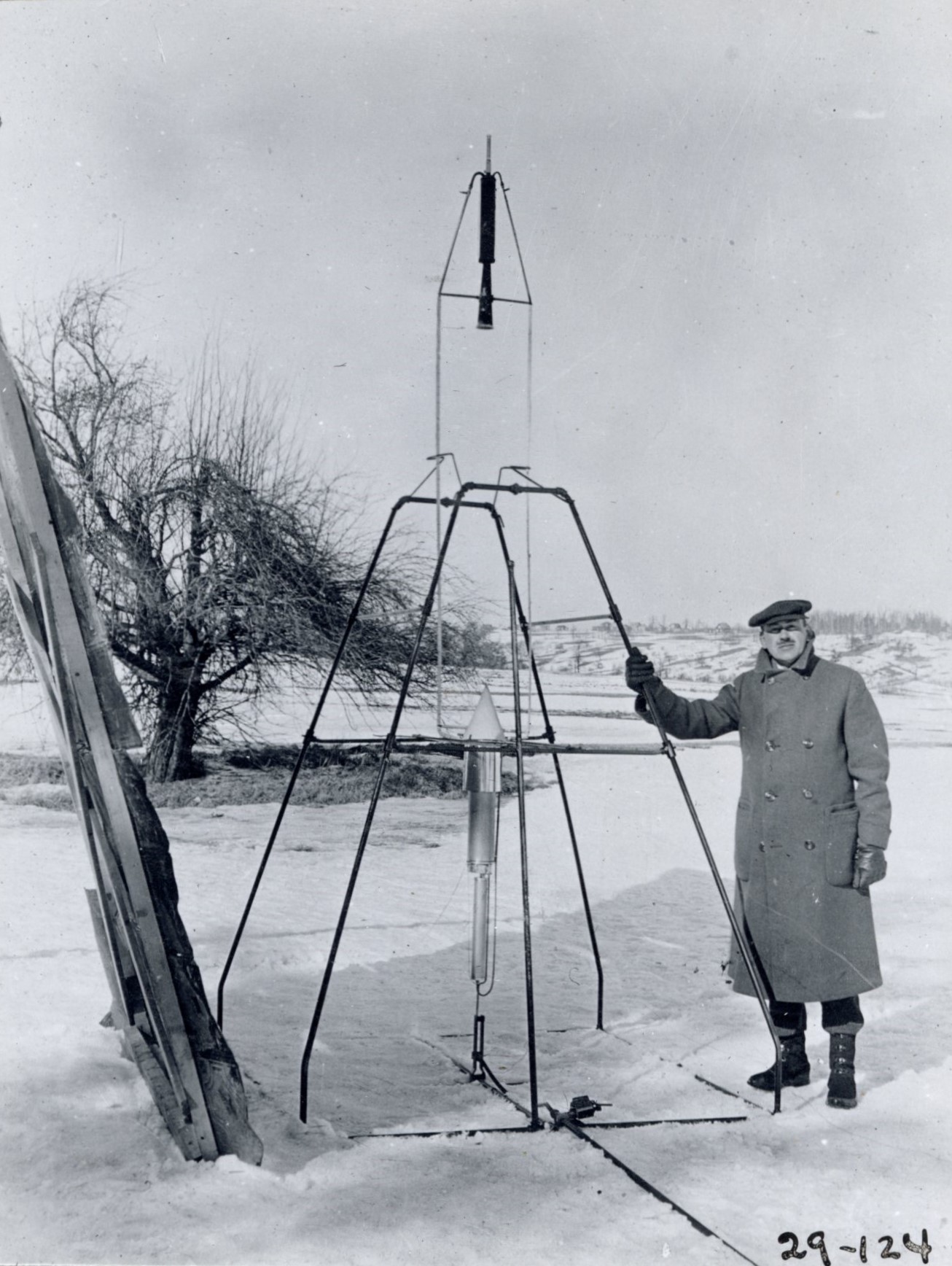
At precisely 1:00 PM EST, after several false starts and meticulous adjustments, the rocket engine ignited with a roar. For a mere 2.5 seconds, "Nell" defied gravity, ascending to an altitude of 41 feet (12.5 meters) before arcing gracefully and landing 184 feet (56 meters) away in a snow-covered cabbage patch. While the flight duration and altitude seem negligible compared to today’s colossal rockets, the significance was monumental. It was irrefutable proof that liquid-fueled rocket propulsion was not merely a theoretical concept but a viable technology capable of producing thrust and achieving flight.
"The experiment was a small step, almost imperceptible to the wider world at the time, but it represented a giant leap in our understanding of what was possible," remarked Michele Ostovar, NASA History Communications Lead. "Goddard’s meticulous documentation and relentless pursuit of this vision laid the groundwork for everything that followed."
Goddard’s Continued Innovations and the Challenges of Progress
The 1926 launch was not an endpoint but a catalyst for Goddard’s subsequent work. Undeterred by initial public indifference and the significant financial strain of his research, he continued to refine his designs. Over the next two decades, his list of innovations grew impressively. He developed gyroscopic stabilization systems for rockets, pioneering methods for steering rockets in flight. He invented effective pumps for liquid propellants, crucial for delivering fuel to the combustion chamber under high pressure. Furthermore, he designed engines that could pivot on gimbals, allowing for vectoring of thrust—a fundamental technique for controlling rocket trajectories still used today.
Seeking more secluded testing grounds away from public scrutiny and potential hazards, Goddard moved his operations to Roswell, New Mexico, in 1930, supported by philanthropic funding, notably from Daniel Guggenheim. Here, with greater resources and freedom, he achieved more impressive flights, with rockets reaching altitudes of several thousand feet and speeds exceeding 500 miles per hour. He experimented with various fuels, improved thrust chambers, and developed sophisticated launch control systems.
Despite these advancements, Goddard remained largely isolated from the broader scientific and engineering communities, partly due to his secretive nature and partly due to the prevailing skepticism. His work was often ahead of its time, and he struggled to secure consistent, substantial government funding, which would later become commonplace for aerospace research. Tragically, many of his innovations were independently rediscovered or developed by others, particularly in Nazi Germany during World War II, where figures like Wernher von Braun rapidly advanced rocket technology, culminating in the V-2 ballistic missile. Goddard, however, continued his research, even contributing to U.S. Navy jet-assisted take-off (JATO) projects during the war, until his death in 1945, just weeks before the atomic bombings of Hiroshima and Nagasaki, and before the true dawn of the Space Age his work had enabled.
The Legacy: From Goddard to the Space Age and Beyond
The true impact of Goddard’s work became fully evident in the post-war era. The V-2 rocket, developed under von Braun using many principles Goddard had independently discovered, demonstrated the devastating potential of rocketry, but also its immense capability. With the Cold War escalating, the race for supremacy in missile technology and, subsequently, space exploration, became a defining geopolitical contest.
Goddard’s pioneering spirit found its ultimate expression in the U.S. space program. Wernher von Braun, upon arriving in the United States, openly acknowledged Goddard’s profound influence, stating, "Goddard was ahead of us all." The development of the Jupiter-C and Saturn V rockets, which propelled the first American satellites and astronauts to the Moon, owed a direct intellectual debt to Goddard’s fundamental research on liquid propulsion, staging, and guidance. The very engines that powered the Apollo missions, like the F-1 and J-2, were sophisticated descendants of the simple combustion chamber Goddard tested in a cabbage patch.

"Without Goddard’s relentless dedication and groundbreaking experiments, the dream of reaching space would have remained precisely that—a dream for much longer," noted Monika Luabeya, another voice from the historical perspective. "His work provided the essential blueprint, proving that liquid fuels were the key to overcoming Earth’s gravity."
Modern Applications and Future Prospects: A Continuing Evolution
Today, liquid-fueled rockets remain the workhorse of global space operations. They are indispensable for launching a vast array of satellites that profoundly impact daily life:
- Navigation: GPS and Galileo constellations, critical for everything from smartphone maps to precision agriculture.
- Communication: Geostationary and low-Earth orbit satellites providing internet, television, and telephone services worldwide.
- Weather Forecasting: Meteorological satellites offering crucial data for predicting weather patterns, monitoring climate change, and issuing storm warnings.
- Earth Observation: Remote sensing satellites monitoring environmental changes, urban growth, and natural disasters.
- Scientific Research: Space telescopes like Hubble and James Webb, and interplanetary probes like Voyager, Curiosity, and Europa Clipper, all launched by liquid-fueled rockets, expanding our knowledge of the universe.
The advancements in liquid-fueled rocket technology have been staggering since Goddard’s inaugural flight. Modern engines, like the SpaceX Merlin, Blue Origin BE-4, and the Space Launch System’s RS-25, generate millions of pounds of thrust, capable of lifting tens of thousands of kilograms into orbit. These rockets often incorporate reusable components, advanced manufacturing techniques like 3D printing, and new propellants, including methane and liquid hydrogen, which offer higher performance and cleaner combustion. The pursuit of even more efficient and sustainable space travel continues, with concepts like nuclear thermal propulsion and advanced electric propulsion systems building upon the fundamental principles of propellant energy conversion.
The economic impact of the space industry, largely dependent on reliable launch capabilities provided by liquid-fueled rockets, is immense. Valued at over $400 billion annually and projected to grow significantly, it drives innovation across numerous sectors, creates high-tech jobs, and fosters international collaboration.
Official Recognition and Ongoing Impact
While Goddard faced significant struggles for recognition during his lifetime, his legacy is now universally acknowledged. NASA’s Goddard Space Flight Center in Greenbelt, Maryland, one of the agency’s premier scientific laboratories, stands as a lasting tribute to his contributions. The scientific community and the public now appreciate the sheer audacity and foresight of his vision.
As we mark the centennial of his first liquid-fueled rocket launch, Dr. Robert H. Goddard’s quiet experiment on a Massachusetts farm resonates louder than ever. It serves as a powerful reminder that monumental achievements often begin with small, determined steps, fueled by unwavering curiosity and an unshakeable belief in the impossible. His pioneering work not only laid the scientific and engineering foundation for spaceflight but also instilled in humanity the enduring aspiration to reach for the stars, an ambition that continues to drive exploration, innovation, and our collective future in the cosmos.