


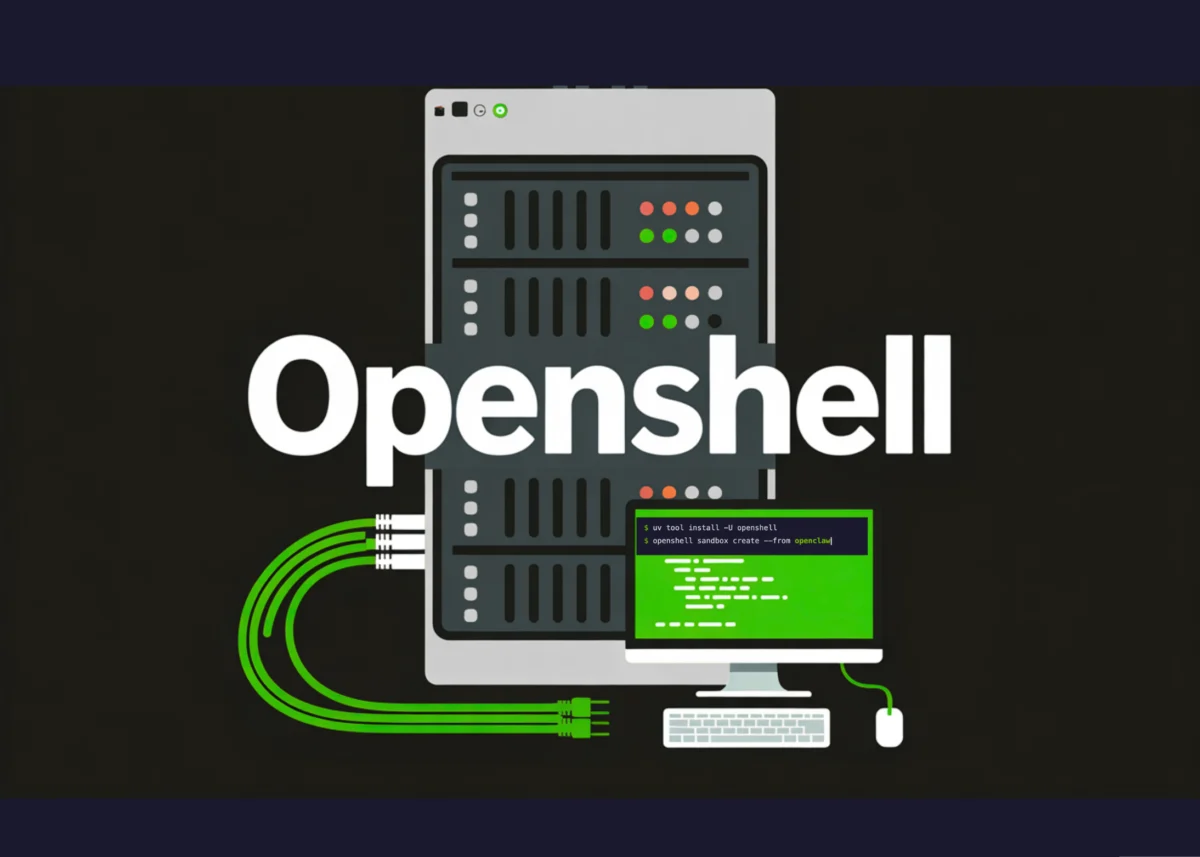
The global technology landscape is currently witnessing a fundamental shift in the deployment of artificial intelligence, moving away from passive large language models (LLMs) toward autonomous AI agents capable of independent action. While traditional AI applications are largely confined to text-based interactions, autonomous agents are designed to interact with the physical and digital world by executing code, accessing file systems, and utilizing network endpoints. This evolution, however, introduces a critical security paradigm: how to grant an AI the power to operate a system without exposing that system to catastrophic failure or unauthorized intrusion. To address this mounting challenge, NVIDIA has announced the release of OpenShell, a dedicated, open-source runtime environment designed to provide a secure "sandbox" for the execution of autonomous agents. Released under the permissive Apache 2.0 license, OpenShell represents a significant step in standardizing the safety protocols required for the next generation of agentic AI.
The Rise of Agentic AI and the Emergence of the Security Gap
The trajectory of generative AI has progressed rapidly from simple autocomplete functions to sophisticated reasoning engines. In 2024 and 2025, the industry began prioritizing "agentic workflows"—systems where the AI does not just suggest a solution but takes the necessary steps to implement it. This includes writing and debugging code, managing cloud infrastructure, or conducting automated market research.
However, the "black box" nature of modern neural networks creates a unique vulnerability. When an LLM is given access to a shell environment, it can theoretically execute any command it generates. If the model hallucinates or is manipulated through prompt injection, it might inadvertently delete critical system files, exfiltrate sensitive data to an external server, or create backdoors in a company’s network. Traditional security measures, which focus on user authentication and static firewalls, are often ill-equipped to manage the dynamic and unpredictable nature of AI-generated commands. OpenShell is positioned as the missing architectural layer that sits between the AI’s "brain" and the host operating system’s "hands."
Architectural Foundations: Sandboxing and Kernel-Level Isolation
At its core, OpenShell functions as a protective buffer, ensuring that an agent’s capabilities are restricted by a predefined security posture rather than relying solely on the model’s internal safety alignment. The primary mechanism for this protection is kernel-level isolation. OpenShell utilizes the Landlock Linux Security Module (LSM), a feature of the Linux kernel that allows processes to restrict their own access to the file system and other resources.
By leveraging Landlock, OpenShell creates an ephemeral execution environment—a temporary workspace that exists only for the duration of a specific task. Within this sandbox, any code generated by the agent, whether it is a complex Python script or a sequence of Bash commands, is executed in total isolation. If the agent attempts to access sensitive host files or modify system configurations that fall outside its permitted scope, the kernel-level protections intercept and block the action instantly. This prevents the "jailbreaking" of the host system, ensuring that even if an agent is compromised, the damage is contained within the restricted environment.
Granular Governance Through Policy-Enforced Access Control
Unlike standard containerization tools like Docker, which often provide broad, all-or-nothing permissions, OpenShell introduces a granular policy engine tailored specifically for AI interactions. This governance core allows developers to define precisely what an agent can and cannot do at the application layer (Layer 7).
The policy engine supports several critical restrictions:
- Binary Execution Limits: Developers can specify exactly which binaries (e.g.,
git,pip,ls) the agent is allowed to run, preventing the use of potentially dangerous tools likermorformat. - Network Constraints: OpenShell can restrict the agent to specific domains or IP addresses, preventing unauthorized data exfiltration to unknown external servers.
- File System Scoping: Agents can be restricted to specific directories, ensuring they cannot read or write to system-critical paths or user-sensitive data folders.
A hallmark of this system is its "explainability." Every action requested by the agent, along with the subsequent decision made by the OpenShell policy engine, is recorded in a comprehensive audit log. This provides a transparent trail for security teams to review, which is essential for both debugging complex agent behaviors and maintaining regulatory compliance in industries like finance and healthcare.
Private Inference Routing and Data Sovereignty
A significant concern for enterprises deploying autonomous agents is the risk of data leakage to external model providers. When an agent processes a task, it often sends prompts containing internal code or proprietary data to a cloud-based LLM. OpenShell addresses this through a dedicated layer for private inference routing.
This mechanism intercepts the traffic between the agent and the model provider. It allows organizations to enforce privacy constraints by scrubbing sensitive information before it leaves the local environment or by routing specific high-sensitivity tasks to locally hosted models (such as those running on NVIDIA NIMs) while sending general tasks to the cloud. Furthermore, this routing layer enables cost management, allowing administrators to set budgets on token usage and switch between different model providers without needing to modify the agent’s underlying logic.
An Agent-Agnostic Approach to Integration
One of the most strategic aspects of NVIDIA’s OpenShell release is its agent-agnostic design. The AI ecosystem is currently fragmented, with developers using a wide array of frameworks such as LangChain, AutoGPT, Claude Code, or custom-built systems. Rather than forcing developers to adopt a new SDK or rewrite their existing agents, OpenShell acts as a runtime wrapper.
This means that a security team can implement OpenShell across an entire organization, providing a consistent security layer regardless of whether a specific department is using OpenAI’s GPT-4o, Anthropic’s Claude, or a fine-tuned Llama 3 model. By standardizing the environment in which these agents operate, NVIDIA is attempting to provide the "industry standard" for AI safety infrastructure, much like how Kubernetes became the standard for container orchestration.
Developer Workflow: CLI, TUI, and Remote Execution
NVIDIA has designed OpenShell to fit seamlessly into existing developer workflows. The tool includes a Command Line Interface (CLI) and a Terminal User Interface (TUI), allowing engineers to monitor agent behavior in real-time.
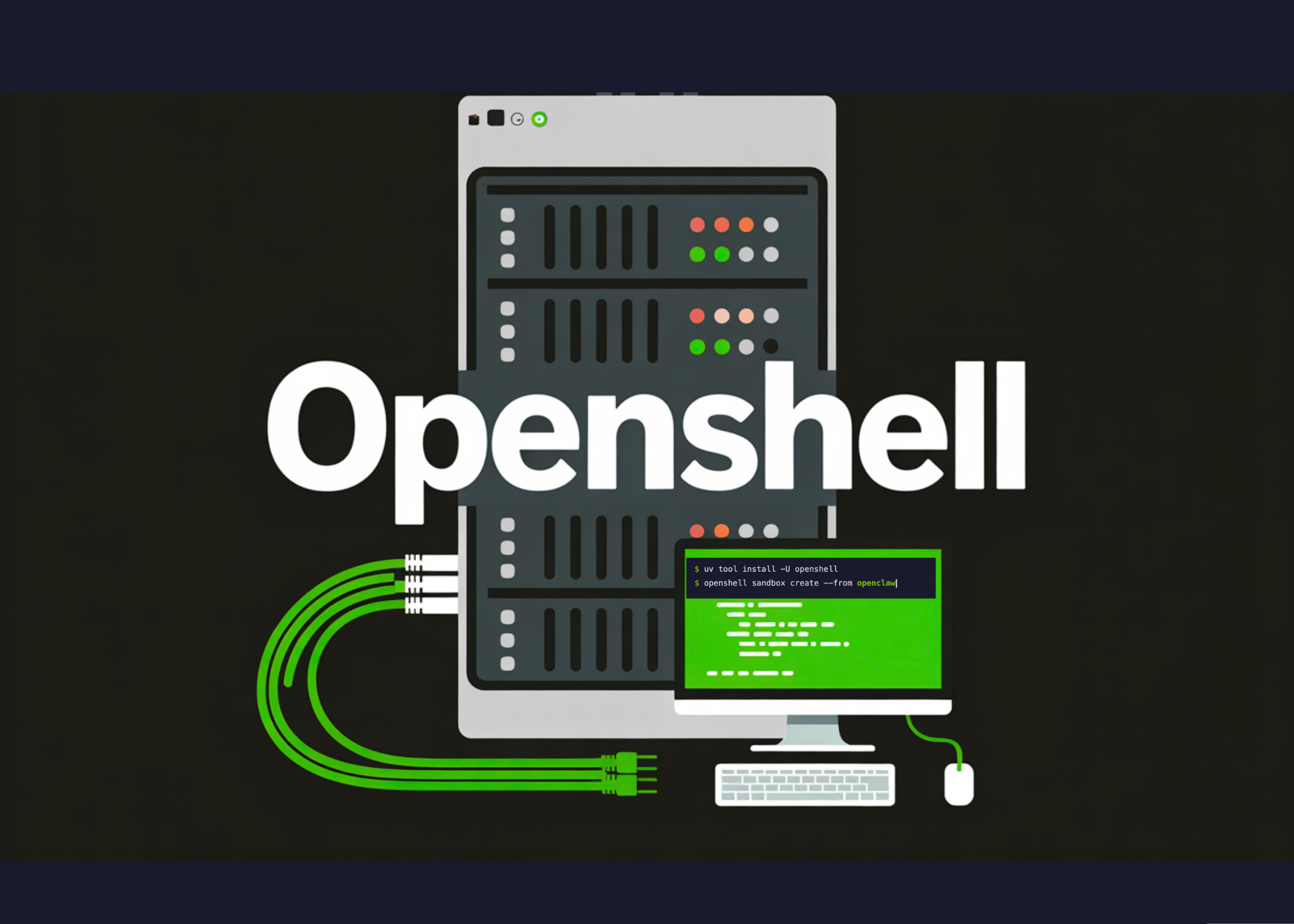
Initialization of a secure sandbox is handled through simple commands, such as openshell sandbox create. Once a sandbox is active, developers can enter a monitoring terminal to observe the agent’s step-by-step execution. A particularly powerful feature is the support for live policy updates. If an agent is mid-task and requires a permission that was initially blocked (such as access to a specific library), a developer can update the policy file on the fly. OpenShell applies these changes immediately without requiring a restart of the sandbox, maintaining the continuity of the agent’s reasoning process.
For large-scale industrial applications, OpenShell supports remote sandbox execution. This allows a developer working on a local laptop to manage and monitor a sandbox running on a high-performance GPU cluster or a secure cloud environment. This capability is vital for training and deploying "self-evolving" agents that require significant compute power to test and iterate on their own code.
Chronology of Development and Market Context
The release of OpenShell comes at a time when the AI industry is facing increased scrutiny regarding safety. In early 2024, several high-profile reports highlighted the ease with which autonomous coding assistants could be tricked into executing malicious packages. By mid-2024, the "AI Safety" movement had gained significant traction, leading to the AI Safety Summit and various executive orders regarding the responsible development of artificial intelligence.
NVIDIA’s decision to open-source OpenShell under the Apache 2.0 license is a calculated move to foster an ecosystem. By making the code available to the community, NVIDIA encourages widespread adoption and allows security researchers to contribute to the robustness of the sandboxing technology. This follows NVIDIA’s broader strategy of providing the full "stack" for AI—from the H100 and Blackwell chips at the hardware layer to the CUDA and NIM software layers, and now the security runtime layer.
Broader Impact and Industry Implications
The implications of OpenShell extend far beyond simple script execution. As organizations move toward "AI Employees"—agents that can manage calendars, write software, and interact with customers—the need for a "Trusted Execution Environment" becomes non-negotiable.
Industry analysts suggest that the lack of secure runtimes has been one of the primary "bottlenecks" preventing the enterprise adoption of autonomous agents. While many companies have experimented with agents in "read-only" modes, they have been hesitant to grant "write" access to their systems. OpenShell provides a technical solution to this trust gap. By ensuring that an agent can only operate within a strictly defined "playpen," enterprises can finally begin to automate complex workflows that involve sensitive data and critical infrastructure.
Furthermore, OpenShell sets a precedent for how AI hardware companies might influence the software security landscape. By optimizing OpenShell for Linux-based environments commonly found in data centers, NVIDIA is reinforcing its dominance in the infrastructure that powers the modern web.
Conclusion: Toward a Future of Governed Autonomy
OpenShell represents a foundational shift in how the industry approaches AI safety. It moves the conversation away from the theoretical alignment of model weights and toward the practical, physical containment of model actions. By providing kernel-level isolation, granular L7 policy enforcement, and private inference routing, NVIDIA has delivered a comprehensive toolkit for the safe deployment of autonomous systems.
As the AI community continues to push the boundaries of what autonomous agents can achieve, tools like OpenShell will be essential in ensuring that these systems remain a benefit to productivity rather than a liability to security. The move toward open-sourcing this technology ensures that safety is not a proprietary feature but a common standard, paving the way for a future where autonomous agents can work alongside humans in a secure, transparent, and governed digital environment.