

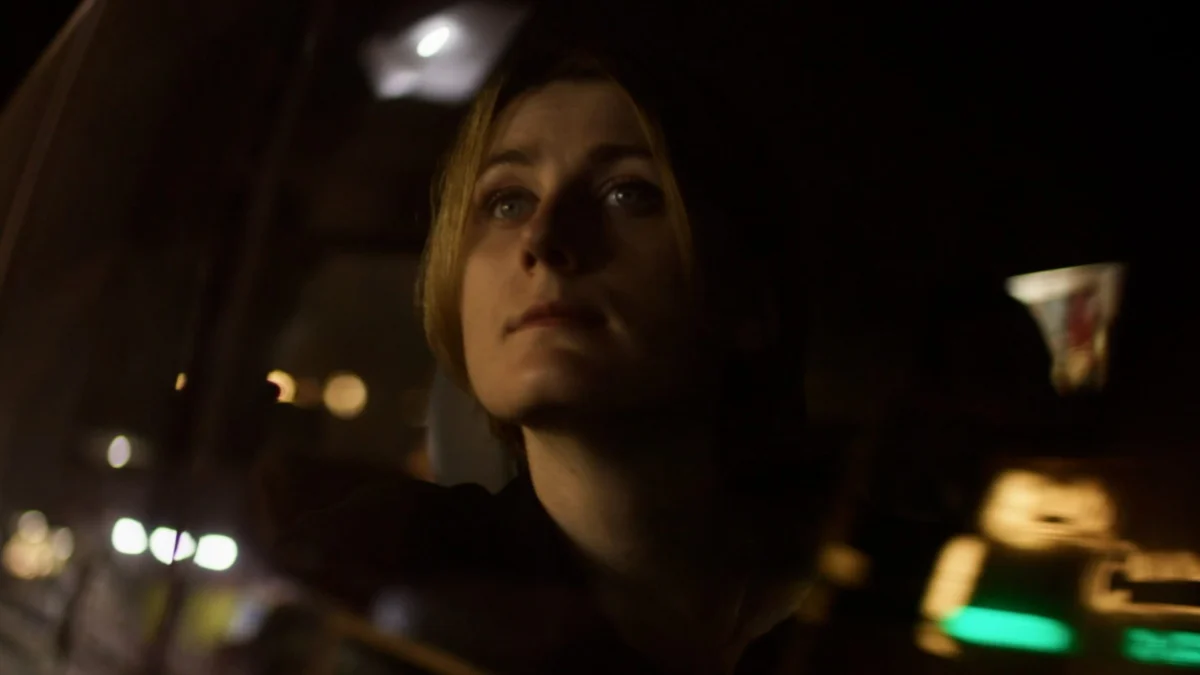
More than a decade ago, the Wagner Group began its ascent as arguably the world’s most formidable mercenary army, operating in the shadows of global affairs, far from the scrutiny of mainstream attention. Among the few dedicated to exposing its clandestine operations was dissident Russian journalist Katya, who was driven by a conviction that this represented "a new model of violence that is transforming the world for all of us." This chilling observation serves as the bedrock for "Hell’s Army," a compelling new documentary from Oscar nominee and three-time Emmy winner Richard Rowley, renowned for his previous works such as "Dirty Wars" and "Kingdom of Silence."
The documentary premiered at the 23rd edition of the Copenhagen International Documentary Film Festival (CPH:DOX), offering an unflinching look inside the opaque world of private military companies. Rowley, alongside exiled police detective Denis, meticulously traces the genesis of the Wagner Group and its enigmatic, now-deceased leader, Yevgeny Prigozhin. Their investigation delves into Prigozhin’s meteoric rise, his eventual defiance against the Russian state, and his demise in a catastrophic plane crash, painting a vivid picture of a shadow army that has profoundly reshaped geopolitical landscapes.
"Hell’s Army," written and directed by Rowley, is produced by Richard Butler, Atanas Georgiev, Odessa Rae, Rebecca Teitel, and Caitlin McNally. The film benefits from the support of executive producers Scott Norville for Evergreen Productions and Kris Kucinskas and Maria Logan for The Dossier Center, an investigative organization significantly funded by Russian dissident Mikhail Khodorkovsky. International sales for the documentary are being handled by Midnight Films.
In an interview conducted in Copenhagen, Rowley elaborated on the film’s genesis, the global proliferation of mercenaries, the intertwined rise of oligarchy and authoritarianism, and his fervent belief that "Hell’s Army" serves as a critical warning for contemporary society.
The Genesis of a Shadow Army
Rowley’s fascination with mercenary forces dates back to his early reporting. "I’ve been tracking mercenaries since I first saw them in the field in Iraq, way back in 2004," he explained. "It was their reemergence on the battlefield that signaled a terrifying potential in war. When Wagner emerged and came out of the shadows, it was clear that mercenaries had entered a completely new paradigm." He underscored the sheer scale of Wagner’s operations, noting that the group fielded an estimated 30,000 soldiers at its peak, making it larger than the armies of many European nations. The documentary highlights a significant historical milestone: Wagner’s involvement in the conquest of a European city, an event unprecedented in approximately 500 years, solidifying its status as a force that demanded urgent investigation.
Unearthing the Truth: The Role of Katya and Denis
The film’s investigative backbone is provided by Katya and Denis, whose unique skills and access were crucial to unraveling Wagner’s complexities. "You can’t make a film about Wagner without talking to Denis, who revealed their existence for the first time and has cultivated an unmatched network of sources on the inside of the organization. He knows it inside and out," Rowley stated. Denis, an exiled former police detective, served as the primary conduit to Wagner’s inner workings, leveraging his deep understanding and extensive network.
Denis’s introduction to Katya and the team at The Dossier Center proved pivotal. Katya, a seasoned investigative journalist, brought on-the-ground reporting from conflict zones, immersing the audience in the stark realities faced by those affected by mercenary operations. "It’s a unique combination. We have, on the one hand, Denis with his sources, and Katya, who’s on the ground in the field, immersing us, taking us to the battlefield and showing us on the ground what this means," Rowley elaborated. The Dossier Center’s access to a vast archive of internal documents further enriched the investigation, allowing for a narrative that was both globally scoped and intimately detailed, capturing the harrowing experiences on the front lines.

Navigating Perilous Terrain: Security and Risk
The inherent danger in investigating organizations like Wagner necessitated stringent security protocols. "The Dossier team has significant security protocols," Rowley emphasized. Both The Dossier Center and Katya are designated as undesirable entities by the Russian state, placing them on watchlists and posing significant personal risks. Katya’s experience in Syria, where she was identified as a target and faced potential arrest, underscores the grave threats faced by those who dare to expose these operations. The filmmakers, therefore, dedicated considerable effort to planning and implementing measures to ensure the safety of their sources and themselves.
Rowley’s own presence in the field was integral to capturing the visceral impact of these conflicts. "I had to be everywhere because I also shoot, and it’s really important for me to immerse the audience in the specificity of each location," he said. This immersion extended beyond visual and auditory elements to capturing the palpable atmosphere of fear and tension, such as the oppressive environment in Syria or the public grief witnessed in Ukraine.
While acknowledging the necessity of private security in certain high-risk areas, Rowley stressed that true safety stems from trusted local collaborators. "What makes you safe is having local people whom you trust, who you can work with," he noted. He also highlighted the profound risks undertaken by these local colleagues, emphasizing that the filmmakers’ own dangers paled in comparison to those faced by individuals on the ground who facilitate their work.
A Tapestry of Human Experience and Moral Ambiguity
"Hell’s Army" presents a diverse cast of characters who inhabit the moral gray zones of mercenary warfare. The film features accounts from individuals such as an AWOL Wagner colonel in Turkish Cyprus, a lieutenant managing operations in the Central African Republic with a prosthetic hand, and a former prisoner recruited into Wagner who subsequently escaped after enduring brutal combat in Ukraine. "Mercenaries occupy this gray zone at the extremities of human morality and experience," Rowley observed. "They’re always fascinating, and their stories are always revealing."
Rowley acknowledged the inherent suspicion he and his team encountered. "First of all, they’re all very suspicious of us," he admitted. The motivations for individuals to speak out were varied and complex. Some sought a form of redemption, like Igor, who was grappling with his future. Others, Rowley surmised, may have spoken to gauge the filmmakers’ knowledge or intentions.
However, Rowley’s approach is rooted in genuine curiosity and a desire to understand rather than to sensationalize. "People want to talk. Everyone wants to talk. And I approach everyone with genuine curiosity. I really want to know how he ended up being who he is in this complex, gray world they operate in," he stated. This non-judgmental stance, focused on allowing subjects to articulate their experiences and self-perception, often led to deeper revelations. "I’m not setting them up for gotcha questions and going to piece together something to misrepresent them. I want them to articulate as clearly as possible who they are and how they became who they are, and how they understand their role in the world. People feel that, and they open up when you approach them like that."
The Escalating Global Mercenary Trend
Despite the death of Yevgeny Prigozhin, the phenomenon of mercenary warfare shows no signs of abating; rather, it has metastasized. In regions like Mali and the Central African Republic, Wagner’s operations continue with little alteration. Elsewhere, fighters have dispersed into other private military formations, with some even joining Western-backed mercenary companies operating across Africa and Europe.
The Wagner brand itself has been co-opted by Russia for its hybrid warfare campaigns. The Associated Press has documented approximately 125 acts of hybrid warfare in Europe attributed to Russia, including attempted assassinations, kidnappings, and sabotage, underscoring the continued and evolving threat posed by these shadowy networks.

The global surge in mercenary activity is stark. The United Arab Emirates maintains a mercenary force deployed in Yemen and Libya. Mercenaries hired from Florida were implicated in the assassination of the President of Haiti. Rowley characterizes this as a "terrifying new paradigm." He posits a direct correlation between the rise of mercenary armies and the erosion of democratic governance. "Democracies don’t need mercenary armies. Mercenary armies are what states turn to when they’ve been taken over by oligarchs and authoritarians who are running the state for their private ambitions and their private gain."
A Warning for the Future
Rowley views "Hell’s Army" as a crucial warning, particularly for Western democracies. He expresses concern that societies, including the United States, are "well on the road to an authoritarian future where our culture and politics are ruled by oligarchs or significantly influenced by oligarchs." The film aims to illustrate the dire consequences of such a trajectory, where war becomes a tool for personal enrichment and ambition, corrupting soldiers into perpetrators of violence and debasing the nation itself.
"It’s about democracy," Rowley asserted. "In a democratic system, you don’t have mercenaries, because one of the core functions of the state and of government is to have a monopoly on violence and to control the army so that wars are only fought when they serve some collective moral purpose." He argues that the current era marks the collapse of the post-war liberal order, a development that necessitates active defense. The brazenness with which these activities are conducted, often with little attempt at concealment, is a cause for significant alarm.
The Moment Wagner Went Public
A pivotal and "craziest" moment during the film’s production was the abrupt public emergence of the Wagner Group. For years, Katya and Denis had toiled to expose its hidden operations. The irony was not lost on Rowley when Wagner, the very entity they sought to unmask, suddenly stepped into the spotlight, particularly following Russia’s invasion of Ukraine, with its leader granting interviews to major publications like The New York Times.
This development cast a shadow of doubt over their arduous efforts. "What is the purpose and the value of all the risks that you’ve taken? Colleagues have died exposing these crimes, and these crimes have now become a celebrated part of this brand. And the brand is brutality, the brand is war crimes," Rowley reflected. The response from Katya and Denis was a resolve to delve even deeper, to expose the systemic underpinnings that facilitate such violence, making it not only possible but perhaps even inevitable.
Continuing the Fight
Rowley indicated that his current projects remain within a similar thematic realm, exploring the profound revelations that war brings to light. "I have a new project in the same sort of universe as ‘Hell’s Army,’" he stated. "I’ve been making films about war in one way or another for 30 years, because it feels to me that wars reveal us at our extremities. The symptoms of our darkest cultural sicknesses become visible." This ongoing commitment underscores his belief in the critical role of investigative journalism and filmmaking in understanding and confronting the most disturbing aspects of contemporary global affairs.