

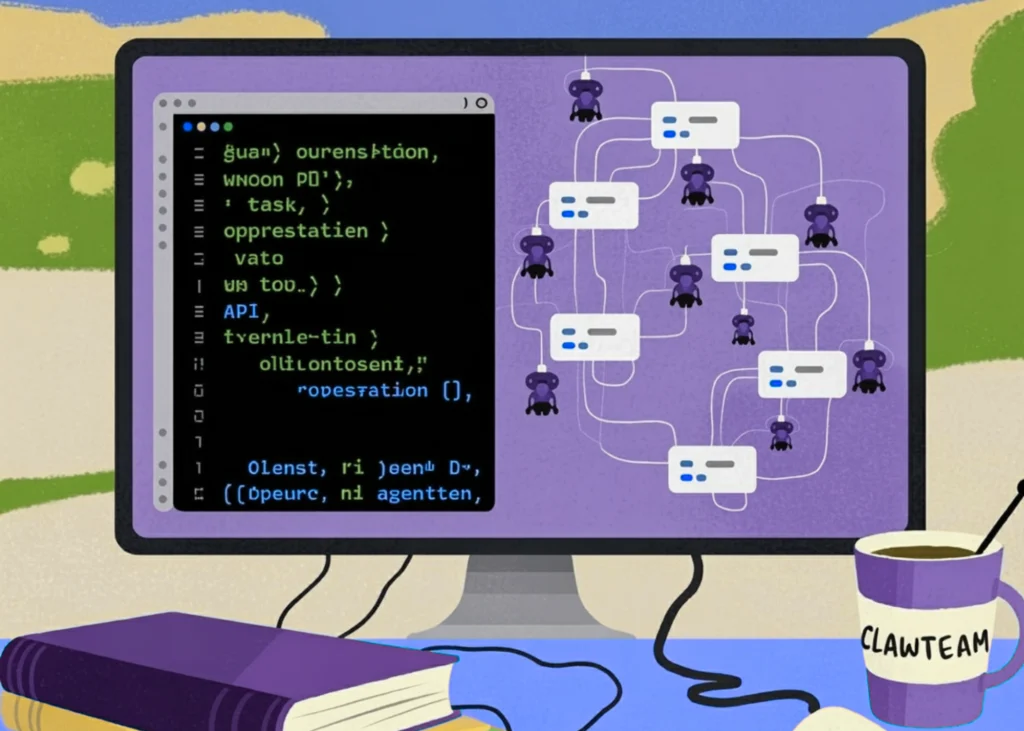
The University of Hong Kong Data Science Lab (HKUDS) has introduced ClawTeam, an open-source framework designed to operationalize Agent Swarm Intelligence (ASI) through a structured, multi-agent orchestration environment. This development marks a significant shift in the evolution of autonomous AI, moving beyond single-prompt interactions toward complex, collaborative ecosystems where specialized agents operate under a unified leadership structure. By releasing a comprehensive tutorial optimized for Google Colab, the HKUDS team has lowered the barrier to entry for developers and researchers, allowing for the deployment of sophisticated agent swarms using standard API keys rather than the complex local infrastructure typically required for such systems.
The Evolution of Multi-Agent Systems and the Rise of Swarm Intelligence
The trajectory of artificial intelligence over the past twenty-four months has transitioned rapidly from Large Language Models (LLMs) acting as passive knowledge retrieval tools to "agentic" systems capable of executing multi-step workflows. While early iterations like AutoGPT and BabyAGI demonstrated the potential for autonomous task completion, they often struggled with "hallucination loops" and a lack of coordination when multiple tasks were required simultaneously.
ClawTeam addresses these limitations by implementing a "Swarm Intelligence" model. This approach is inspired by decentralized, self-organized systems found in nature, such as ant colonies or beehives, where simple individual behaviors lead to complex collective problem-solving. In the digital context, ClawTeam provides the "connective tissue"—the communication protocols and task management structures—necessary for multiple LLM instances to work in concert without human intervention.
The framework’s core philosophy centers on the separation of concerns. Rather than asking a single, massive model to handle every facet of a complex project, ClawTeam decomposes the objective into sub-tasks assigned to specialized "workers." This modularity not only improves the accuracy of the output but also allows for parallel processing, significantly reducing the time required to complete large-scale research or engineering projects.
Architectural Foundations: The Triad of Coordination
At the heart of the ClawTeam framework are three foundational systems that manage the lifecycle of a task from inception to synthesis. These components—the Task Board, the Inbox System, and the Team Registry—mirror the organizational structures of high-functioning human teams.
The Automated Task Board and Dependency Resolution
The Task Board serves as the central nervous system of the swarm. Unlike a static list of to-do items, the ClawTeam Task Board utilizes an automated dependency resolution engine. Tasks are categorized by status: pending, in-progress, completed, blocked, or failed. A critical innovation in this architecture is the "blocked_by" dependency chain. In complex workflows, Task B often cannot begin until Task A is finished. The Task Board monitors these relationships in real-time; as soon as a prerequisite task is marked as "completed," the system automatically transitions dependent tasks from "blocked" to "pending," alerting the relevant worker agent that it is time to begin.
The Inter-Agent Inbox System
Effective collaboration requires robust communication. ClawTeam implements an Inbox System that facilitates both point-to-point and broadcast messaging. Each agent is assigned a unique digital inbox, allowing the leader agent to send specific instructions and worker agents to report findings. This system supports thread-safe concurrent operations, ensuring that messages are delivered and retrieved without data corruption, even when dozens of agents are communicating simultaneously.
The Team Registry and Role Specialization
To maintain order within the swarm, the Team Registry tracks the metadata of every active participant. This includes the agent’s name, assigned role, current status, and a count of completed tasks. By maintaining a global registry, the framework ensures that the leader agent has a clear overview of the swarm’s capacity and can reassign tasks if a specific worker encounters a failure.
The Operational Workflow: From Human Goal to Synthesized Report
The execution of a ClawTeam swarm follows a rigorous six-phase pipeline designed to ensure consistency and quality. The process begins with the "Leader Agent," a high-level orchestrator tasked with strategic planning.
Phase 1: Strategic Decomposition
When a human user provides a high-level goal—such as "Conduct a comprehensive analysis of a semiconductor stock"—the Leader Agent does not perform the research itself. Instead, it analyzes the goal and produces a structured JSON blueprint. This blueprint outlines 3 to 5 specific sub-tasks, defines the roles required to complete them (e.g., Financial Analyst, Sentiment Researcher, Technical Chartist), and establishes the dependency logic between them.
Phase 2 through 4: Infrastructure, Spawning, and Execution
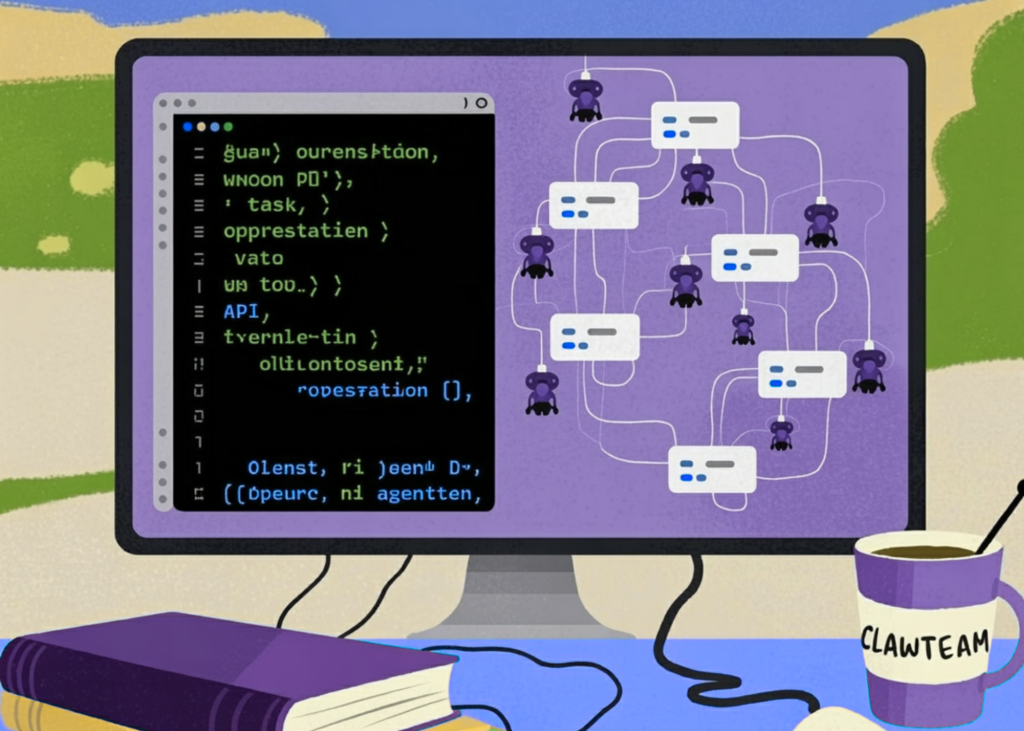
Once the plan is finalized, the framework initializes the necessary infrastructure and "spawns" the worker agents. Each agent is injected with a "Coordination Protocol" in its system prompt, which informs the agent of its identity, its role within the team, and the specific tools it has at its disposal, such as task_list and inbox_send.
The execution phase occurs in iterative rounds. During each round, worker agents check the Task Board for pending assignments. When an agent identifies a task it owns, it marks the status as "in-progress," performs the required reasoning or data analysis, and then updates the board with its findings. This iterative process continues until all tasks in the dependency chain are resolved.
Phase 5 and 6: Synthesis and Dashboard Reporting
The final stage of the workflow involves the Leader Agent retrieving all individual worker outputs from the Task Board. The leader then performs a "synthesis" operation, identifying connections between different workers’ findings and resolving any conflicting information. The result is a coherent, comprehensive final report that provides actionable insights. To ensure transparency, the framework generates a Rich-powered dashboard, providing a visual Kanban board and agent roster that allows human supervisors to audit the swarm’s performance.
Practical Applications and Industry Templates
To demonstrate the versatility of the framework, HKUDS has included several pre-built "team templates" that represent common high-value use cases for multi-agent swarms.
- AI Hedge Fund: This template deploys a team of analysts to evaluate investment potential. Specialist agents cover value investing fundamentals, growth metrics, technical indicators, and news sentiment. The swarm concludes with a unified buy/hold/sell recommendation.
- Research Swarm: Designed for academic or industrial deep-dives, this team explores the background, current challenges, recent breakthroughs, and future outlook of any given topic, ensuring a multi-perspective analysis.
- Engineering Team: This template focuses on software architecture. Agents are tasked with requirements analysis, component design, API modeling, and security auditing, providing a holistic blueprint for complex technical projects.
Technical Analysis of Implications and Accessibility
The release of this tutorial is particularly significant due to its focus on accessibility. The original ClawTeam command-line interface (CLI) required a complex environment including tmux sessions, git worktrees, and filesystem-based message queues. These requirements often acted as a barrier for non-engineers or those without access to dedicated server infrastructure.
By re-implementing the core logic to run within Google Colab using OpenAI’s function-calling API, HKUDS has demonstrated that the logic of swarm intelligence is more important than the specific infrastructure used to host it. This move toward "serverless" agent orchestration suggests a future where complex AI teams can be deployed as easily as a single chat query.
Furthermore, the use of gpt-4o-mini as the default model for these swarms highlights a shift toward cost-efficiency. By delegating specific, narrow tasks to smaller, faster models, organizations can achieve results comparable to larger models at a fraction of the computational cost and latency.
Community Reaction and Future Outlook
Early reactions from the machine learning community have highlighted ClawTeam’s structured approach to "agentic" workflows as a necessary evolution. "The primary challenge in AI today isn’t just getting a model to think; it’s getting a group of models to coordinate," noted one independent AI researcher following the release. "ClawTeam’s use of a centralized Task Board with dependency resolution provides a level of reliability that was missing from earlier autonomous agent experiments."
As HKUDS continues to refine the ClawTeam framework, the integration of more diverse tools—such as web search, code execution, and database access—is expected to expand the swarm’s capabilities. The long-term implication of such frameworks is the potential for "Autonomous Departments," where entire business functions, from market research to initial software design, are handled by coordinated swarms of AI agents overseen by a human "Director."
In conclusion, the democratization of the ClawTeam architecture provides a robust blueprint for the next generation of AI development. By focusing on the fundamental principles of leadership, specialization, and structured communication, HKUDS has provided a scalable path forward for the practical application of Agent Swarm Intelligence in both academic and commercial sectors.