


By approving this framework, the SEC has effectively sanctioned a model where the benefits of blockchain—such as near-instant settlement, 24/7 availability, and enhanced transparency—are integrated into the existing market structure rather than replacing it. Under the new guidelines, while the underlying technology changes, the primary intermediaries remain the same. The Depository Trust & Clearing Corporation (DTCC) will continue to oversee clearing and settlement, and traditional broker-dealers will remain the primary gatekeepers for investor access. This "middle-path" approach highlights a strategic pivot by Wall Street: adopting the "plumbing" of crypto-tech while maintaining the centralized control and oversight that have defined U.S. markets for decades.
A Chronology of the Shift Toward Onchain Equities
The journey toward the SEC’s approval of Nasdaq’s tokenized framework has been a multi-year progression, driven by the increasing institutionalization of digital assets. In the early 2020s, blockchain technology was largely viewed by major exchanges as a speculative peripheral interest. However, as the concept of Real World Asset (RWA) tokenization gained traction among institutional heavyweights like BlackRock and Franklin Templeton, the narrative shifted from "crypto-currencies" to "tokenized infrastructure."
In 2023 and 2024, the financial industry saw a wave of pilot programs aimed at testing the viability of private blockchains for bond issuance and repo markets. By 2025, the conversation moved toward the $126 trillion global equity market. Nasdaq, alongside the owners of the New York Stock Exchange (NYSE), began lobbying for a framework that would allow them to utilize distributed ledger technology (DLT) to modernize post-trade operations. The SEC, initially hesitant due to concerns over investor protection and market manipulation, eventually moved toward a collaborative stance as the DTCC—the backbone of U.S. post-trade infrastructure—successfully demonstrated that blockchain could be integrated without compromising the stability of the National Market System (NMS).
The formal approval on March 18, 2026, serves as the culmination of these efforts. It provides a legal roadmap for Nasdaq to move beyond pilot phases and into a live production environment where tokenized securities are treated with the same legal weight as their paper-and-electronic predecessors.
The Technical Infrastructure: Blockchain as Post-Trade Plumbing
The core of Nasdaq’s new system is focused on "post-trade plumbing"—the invisible processes that occur after a buyer and seller agree on a price. Currently, the U.S. equity market operates on a T+1 settlement cycle, meaning it takes one business day for the transfer of ownership and funds to be finalized. While an improvement over the previous T+2 standard, this delay still necessitates significant collateral requirements and creates liquidity bottlenecks.
Nasdaq’s tokenized framework aims to move the market toward T+0, or near-instant settlement. By using blockchain as a synchronized record of ownership, the need for complex reconciliations between disparate databases is minimized. Brian Steele, an executive at the DTCC, noted that the firm’s goal is to build "safe, secure tokenization services to advance a more resilient, inclusive, cost-effective and efficient financial system." By working directly with Nasdaq, the DTCC ensures that even as shares move "onchain," they remain within a permissioned environment where every participant is vetted and every transaction is compliant with Anti-Money Laundering (AML) and Know Your Customer (KYC) regulations.
This structure allows for the "ring-fencing" of blockchain benefits. Investors may experience faster settlement and more flexible ownership features, but these gains are realized within a "permissioned" system. Unlike public blockchains like Ethereum or Solana, where anyone can participate, Nasdaq’s ledger will be controlled, ensuring that Wall Street maintains the "kill switch" and oversight capabilities required by federal law.
Strategic Partnerships and Global Distribution
To facilitate the global reach of these tokenized assets, Nasdaq has formed a strategic partnership with the crypto exchange Kraken. Kraken’s tokenized stock platform, xStocks, will serve as a primary distribution channel, allowing global investors to access U.S. equities in a digital format. This partnership is significant because it bridges the gap between traditional exchanges and crypto-native platforms that already possess the infrastructure for 24/7 digital asset trading.
Val Gui, General Manager at xStocks, described the SEC approval as a "clear signal the $126 trillion equity market will be shifting onto blockchain rails." The move is particularly beneficial for international investors who have historically faced barriers—such as time zone differences and complex cross-border brokerage requirements—when trying to access the $62 trillion U.S. equity market. By tokenizing these shares, Nasdaq can offer a product that is "24/7 and global," effectively extending the trading day indefinitely.
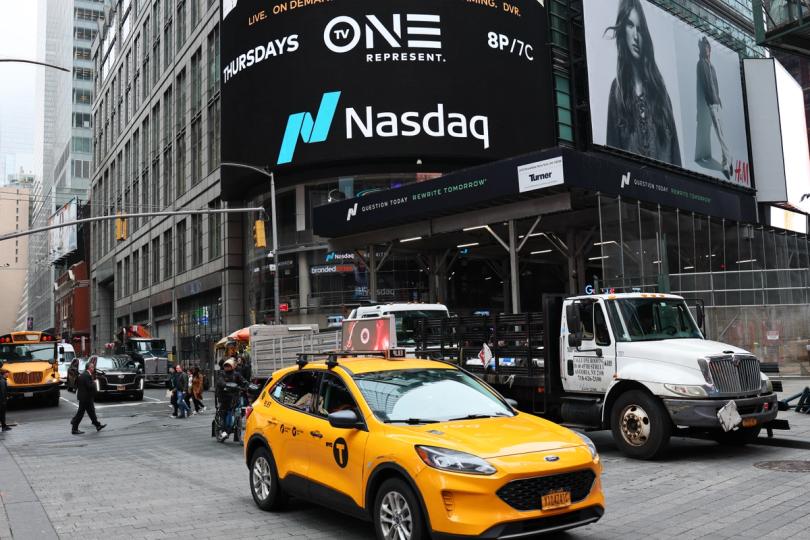
Ian De Bode, President of the tokenization firm Ondo, echoed this sentiment, stating that progress toward 24/7 markets, even in a permissioned form, is a major positive for the industry. "The biggest beneficiaries will be global investors who have long lacked seamless, around-the-clock access to U.S. equities," De Bode noted.
The Counter-Argument: Efficiency vs. Transformation
While many celebrate the SEC’s move as a victory for innovation, some industry experts argue that the Nasdaq model is more of an incremental upgrade than a revolutionary transformation. By keeping the same intermediaries—brokers, clearinghouses, and centralized exchanges—Wall Street is ensuring that it remains the primary beneficiary of the technology’s cost-saving potential.
Maylea Ma, Deputy General Counsel at 1inch, a decentralized exchange (DEX) aggregator, pointed out that Nasdaq is effectively "ring-fencing the benefits of blockchain within the existing TradFi [traditional finance] stack." Ma argued that if tokenized equities cannot connect to broader, non-custodial onchain liquidity, the efficiency gains will be limited. In a truly decentralized model, investors would be able to trade assets directly with one another without a broker, using smart contracts to handle escrow and settlement. Nasdaq’s model, by contrast, preserves the role of the middleman. "If tokenized equities cannot connect to broader onchain liquidity and non-custodial execution, the efficiency gains will be incremental rather than transformational," Ma explained.
A Global Perspective: Is the U.S. Falling Behind?
Despite the significance of the SEC’s approval, the United States is often viewed as a latecomer to the tokenization race. Other jurisdictions have already established more flexible frameworks that allow for blockchain-native settlement and direct investor access.
Jesse Knutson, Head of Operations at Bitfinex Securities, highlighted that markets in Kazakhstan’s Astana International Financial Centre (AIFC) and El Salvador have already moved toward allowing tokenized securities to trade with fewer legacy constraints. These regions allow for fractionalization, real-time settlement, and self-custody—features that are still restricted or highly regulated in the U.S. model. Similarly, Switzerland and the United Arab Emirates (UAE) have created "sandbox" environments that allow firms to experiment with decentralized settlement layers that do not rely on traditional clearinghouses.
"The flexibility of tokenization is what markets really want," Knutson said. While he described the SEC’s move as encouraging, he noted it is "still a step behind more progressive jurisdictions" that have embraced the full spectrum of blockchain’s capabilities.
However, the scale of the U.S. market provides a unique challenge. U.S. regulators oversee a market worth roughly $62 trillion, a figure that dwarfs the nascent digital asset hubs in Europe and Asia. For the SEC, any change must be weighed against the potential for systemic risk. The "Wall Street-led" approach to blockchain ensures that the transition does not destabilize the world’s most liquid and trusted capital market.
Broader Implications and Future Outlook
The SEC’s approval of Nasdaq’s framework is likely to trigger a domino effect across other asset classes. If the tokenization of equities proves successful and stable, the focus will almost certainly shift to the $130 trillion global bond market, where the benefits of automated settlement and transparency are even more pronounced.
Furthermore, the integration of blockchain into Nasdaq’s operations may lead to a new era of "programmable" securities. This could include automated dividend payments, real-time proxy voting, and more efficient corporate actions, all handled by smart contracts. For retail investors, the most immediate impact will likely be the ability to trade fractional shares of high-priced stocks more easily and the eventual expansion of trading hours beyond the traditional 9:30 a.m. to 4:00 p.m. ET window.
As Wall Street continues to "take charge" of crypto technology, the distinction between "crypto" and "finance" is rapidly blurring. The SEC’s decision suggests a future where the underlying technology of a trade is irrelevant to the investor, who will simply enjoy a faster, more accessible market. While the "intermediaries" are not going away, their roles are evolving from record-keepers to technology providers, ensuring that even as the world moves onchain, the rules of the road remain firmly under the jurisdiction of traditional regulatory bodies. For now, the message from the SEC and Nasdaq is clear: Tokenization is no longer a peripheral experiment; it is the future of the public markets, and it will be built on the foundations of the existing financial establishment.