

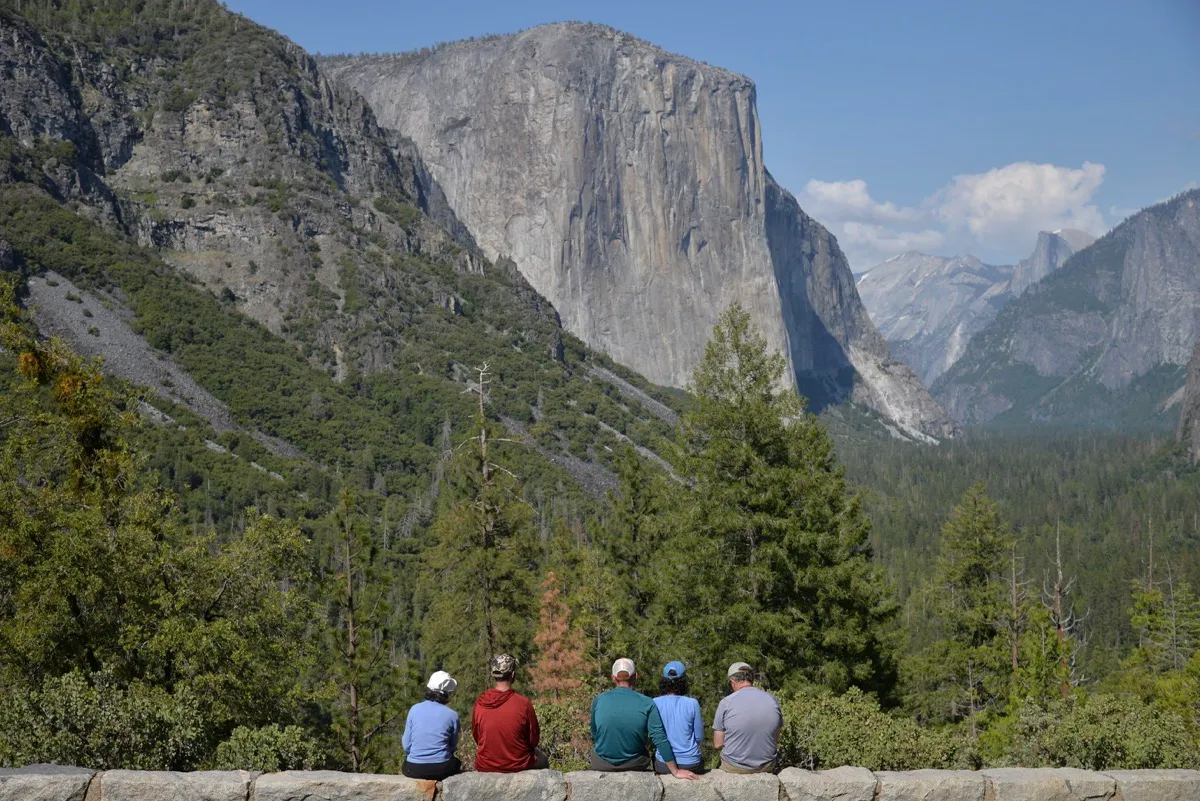
The international travel and tourism industry has been placed on high alert following a Friday announcement from a senior Iranian military official, who warned that recreational areas and tourist destinations worldwide could be targeted in a significant escalation of hostilities. The statement, which specifically identified parks and public leisure spaces as potential sites of interest, marks a departure from traditional military rhetoric that typically focuses on government or strategic infrastructure. This development has triggered immediate concern among security analysts, government agencies, and travel industry stakeholders, who view the move as an attempt to weaponize the global tourism sector against Western interests and their allies.
The threat comes amid a period of heightened friction between Tehran, Washington, and Jerusalem, following months of regional instability that has increasingly spilled over into the international arena. According to the official’s statement, the Iranian military claims to have gathered intelligence on specific locations frequented by Western tourists, suggesting that the "geography of confrontation" has expanded beyond the borders of the Middle East. By explicitly mentioning "parks and recreational areas," the rhetoric targets the very concept of public safety in civilian spaces, aiming to instill a sense of vulnerability in the global traveling public.
A New Paradigm in Asymmetric Threats
The targeting of tourism is not a new phenomenon in the history of global conflict, but the directness of a state-sponsored threat against such specific "soft targets" represents a significant shift in diplomatic and military posturing. Traditionally, threats to tourism have emerged from non-state actors or extremist groups seeking to undermine local economies or gain media attention. However, a formal military entity suggesting that leisure sites are now within their operational scope suggests a strategy of psychological warfare intended to disrupt the multi-billion dollar travel economy.
Security experts note that parks and recreational areas are notoriously difficult to secure compared to "hard targets" like embassies or military bases. These locations are designed for public accessibility and often lack the perimeter controls, surveillance density, and restricted access points common in high-security zones. By signaling intent toward these areas, the Iranian military is highlighting the vulnerability of the "peace dividend"—the freedom of movement and leisure that characterizes modern international relations.
Chronology of Escalation: The Road to the March 2026 Crisis
The current crisis did not emerge in a vacuum. A series of geopolitical maneuvers and military exchanges over the preceding eighteen months have contributed to this point of rupture.
In late 2024 and throughout 2025, a cycle of sanctions and retaliatory cyberattacks between the U.S. and Iran created a volatile diplomatic environment. By mid-2025, maritime security in the Strait of Hormuz and the Red Sea had deteriorated, leading to increased insurance premiums for commercial shipping and a general sense of unease in the Eastern Mediterranean and Persian Gulf tourism markets.
By January 2026, the rhetoric shifted toward direct confrontation following a series of disputed incidents in the Levant. The United States and Israel increased their joint military exercises in the region, which Tehran characterized as a direct provocation. In February 2026, several Iranian diplomatic assets faced new rounds of international restrictions, leading to a vow from the Iranian Revolutionary Guard Corps (IRGC) to "take the battle to the doorsteps" of its adversaries. The March 20th statement serves as the culmination of this escalating tension, moving the focus from military assets to the global civilian infrastructure.
The Economic Significance of the Tourism Sector
The threat to tourist sites carries immense economic weight. According to data from the World Travel & Tourism Council (WTTC), the travel and tourism sector contributed approximately 9.1% to the global GDP in 2025, accounting for nearly $10 trillion in economic activity. The sector is also a primary driver of employment, supporting one in ten jobs worldwide.
When a state entity issues a credible threat against recreational areas, the economic ripple effects are immediate. Historically, even localized incidents of violence in tourist hubs—such as the 2015 Sousse attacks in Tunisia or the 1997 Luxor massacre in Egypt—have led to years of economic depression in the affected regions. A global threat, however, risks a broader "chilling effect" on international mobility.
Investors in the hospitality and aviation sectors have already begun to react. Following the announcement, shares in major international hotel chains and global airlines saw a marginal decline as markets priced in the potential for increased security costs and a decrease in consumer confidence for international travel. The "fear factor" in tourism is quantifiable; past data shows that for every major security warning issued by the U.S. Department of State, there is a measurable decline in outbound travel to the affected regions within a 30-day window.

Official Responses and Heightened Security Protocols
The response from Western governments and international organizations has been swift. The U.S. Department of State issued a "Worldwide Caution" update shortly after the Iranian official’s remarks, advising American citizens to exercise increased caution in public spaces, including parks, shopping malls, and transit hubs. While the advisory did not raise the specific "Level" of travel for most countries, it emphasized the need for situational awareness in areas with high tourist density.
In Israel, the National Security Council (NSC) reiterated its warnings to citizens traveling abroad, particularly in regions where Iranian operational presence is historically high, such as parts of Southeast Asia, the Caucasus, and Southern Europe. Israeli security officials have reportedly shared intelligence with European counterparts regarding potential "surveillance activities" observed near popular landmarks.
The United Nations Tourism body (formerly UNWTO) released a statement condemning the use of tourism as a tool for political or military leverage. "Tourism is a bridge for peace and cultural understanding," the statement read. "To target the spaces where people seek rest and recreation is an affront to the fundamental rights of global citizens. We call on all nations to respect the neutrality of civilian leisure spaces."
Analyzing the Impact on Global Mobility
The implications of this threat extend beyond immediate security concerns; they touch upon the future of how people move across borders. If recreational areas are now considered legitimate targets in state-level conflicts, the "securitization of leisure" is likely to follow. This could manifest in several ways:
- Increased Surveillance in Public Parks: Major cities like London, Paris, New York, and Tokyo may implement more sophisticated AI-driven surveillance and facial recognition in public parks and recreational zones that were previously less monitored.
- Expansion of the "Green Zone" Concept: High-end resorts and "tourist bubbles" may become more common, where travelers stay in heavily fortified environments that are isolated from the broader public landscape.
- Changes in Travel Insurance: Insurance providers may introduce new clauses or higher premiums for "terrorism and political violence" coverage, particularly for destinations perceived to be at higher risk of Iranian-linked activity.
- Diplomatic Isolation: Such threats often lead to reciprocal diplomatic measures, including the further restriction of visas for citizens of the threatening nation, creating a feedback loop of isolation.
The Role of Intelligence and Counter-Terrorism
From a counter-terrorism perspective, the Iranian official’s claim of having "information about you" suggests a sophisticated level of digital and physical surveillance. Analysts believe this may refer to the harvesting of data from travel booking sites, social media geotags, and public records to identify patterns of Western tourist behavior.
The modern traveler leaves a massive digital footprint, from checking in at a national park on social media to booking tours via international platforms. If a state actor is indeed monitoring these patterns to identify "recreational areas" for potential targeting, the security community must pivot toward protecting the digital infrastructure of the travel industry as much as the physical locations themselves.
Regional Outlook: The Middle East Tourism Recovery at Risk
One of the most tragic ironies of the current threat is its potential impact on the Middle East’s own tourism recovery. Nations like Saudi Arabia, the United Arab Emirates, and Qatar have invested hundreds of billions of dollars into transforming themselves into global tourism hubs. Saudi Arabia’s "Vision 2030" relies heavily on attracting millions of international visitors to sites like AlUla and the Red Sea Project.
A regional conflict that targets tourism generally does not discriminate between destinations. If the Persian Gulf becomes a theater for threats against tourists, the ambitious economic diversification plans of Iran’s neighbors could be jeopardized. This creates a complex internal dynamic within the region, where Iran’s rhetoric may alienate its neighbors who are striving to project an image of safety and openness to the world.
Conclusion: A Testing Moment for the Global Travel Industry
As the world digests the implications of the March 20th warning, the global tourism industry finds itself at a crossroads. The transition of tourist sites from "zones of peace" to "zones of conflict" represents a challenge to the post-Cold War order of globalized travel.
The resilience of the travel sector has been proven time and again—through pandemics, economic recessions, and localized terror attacks. However, a sustained threat from a state-level military power introduces a level of complexity that requires a coordinated, international response. For now, the focus remains on vigilance. Governments are urging travelers not to succumb to fear but to remain informed, while security agencies work behind the scenes to ensure that the world’s parks and recreational areas remain spaces of sanctuary rather than targets of aggression. The coming weeks will be critical in determining whether this rhetoric translates into operational reality or remains a potent, yet hollow, instrument of psychological warfare.