


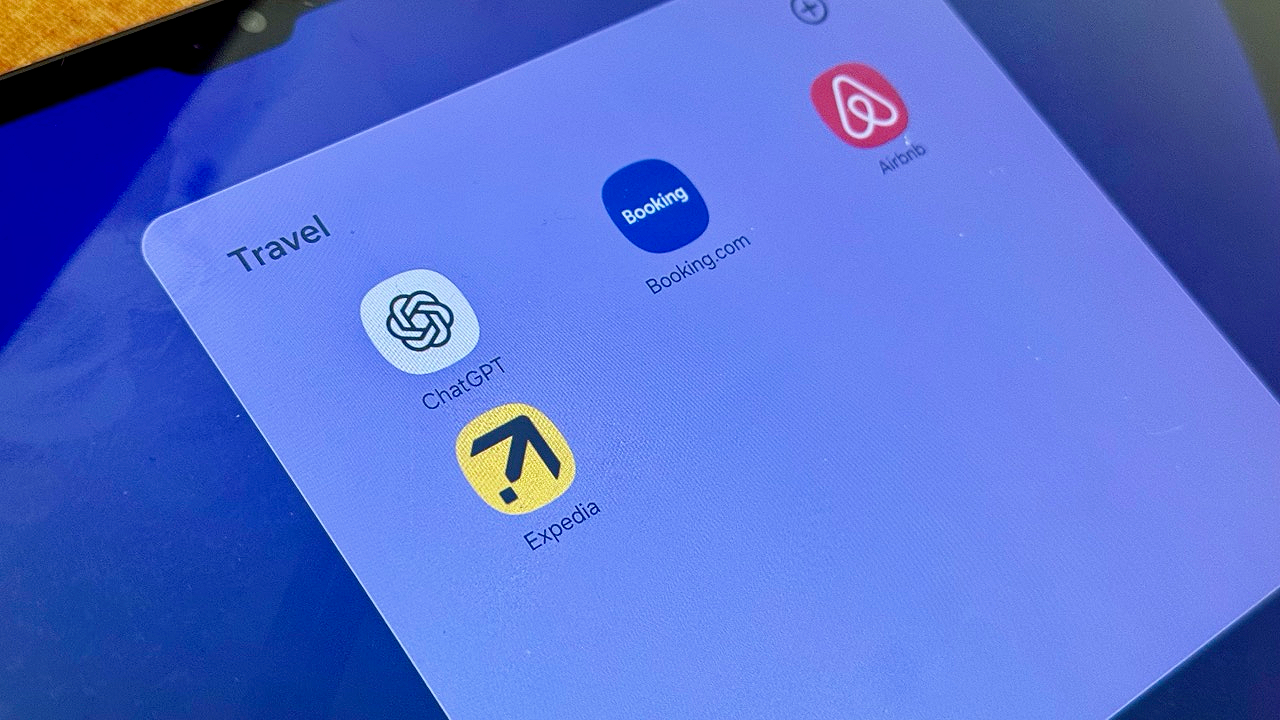
The global travel technology landscape experienced a significant shift in investor sentiment this week as shares of major Online Travel Agencies (OTAs), including Expedia Group and Booking Holdings, saw a notable uptick following reports that OpenAI has decelerated its efforts to facilitate direct commerce and transactions within its ChatGPT interface. This strategic pivot by the artificial intelligence powerhouse has temporarily quelled fears of immediate disintermediation within the travel sector, where the threat of a "super app" capable of both planning and booking trips has loomed large over established players. However, while the immediate threat of losing transaction volume to a generative AI interface may have receded, a more fundamental transformation is underway regarding how consumers discover, evaluate, and select travel products.
The market reaction underscores a critical tension in the digital travel economy. For years, OTAs have served as the primary gatekeepers of the booking process, leveraging massive marketing budgets and sophisticated search engine optimization strategies to capture users at the bottom of the sales funnel. The prospect of OpenAI enabling users to book flights, hotels, and tours directly through a conversational interface posed an existential threat to this business model. With OpenAI stepping back from the transactional layer to focus on the reasoning and discovery capabilities of its models, the traditional booking engines have gained a strategic reprieve. Nevertheless, industry analysts suggest that the battleground has merely shifted further up the funnel to the "discovery" phase, where AI is rapidly becoming the dominant tool for itinerary construction.
The Evolution of AI in Travel Planning: A Chronology of Disruption
The integration of artificial intelligence into the travel sector is not a new phenomenon, but the pace of change accelerated dramatically with the public release of ChatGPT in November 2022. To understand the current market dynamics, it is essential to trace the trajectory of AI’s influence on the industry over the past twenty-four months.
In the early months of 2023, the travel industry reacted to generative AI with a mixture of experimentation and apprehension. By March 2023, Expedia and Kayak were among the first to launch plugins for ChatGPT, allowing the AI to pull real-time data from their databases. This was viewed as a symbiotic relationship: OpenAI provided the conversational interface, while the OTAs provided the inventory and handled the complex transactional back-end.
By late 2023 and early 2024, the narrative began to shift toward "agentic AI"—systems capable of not just answering questions, but executing multi-step tasks. Investors grew concerned that OpenAI, Google, and Apple would eventually bypass the OTA plugins to build their own direct-to-supplier booking pipelines. The recent news that OpenAI is prioritizing the refinement of its "SearchGPT" and reasoning models over building a transactional commerce engine indicates a realization that the logistics of travel—handling cancellations, customer service, and complex payment processing—remain a significant barrier to entry for non-travel native tech firms.
Data Analysis: The Rapid Rise of AI Adoption Among Travelers
The scale of the shift in consumer behavior is documented in the latest joint research from Skift Research and McKinsey & Company. Their report, "Remapping Travel With Agentic AI," highlights a staggering increase in the number of travelers relying on generative AI tools for the foundational stages of trip planning.
According to the study, the proportion of travelers who reported using ChatGPT or similar generative AI tools "extensively" to plan their trips rose from 13% in the previous year to 30% in the current period. This represents a 124% year-over-year increase, signaling that AI has moved from a niche experimental tool to a mainstream utility for the modern traveler. The data suggests that while users may still return to Expedia or Booking.com to finalize a payment, the critical decisions—where to go, which neighborhood to stay in, and what activities to prioritize—are increasingly being made within the AI environment.
Further analysis of the data reveals that younger demographics are leading this charge. Among Gen Z and Millennial travelers, the reliance on AI for discovery is even higher, with many citing the "conversational" and "personalized" nature of AI itineraries as superior to the static filters and list-based results found on traditional OTA platforms. This shift poses a long-term risk to the brand loyalty and customer acquisition strategies of legacy travel companies.
Strategic Responses from Expedia and Booking Holdings
In response to the evolving landscape, the major OTAs have not remained idle. Both Expedia Group and Booking Holdings have funneled billions of dollars into their own proprietary AI integrations to ensure they remain relevant in the discovery phase.
Expedia Group recently unveiled "Romie," an AI assistant designed to act as a travel agent, concierge, and personal assistant all in one. Romie is integrated into the Expedia app and can join group chats on platforms like WhatsApp to help friends plan trips together, summarizing suggestions and automatically adding them to an itinerary. Peter Kern, the former CEO of Expedia, and Ariane Gorin, the current CEO, have both emphasized that the goal is to create a "full-funnel" experience where the user never feels the need to leave the Expedia ecosystem for inspiration.
Similarly, Booking Holdings has integrated an AI Trip Planner into its primary mobile application. Glenn Fogel, CEO of Booking Holdings, has frequently stated that the future of the company lies in the "Connected Trip," a vision where AI seamlessly manages every aspect of travel, from flights and ground transport to dining and attractions. By embedding these tools within their own apps, OTAs are attempting to capture the discovery phase before users migrate to general-purpose AI like ChatGPT or Google’s Gemini.
The Discovery vs. Transaction Paradox
The central question facing the industry is whether "owning the transaction" is enough to sustain the current valuations of OTAs if they lose "ownership of the customer’s mindshare" during the discovery phase. Historically, the travel industry has been divided into two camps: discovery platforms (like TripAdvisor, Instagram, and Google Search) and transactional platforms (like Expedia, Booking.com, and airline websites).
AI is blurring these lines. If a traveler spends three hours refining a ten-day Italian itinerary on ChatGPT and only spends three minutes on Booking.com to execute the final reservation, the value proposition of the OTA shifts. In this scenario, the OTA becomes a "commodity pipe"—a utility that processes payments and manages inventory but holds little influence over the consumer’s choices. This transition could lead to a decline in the effectiveness of high-margin advertising products that OTAs sell to hotels, as the "influence" has moved elsewhere.
Furthermore, the "agentic" nature of new AI models means that even if OpenAI does not process the payment themselves, they may use "agents" to fill out the forms on an OTA website automatically on behalf of the user. This would further distance the brand from the consumer, making the user experience synonymous with the AI interface rather than the travel site.
Implications for Marketing and Search Engine Dynamics
The pullback by OpenAI also has significant implications for the broader digital marketing ecosystem, particularly the relationship between OTAs and Google. Expedia and Booking Holdings are among the world’s largest spenders on Google Search ads, collectively contributing billions of dollars annually to Google’s revenue.
If AI-driven discovery continues to grow, the traditional SEO (Search Engine Optimization) and SEM (Search Engine Marketing) models may face diminishing returns. Google’s own transition toward "AI Overviews" in search results is a direct response to this threat. For OTAs, the challenge is twofold: they must compete with OpenAI for discovery while also navigating a transformed Google search environment that may prioritize its own AI-generated travel advice over traditional paid links.
Industry experts suggest that we are entering an era of "LLMO" (Large Language Model Optimization), where travel brands must figure out how to ensure their inventory and brand are recommended by AI models. This requires a shift from keyword-heavy content to high-quality, structured data that AI can easily ingest and verify.
Future Outlook: The Rise of Autonomous Travel Agents
While the stock market has reacted positively to OpenAI’s hesitation regarding transactions, the long-term trajectory suggests that the "transactional wall" will eventually be breached. The development of secure, autonomous AI agents capable of handling credit card information and navigating complex checkout flows is a matter of "when," not "if."
The current phase can be viewed as a period of consolidation and refinement. OpenAI and its competitors are focusing on the "reasoning" layer—ensuring that an AI doesn’t just suggest a hotel, but understands why a traveler might prefer a boutique hotel in Trastevere over a chain hotel near Rome’s Termini Station.
For Expedia and Booking Holdings, the reprieve offered by OpenAI’s strategic shift provides a window of opportunity to solidify their own AI offerings. The battle for the "tip of the sales funnel" is far from over. As AI tools become more integrated into operating systems (such as Apple Intelligence) and browsers, the travel companies that successfully merge deep inventory with genuine AI-driven inspiration will be the ones that survive the next decade of disruption.
In conclusion, the rise in shares for Expedia and Booking Holdings reflects a market that is relieved to see the transactional status quo maintained for another cycle. However, the underlying data from Skift and McKinsey serves as a stark reminder that the consumer journey has already been fundamentally remapped. The value of a travel company is increasingly being measured not just by the bookings it processes, but by its ability to remain relevant in the silent, AI-driven conversations that happen long before a credit card is ever pulled from a wallet.