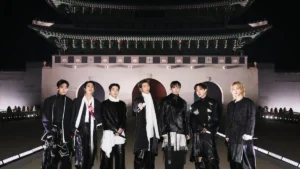

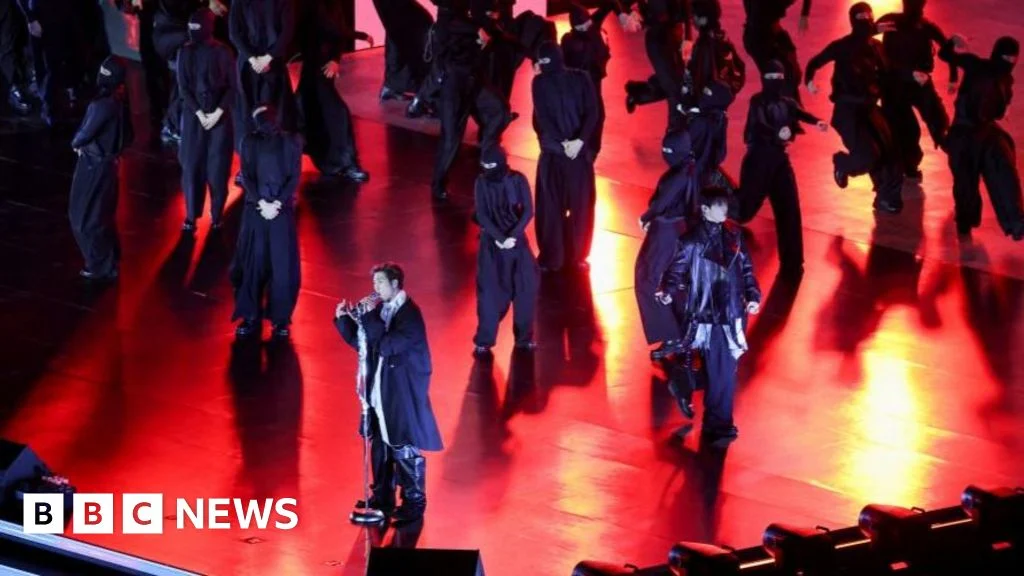
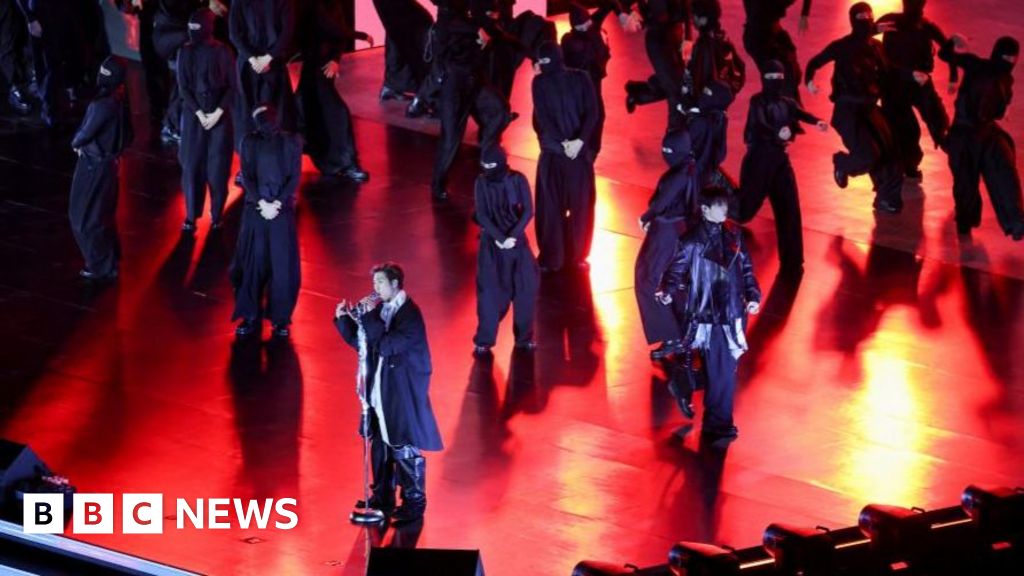
Seoul, South Korea — A vibrant wave of purple washed over Gwanghwamun Square in the historic heart of Seoul this Saturday as global K-pop sensation BTS made their highly anticipated return to the stage, performing together for the first time in nearly four years. The electrifying comeback concert, hailed as the year’s most significant cultural event in South Korea, drew an estimated 260,000 fans to the capital’s central plaza, eager to witness the reunion of RM, Jin, Suga, J-Hope, Jimin, V, and Jung Kook.
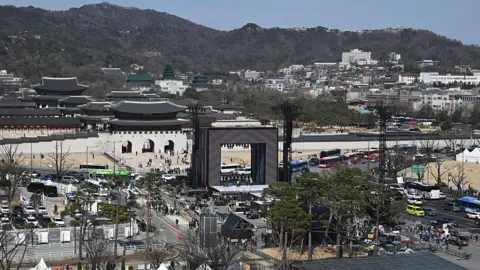
The atmosphere was nothing short of a pilgrimage for the "Army," BTS’s devoted global fanbase. Gwanghwamun Square, typically a symbol of Korean history and national pride, transformed into a sprawling, open-air shrine adorned with the band’s signature purple hue. Towering above the fervent crowd, the stage itself was a monumental spectacle, resembling a triumphal arch set against the majestic backdrop of a 14th-century gateway to the Gyeongbokgung royal palace. This grand setting underscored the immense cultural stature BTS has achieved, becoming synonymous with South Korea’s burgeoning soft power on the global stage.
The one-hour set was a historic moment, marking the group’s collective performance since October 2022. It featured tracks from their newly released album, Arirang, which dropped on Friday afternoon to immediate acclaim. The concert served not only as a celebration of their return but also as a powerful testament to the enduring loyalty of their fanbase and the unparalleled impact of Korean culture worldwide. Following this landmark performance, the septet is poised to embark on an ambitious world tour next month, projected to generate over $1 billion in revenue. However, as government officials and cultural commentators note, BTS’s contribution to South Korea extends far beyond economic metrics, embodying the nation’s cultural dynamism and global appeal.
The Return of a Global Phenomenon: A Chronology of Anticipation
The journey to this monumental comeback has been a carefully navigated one, marked by a period of individual pursuits and mandatory national service. In June 2022, at the zenith of their global fame, BTS announced a temporary hiatus, a move that sent ripples through the entertainment world. While members focused on solo projects, the primary reason for the pause was the fulfillment of South Korea’s compulsory military service. By law, all able-bodied men in South Korea are required to serve in the armed forces for approximately 18 to 21 months, a duty that even global icons are not exempt from.
The eldest member, Jin, was the first to enlist in December 2022, followed by J-Hope, Suga, RM, Jimin, V, and Jung Kook in a staggered fashion. Each enlistment was met with emotional farewells from fans, who understood the significance of this national duty but eagerly awaited the group’s full return. Suga, the last member to complete his service, was discharged in June of last year, setting the stage for the highly anticipated reunion. This intricate timeline, meticulously managed by their agency Big Hit Music (a subsidiary of HYBE Corporation), ensured that the group could eventually reconvene without any member being left out.
The anticipation for their comeback had been building for months, culminating in the release of Arirang on Friday. The album’s immediate success was staggering; Big Hit Music announced that it had sold an astounding 3.98 million copies on its first day alone, shattering previous records and reaffirming BTS’s undiminished commercial power. The concert itself, scheduled for the following day, was designed as the ultimate celebration of this new chapter, a physical manifestation of their return to collective artistry.
“Arirang”: A Deep Dive into Cultural Resonance
The choice of Arirang as the album title is profoundly symbolic, resonating deeply with Korean identity and history. Arirang is not merely a song; it is arguably Korea’s most beloved and recognized folk anthem, a poignant melody often described as the "soul of Korea." Its themes typically revolve around separation, longing, and resilience, expressing a sentimental journey from hardship towards a hopeful future. This narrative arc mirrors BTS’s own journey through their hiatus and reunion, offering a powerful metaphor for their artistic evolution and the collective experiences of their nation.
The band’s connection to this historical anthem is further emphasized by a promotional video for the album, which shows RM, V, Jin, Jungkook, Jimin, j-hope, and Suga listening to the first known recording of Arirang. Made in the United States in 1896 by a group of seven Korean men at Howard University, this historical artifact serves as a powerful lineage, positioning BTS as contemporary torchbearers of Korean culture, exporting its essence to a global audience 130 years later. This deliberate alignment underscores their role not just as entertainers but as cultural ambassadors, bridging centuries of Korean heritage with modern global pop phenomena.
Critics and fans alike have praised the album for its emotional depth and lyrical maturity, seeing it as a reflection of the members’ growth during their time apart. The album’s blend of traditional Korean musical elements with contemporary K-pop sounds is also seen as a bold artistic statement, further solidifying BTS’s reputation for pushing creative boundaries while remaining deeply rooted in their cultural identity.
The Army Gathers: A Global Congregation in Seoul
The Gwanghwamun Square concert was a magnet for fans from every corner of the globe, transforming Seoul into a temporary international hub for the BTS Army. Of the quarter-million people present, only a select 22,000 managed to secure free tickets to the cordoned-off main concert venue. The intense demand highlighted the unparalleled loyalty and dedication of the fanbase.
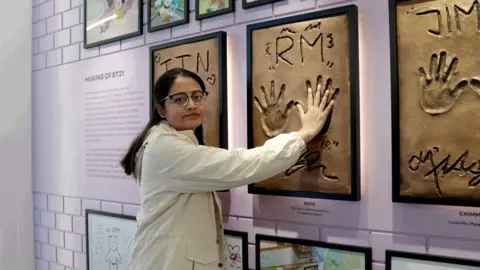
Ami Ostrovskaia, a 23-year-old student who moved to Seoul from Russia last year, embodied this dedication. "BTS is the reason I’m here," she shared, explaining how the group inspired her to delve into Korean history, culture, food, sports, and language. After initial heartbreak at failing to secure a ticket, a stroke of luck through a friend allowed her to join the privileged few inside the venue. "I was so happy and felt like all my problems were gone. This means that I’ll be joining their [full-group] performance after so many years. It’s really meaningful for me," she added, her voice brimming with emotion.
Outside the main enclosure, thousands gathered around giant screens, creating a festive, communal viewing experience. Margarita Perez, a 58-year-old architect from Germany, was among them. Unable to snag a ticket, she meticulously scouted the area to ensure she could "stay nearby" and soak in the atmosphere. Jacqueline, a 29-year-old teacher from Mexico City, also traveled to Gwanghwamun Square, anticipating the upcoming world tour. "The last few years have been a sad time for [the BTS] Army. I loved their solo albums, but they’re more amazing when they’re together," she said, articulating a sentiment shared by many.
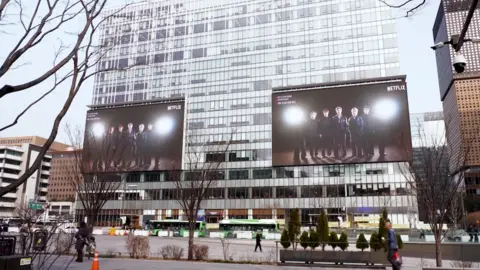
For the millions of fans unable to be physically present, the concert was live-streamed exclusively on Netflix. This strategic partnership was a significant marketing triumph for both BTS and the streaming giant, given Netflix’s substantial investments in Korean entertainment. Beyond the live performance, the deal also includes a documentary on the band’s reunion, further cementing their global accessibility and impact. This digital reach amplified the event, turning a local gathering into a worldwide phenomenon, allowing the "purple ocean" of light sticks and cheers to extend across continents.
Economic and Cultural Diplomacy: The BTS Effect
The economic ripple effect of BTS’s return is immense. The upcoming 82-date world tour, spanning over 30 cities from Singapore and Tokyo to Munich and Los Angeles, is forecast to generate an astonishing $1 billion in revenue. This figure underscores the band’s formidable commercial power, but the impact reverberates far beyond direct ticket and merchandise sales.
Prior to their hiatus, the Korea Culture & Tourism Institute estimated that a single performance by BTS could inject up to $842 million into the South Korean economy. This includes not just concert-related spending but also significant boosts to tourism, accommodation, retail, and hospitality sectors. Hotels around Gwanghwamun Square were fully booked weeks in advance, with some reportedly raising prices by significant margins. Local businesses, eager to capitalize on the influx of international visitors, prepared special menus and decorated their establishments in purple. Kim Sung-dae, owner of a nearby seafood restaurant, proudly mentioned preparing menus in English, Chinese, and Japanese, alongside adorning his eatery with purple flowers.
Beyond the quantifiable economic gains, the South Korean government views BTS as invaluable cultural ambassadors. Their global popularity has significantly elevated South Korea’s image abroad, fostering interest in Korean language, cuisine, fashion, and traditions. This "Hallyu" or Korean Wave, spearheaded by BTS, contributes immeasurably to the nation’s soft power, enhancing its diplomatic standing and cultural influence on the world stage. The government’s emphasis on their contribution going "far beyond money" highlights this strategic importance.
Seoul on High Alert: Managing a Megastar Event
Hosting an event of this magnitude in the heart of a bustling metropolis required unprecedented logistical and security measures. Seoul authorities pulled out all stops to ensure public safety and manage the colossal crowds. An estimated 7,000 police officers, including specialized SWAT units equipped with anti-drone systems, were deployed to Gwanghwamun Square and surrounding areas. The entire central district effectively transformed into a massive, controlled open-air stadium.
Access to dozens of buildings was restricted, and three nearby subway stations were temporarily closed to manage pedestrian flow and prevent overcrowding. The square itself, a popular public space, was meticulously controlled through 31 entry points, each fitted with metal detectors. In a unique security measure, authorities temporarily barred civilians from retrieving firearms, a notable step in a country with already strict gun control laws.
While essential for safety, these extensive measures inevitably caused significant disruptions for local residents and non-concert-goers. Sohn Yeon-ju, a lawyer in her 30s, faced a particular predicament as her wedding was scheduled near Gwanghwamun Square just hours before the concert. By Thursday, the logistics of her hundreds of guests navigating the heavily guarded venue remained unclear, with police suggesting guests might be shuttled by police buses if subway stations remained closed. Her situation became a poignant example of the logistical challenges posed by such a high-profile event.
A Seoul city official confirmed to the BBC that while the city provided the venue, crowd management, and other safety measures, there was no direct financial support for the concert itself. This distinction aimed to clarify the government’s role as facilitators of public order rather than direct sponsors of the entertainment event.
Public Discourse: Balancing Pride and Disruption
The sheer scale of the BTS comeback concert ignited a robust public debate in South Korea, balancing national pride against concerns over urban disruption and resource allocation. Many citizens expressed immense pride in BTS’s global achievements and felt the inconveniences were a small price to pay. One local resident, living near the square, articulated this sentiment on X (formerly Twitter): "I don’t see what the problem is. BTS has done so much for Korea, elevating our image abroad, with no government support all along. Why can’t we share the Gwanghwamun public space for their performance just one Saturday?" This perspective highlights a deeply ingrained sense of national investment in the group’s success.
However, others voiced concerns about the extensive deployment of public resources and the precedent such an event might set. Pop music critic Jung Min-jae, also on X, questioned the long-term implications: "If a comeback concert of this scale, one that effectively paralyses parts of the city centre, is allowed, then other artists or agencies may well request to use the same space in the future. At that point, on what criteria will the Seoul Metropolitan Government approve or reject such requests?" This raises valid points about equitable access to public spaces and potential favoritism.
Another X user pointed out the potential strain on emergency services: "They’ve pulled in police and fire personnel en masse. If something happens elsewhere, there may be no staff left to respond, and access could be blocked because of the controls." These criticisms underscore a tension between celebrating a national treasure and ensuring the smooth functioning of a major capital city. The debate reflects a mature public discourse grappling with the multifaceted impact of cultural megastars on urban life and public policy.
The K-Pop Landscape: A Return to a More Competitive Arena
BTS returns to a K-pop industry that has grown exponentially and become significantly more competitive during their hiatus. While BTS held an almost unassailable position at their peak, the landscape has evolved with the emergence of powerful new groups and solo artists, many of whom have also achieved considerable international success. The global reach of K-pop has expanded, with more diverse sounds and concepts captivating audiences worldwide.
This heightened competition means the stakes are incredibly high for BTS. They are not merely returning to reclaim their throne but to navigate a dynamic and crowded field. Observers will be keenly watching how they integrate their individual growth and solo experiences into their collective sound and identity, and how they continue to innovate while maintaining their unique appeal.
Park Joo-young, a student in her 20s who has been a long-time fan, expressed confidence in the group’s ability to adapt and excel. "They’ve always exceeded my expectations. They might feel the pressure, but I believe they’ll do their best," she stated, reflecting the unwavering faith of the Army. BTS’s upcoming 82-date world tour will be a crucial test of their enduring global appeal and their capacity to continue shaping the future of K-pop.
The Ticketing Frenzy: A Testament to Devotion
The scramble for tickets to the Gwanghwamun Square concert was a fierce battle, highlighting the immense dedication of the BTS Army. When the first batch of 13,000 free tickets was released last month, they were snapped up instantaneously, despite over 100,000 people queuing online. A subsequent release of 7,000 additional free tickets met the same fate, vanishing within minutes.
This ticketing scarcity sparked debate among fans. Some argued that offering free tickets diluted the chances for truly dedicated Army members, as casual attendees might secure spots. Campaigns were launched online to discourage resales and prevent "no-shows," underscoring the passion and protectiveness fans feel for their community and the band. Rachel, a casual admirer, recounted her failed attempt to secure a ticket using both her smartphone and desktop computer: "none of them worked," she lamented, expressing a common frustration.
Ultimately, the comeback concert in Gwanghwamun Square was more than just a musical performance; it was a cultural milestone. It marked the triumphant return of seven global icons, reaffirmed their profound connection with millions of fans, and showcased South Korea’s formidable cultural influence. As the purple lights faded from the historic square, the reverberations of BTS’s return echoed across the globe, signaling a new chapter for the band and the ever-expanding universe of K-pop.
Additional reporting by Leehyun Choi and Hosu Lee