

Cuba’s national electrical grid has once again collapsed, plunging over 10 million people into darkness across the island nation, marking the second such nationwide blackout within a single week. The critical infrastructure failure, confirmed by the country’s energy ministry, has exacerbated an already dire energy crisis, fueling public dissent and intensifying geopolitical tensions with the United States. As millions grapple with disrupted daily life, the incident underscores the severe challenges facing the Communist-run country, from its aging energy infrastructure and chronic fuel shortages to the profound impact of a sustained U.S. fuel blockade.
The Immediate Crisis: A Nation Without Power
The complete disconnection of the National Electrical System (SEN) occurred on March 16, 2026, leaving homes, businesses, and essential services without electricity. Cuba’s state-owned electrical utility, Unión Eléctrica (UNE), swiftly announced the incident via social media, confirming a "total disconnection" and stating that "protocols for restoration are already beginning to be implemented." Priority for power restoration, UNE indicated, would be given to "vital" centers, including hospitals, water pumping stations, and critical communication hubs, a standard emergency response aimed at mitigating immediate humanitarian fallout. However, the sheer scale of the outage, affecting nearly the entire population of approximately 11 million, means that a swift and comprehensive recovery remains a formidable challenge.
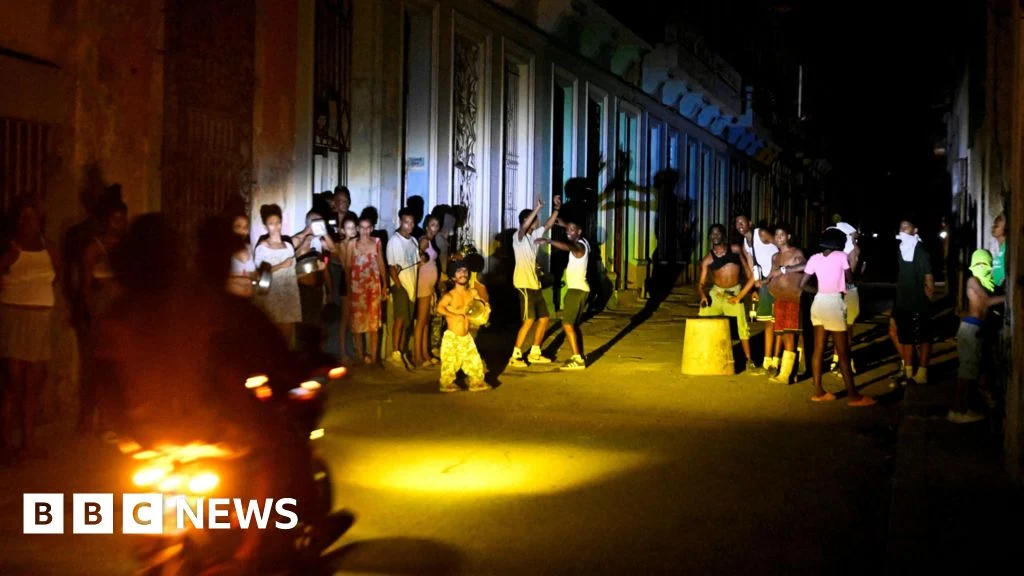
This latest incident follows closely on the heels of another national blackout just days prior, and it represents the third major grid collapse Cuba has experienced this month alone. The cumulative effect of these repeated failures has pushed the island’s infrastructure to its breaking point, severely impacting daily routines, food preservation, healthcare services, and economic activity. Residents in major urban centers like Havana and Santiago de Cuba, as well as rural communities, found themselves navigating the streets by flashlight, struggling with communication, and facing the prospect of spoiled perishables in the tropical heat.
Root Causes of Cuba’s Enduring Energy Woes
Cuba’s vulnerability to widespread power outages is deeply rooted in a confluence of factors, primarily its dilapidated electricity infrastructure and a persistent, severe shortage of fuel. The national grid, largely constructed with Soviet-era technology, has suffered from decades of underinvestment, deferred maintenance, and a lack of access to modern replacement parts. Many of the island’s thermal power plants, which generate the vast majority of Cuba’s electricity, are notoriously inefficient and prone to breakdowns. These plants predominantly rely on heavy fuel oil, a resource Cuba largely imports.
Historically, Venezuela was Cuba’s primary benefactor, supplying subsidized oil in exchange for Cuban medical and educational services. However, Venezuela’s own economic and political turmoil, exacerbated by international sanctions, has drastically curtailed its ability to meet Cuba’s energy demands. This reduced supply has been further compounded by the U.S. fuel blockade, which the Cuban government asserts is explicitly designed to cut off foreign oil imports. U.S. sanctions have targeted shipping companies and vessels involved in transporting oil to Cuba, making it exceedingly difficult and costly for the island to secure necessary fuel supplies from alternative sources. The cumulative effect is a critical deficit in the fuel required to keep the aging power stations operational, leading to reduced generation capacity and increased instability across the grid.
A Month of Darkness: Chronology of Recent Events
The current crisis did not emerge in a vacuum but is the culmination of escalating pressures and events over recent weeks.
- Early January 2026: The geopolitical landscape shifted significantly with the reported seizure of former Venezuelan President Nicolás Maduro by U.S. soldiers on January 3. This event signaled an aggressive turn in U.S. foreign policy toward socialist governments in Latin America, casting a shadow over Cuba, a staunch ally of Venezuela.
- February 2026: Reports of increasing fuel shortages across Cuba began to surface, leading to more frequent, localized power cuts and rationing of electricity in various provinces.
- Early March 2026: Cuba experienced its first major national grid collapse of the month, triggering widespread disruption and prompting initial public outcry. This event highlighted the fragility of the SEN and the severity of the fuel deficit.
- Mid-March 2026 (Pre-current blackout): A second national blackout occurred, further straining resources and testing the resilience of the Cuban population. This incident prompted the Cuban energy ministry to issue more urgent appeals for conservation and to reiterate the challenges posed by external pressures.
- March 16, 2026: The current, third national blackout this month occurred, bringing the entire grid down once more. This repeated failure within such a short timeframe underscores the systemic nature of the crisis and the profound vulnerability of Cuba’s energy infrastructure.
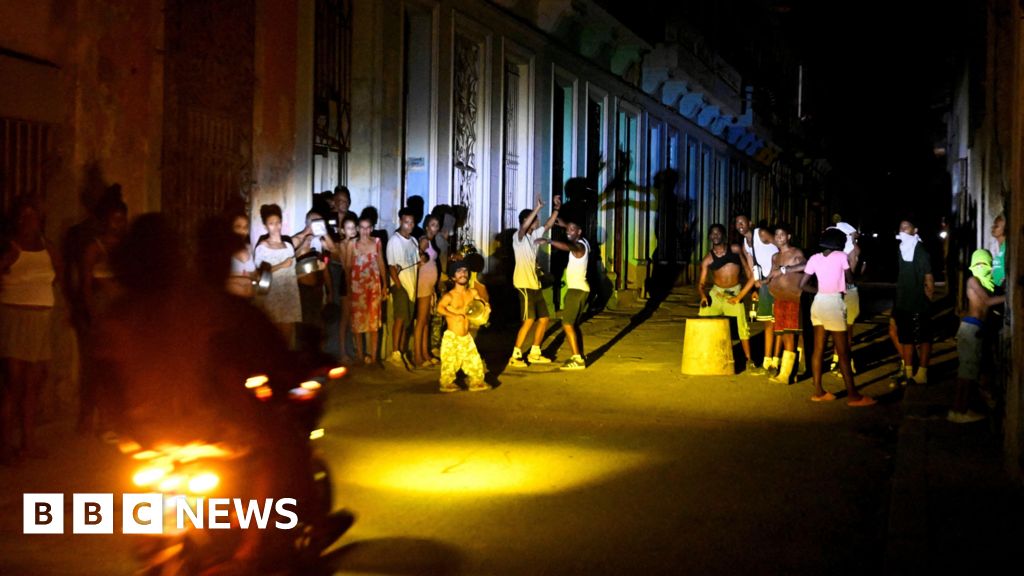
- March 16, 2026 (Concurrent with blackout): Amidst the darkness, rare public dissent began to boil over. In central Havana, residents reportedly engaged in "cacerolazos," banging pots and pans to express their frustration – a traditional form of protest in Latin America. More dramatically, in the central Cuban town of Morón, protesters attacked and set fire to the local Communist Party headquarters, an exceptionally rare and bold act of defiance in a country where unauthorized demonstrations are illegal and carry severe penalties.
- Over the Weekend (Prior to March 17): A coalition of international socialist groups, under the banner of the "Nuestra America" convoy, arrived in Havana. This flotilla, originating from Mexico, brought much-needed humanitarian aid, including solar panels, basic food kits, and medicines, symbolizing international solidarity with the Cuban government. Despite delays caused by rough sea conditions, the convoy was expected to arrive in Havana’s port on Monday, March 17.
Official Responses and Geopolitical Stances
In the face of the deepening crisis, the Cuban government has maintained a resolute stance, balancing efforts at domestic restoration with strong condemnations of external pressures. President Miguel Díaz-Canel has confirmed that initial phases of bilateral talks aimed at ending the crisis have been held between American and Cuban governments. However, details on the progress of these discussions remain scarce, and a fundamental ideological chasm persists.
Cuban Deputy Foreign Minister Carlos Fernandez de Cossio, speaking on Friday, emphatically stated that "the political system of Cuba is not up for negotiation, and of course neither the president nor the position of any official in Cuba is subject to negotiation with the United States." This declaration unequivocally rejects any U.S. demands for internal political change as a precondition for lifting sanctions, particularly the fuel embargo. This firm position highlights the deep ideological divide that has historically characterized U.S.-Cuba relations and suggests that any resolution will be fraught with difficulty.
Meanwhile, U.S. President Donald Trump has made a series of provocative statements regarding Cuba, linking the lifting of the fuel embargo to the removal of Cuba’s President Miguel Díaz-Canel, a key regional ally of Venezuela. Last week, Trump reportedly suggested there could be a "friendly takeover" of Cuba, later remarking it would be an "honour." Such comments, reminiscent of historical U.S. interventions in Latin America, have been met with strong condemnation from Havana. President Díaz-Canel, addressing campaigners delivering humanitarian supplies over the weekend, affirmed that the island has a "preparation plan to raise our people’s readiness for defence" against any potential U.S. military aggression, signaling Cuba’s preparedness to resist external pressure.
Domestic Impact and Rising Dissent
The recurring blackouts have exacted a heavy toll on the Cuban population. Beyond the immediate inconvenience, the lack of electricity impacts every facet of daily life. Food security is compromised as refrigerators fail, leading to spoilage in a country already grappling with food shortages. Access to clean water is disrupted when electric pumps cease to function. Communication becomes challenging, isolating communities and hindering emergency responses. Healthcare facilities, even with priority restoration, face immense pressure, relying on limited generator power for critical operations.
The economic ramifications are equally severe. Businesses, from small private enterprises to state-run industries, suffer significant losses due to operational stoppages. The vital tourism sector, a key source of foreign currency, is severely hampered by unreliable infrastructure, potentially deterring visitors. The cumulative economic impact of these outages exacerbates an already fragile economy, contributing to widespread discontent.
The rare public demonstrations, particularly the attack on the Communist Party headquarters in Morón, are potent indicators of escalating frustration among ordinary Cubans. While small in scale compared to the 2021 nationwide protests, these acts of defiance signal a growing willingness to challenge the government despite the severe legal risks. The government’s ban on unauthorized demonstrations, coupled with the potential for harsh penalties, typically suppresses overt public dissent. However, the desperation born from chronic hardship and repeated failures of essential services appears to be pushing some segments of the population to their limits.
International Solidarity and Geopolitical Ramifications
The arrival of the "Nuestra America" convoy represents a tangible expression of international solidarity with Cuba, particularly from socialist and left-leaning groups in Latin America and beyond. The aid, though symbolic in its overall volume, offers immediate relief to some communities and, more importantly, sends a political message of support against what many perceive as aggressive U.S. foreign policy. The inclusion of solar panels in the aid package also hints at a long-term strategy for Cuba to diversify its energy mix and reduce its reliance on imported fossil fuels, offering a glimmer of hope amidst the current energy crisis.
On the broader geopolitical stage, the situation in Cuba is intricately linked to U.S. policy in Latin America, particularly concerning Venezuela. The seizure of Nicolás Maduro in January 2026 marked a significant escalation in the Trump administration’s efforts to dismantle socialist governments in the region. Cuba, as a steadfast ally of Venezuela and a long-standing adversary of the U.S., finds itself directly in the crosshairs of this policy. President Trump’s explicit linking of the fuel embargo’s lifting to a change in Cuba’s leadership, coupled with suggestions of a "friendly takeover," represents a clear demand for regime change. Such rhetoric is deeply alarming to Havana and many international observers, who view it as a violation of national sovereignty and a dangerous precedent.
The ongoing bilateral talks, despite their opaque nature and the stated non-negotiable positions of both sides, represent a fragile diplomatic channel. However, the vast ideological chasm and the high stakes involved — from Cuba’s national sovereignty to the U.S.’s regional strategic objectives — suggest that a swift resolution to the crisis, particularly one that satisfies both parties, remains highly improbable.
Looking Ahead: Challenges and Uncertainties
As Cuba grapples with the immediate aftermath of its latest national blackout, the path forward is fraught with challenges. In the short term, the priority remains the full restoration of power and the management of public discontent. However, without addressing the fundamental issues of aging infrastructure and securing a stable, sufficient fuel supply, these recurring blackouts are likely to persist.
In the medium term, Cuba faces the immense task of modernizing its energy grid, exploring renewable energy sources more aggressively, and finding sustainable solutions to its fuel dependency. This will require significant international investment and technical assistance, which remain complicated by the ongoing U.S. embargo.
Longer term, the future of U.S.-Cuba relations will heavily influence the island’s trajectory. Whether the current bilateral talks can yield any meaningful de-escalation or whether the U.S. maintains its maximalist pressure will profoundly impact Cuba’s economic stability and political future. The increasing frequency of blackouts and the growing public frustration underscore the urgent need for viable solutions, both domestically and internationally, to prevent further destabilization in the Caribbean nation. The dark nights in Cuba serve as a stark reminder of the complex interplay between energy security, economic hardship, and geopolitical power struggles.