


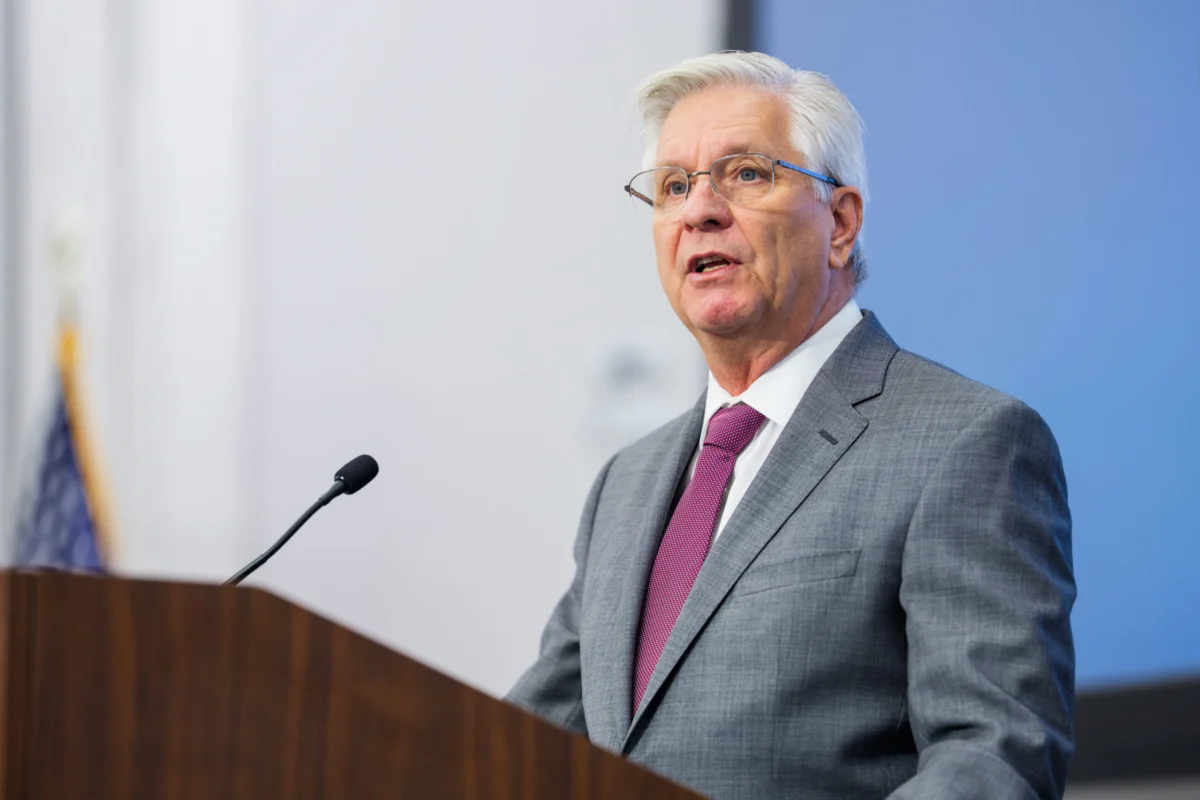
Federal Reserve Governor Christopher Waller, a prominent voice within the central bank, on Friday articulated a newfound caution regarding the prevailing economic conditions, tempering his previously more dovish stance. While still acknowledging the potential for interest rate reductions later in the year, Waller emphasized a necessity for a more conservative and data-dependent approach, citing recent shifts in the labor market and the profound uncertainties stemming from the ongoing war with Iran. This pivot marks a significant recalibration for Waller, who had been an advocate for earlier rate cuts, and it underscores the complex challenges currently confronting the Federal Open Market Committee (FOMC) in navigating a volatile economic landscape.
The Shifting Stance of Governor Waller: From Advocate to Await-and-See
Governor Waller’s remarks, delivered during a comprehensive interview on CNBC’s "Squawk Box," highlight a crucial evolution in his economic outlook. Earlier in the year, Waller had been among the more vocal proponents for initiating rate cuts, driven by what he perceived as a clearly weakening labor market and progress on inflation. His stance even led him to dissent from an FOMC decision in January to maintain the federal funds rate, indicating his readiness to move towards easing monetary policy sooner. However, recent developments, particularly the intricate dynamics of the labor market and the escalating geopolitical tensions involving Iran, have prompted a re-evaluation of this position.
"It doesn’t mean that I’m going to stay put for the rest of the year," Waller stated, clarifying that his caution is not an abandonment of the possibility of future cuts. "I just want to wait and see where this goes, and if things go reasonably well and the labor market continues to be weak, I would start advocating again for cutting the policy rate later this year." This statement encapsulates a data-driven, flexible approach, signaling that while the immediate path to rate cuts is clouded, the door remains open should economic indicators align with his previous dovish inclinations. His recent alignment with the majority for another pause earlier this week, despite his earlier dissent, further illustrates his pragmatic response to the rapidly changing economic and geopolitical environment.
The Evolving Labor Market Landscape: A Paradox of Weakness and Stability
A central pillar of Waller’s revised outlook is the perplexing state of the labor market. His earlier dovish position was significantly motivated by what was perceived as a clearly weakening labor market throughout 2025, characterized by nearly no net job growth. This trend had fueled expectations that the Federal Reserve would need to ease monetary policy to prevent a more significant downturn in employment. However, Waller noted on Friday that while job growth remains subdued, the labor force itself is also not expanding significantly. This creates a paradox where "net zero" job growth, while concerning, is still leaving the unemployment rate largely unchanged.
The recent February jobs report, which revealed a 92,000 drop in nonfarm payrolls, adds another layer of complexity to this picture. While a negative payroll number typically signals a deteriorating job market, Waller’s interpretation suggests a nuanced view. He articulated a specific threshold for concern: "If we get another 90,000 jobs decline in the next jobs report, that’ll be like four negative reports out of five. To me, that’s not zero. So at that point, you need to start thinking about this labor market isn’t good." This implies a cumulative effect, where sustained declines, rather than isolated instances, would unequivocally signal a problematic labor market necessitating policy intervention.

For context, throughout late 2024 and early 2025, the U.S. labor market had shown signs of cooling from the robust growth observed in the immediate post-pandemic recovery. Monthly job gains had steadily decelerated, and the unemployment rate, while remaining historically low, began to show slight upticks in certain sectors. The "net zero" growth Waller refers to in 2025 indicated a period where new job creation barely kept pace with job losses or the natural entry and exit of workers from the labor force. This trend, combined with a stagnant labor force participation rate, suggested an economy nearing full employment but with diminishing momentum. The February 2026 decline in payrolls, if followed by another similar report, would represent a significant shift from mere stagnation to active contraction, compelling policymakers to reassess the urgency of supporting employment through rate cuts.
Inflation Outlook Amidst New Headwinds: Tariffs, Oil, and Geopolitical Risks
Beyond the labor market, Waller’s assessment of inflation plays a critical role in his cautious approach. He generally maintains a sanguine outlook on inflation, believing that it is structurally moving towards the Fed’s long-term 2% target. This optimism is rooted in the expectation that many of the supply-side pressures and demand imbalances that fueled earlier inflationary surges have largely dissipated. However, he acknowledged specific risks that could derail this trajectory, primarily focusing on "one-off effects from tariffs."
Tariffs, often imposed for geopolitical or trade policy reasons, can directly increase the cost of imported goods, leading to higher consumer prices. If these tariff-induced price increases prove more persistent than anticipated, they could contribute to a renewed inflationary impulse, challenging the Fed’s progress. "If those tariff effects don’t roll off by the second half of the year, and then inflation starts rising then, then you’re in this tricky business of like, do we worry about inflation? Take a chance on recession or not?" Waller pondered. This statement highlights the precarious balance the Fed must strike between its dual mandate of price stability and maximum employment. Aggressively combating tariff-driven inflation could inadvertently trigger a recession by stifling economic activity, while allowing it to fester could de-anchor inflation expectations.
Compounding this challenge is the dramatic impact of the war with Iran on global commodity markets, particularly oil. Soaring oil prices, a direct consequence of geopolitical instability in the Middle East, act as a significant inflationary impulse, raising costs across a multitude of sectors, from transportation to manufacturing. Historical data consistently shows a strong correlation between spikes in crude oil prices and broader inflationary pressures. For instance, in previous periods of Middle Eastern conflict, global oil benchmarks like Brent crude have seen rapid increases, sometimes by 20-30% within weeks, directly translating to higher gasoline prices for consumers and increased operational costs for businesses. This dynamic presents a substantial headwind to the Fed’s efforts to bring inflation sustainably down to its target, making Waller’s "sanguine" view contingent on the resolution of these external pressures.
Geopolitical Turmoil: The Iran War’s Economic Shadow
The war with Iran stands out as the most significant and unpredictable factor influencing Waller’s, and indeed the entire FOMC’s, current policy deliberations. The original article, dated March 2026, explicitly mentions this conflict as a major source of uncertainty. Geopolitical conflicts, especially in critical energy-producing regions, have historically proven to be potent disruptors of global economic stability.
The immediate and most palpable effect of the war has been the "soaring oil prices." Disruptions to oil supply routes, potential damage to energy infrastructure, and heightened risk premiums associated with Middle Eastern crude production have sent global benchmarks surging. For example, reports from energy market analysts indicate that Brent crude futures, which had been trading around $80-$85 per barrel in late 2025, have now surged past $100, reaching levels not seen in several years. This significant increase permeates through the entire economy, boosting transportation costs, manufacturing inputs, and ultimately, consumer prices.

Beyond oil, the war introduces broader supply chain vulnerabilities. Shipping routes through strategic waterways could be impacted, leading to delays and increased freight costs for a wide array of goods. Investor confidence can also be severely dented by such large-scale conflicts, leading to capital flight from riskier assets and a preference for safe havens, which can tighten financial conditions globally. Waller’s observation that "I don’t think this war is going to help in any way going forward" is a considerable understatement, reflecting the profound and multifaceted economic risks posed by prolonged geopolitical instability. The indeterminate time frame over how long the war will last further exacerbates this uncertainty, making long-term economic forecasting and monetary policy planning exceptionally challenging.
Market Re-calibration: A Dramatic Shift in Expectations
The confluence of a cautious Fed, a perplexing labor market, and a major geopolitical conflict has triggered a dramatic re-calibration in market expectations regarding future interest rate cuts. Prior to the escalation of the war with Iran, traders and analysts had been broadly anticipating two or three rate reductions by the Federal Reserve through 2026. This optimism was largely fueled by expectations of cooling inflation and a softening labor market, which many believed would provide ample room for the Fed to ease monetary policy.
However, the rapid succession of events—the war’s onset, the subsequent surge in oil prices, and the Fed’s measured approach—has almost completely "doused" these expectations. Markets have now largely priced out the chance of any rate reductions through the balance of 2026 and well into 2027. This represents a stark reversal, reflecting a profound shift in risk assessment and economic outlook among investors. The change in Waller’s rhetoric, from advocating for cuts to expressing caution, further solidified this market sentiment. When a previously dovish voice adopts a more conservative tone, it signals to markets that the path to lower rates is far more challenging than previously assumed.
The implications of this market re-calibration are significant. Higher-for-longer interest rates translate to increased borrowing costs for businesses and consumers, potentially dampening investment and consumption. It can also impact asset valuations, particularly in interest-rate-sensitive sectors. The bond market, in particular, has reacted sharply, with yields on Treasury securities reflecting the updated outlook for monetary policy. This shift underscores the sensitivity of financial markets to both economic data and the geopolitical environment, and the critical role of central bank communication in shaping expectations.
The Federal Open Market Committee’s Diverse Views: A Spectrum of Economic Interpretation
Waller’s updated cautious stance, while significant, is not universally shared among all Federal Reserve policymakers, highlighting the diverse interpretations of current economic data within the FOMC. His January dissent from a decision not to cut rates underscored his then-more aggressive view on easing policy. However, by March, he went along with the majority for another pause, indicating a strategic alignment with the committee’s consensus given the evolving circumstances, even if his underlying concerns might differ in nuance.
A contrasting view was articulated earlier on Friday by Fed Governor Michelle Bowman. Like Waller, Bowman was nominated for her position by President Donald Trump. In a separate interview with Fox Business, Bowman expressed a more optimistic outlook, stating her belief that the Fed could still implement three rate cuts this year. This would bring the benchmark federal funds rate below the "neutral level," a theoretical rate that neither stimulates nor restricts economic growth, as identified by FOMC officials.

Bowman’s rationale for this aggressive rate-cut projection is rooted in her expectation of "strong growth" for the year, which she attributes to "supply-side policies that this administration is putting into place." Such policies, typically focusing on reducing regulatory burdens, tax incentives, and investments in infrastructure, are intended to boost the economy’s productive capacity, potentially allowing for lower interest rates without triggering inflation.
Bowman’s position places her among a small minority within the Federal Reserve. According to the updated "dot plot" grid, released earlier in the week, she is one of just three Fed officials who foresee such aggressive rate cuts this year. The "dot plot" visually represents the anonymous projections of all 19 policymakers on the future path of the federal funds rate, offering insight into the committee’s collective thinking and its internal divisions. The broad divergence between Waller’s newfound caution and Bowman’s continued optimism illustrates the complex analytical challenges facing the Fed, where different members weigh various economic indicators and external factors with varying degrees of emphasis. This internal debate is crucial for a robust policymaking process, but it also underscores the uncertainty surrounding the future direction of monetary policy.
Broader Economic Implications and Forward Look: Navigating Uncharted Waters
The current environment presents the Federal Reserve with an exceptionally complex set of challenges, forcing it to navigate uncharted waters. Balancing its dual mandate of achieving maximum employment and price stability becomes exponentially more difficult when faced with a weakening labor market that is simultaneously stable in its unemployment rate, persistent inflationary pressures from tariffs, and the profound economic disruptions caused by a major geopolitical conflict like the war with Iran.
The "tricky business" that Waller alluded to – the dilemma of choosing between risking inflation or a recession – is now a central feature of the Fed’s policy landscape. If inflation remains elevated due to external shocks like oil price surges and tariff effects, the Fed might feel compelled to maintain restrictive monetary policy, even at the risk of further slowing economic growth and potentially pushing the economy into a recession. Conversely, prematurely cutting rates to support a softening labor market could reignite inflationary pressures, undoing the significant progress made in recent years.
The path forward for the Federal Reserve will undoubtedly remain data-dependent, with policymakers meticulously scrutinizing every incoming economic report and closely monitoring geopolitical developments. The internal debates within the FOMC, as evidenced by the contrasting views of Waller and Bowman, highlight the lack of a clear consensus and the ongoing need for flexible, adaptive policymaking. In an era of heightened global uncertainty, the Fed’s ability to communicate its strategy clearly and react judiciously to evolving conditions will be paramount in guiding the U.S. economy through these turbulent times. The focus will remain on the interplay of inflation, the labor market, and the unpredictable geopolitical currents, all of which will ultimately determine the timing and extent of any future adjustments to the federal funds rate.