



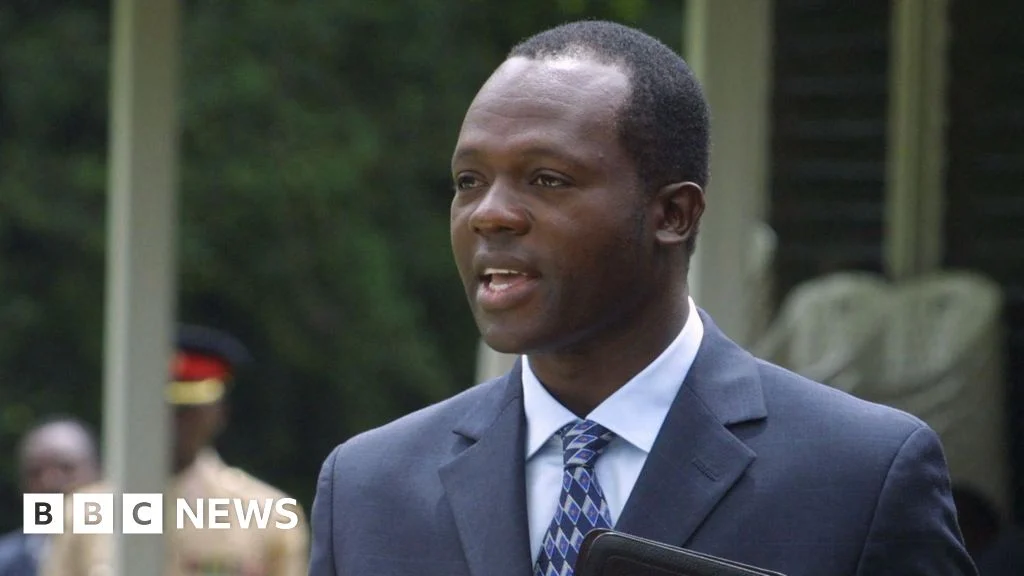
Former Kenyan Foreign Minister Raphael Tuju has dramatically resurfaced a day after his reported disappearance, which had ignited widespread fears of an abduction and prompted a police investigation. His reappearance on Monday afternoon brought a temporary end to a period of intense speculation and concern among the public and political figures, but simultaneously raised profound questions about personal security, the rule of law, and the political climate in Kenya. Speaking to local Citizen TV, Tuju recounted a harrowing experience, stating he had gone into hiding after realizing he was being actively trailed by an unmarked vehicle, a situation that he claimed left his family deeply traumatized.
A Chronology of Disappearance and Reappearance
The sequence of events unfolded rapidly, beginning on Saturday when Tuju, a prominent figure who has held several significant government portfolios, was reported missing. According to his family, Tuju and his driver had vanished while en route to an evening radio interview. This sudden disappearance immediately triggered alarm, particularly given Tuju’s high public profile and his ongoing, high-stakes legal entanglements.
By Sunday, the gravity of the situation became clearer. Police confirmed that Tuju’s vehicle had been discovered abandoned along a road in Karen, an affluent suburb of the capital, Nairobi. The car was found with its hazard lights illuminated, suggesting an abrupt halt or a signal of distress. Compounding the mystery, authorities reported that attempts to contact Tuju were futile, as his phone was switched off. The police promptly initiated an investigation into his reported disappearance, appealing to the public for any information that might shed light on his whereabouts. Simultaneously, his lawyer, Paul Nyamodi, revealed to local media that Tuju had, prior to his disappearance, filed a report with the police detailing concerns about being trailed by an unmarked vehicle – a crucial piece of information that would later corroborate Tuju’s own account.
The disappearance quickly transcended a mere missing person’s case, morphing into a national concern, especially within political circles. Prominent opposition figures voiced their apprehension, openly speculating that Tuju might have been abducted. This immediate leap to the conclusion of abduction underscored a broader, underlying anxiety within Kenya’s political landscape regarding the safety of individuals, particularly those embroiled in sensitive disputes or perceived as politically vulnerable.
The tension finally broke on Monday afternoon when Raphael Tuju reappeared, choosing to speak publicly about his ordeal. He explained that upon realizing he was being followed, he made a strategic decision to branch off onto a less accessible road, aiming to shake off his pursuers. Once convinced he had evaded the trailing vehicle, he then abandoned his own car, understanding that it would be the primary object of their search. His actions, he conveyed, were born out of a profound sense of fear for his personal safety, a fear he articulated by referencing the unfortunate fates of "many Kenyans in unmarked graves" – a poignant and chilling allusion to a history of disappearances and extrajudicial killings in the country.
The Shadow of Unmarked Graves and Erosion of Trust
Tuju’s explanation for not seeking immediate police assistance after detecting he was being followed was particularly telling. He explicitly stated that his decision to go into hiding instead of turning to law enforcement was informed by the memory of other Kenyans who had been abducted or killed in the past. This statement, delivered by a former high-ranking government official, carries significant weight and implicitly raises questions about public trust in the state’s security apparatus and its capacity to protect all citizens, even those who once served at the highest levels. It suggests a perceived vulnerability even within the political elite, highlighting a climate where fear of state-sanctioned or politically motivated harm can override the instinct to seek official protection.
His emotional declaration, "My family is very traumatized… and I consider myself blessed because there are many Kenyans in unmarked graves," resonated deeply. It underscored not only the personal toll of his ordeal but also tapped into a collective national memory concerning incidents where individuals have vanished under suspicious circumstances, often without accountability. This sentiment was echoed by opposition politicians, who, while expressing relief at his return, seized the opportunity to articulate broader concerns about governance and the rule of law. Kalonzo Musyoka, a veteran opposition politician, stated, "We thank God that our brother is alive and well," but quickly added a more ominous warning: "The truth of the matter is that there is an abduction squad in town." He then called for calm and adherence to "the principles of constitutionalism and the rule of law," implicitly challenging the government to address these serious allegations and ensure accountability.
The High-Stakes Legal and Financial Battle
Raphael Tuju’s recent disappearance is inextricably linked to a long-running and highly contentious legal battle that has embroiled him for several years. The former minister, who previously held portfolios including Foreign Affairs and Cabinet Secretary without portfolio, has been locked in a bitter dispute contesting the auction and potential takeover of his valuable properties in Nairobi. At the heart of this dispute is an unsettled bank loan amounting to over $15 million (£11 million), tied to properties owned by his company, Dari Limited.
The legal saga has seen Tuju lodge multiple, largely unsuccessful, legal challenges aimed at halting the auction of his assets. These efforts highlight the intensity of the financial pressures he faces and the determination of the lenders to recover their debts. Recently, however, Tuju managed to secure temporary court orders barring the transfer of the property, pending the hearing of his latest application. This suggests a desperate attempt to cling onto his assets, indicating the severe personal and financial ramifications of the legal proceedings.
Adding another layer of complexity and controversy to the dispute, Tuju recently made grave allegations concerning the direct involvement of state agents in his property affairs. He claimed that dozens of police officers had raided his property in Karen, forcibly ejecting his staff and security guards, and subsequently taking control of the business premises. More disturbingly, he alleged that "powerful officials" were orchestrating these attempts to seize his property, implying political interference and abuse of power behind what should ostensibly be a commercial dispute. As of the time of his reappearance, the government had not issued any official comment on these specific allegations, leaving a significant vacuum of accountability and official explanation.
This intertwining of personal disappearance, allegations of state overreach, and a high-value financial dispute paints a picture of a politically charged environment where economic struggles can quickly escalate into matters of national security and human rights. The nature of the debt, the value of the properties, and Tuju’s past and present political standing make this a case of significant public interest, raising questions about the intersection of business, politics, and the judiciary in Kenya.
Broader Implications and The Political Landscape
Raphael Tuju’s disappearance and subsequent reappearance, coupled with his alarming statements and the allegations made by opposition figures, carry significant implications for Kenya’s political landscape and public trust in institutions.
Firstly, the incident serves as a stark reminder of the persistent concerns regarding political security and the rule of law in Kenya. Tuju’s allusion to "unmarked graves" immediately invokes a dark period in Kenya’s history marked by political assassinations and forced disappearances, particularly targeting critics of the government or individuals involved in sensitive matters. For a former high-ranking official to openly express such fears, and to consciously avoid involving the police, speaks volumes about the perceived efficacy and impartiality of law enforcement agencies in certain circumstances. This erosion of trust, if widespread, can destabilize governance and undermine democratic principles.
Secondly, the allegations of an "abduction squad" and "powerful officials" attempting to seize Tuju’s property highlight deep-seated anxieties about the misuse of state power and institutions for political or economic gain. While these remain unproven allegations, their utterance by credible political figures like Kalonzo Musyoka adds weight to the public discourse surrounding accountability and transparency within the government. Such claims, whether substantiated or not, contribute to a climate of suspicion and fear, potentially chilling free expression and dissent. The lack of an official government response to Tuju’s specific allegations of police raids on his property only amplifies these concerns, leaving critical questions unanswered.
Thirdly, the case illuminates the vulnerabilities faced by individuals, even those with considerable political influence, when embroiled in complex financial and legal disputes. The multi-million dollar debt and the battle over property underscore the potential for such private matters to spill over into the public domain with political ramifications. It also raises questions about the mechanisms for debt recovery and property rights, especially when powerful individuals or state actors are perceived to be involved. The ongoing legal challenges and the court orders obtained by Tuju suggest a protracted and difficult struggle, indicative of the complexities involved in navigating the Kenyan judicial system under intense pressure.
Finally, the incident has momentarily overshadowed other political narratives and brought renewed focus on human rights and civil liberties. The swift reaction from opposition figures, and their unified expression of relief and concern, suggests a broader political calculus at play. They are keen to leverage such incidents to advocate for greater adherence to constitutionalism and the rule of law, principles that are often at the forefront of political debate in Kenya. The incident, therefore, becomes a litmus test for the government’s commitment to upholding these principles and ensuring the safety and security of all its citizens, regardless of their political or financial standing.
In conclusion, Raphael Tuju’s brief disappearance and dramatic reappearance have done more than just resolve a missing person’s case. It has ripped open a wound of historical fears, reignited debates about the integrity of state institutions, and brought into sharp relief the delicate balance between personal security, political power, and economic interests in Kenya. As investigations continue and the legal battles unfold, the nation will be watching closely for answers and for assurances that such unsettling incidents will not become a recurring feature of its political landscape.