


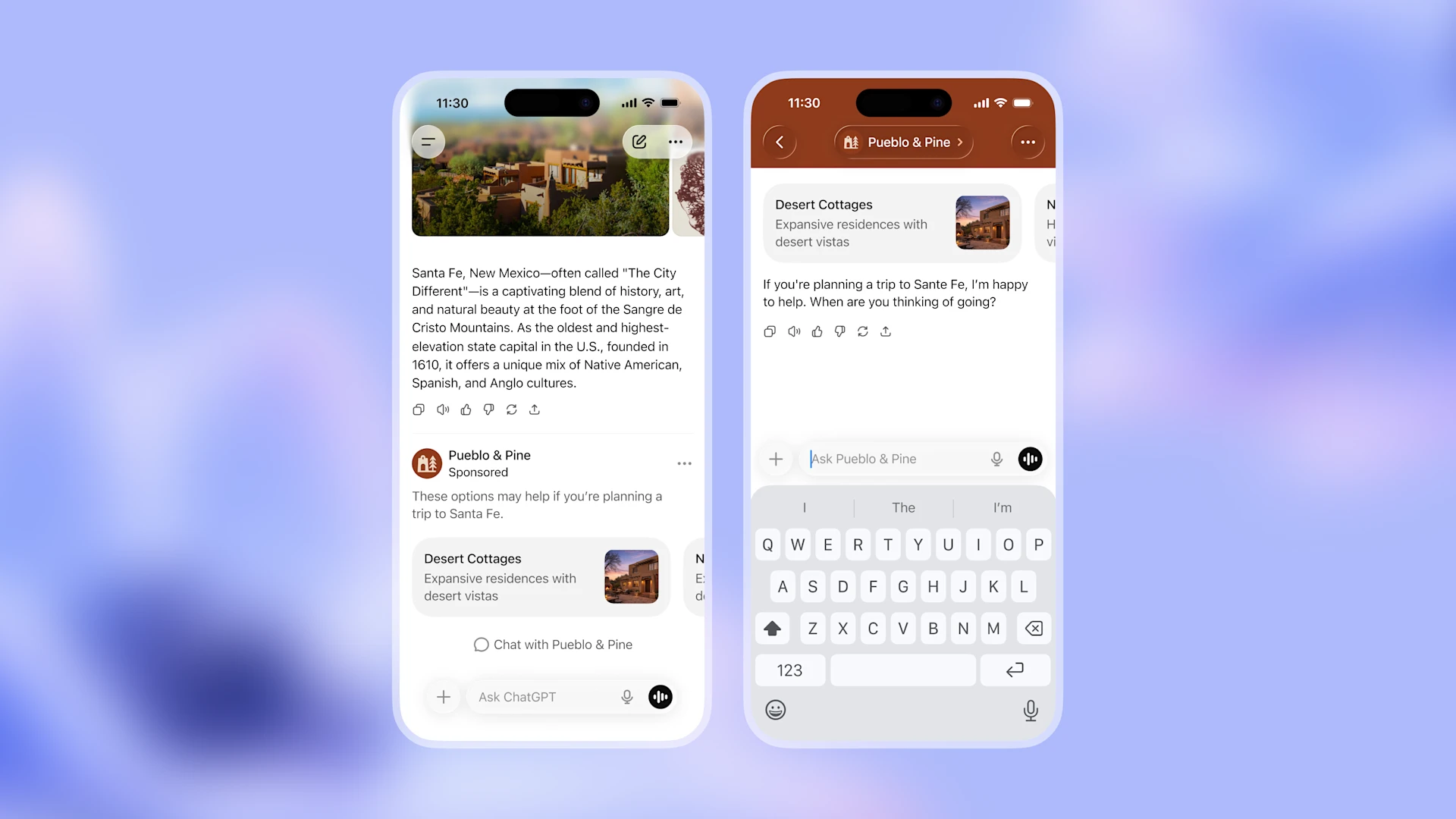
OpenAI has officially signaled a transformative shift in its business model with the appointment of Dave Dugan, a veteran advertising executive from Meta, to lead its global ad solutions division. Dugan, who previously served as the vice president of global clients and agencies at Meta, brings over a decade of experience in managing high-stakes relationships with the world’s largest advertisers and agencies. His transition to OpenAI marks the first time the artificial intelligence research organization has placed a senior, agency-facing leader in a named executive position dedicated specifically to advertising sales. This strategic move suggests that OpenAI is moving beyond its primary reliance on subscription-based revenue and is preparing to challenge the long-standing duopoly of Google and Meta in the digital advertising landscape.
Dugan’s primary mandate will be to transition ChatGPT’s advertising capabilities from an experimental phase into a fully realized, commercial-ready product suite. In a statement shared on his LinkedIn profile, Dugan emphasized that a core priority of his leadership will be to integrate advertising in a manner that does not compromise the core user experience that has made ChatGPT a global phenomenon. The appointment comes at a critical juncture for OpenAI as it seeks to diversify its revenue streams following massive infrastructure investments and the ongoing rollout of SearchGPT, a prototype search engine designed to compete directly with traditional search platforms.
A Strategic Hire from the Heart of the Ad Industry
Dave Dugan’s background at Meta is particularly relevant to OpenAI’s current trajectory. During his tenure at the social media giant, Dugan was a central figure in the commercial interface for some of the world’s most significant ad spenders, specifically within the travel and retail sectors. Travel, in particular, has historically been one of Meta’s most lucrative categories, with companies like Booking Holdings, Expedia, and major airlines spending billions of dollars annually to reach targeted audiences.
By hiring an executive who understands the nuances of global agency relationships and the specific needs of high-intent categories like travel, OpenAI is positioning itself to capture a share of the performance marketing budget that currently flows toward Google Search and Meta’s algorithmic feeds. Unlike traditional display advertising, which relies on banners and interstitials, the advertising model under Dugan’s purview is expected to lean heavily into conversational commerce and sponsored results within the natural flow of AI-generated responses.
The Evolution of OpenAI’s Revenue Model
Since the public launch of ChatGPT in November 2022, OpenAI has primarily monetized its technology through two main channels: the $20-per-month ChatGPT Plus subscription for individuals and API access for developers and enterprises. While these streams have generated significant revenue—reportedly putting the company on track for an annualized revenue run rate of several billion dollars—the operational costs of running large language models (LLMs) remain astronomical.
The introduction of an advertising layer represents a necessary evolution for OpenAI to sustain its growth and valuation, which was recently pegged at $157 billion following a massive funding round. The timeline of this evolution has been rapid:
- Late 2022: Launch of ChatGPT, focusing on user acquisition and research.
- Early 2023: Launch of ChatGPT Plus and Enterprise editions to begin monetization.
- Mid-2024: Introduction of SearchGPT, a specialized search prototype that provides real-time information with citations.
- Late 2024: The hire of Dave Dugan and the formalization of a global ad solutions team.
This chronology demonstrates a clear path from a research-first organization to a commercial entity that mirrors the early trajectories of Google and Facebook, both of which started with high-utility products before introducing robust advertising engines to subsidize free tiers and drive profitability.
The Significance of the Travel Sector
The mention of travel brands in the context of Dugan’s hire is not incidental. The travel industry is often considered the "canary in the coal mine" for digital advertising trends because travel purchases are high-consideration, research-intensive, and highly dependent on search intent. In 2023, digital travel ad spend in the United States alone exceeded $6 billion, with a significant portion of that budget allocated to search engine marketing (SEM).
For travel brands, ChatGPT offers a unique value proposition. Traditional search requires users to sift through multiple links to piece together an itinerary. In contrast, ChatGPT can synthesize flight options, hotel recommendations, and local attractions into a single, cohesive narrative. If Dugan can successfully implement "sponsored recommendations" or "sponsored links" within these summaries without alienating users, OpenAI could become the most powerful lead-generation tool in the travel industry’s history.
Industry analysts suggest that the travel sector’s biggest players—Online Travel Agencies (OTAs) like Expedia and Booking.com—are already experimenting with their own AI plugins. However, a native advertising solution built directly into the OpenAI ecosystem would provide a more seamless path to conversion than external plugins.
Supporting Data: The Digital Ad Landscape
The market that Dave Dugan is entering is massive but increasingly competitive. According to data from eMarketer, the global digital ad market is projected to reach over $740 billion in 2024. While Google and Meta still control a combined share of nearly 50%, their dominance is being challenged by Amazon’s growing ad business and the emergence of "retail media networks."
OpenAI’s entry into this market is disruptive because it bypasses the traditional "link-based" search model. If users begin to prefer AI-driven answers over a list of blue links, the trillions of dollars of value tied to Search Engine Optimization (SEO) and SEM could be redistributed.
- Meta’s Ad Revenue (2023): Approximately $131 billion.
- Google’s Ad Revenue (2023): Approximately $237 billion.
- ChatGPT User Base: Over 200 million weekly active users as of late 2024.
With a user base of that scale, even a conservative Average Revenue Per User (ARPU) derived from advertising could result in billions of dollars in incremental revenue for OpenAI.
The Challenge of Balancing Utility and Commercialization
The most significant hurdle facing Dave Dugan and his new team is the potential for "ad fatigue" or the degradation of the AI’s perceived objectivity. One of ChatGPT’s primary draws is its ability to provide clear, direct answers. If users feel that responses are being biased toward the highest bidder, the trust that OpenAI has built could evaporate.
Dugan’s LinkedIn comments regarding "not disrupting the user experience" indicate that OpenAI is aware of this risk. Potential strategies for "clean" integration include:
- Clearly Labeled Citations: Similar to SearchGPT, where sponsored links are clearly demarcated from organic information.
- Contextual Suggestions: Providing an ad only when the user’s query is explicitly transactional (e.g., "Find me a hotel in London").
- Partnership Models: Allowing brands to provide verified data to the model in exchange for attribution, rather than traditional "pay-per-click" ads.
Industry Reactions and Market Implications
The reaction from the advertising world has been one of cautious optimism. Large agencies, which have long been looking for a "third force" to counter the influence of Google and Meta, see OpenAI as a viable alternative. By bringing in a leader like Dugan, who is a known quantity in the agency world, OpenAI is signaling that it intends to play by the established rules of the industry regarding transparency, measurement, and brand safety.
"Dave Dugan understands how to talk to the world’s biggest brands," noted one industry consultant familiar with Meta’s agency structure. "His hire isn’t just about selling ads; it’s about building an ecosystem where brands feel safe spending millions of dollars on a platform that is still, in many ways, experimental."
For competitors, the hire is a clear warning shot. Google has already responded by integrating AI Overviews into its search results, which include ads. However, Google faces the "innovator’s dilemma"—it must protect its existing multi-billion dollar search ad business while transitioning to a new AI-first format. OpenAI, having no legacy ad business to protect, has the freedom to design its commercial platform from the ground up for the AI era.
Broader Implications for the AI Economy
The formalization of OpenAI’s ad strategy marks a definitive end to the "pure research" era of the company. It confirms that the future of AI will likely follow the path of the internet and social media before it: a subsidized model where free access is traded for targeted advertising.
This move also has implications for the broader AI ecosystem, including competitors like Perplexity AI and Anthropic. Perplexity has already begun exploring an ad-supported model, and Dugan’s appointment will likely accelerate the timeline for other AI firms to monetize their interfaces.
As Dave Dugan begins his tenure, the focus will be on the first quarter of 2025, when the first major "commercial-ready" ad products are expected to debut. If successful, OpenAI will not only have revolutionized how humans interact with information but also how businesses interact with consumers, potentially triggering the most significant shift in digital marketing since the invention of the smartphone. The goal is clear: to prove that an AI can be both a world-class assistant and a world-class advertising platform, without sacrificing the integrity of the conversation.