
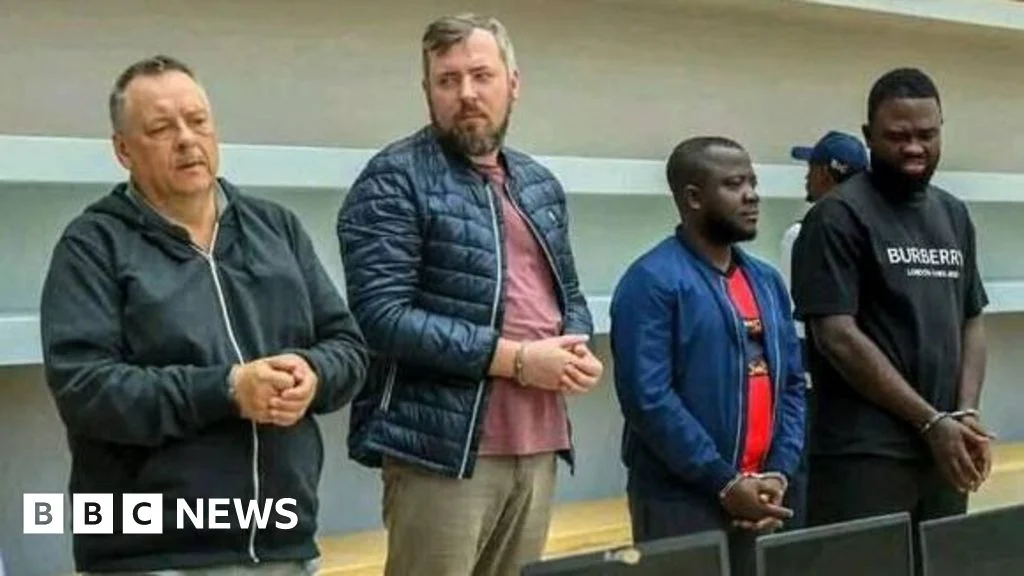
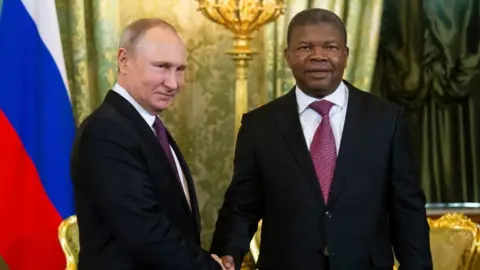
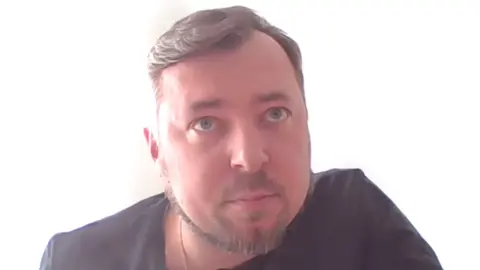
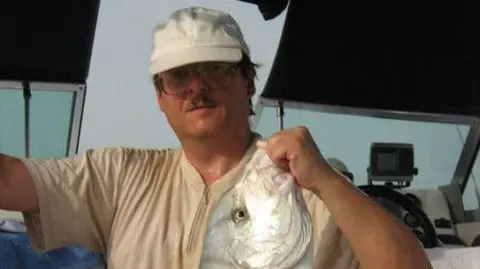
Two Russian nationals are set to face trial in Angola, accused of orchestrating a sophisticated operation aimed at destabilizing the government, spreading disinformation, and interfering in the nation’s upcoming 2026 presidential election. Political consultant Igor Ratchin and translator Lev Lakshtanov, who have been awaiting trial since their arrest last August, confront a formidable indictment comprising 11 charges, including terrorism, espionage, and influence peddling. This case has drawn international attention, casting a spotlight on Russia’s evolving clandestine activities across the African continent and Angola’s delicate geopolitical balancing act.
The Indictment: Allegations of a Shadowy Network
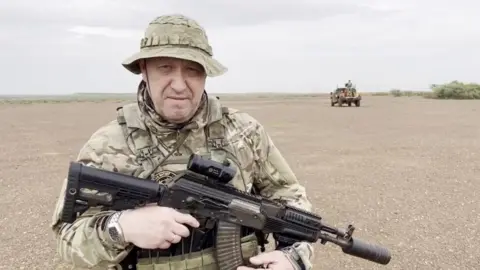
The BBC, having obtained a copy of the indictment, reveals a detailed prosecution narrative that portrays Ratchin and Lakshtanov as key figures in an alleged campaign designed to alter Angola’s political trajectory. According to Angolan prosecutors, the two Russians operated under the banner of "Africa Politology," a network described as a successor to elements of the now-defunct Wagner Group. The Wagner Group, once a formidable private military company founded by Yevgeny Prigozhin—who died in a plane crash in 2023—had established a significant, albeit often shadowy, presence across various African nations, including the Central African Republic, Mali, and Madagascar, over the past decade. Its operatives were known for blending military support with political influence campaigns, often in resource-rich countries.
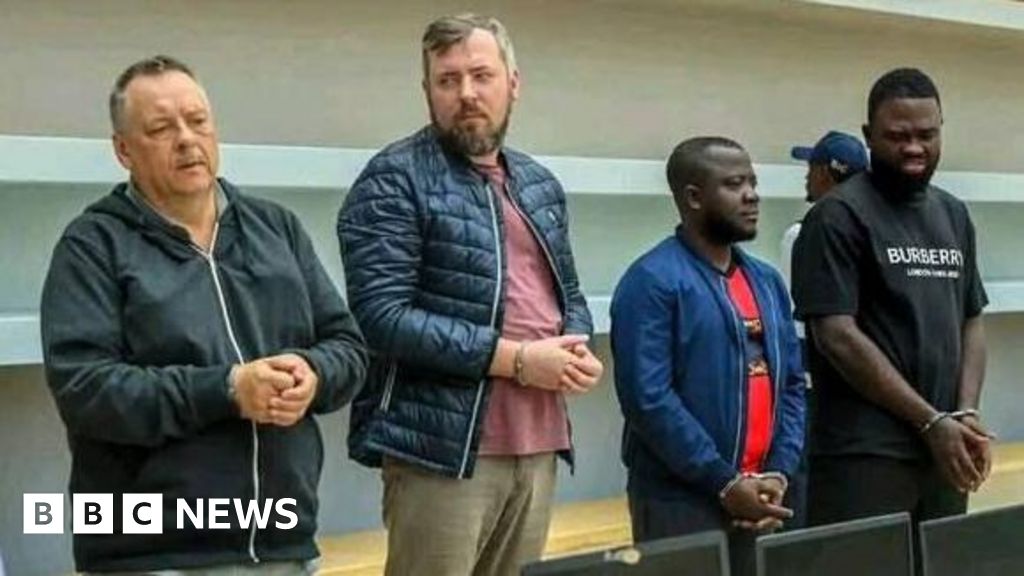
The defence teams for Ratchin and Lakshtanov vehemently dispute the charges, asserting that the indictment lacks "concrete and objective facts." They argue that their clients have no ties to Africa Politology or the Wagner Group, nor were they acting on behalf of the Russian state. Instead, their lawyers contend that the Russians were engaged in a legitimate cultural initiative to establish a "Russian House" in Luanda, intended to foster cultural exchange between the two nations. This stark divergence in narratives sets the stage for a high-stakes legal battle with significant geopolitical implications.
Angola’s Geopolitical Pivot and Russian Anxiety
Angola, a major African oil producer and diamond exporter, holds substantial strategic and economic importance. Historically, ties between Angola and Russia trace back to the Cold War era, when the Soviet Union provided significant support to the ruling People’s Movement for the Liberation of Angola (MPLA) during the Angolan Civil War. However, in recent years, Angola has progressively distanced itself from Moscow’s traditional sphere of influence, opting for a more diversified foreign policy.
President João Lourenço, who assumed office in 2017, has notably steered Angola towards closer ties with Western powers. This strategic pivot has been underscored by several key developments. Russian diamond mining giant Alrosa and state-owned bank VTB were compelled to withdraw from Angola following international sanctions imposed on Russia after its full-scale invasion of Ukraine. Furthermore, President Lourenço has not met his Russian counterpart, Vladimir Putin, since 2019, a clear indicator of the shifting diplomatic landscape.
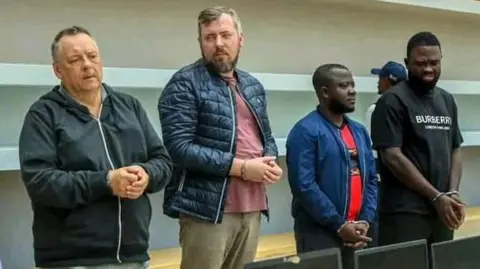
This discernible tilt towards the West has, according to analysts, fueled Russian apprehension. Alex Vines, Africa programme director at the European Council on Foreign Relations, notes, "This is indicative of Russian anxiety of the direction of travel of Angola under the Lourenço administration. There’s clearly an element of Russian disinformation to try and build up more sympathy towards the Russian Federation." The alleged operation in Angola represents a new frontier for Russian influence activities, suggesting a concerted effort to counteract this pivot and regain a foothold in a strategically vital nation.
Local Connections and Alleged Influence Peddling
The Angolan prosecution asserts that the alleged Russian operation was not confined to foreign actors but actively sought to recruit local individuals. Two Angolan nationals, sports journalist Amor Carlos Tomé and political activist Francisco Oliveira, are also slated to stand trial for their alleged roles in the influence operation. Tomé faces nine charges, while Oliveira faces five, both including terrorism, espionage, and influence peddling.
Prosecutors allege that Ratchin and Lakshtanov hired Tomé and Oliveira to execute their activities on the ground. Oliveira, a youth leader for Angola’s main opposition party, Unita, who studied chemical engineering in Russia between 2015 and 2019 and speaks fluent Russian, is accused of introducing Angolan politicians to the Russian defendants. His defence lawyer, Pedro Cangombe, argues that Oliveira "doesn’t know this organisation [Politology] and any activity related to this organisation. All he knows is that they wanted to create Russian culture house."
Amor Carlos Tomé, a sports journalist at the state-run TPA television channel, is accused of gathering intelligence on Angola’s political landscape, assessing potential presidential candidates, and assisting in the production and dissemination of content linked to the alleged influence operation. His legal team contends that "none of the subjective or objective elements" of the alleged crimes are "minimally" demonstrated in the indictment.
A Timeline of Alleged Subversion
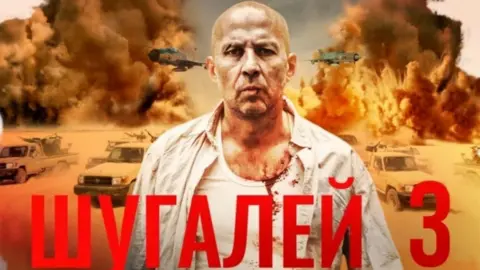
The indictment sketches a timeline of the alleged operation, commencing in 2024. Prosecutors claim that the initial team of Russian operatives arrived in Luanda that year, ostensibly to establish a Russian cultural centre – a project that never materialized. The indictment also references Maxim Shugalei, a Russian political operative known for his escapades in Africa and the subject of a film trilogy. While the indictment claims Shugalei arrived in Angola in October 2024, the BBC notes a significant factual discrepancy: Shugalei was reportedly arrested in Chad on September 19, 2024, and repatriated to Moscow on November 16, 2024. This inconsistency casts a shadow on the precision of the prosecution’s timeline.
Throughout 2024 and extending into 2025, the defendants are accused of making multiple payments totaling over $24,000 (£17,900) to local journalists and experts. These payments were allegedly made to facilitate the dissemination of propaganda and disinformation across Angolan media, with the ultimate goal of "provoking political change."
The Disinformation Campaign: Targeting Western Ties and Domestic Stability
Angolan authorities view these media activities as integral to a broader influence operation designed to erode public trust in Western partners and undermine President Lourenço’s pro-Western foreign policy. The prosecution has cited specific publications as evidence of this disinformation campaign.
One notable example is a January 2025 post on a Facebook page that mimicked the popular local news site "Angola 24 Horas" but identified itself as a "satirical page." This post reportedly warned that Angola risked being drawn into the Ukraine war and claimed that foreign firms were gaining almost total access to Angola’s mineral resources. The BBC’s attempts to contact the satirical page for comment were unsuccessful.
Another alleged instance involved articles published by the news website "Lil Pasta News." One article, appearing a day after the Facebook post, discussed the Lobito Corridor, a critical infrastructure project linking Angola’s port of Lobito to the Democratic Republic of Congo and Zambia, aimed at boosting regional trade. A subsequent article on the same website provocatively questioned whether Angola had "signed a pact with the Devil" by participating in the project. Lil Pasta News informed the BBC that these articles were not produced by its team but were received through an intermediary, denying any contact with the author or payment for their publication. The defence for the Russian defendants maintains there is no evidence to link Ratchin to the commissioning of these articles.
An anonymous insider, previously involved in Prigozhin’s African projects, dismissed these alleged efforts as "amateurish," stating, "This year [2025] they handed the whole African topic over to some complete idiots. It feels like they were just picked up at the Sadovod market [a street market in Moscow]. And right before New Year they really wanted publications in Angolan media. But I told them all to go to hell," without revealing the employers. This comment suggests a possible fragmentation or lack of coordination within Russia’s post-Wagner influence apparatus.
Alleged Meetings with Political Heavyweights
Beyond media manipulation, the prosecution further alleges that Lakshtanov and Ratchin engaged directly with senior Angolan political figures from both the ruling MPLA party and the opposition Unita, purportedly offering support and funding for campaign activities. Most notably, the indictment claims the Russians held meetings with MPLA stalwart General Higino Carneiro and Unita leader Adalberto Costa Junior, both considered potential presidential candidates for the 2026 election.
Prosecutors allege that the Russians offered Carneiro a substantial sum of up to $15 million (£11 million) in campaign support, alongside promises of security assistance, strategic advice, and intelligence gathering. However, the BBC noted that the specific evidence backing this alleged financial offer was not present in the indictment reviewed.
Unita representative Jonas Mulato has vehemently denied allegations linking the party’s leader to any foreign influence operation, asserting that it has become "increasingly evident" that judicial proceedings are being exploited for political ends. General Carneiro did not respond to the BBC’s request for comment. These alleged high-level contacts underscore the serious nature of the charges, suggesting an intent to penetrate and influence the highest echelons of Angolan politics.
The Protests: Organic Grievances or External Incitement?
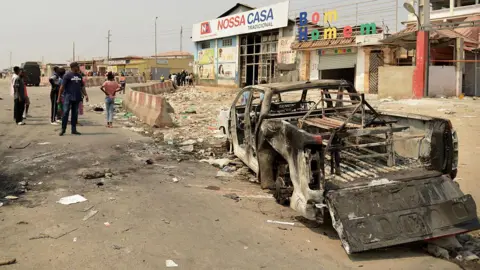
A crucial element of the prosecution’s case revolves around the deadly protests that rocked Angola in July 2024. What began as a peaceful taxi drivers’ strike in Luanda swiftly escalated into nationwide unrest, turning violent and resulting in significant casualties. Activists condemned the police response as "excessive" force.
The prosecution points to notes found on the defendants’ mobile phones regarding the demonstrations and photographs taken by Ratchin as evidence of their orchestration of the protests. Ratchin’s lawyers, however, counter that he took the images for personal safety, to document any potential attacks.
Many Angolan journalists and human rights activists strongly dispute the notion that these protests were externally manufactured. They argue that the unrest was a genuine reflection of deep-seated socio-economic grievances within the population. The World Bank estimates that nearly 40% of Angolans live below the international poverty line of $3 per day. Sheila Nhancale, an Angola researcher at Human Rights Watch, states unequivocally, "People were protesting because of their living conditions, not because someone from another country told them to." This perspective frames the government’s narrative as a potential deflection from domestic challenges by attributing unrest to foreign interference.
Legal Scrutiny and Broader Implications
The indictment itself has faced criticism for its perceived weaknesses, including misspellings and apparent factual errors beyond the Shugalei discrepancy. Rui Verde, a legal expert and research associate at the University of Oxford’s African Studies Centre, highlights that the prosecution’s primary challenge will be to convincingly demonstrate that the various acts detailed in the indictment constitute a deliberate, interconnected "intentional roadmap to subversion" rather than isolated incidents.
Should the Russians be convicted, several sources suggest they could be repatriated to Russia. However, official Russian authorities appear disinclined to offer direct assistance. A source close to the Russian diplomatic community, speaking to the BBC, articulated Moscow’s probable stance: "The logic is simple: these people were not carrying out official state tasks, they were just contractors. Russia’s position in the country is already weak, so there’s no point making things worse. Let these remnants of Prigozhin’s operation sort it out themselves." This statement underscores a strategic policy of deniability often employed by Moscow regarding non-state actors operating abroad, especially in the wake of the Wagner Group’s restructuring.
The trial in Luanda will have far-reaching implications. For Angola, it is a test of its judicial independence and its resolve to protect national sovereignty against foreign interference. The outcome could solidify President Lourenço’s pro-Western stance or, conversely, be perceived as politically motivated, further exacerbating domestic tensions ahead of the crucial 2026 elections. For Russia, the case offers a glimpse into its post-Wagner influence operations in Africa, revealing both continuity in ambition and potential challenges in execution, particularly in countries seeking to diversify their international partnerships. It also highlights the broader global concern over disinformation and hybrid warfare tactics employed by state and non-state actors to manipulate political landscapes in developing nations.