


United Airlines confirmed on Tuesday a massive expansion of its global fleet, outlining plans to integrate more than 250 new aircraft by April 2028. This strategic move serves as a definitive signal of the carrier’s confidence in the long-term sustainability of high travel demand and its commitment to a "United Next" growth strategy. The announcement, led by CEO Scott Kirby, emphasizes a shift away from the industry-wide trend of commoditization, focusing instead on a premiumized, differentiated passenger experience designed to capture high-yield market segments.
During a conference call with reporters and industry analysts, Kirby characterized the expansion as a pivotal moment in a decade-long transformation. “This is another step in a decade-long journey that we’ve been on at United to de-commoditize the industry—to de-commoditize United in particular,” Kirby stated. The strategy hinges on the belief that air travel should not be a race to the bottom in terms of pricing and service, but rather a tiered ecosystem where quality, reliability, and onboard amenities drive loyalty and revenue.
The Strategic Introduction of the A321 Coastliner and A321XLR
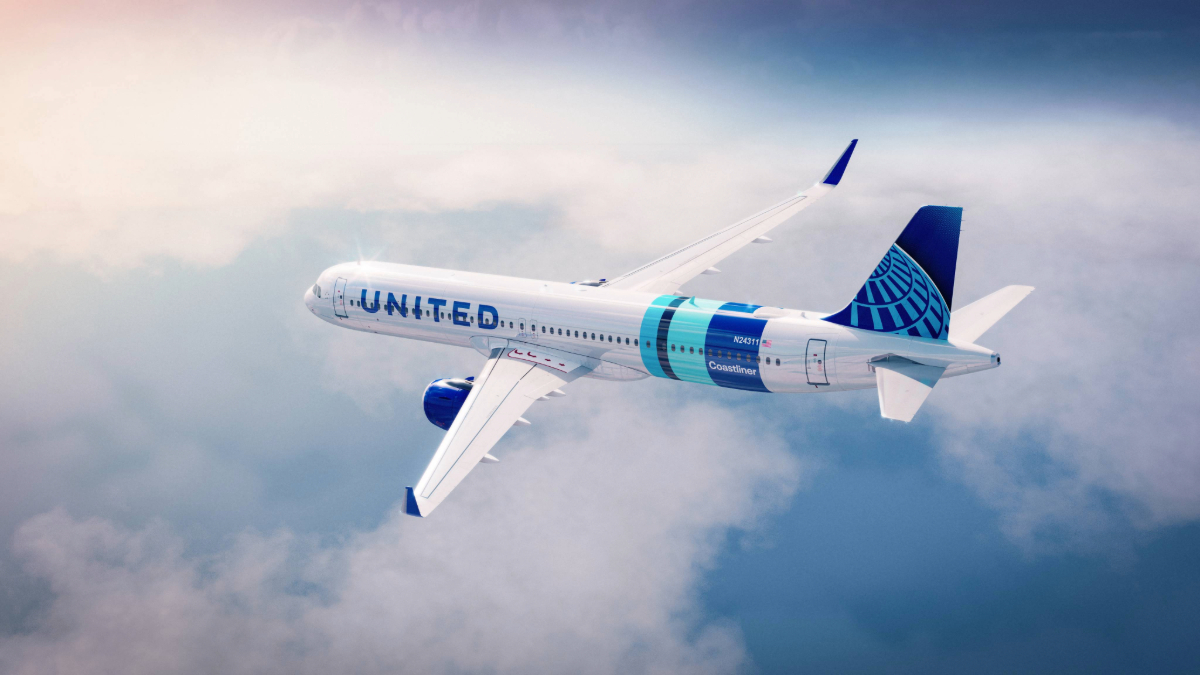
Central to this fleet expansion is the introduction of two specialized Airbus narrowbody variants: the A321 Coastliner and the A321XLR (Extra Long Range). These aircraft are intended to replace aging airframes while simultaneously opening new market opportunities that were previously economically unviable for larger widebody jets or less efficient narrowbodies.
The A321 Coastliner represents United’s latest effort to dominate the lucrative premium transcontinental market, specifically routes connecting New York (Newark Liberty International) with Los Angeles and San Francisco. The aircraft is configured with a heavy emphasis on premium seating, featuring 20 lie-flat Polaris business class seats arranged in a 1-1 or 2-2 configuration, depending on the final cabin shell selection. Additionally, the Coastliner will include 12 Premium Plus seats—a dedicated premium economy product—and 129 economy seats.
In a notable departure from standard high-density narrowbody configurations, United has opted to remove three potential economy seats to accommodate a walk-up snack bar in the rear of the cabin. This feature, designed for economy passengers on long-haul domestic flights, follows a successful pilot program initiated in 2023. By offering self-service refreshments, United aims to improve passenger satisfaction on flights exceeding five hours while allowing flight attendants to focus on primary cabin service.
Complementing the Coastliner is the A321XLR, an aircraft capable of flying up to 4,700 nautical miles. The XLR is positioned to revolutionize United’s transatlantic network, allowing the airline to fly from East Coast hubs to secondary European cities that do not have the passenger volume to support a Boeing 767 or 787. This "long and skinny" route strategy allows for increased frequency and point-to-point connectivity, bypassing traditional mega-hubs and reducing travel times for passengers.
Chronology of the United Next Transformation
The current fleet plan is the culmination of several years of aggressive capital investment. The "United Next" program was officially unveiled in June 2021, marking the largest aircraft order in the company’s history at the time.
- June 2021: United announces an order for 270 aircraft, comprising 200 Boeing 737 MAX jets and 70 Airbus A321neos. The goal was to replace smaller regional jets with larger mainline aircraft, a process known as "upgauging."
- December 2022: The airline follows up with a historic widebody order, purchasing 100 Boeing 787 Dreamliners with options for 100 more. This was the largest widebody order by a U.S. carrier in commercial aviation history.
- 2023: United begins the retrofitting of its existing narrowbody fleet with "Signature Interiors," featuring larger overhead bins, seatback entertainment at every seat, and high-speed Wi-Fi. The airline also begins testing the "Grab and Go" snack concept on select transcontinental routes.
- April 2024: Amid delivery delays from Boeing regarding the 737 MAX 10 certification, United adjusts its short-term fleet plan, pivoting toward more Airbus A321neo leases to ensure capacity targets are met for the 2025–2028 window.
- Current Tuesday Announcement: Confirmation of the 250+ aircraft delivery schedule through April 2028 and the formal branding of the "Coastliner" service.
Supporting Data: Fleet Composition and Economic Impact
The scale of United’s investment is reflected in the sheer volume of its order book. As of early 2024, United has one of the largest backlogs of any global airline. The 250+ aircraft scheduled for delivery over the next four years are part of a broader commitment to take delivery of approximately 800 new narrowbody and widebody aircraft by 2032.
Data provided by the airline suggests that the transition to newer aircraft will result in an average 11% to 15% improvement in fuel efficiency per seat compared to the older Boeing 757 and 767 models they replace. This efficiency is critical not only for United’s goal of reaching net-zero emissions by 2050 but also for mitigating the impact of volatile jet fuel prices.
Furthermore, the "upgauging" strategy is expected to increase the number of available seats per departure across United’s North American network by nearly 30%. By replacing 50-seat regional jets with 150- to 200-seat mainline aircraft, United can lower its cost per available seat mile (CASM) while increasing its ability to offer premium cabin products, which historically carry higher profit margins.
Official Responses and Stakeholder Reactions
The announcement has garnered reactions from across the aviation sector, reflecting the high stakes of United’s aggressive growth.
A spokesperson for the Air Line Pilots Association (ALPA), which represents United’s pilots, noted that the expansion provides significant career progression opportunities for flight crews. "The delivery of over 250 aircraft means thousands of new captain positions and a robust hiring pipeline. It underscores the stability of the carrier in a competitive market," the statement read.
Market analysts, however, have expressed a blend of optimism and caution. "United is doubling down on the premium traveler," said one senior transportation analyst at a major Wall Street firm. "The challenge lies in the execution—specifically the ability of Boeing and Airbus to meet these delivery timelines given the current supply chain constraints and regulatory scrutiny facing Boeing."
Boeing, which has faced significant delays in the certification of the 737 MAX 10, remains a critical partner for United. In response to United’s recent pivot toward Airbus for certain narrowbody needs, a Boeing representative stated, "We are focused on delivering for our customers and ensuring the highest standards of safety and quality. We value our long-standing partnership with United and are working closely with them to manage delivery schedules."
De-Commoditization: A Brief Analysis of Implications
Scott Kirby’s emphasis on "de-commoditization" marks a departure from the low-cost carrier (LCC) model that has influenced the industry for decades. For years, major carriers focused on matching the pricing of budget airlines by unbundling services and densifying cabins. United’s current trajectory suggests a reversal of this trend for the "Big Three" U.S. carriers.
By investing in specialized aircraft like the Coastliner, United is targeting the "premium leisure" and "corporate" segments. These travelers are increasingly willing to pay a premium for comfort, reliability, and amenities like lie-flat seats on domestic routes. The inclusion of a snack bar for economy passengers is a symbolic move; it suggests that even at the lower end of the fare ladder, the airline is seeking to provide a "branded" experience rather than a generic utility service.
This strategy carries risks. The high capital expenditure (CapEx) required to fund hundreds of new aircraft puts pressure on the balance sheet. If the global economy enters a significant downturn, the fixed costs associated with a modernized, premium-heavy fleet could become a liability. However, United’s leadership argues that the younger, more fuel-efficient fleet will provide a structural cost advantage that will allow the airline to weather economic cycles more effectively than competitors flying older, thirstier aircraft.
Broader Industry Impact and Infrastructure Demands
The influx of 250 aircraft will require significant upgrades to airport infrastructure. United has already committed billions of dollars to terminal redevelopments at its major hubs. In Newark, the airline has integrated into the new Terminal A, and in Denver, it has undertaken a massive gate expansion project to accommodate the larger "United Next" fleet.
The shift toward the A321XLR also signals a change in international travel patterns. As United gains the ability to fly narrowbodies across the Atlantic, traditional hub-to-hub widebody flying may be supplemented by more "point-to-point" long-haul flying. This could put pressure on European carriers to modernize their own fleets or risk losing market share on routes to mid-sized American cities.
As April 2028 approaches, the aviation industry will be watching United closely to see if the "de-commoditization" gamble pays off. If successful, it could redefine the standard for domestic and international travel, forcing a paradigm shift across the global airline industry toward a model where the quality of the onboard experience is once again the primary driver of competition.