

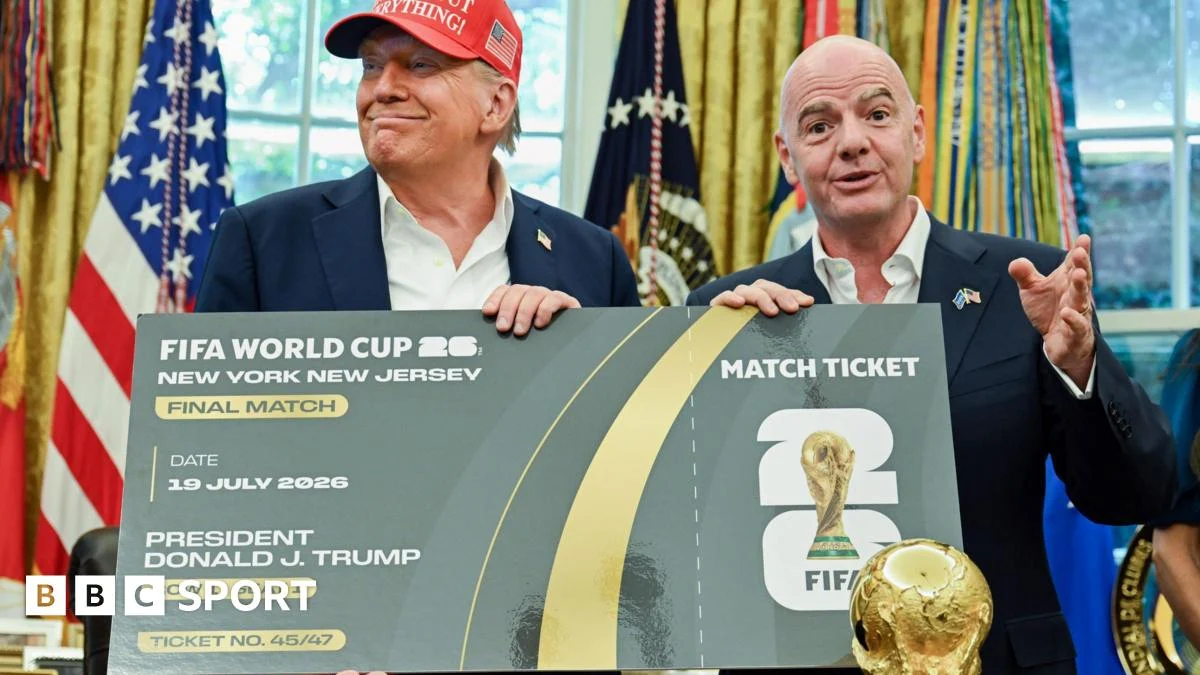
European consumer groups have lodged a formal complaint with the European Commission, accusing global football governing body Fifa of exploiting its monopoly position in the sale of tickets for the 2026 FIFA World Cup. The Federation of Supporters Europe (FSE) and Euroconsumers allege that Fifa has imposed "excessive ticket prices and opaque and unfair purchasing conditions and processes on European fans," effectively leveraging its exclusive control over ticket distribution to the detriment of supporters.
The complaint details a series of alleged "six specific abuses" by Fifa, which consumer advocates argue would be unacceptable in any competitive market. Central to these accusations is the charge of "bait advertising," a practice illegal under EU consumer law. This refers to Fifa’s alleged strategy of advertising ticket prices that are not genuinely available, releasing only a minuscule number of cheaper tickets while subsequently making the vast majority of available seats at significantly higher price points. This leaves loyal fans facing the stark choice of paying exorbitant prices or missing out entirely.
Escalating Costs and Diminishing Accessibility
The financial burden on fans attending the 2026 World Cup, co-hosted by the United States, Canada, and Mexico, appears to be substantially higher than for previous tournaments. According to the provided data, a fan wishing to attend eight matches, progressing through each round of the tournament, could face staggering costs. In the lowest price bracket, the total expenditure is estimated at approximately £5,225. This figure escalates to £8,580 for mid-tier tickets and reaches an eye-watering £12,350 for the most expensive seats.
To provide a stark point of comparison, attending a similar number of matches (seven in the 2022 tournament) would have cost £1,466, £2,645, or £3,914, respectively, in the lowest, middle, and highest price categories. This represents an increase of potentially over 250% in the lowest price bracket for attending one more match. While the number of matches differs slightly, the scale of the price hike raises significant concerns about the affordability of the tournament for the average fan.
A History of Fan Frustration and Fifa’s Response
The FSE, a prominent organization representing football supporters across Europe, has expressed deep frustration with Fifa’s approach to ticket sales. Ronan Evain, director of the FSE, stated that the group felt compelled to escalate the issue to the European Commission due to Fifa’s "failure to engage in meaningful consultation" with fan groups. He criticized Fifa’s reliance on unconfirmed sales figures as a justification for its practices, arguing that this overlooks the reality faced by dedicated fans. "Fifa point to their unconfirmed sales figures as validation of their unfair ticket practices, while the reality is they leave loyal fans with no other choice – pay up or lose out," Evain remarked.
Fifa, in its defense, has stated that almost seven million tickets have been made available for the 2026 tournament. However, the specifics of this availability, particularly the distribution of price categories and the timing of their release, remain a central point of contention. BBC Sport has reached out to Fifa for comment on the allegations.
The Monopoly Advantage: A Leveraged Position
The core of the complaint rests on Fifa’s perceived monopolistic control over ticket sales for the World Cup. This control, the consumer groups argue, allows Fifa to dictate terms and prices without the checks and balances that would exist in a competitive market. The FSE and Euroconsumers contend that Fifa has "taken advantage of its position" to impose conditions that fans would never accept elsewhere.
The specific accusation of "bait advertising" highlights a manipulative tactic. By advertising a low price for a select few tickets, Fifa allegedly entices a broad audience, only to reveal that these tickets are "so scarce" as to be practically unavailable. This leaves fans who are eager to attend the tournament with significantly more expensive options, or no options at all if they cannot afford the inflated prices. The example cited of approximately 400 tickets at £45 being made available for England and Scotland’s group matches, while not explicitly labelled as "bait," could be seen as an illustration of this scarcity strategy, especially when contrasted with the overall ticket availability and higher price points.
Transparency Demands: A Call for Fairer Practices
Beyond the pricing concerns, the consumer groups are also demanding greater transparency for fans throughout the ticket purchasing process. Key demands include a minimum of 48 hours’ notice regarding the availability of tickets in each category. Crucially, this notice should also specify the exact locations of the seats being made available. This level of detail is intended to combat the uncertainty and frustration that fans often experience, where they are left guessing about when and where tickets will be released, often leading to missed opportunities and a sense of being perpetually on the back foot.
Background: The FIFA World Cup and its Economic Impact
The FIFA World Cup is the most prestigious international association football competition, contested by the senior men’s national teams of the members of the Fédération Internationale de Football Association (FIFA), the sport’s global governing body. The tournament, held every four years, is a massive global spectacle, attracting billions of viewers and generating significant revenue through broadcasting rights, sponsorships, and ticket sales. The 2026 edition, with its unprecedented co-hosting arrangement across three North American nations, is anticipated to be the largest in history, further amplifying its economic and cultural impact.
The economic model of the World Cup, however, has increasingly come under scrutiny. While Fifa champions the tournament as a vehicle for global development and a celebration of sport, critics argue that the immense profits generated often do not trickle down equitably and that fan access is becoming increasingly commodified. The reliance on high ticket prices and premium hospitality packages can create an exclusionary environment, turning what should be a sport for the people into an event accessible only to the affluent.
The European Commission’s Role and Potential Implications
The European Commission, as the executive arm of the European Union, plays a vital role in enforcing competition law and protecting consumer rights across member states. By filing a complaint with the Commission, the FSE and Euroconsumers are invoking EU legislation designed to prevent anti-competitive practices and safeguard consumers from unfair commercial dealings.
If the European Commission finds merit in the allegations, it could initiate a formal investigation into Fifa’s ticketing practices. Such an investigation could lead to a range of outcomes, including:
- Fines: Fifa could be subject to significant financial penalties if found to have breached EU competition law.
- Mandated Changes to Ticketing Practices: The Commission could order Fifa to alter its ticketing procedures, mandating greater transparency, fairer pricing structures, and more accessible purchasing windows.
- Reputational Damage: Even an investigation could cause considerable reputational harm to Fifa, potentially impacting future partnerships and fan trust.
- Precedent Setting: A successful challenge could set a precedent for how major sporting bodies manage ticket sales for global events, potentially influencing other organizations to adopt more fan-centric policies.
The timing of the complaint, well in advance of the 2026 World Cup, suggests a strategic move by the consumer groups to force changes before ticket sales become irrevocably entrenched in Fifa’s established model. The outcome of this complaint will be closely watched by football fans and consumer advocates worldwide, as it could signal a significant shift in the balance of power between global sporting federations and the supporters who form the bedrock of the sport. The demand for transparency and fair access is not merely about the cost of a ticket; it is about preserving the spirit of the game and ensuring that the world’s biggest sporting event remains accessible to all who wish to experience it.