


The global hospitality sector is navigating an era defined by perpetual flux, where geopolitical tensions, economic shifts, and changing consumer behaviors have rendered traditional forecasting models increasingly complex. Speaking at the International Hospitality Investment Forum (IHIF) in Berlin, Elie Maalouf, the Chief Executive Officer of InterContinental Hotels Group (IHG), provided a candid assessment of the current operating environment. His central thesis—that uncertainty has become the only reliable constant in the industry—underscores a strategic pivot among major hotel operators toward building structural resilience through scale, diversification, and operational agility. Maalouf’s remarks come at a critical juncture for the industry, as it transitions from the post-pandemic recovery phase into a period of moderated growth tempered by high interest rates and regional instabilities.
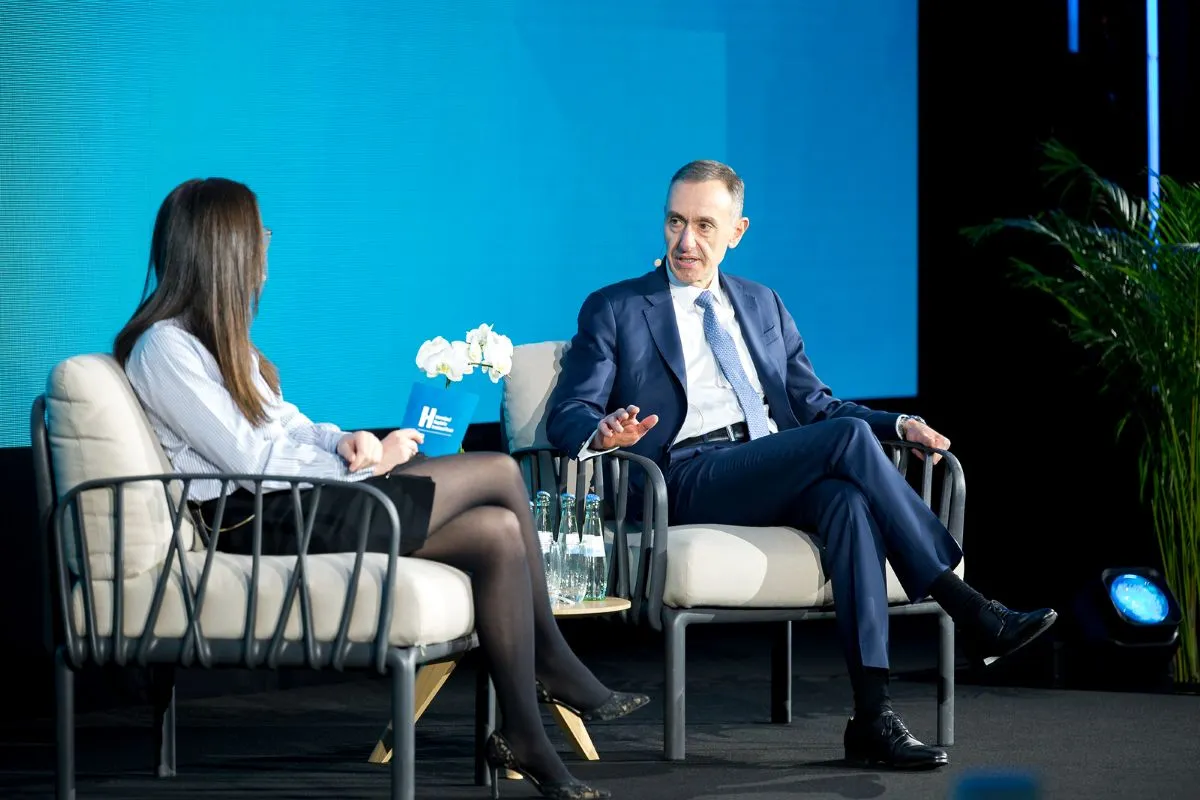
The International Hospitality Investment Forum, often regarded as the premier gathering for the European and global hotel investment community, served as the backdrop for Maalouf’s insights. The event brings together thousands of institutional investors, asset managers, and C-suite executives to discuss the capital flows and operational strategies shaping the future of travel. During a keynote session, Maalouf reflected on the rapid succession of global crises that have tested the hospitality industry over the past several years. He noted that while the specific nature of the disruptions varies from year to year, the necessity for a robust corporate response remains unchanged.
The Philosophy of Constant Volatility
Maalouf’s perspective on market volatility is rooted in the observation that the source of disruption is fluid. "Uncertainty is the only certainty we have," Maalouf stated during the Berlin summit. "Every year, I am unsure what the uncertainty will be, but it happens." This philosophical approach to management suggests that top-tier hotel groups are no longer waiting for a return to "normalcy." Instead, they are baking volatility into their long-term strategic planning.
To illustrate this point, Maalouf drew a comparison between the challenges of the previous fiscal year and the current landscape. In 2023, much of the industry’s focus was dominated by trade tensions, fluctuating tariffs, and the lingering logistical hurdles of the post-COVID era. In contrast, 2024 has been defined by the humanitarian and economic fallout of conflict in the Middle East, as well as persistent inflationary pressures in Western markets. While the external triggers are different, Maalouf argued that the impact on hotel operators requires a consistent internal framework. This framework relies on three core pillars: global scale, segment breadth, and the ability to maintain operational consistency amid external chaos.
A Chronology of Industry Disruption and Adaptation
The trajectory of the hospitality industry over the last five years provides the necessary context for Maalouf’s current stance. In 2019, the industry reached record highs in occupancy and RevPAR (Revenue Per Available Room). The subsequent total shutdown in 2020 due to the COVID-19 pandemic forced an unprecedented restructuring of the industry. By 2021 and 2022, the "revenge travel" phenomenon saw a surge in leisure demand, which allowed hotels to hike average daily rates (ADR) even as occupancy lagged behind pre-pandemic levels.
By 2023, the narrative shifted toward the recovery of business travel and the reopening of the Chinese market. However, this recovery coincided with aggressive interest rate hikes by central banks, including the U.S. Federal Reserve and the European Central Bank, aimed at curbing inflation. This created a dual-speed environment: while consumer demand remained surprisingly resilient, the cost of capital for new hotel developments skyrocketed, slowing down the construction pipeline for many developers.
Entering 2024, the industry faces a new set of geopolitical hurdles. The conflict in the Middle East has affected travel patterns not only within the region but also across Mediterranean destinations that share similar traveler demographics. Despite these headwinds, Maalouf and his peers at other "Big Six" hotel groups—including Marriott, Hilton, and Accor—have reported that the desire for travel remains a top priority for consumers, often taking precedence over other discretionary spending categories like luxury goods or home improvements.
Supporting Data: IHG’s Financial Foundation
The resilience Maalouf spoke of is backed by IHG’s recent financial performance data. In its full-year 2023 results, IHG reported a 16.1% increase in global RevPAR compared to 2022, and a significant 10.9% increase compared to the 2019 pre-pandemic benchmark. The company’s operating profit from reportable segments grew by 23%, reaching $1.02 billion. These figures demonstrate that despite the "chaos" Maalouf referenced, the financial engine of a diversified hotel group can continue to perform.
IHG’s portfolio currently spans nearly 6,400 hotels across 19 brands, ranging from the "Essentials" category (Holiday Inn, Holiday Inn Express) to "Luxury & Lifestyle" (InterContinental, Six Senses, Kimpton). This breadth is a deliberate hedge against economic volatility. When corporate budgets are tightened, the Essentials and Midscale segments often capture "trade-down" business. Conversely, when the wealthy remain unaffected by inflation, the Luxury segment continues to drive high margins.
The company’s development pipeline also serves as a metric for investor confidence. As of early 2024, IHG had approximately 297,000 rooms in its pipeline, representing more than 30% of its current system size. This growth is increasingly focused on "asset-light" models, where IHG manages or franchises the brand while third-party owners hold the real estate. This model insulates the parent company from the direct costs of property maintenance and debt service on the buildings themselves, allowing them to focus on brand equity and loyalty program engagement.
Official Responses and Peer Sentiment
The sentiment expressed by Maalouf in Berlin is echoed by other leaders in the hospitality investment space. During the same forum, representatives from major real estate investment trusts (REITs) and private equity firms noted that while they are cautious about the "higher-for-longer" interest rate environment, they remain bullish on hotel assets due to their ability to re-price rooms in real-time. Unlike commercial office space or retail leases, which may be locked in for years, hotels can adjust rates daily to offset inflationary costs—a feature that Maalouf highlighted as a key advantage of the hospitality sector.
Competitors such as Hilton’s CEO Christopher Nassetta and Marriott’s CEO Anthony Capuano have made similar remarks in recent earnings calls, emphasizing that the "normalization" of travel demand is not a sign of weakness but rather a transition to a more sustainable growth pattern. The consensus among these leaders is that the industry has moved past the volatile "recovery" spikes and is now entering a phase where professional management and global scale are the primary differentiators between success and stagnation.
Broader Impact and Strategic Implications
The implications of Maalouf’s "certainty of uncertainty" doctrine are far-reaching for the future of travel. First, it signals an acceleration of the "brand-first" strategy. As independent hotel owners face rising costs and complex distribution landscapes, the value proposition of joining a global chain like IHG becomes more compelling. Global groups provide access to massive loyalty programs—such as IHG One Rewards, which boasts over 130 million members—and sophisticated digital booking platforms that independent operators cannot replicate.
Second, the focus on diversification is leading to a geographic shift in investment. While Europe and North America remain the largest markets, IHG and its competitors are aggressively expanding in Greater China and the EMEAA (Europe, Middle East, Asia, and Africa) region. Maalouf’s strategy involves capturing the rise of the domestic traveler in markets like India and Saudi Arabia, where massive infrastructure investments are creating new hubs for tourism and commerce.
Third, the industry is seeing a structural shift in how "work" and "travel" are defined. The rise of "bleisure"—the blending of business and leisure travel—has extended the average length of stay and smoothed out the traditional midweek/weekend occupancy curves. Maalouf has previously noted that this trend provides a buffer against the volatility of traditional corporate travel, which has yet to fully return to 2019 volumes in certain sectors.
Fact-Based Analysis of the Path Forward
The "chaos" mentioned by Maalouf is not merely a hurdle to be cleared but a permanent feature of the 21st-century economy. For a global entity like IHG, the goal is to create a "weather-proof" business model. The data suggests that this is being achieved through a combination of aggressive brand segmentation and technological investment. By leveraging artificial intelligence for dynamic pricing and enhancing mobile app functionality, hotel groups are able to capture demand more efficiently, even when macroeconomic indicators are fluctuating.
However, challenges remain. The labor market in the hospitality sector continues to be tight, with rising wages putting pressure on property-level margins. Furthermore, the industry is under increasing pressure to meet ESG (Environmental, Social, and Governance) targets. Investors at IHIF Berlin frequently raised the issue of "green premiums" and the cost of retrofitting older properties to meet new carbon emission standards. Maalouf’s call for consistency will likely extend to these areas, as IHG seeks to standardize sustainability practices across its global franchise network.
Conclusion: Resilience as a Competitive Edge
Elie Maalouf’s address at IHIF Berlin serves as a definitive statement on the state of modern hospitality management. By embracing uncertainty rather than fighting it, IHG is positioning itself as a stabilizing force for hotel owners and investors alike. The strategy of utilizing scale to mitigate localized risks and leveraging a broad portfolio to capture diverse consumer segments has proven effective in the post-pandemic era.
As the industry looks toward the remainder of 2024 and beyond, the focus will remain on how these global giants navigate the next unforeseen disruption. Whether the challenge is geopolitical, economic, or technological, the message from the IHIF stage was clear: in an unpredictable world, the winners will be those who have built the infrastructure to stay consistent amid the chaos. The hospitality sector is no longer just about providing a bed for the night; it is about managing complex global systems that can withstand the inevitable shocks of a volatile global landscape.