


Houston, Texas – March 27, 2026 – In a significant move to accelerate lunar exploration and establish a sustainable human presence on the Moon, NASA has announced a new Commercial Lunar Payload Services (CLPS) initiative award to Intuitive Machines of Houston, Texas. The $180.4 million contract tasks the aerospace company with delivering a suite of critical science and technology payloads to the lunar South Pole region in 2030. This mission, the fifth CLPS contract awarded to Intuitive Machines, underscores NASA’s strategic reliance on commercial partners to pave the way for its ambitious Artemis program, which aims to return humans to the lunar surface.
The upcoming lunar delivery will carry seven distinct payloads, five of which are funded by NASA. These instruments and experiments are specifically designed to deepen humanity’s understanding of the lunar South Pole’s unique environment, focusing on the chemical composition and structure of its regolith – the layer of loose, rocky material covering the solid bedrock – as well as the pervasive radiation environment. The data gathered from this mission will be instrumental in preparing for future Artemis missions, providing crucial insights necessary for the long-term sustainability of human operations on the Moon and serving as a vital precursor to eventual human missions to Mars.
The CLPS Initiative: A Cornerstone of Lunar Exploration
The Commercial Lunar Payload Services (CLPS) initiative, established by NASA in 2018, represents a paradigm shift in how the agency approaches lunar exploration. Rather than solely developing and operating its own lunar landers, NASA procures end-to-end payload delivery services from American commercial companies. This innovative model is designed to foster a robust lunar economy, drive technological innovation within the private sector, and reduce the overall cost and time required for lunar missions. By leveraging commercial capabilities, NASA can send more science and technology to the Moon more frequently, gathering essential data and testing critical systems at a pace unachievable through traditional government-led programs alone.
The CLPS program is fundamentally about enabling rapid, repeatable access to the lunar surface for a wide array of scientific instruments, technology demonstrations, and resource prospecting tools. It acts as a vital bridge between scientific discovery and human exploration, providing critical reconnaissance and validation steps before astronauts set foot in new, unexplored territories. This particular award to Intuitive Machines is a testament to the program’s success and its ability to attract and empower private industry partners capable of meeting NASA’s stringent requirements for lunar deliveries.
Intuitive Machines: A Track Record of Lunar Landings
Intuitive Machines has emerged as a frontrunner in the nascent commercial lunar space. This $180.4 million contract marks their fifth CLPS award, building upon a growing legacy of successful lunar endeavors. The company made history with its IM-1 mission in February 2024, when its Nova-C lander, named "Odysseus," successfully touched down near the lunar South Pole. This monumental achievement marked the first time a privately built spacecraft from the United States had ever landed on the Moon, reigniting American presence on the lunar surface after more than five decades. The IM-1 mission delivered several NASA and commercial payloads, demonstrating the viability of the CLPS model and Intuitive Machines’ technical prowess.
Following IM-1, the company launched its IM-2 mission, further solidifying its operational experience and capacity for complex lunar logistics. While details of specific payloads and outcomes from IM-2 are continuously being analyzed, each mission provides invaluable data on lunar landing dynamics, surface operations, and payload performance in the harsh lunar environment. The cumulative experience gained from these previous missions positions Intuitive Machines as a highly capable and reliable partner for this upcoming 2030 delivery, particularly given the challenging target destination of the South Pole. Their demonstrated ability to navigate the complexities of lunar transit and soft landing is a critical factor in NASA’s continued confidence in their services.
Strategic Importance of the Lunar South Pole
The selection of the Moon’s South Pole as the landing site for this mission is not arbitrary; it is a strategic choice driven by compelling scientific and logistical considerations for the Artemis program. The lunar South Pole is considered a prime location for future human settlements due to the potential presence of significant quantities of water ice within permanently shadowed regions (PSRs) inside craters. This water ice is a game-changer for long-duration human missions, as it could be processed into potable water for astronauts, breathable oxygen, and, crucially, hydrogen and oxygen propellants for spacecraft. This "in-situ resource utilization" (ISRU) capability is vital for making lunar outposts sustainable and for enabling future missions to Mars without having to launch all resources from Earth.
Beyond water ice, the South Pole region offers areas of near-continuous sunlight along crater rims, which could provide consistent solar power for a lunar base. The unique thermal and radiation environments of these polar regions also present unparalleled opportunities for scientific research. Understanding the distribution and properties of water ice, analyzing the deep regolith structure, and monitoring the radiation flux are paramount before committing human crews to long-term stays. The data from this mission will inform the design of habitats, resource extraction equipment, and radiation shielding for future Artemis astronauts.
Payloads and Scientific Objectives: A Glimpse into Lunar Secrets
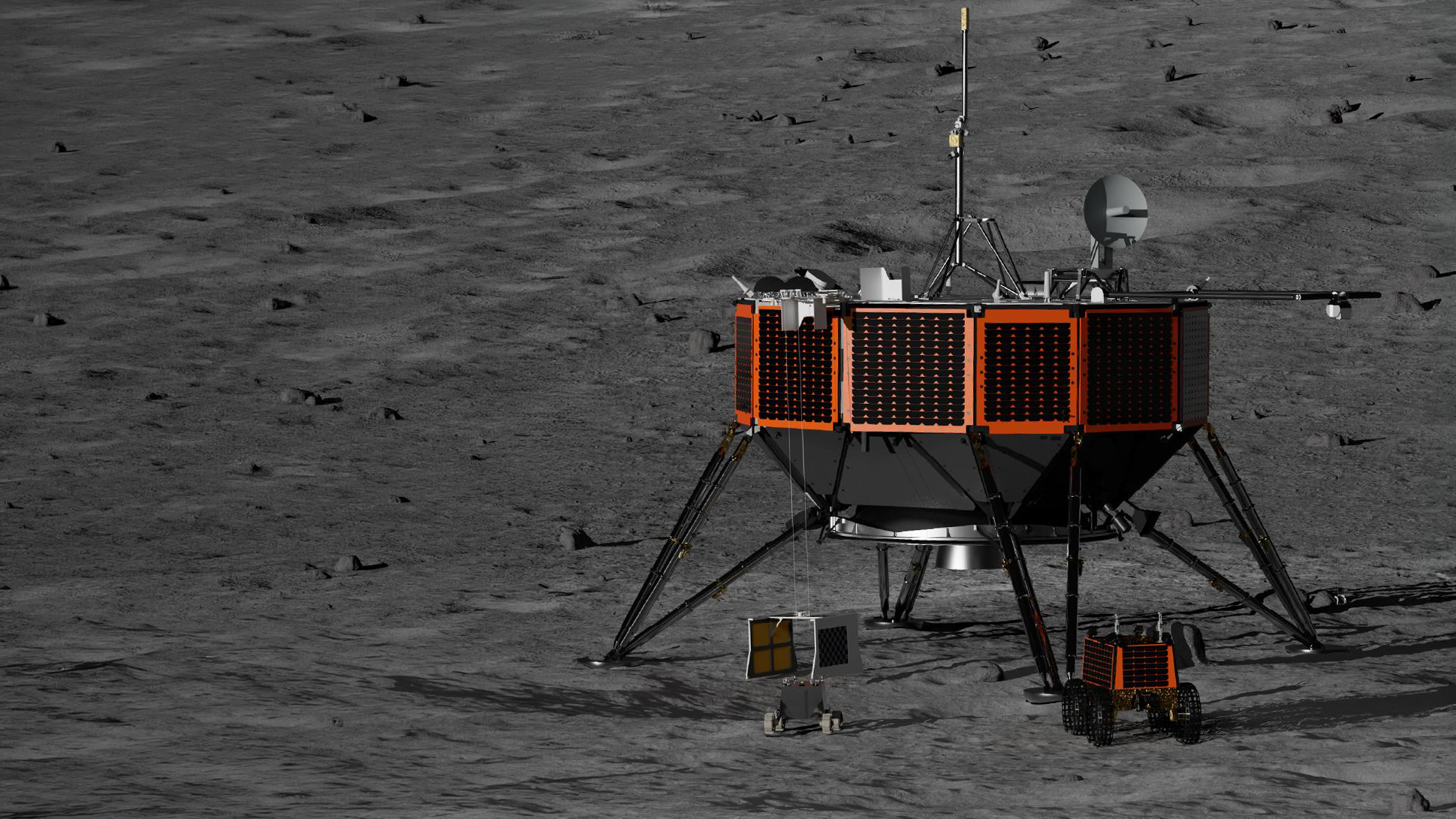
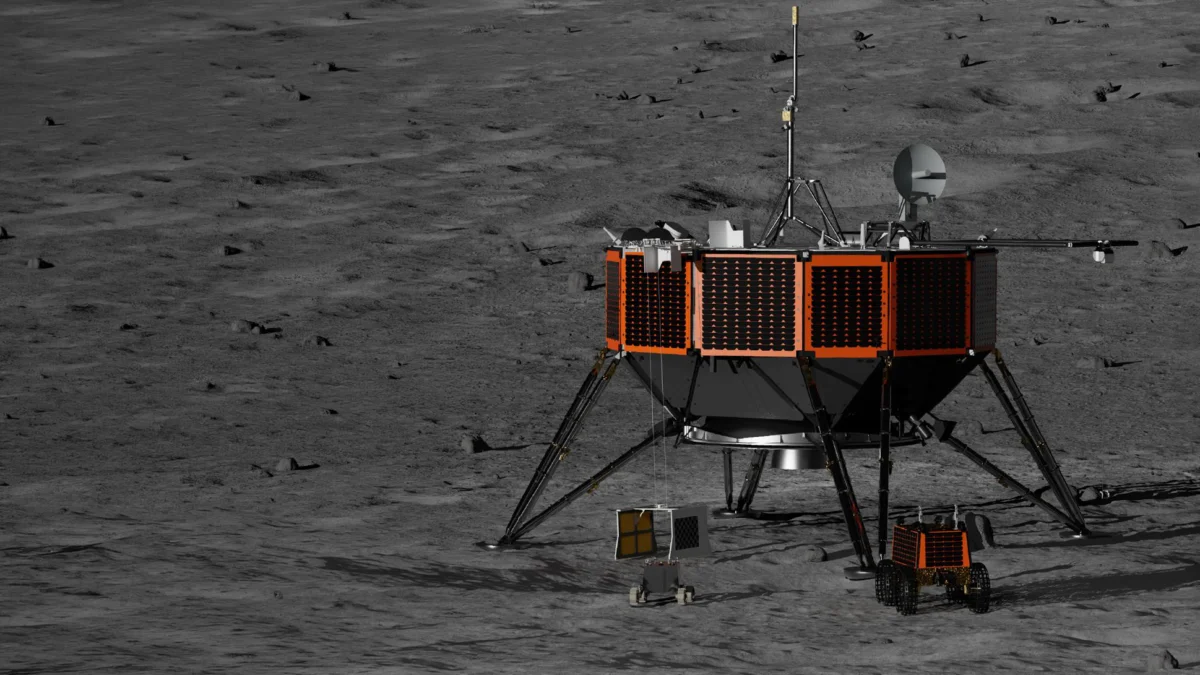
While the specific names and detailed functionalities of the seven payloads were not fully disclosed in the initial announcement, the overarching scientific objectives are clear and align directly with NASA’s lunar exploration goals. The 165 pounds (75 kilograms) of rovers and instruments are designed to address key unknowns about the South Pole. These typically include:
- Regolith Characterization Instruments: These could involve drills to sample subsurface regolith, spectrometers to analyze its elemental and mineralogical composition, and instruments to measure its physical properties like density and thermal conductivity. Understanding the regolith is critical for construction, resource extraction, and mitigating dust hazards for equipment and astronauts.
- Radiation Sensors: Monitoring the radiation environment is crucial for astronaut safety. These sensors would measure solar energetic particles and galactic cosmic rays, providing data essential for designing effective radiation shielding for habitats and spacecraft.
- Volatile Prospectors: Instruments designed to detect and quantify the presence of volatiles, particularly water ice, either on the surface or buried beneath it. This could involve neutron spectrometers, mass spectrometers, or specialized drills capable of extracting and analyzing samples from PSRs.
- Technology Demonstrations: CLPS missions often include technology demonstrations for future human exploration. These might involve testing new navigation systems, power generation concepts, communication relays, or even prototypes for resource extraction equipment.
- Surface Mobility Rovers: Small rovers can extend the reach of the lander, allowing for in-situ measurements across a wider area and accessing challenging terrains like crater rims or shadows.
Joel Kearns, deputy associate administrator for exploration, Science Mission Directorate, at NASA Headquarters in Washington, emphasized the mission’s dual purpose: "NASA continues to progress lunar science and exploration by enabling commercial lunar landings. These science and technology investigations aim to support long-term sustainability and contribute to a deeper understanding of the lunar surface, test technologies, and prepare for future human missions at the South Pole." This statement highlights the symbiotic relationship between scientific discovery and the practical necessities of human spaceflight.
Artemis Program: A Stepping Stone to Mars
This CLPS delivery is an integral component of NASA’s broader Artemis program, which represents humanity’s return to the Moon and a stepping stone for future deep space missions. The Artemis program is structured in several phases:
- Artemis I (2022): An uncrewed test flight of the Space Launch System (SLS) rocket and Orion spacecraft, successfully demonstrating the capabilities of NASA’s deep space transportation system.
- Artemis II (Targeted 2025): A crewed test flight around the Moon, validating Orion’s life support systems and operational procedures with astronauts aboard.
- Artemis III (Targeted 2026): The historic mission to land humans, including the first woman and first person of color, on the lunar South Pole.
The data and technological validations provided by CLPS missions like this one are critical for mitigating risks and maximizing the success of these crewed missions. The commercial landers are essentially "advance scouts," gathering information on landing hazards, resource availability, and environmental conditions that will directly influence the selection of landing sites for Artemis III and beyond. The long-term vision of Artemis includes establishing a sustainable lunar base camp at the South Pole and the Gateway lunar orbiting outpost, which will serve as a multi-purpose waystation for missions to the Moon and ultimately, Mars.
Adam Schlesinger, manager of the CLPS initiative at NASA’s Johnson Space Center in Houston, underscored this grander vision: "As NASA prepares to send humans and more robotic missions to the Moon, regular CLPS deliveries will provide a better understanding of the exploration environment, accelerating progress toward establishing a long-term human presence on the Moon, setting the stage for eventual human missions to Mars." This reinforces the idea that lunar exploration under Artemis is not an end in itself, but a crucial proving ground for the ultimate goal of interplanetary human travel.
Broader Implications: Commercialization and Future Exploration
The continuous awarding of CLPS contracts to companies like Intuitive Machines signifies a robust commitment from NASA to its commercial partners and the public-private partnership model. This approach is not only cost-effective but also fosters a vibrant commercial space ecosystem, stimulating innovation and creating jobs. It demonstrates that the private sector is capable of taking on increasingly complex missions, freeing NASA to focus its resources on developing cutting-edge research and the next generation of human spaceflight capabilities.
The success of CLPS missions also has significant implications for the future commercialization of space. As private companies gain experience and demonstrate reliability in lunar operations, the potential for non-NASA commercial ventures on the Moon grows. This could include lunar tourism, private resource extraction operations, and even manufacturing in space. The data and technologies validated through CLPS are openly shared, creating a foundation upon which a broader lunar economy can be built.
Looking ahead to 2030, this Intuitive Machines mission will be a pivotal moment in the ongoing exploration of the Moon. It represents another critical step in NASA’s journey to return humans to the lunar surface, understand its unique resources, and ultimately, extend humanity’s reach deeper into the solar system. The insights gained from the regolith and radiation studies at the South Pole will not only inform the design of future lunar habitats but also provide essential knowledge for the eventual complex journey of sending astronauts to Mars. The partnership between NASA and commercial entities like Intuitive Machines is thus not just about landing robots on the Moon; it is about forging a sustainable path for humanity’s future in space.
For more comprehensive information regarding NASA’s CLPS initiative and the Artemis program, please visit: https://www.nasa.gov/clps
Contact:
Tiffany Blake
Headquarters, Washington
202-358-2546
[email protected]
Kenna Pell / Ivry Artis
Johnson Space Center, Houston
281-483-5111
[email protected] / [email protected]