

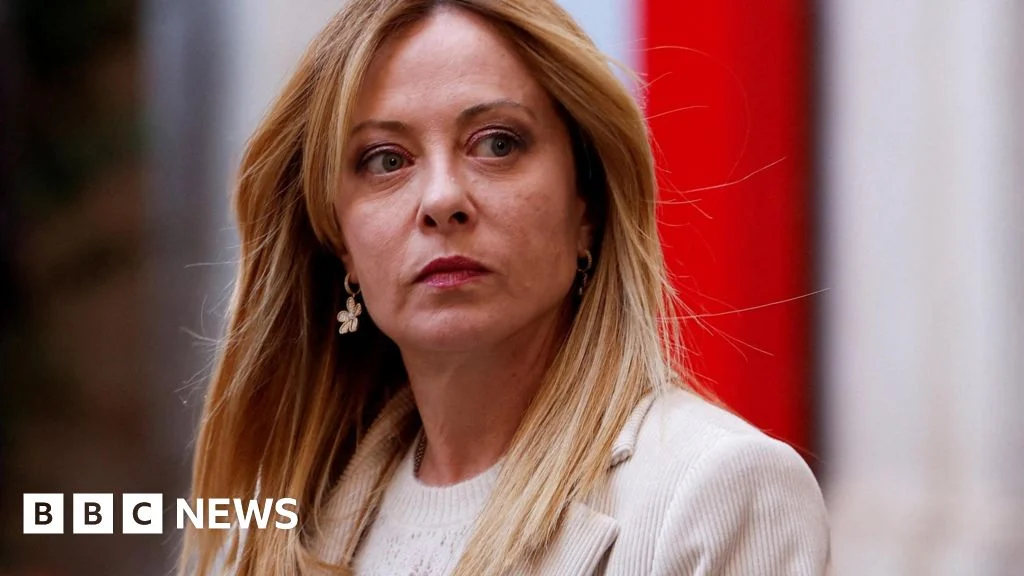
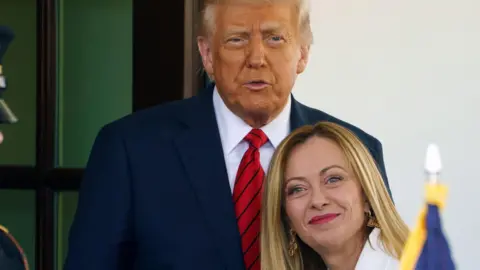
In a significant diplomatic development that underscores the complex interplay between faith, politics, and international alliances, Italian Prime Minister Giorgia Meloni has publicly condemned US President Donald Trump’s recent remarks about Pope Leo XIV as “unacceptable.” The rebuke from a staunch political ally marks a notable shift in the relationship between the two right-wing leaders and highlights the profound sensitivity surrounding criticism of the head of the Catholic Church. Trump’s scathing comments, delivered via his Truth Social platform and subsequently reiterated to reporters, accused the pontiff of being “WEAK on Crime and terrible for Foreign Policy,” further escalating an already tense exchange.
The Unprecedented Condemnation from a Key Ally
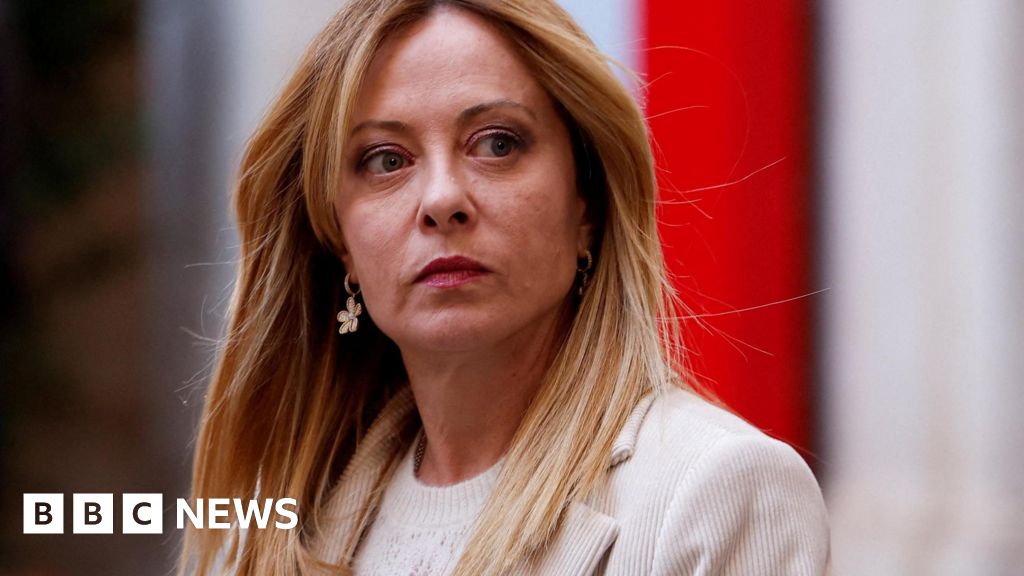
Prime Minister Meloni, a devout Catholic and leader of Italy’s right-wing coalition government, issued her statement after an initial period of perceived reluctance, drawing criticism from domestic opposition parties who urged a swifter response. "The Pope is the head of the Catholic Church, and it is right and normal for him to call for peace and to condemn every form of war," Meloni affirmed, implicitly defending the Pontiff’s traditional role in global affairs against Trump’s criticisms. This declaration from a leader who has cultivated a famously strong relationship with Trump, frequently positioning herself as a key European partner, signals a potential strain in their alliance. The two leaders have often found common ground on issues ranging from immigration control to national sovereignty, making Meloni’s public disagreement particularly impactful.
The domestic pressure on Meloni was palpable. Italian opposition factions had been vocal in questioning her silence, arguing that defending the Pope was a fundamental duty for any Italian leader, especially one leading a nation with such deep historical and cultural ties to the Vatican. Even within her own coalition, dissent emerged, with Matteo Salvini, leader of the populist League party and a prominent figure in Meloni’s government, stating unequivocally that "attacking the Pope… doesn’t seem like a useful or intelligent thing to do." Salvini’s comments, though less direct than Meloni’s, underscored a broad consensus across the Italian political spectrum regarding the sanctity of the papal office.
Trump’s Provocative Remarks and Escalation
The controversy erupted following a series of aggressive statements from President Trump. In a lengthy Truth Social post, he lambasted Pope Leo XIV, before doubling down on his criticisms in subsequent interactions with the press. He accused the pontiff of being "WEAK on Crime" and "terrible for Foreign Policy," later telling reporters that he was "not a big fan." These remarks were not isolated; Trump had specifically targeted the Pope’s stance on the Iran conflict, accusing him of being "weak on nuclear weapons" in apparent reference to Tehran’s alleged pursuit of nuclear capabilities, which the US and Israel cited as a casus belli for their current conflict with Iran.
Further inflaming tensions, Trump made a highly unusual and controversial claim regarding the Pontiff’s election, suggesting that Pope Leo XIV was chosen "because he was American, and they thought that would be the best way to deal with President Donald J Trump." He provocatively added, "If I wasn’t in the White House, Leo wouldn’t be in the Vatican." When pressed to elaborate, Trump continued his verbal assault, stating, "I don’t think he’s doing a very good job, he likes crime, I guess. He’s a very liberal person, and he’s a man who doesn’t believe in stopping crime, he’s a man who doesn’t believe we should be toying with a country that wants a nuclear weapon so they can blow up the world." These allegations painted a picture of a pontiff allegedly sympathetic to criminal elements and dangerously naive on geopolitical matters, directly challenging the Pope’s moral authority and diplomatic standing.
Papal Response and Steadfast Commitment to Peace
In response to Trump’s persistent attacks, Pope Leo XIV maintained a measured yet resolute tone, characteristic of papal diplomacy. Speaking to reporters aboard his plane en route to Algeria, where he was undertaking an 11-day trip to Africa, the Pontiff asserted his commitment to his spiritual mission over political entanglement. He stated that he did not wish to engage in a direct debate with Trump, reiterating his primary role as a messenger of peace. "I have no fear of the Trump administration, or speaking out loudly of the message of the gospel, which is what I believe I am here to do, what the Church is here to do," Pope Leo XIV declared. "I don’t want to get into a debate with [Trump]. Too many people are suffering in the world today. Too many innocent people are being killed. And I think someone has to stand up and say: there’s a better way to do this."
During his visit to Algeria, the Pope further underscored his commitment to global justice, using a speech to criticise "continuous violations of international law and neocolonial tendencies," urging world leaders to embrace principles of justice and solidarity. This statement, delivered amidst Trump’s criticisms, served as an indirect but potent reaffirmation of the Vatican’s independent moral compass and its role as a voice for the voiceless and a proponent of peaceful resolution in international conflicts. The Pope’s journey through Africa, a continent often afflicted by conflict and humanitarian crises, provided a powerful backdrop for his message of peace and solidarity, contrasting sharply with the confrontational rhetoric emanating from Washington.
A Strained Alliance: Meloni’s Diplomatic Tightrope
Meloni’s condemnation places her in a precarious position, balancing her ideological alignment with Trump against her nation’s deep Catholic identity and the universal respect accorded to the Pope. Her alliance with Trump has been a cornerstone of her foreign policy, aiming to elevate Italy’s standing on the global right. The two leaders have frequently met, exchanged compliments, and supported each other’s political agendas. For Meloni, distancing herself from Trump, even on a matter of such spiritual significance, carries political risks, potentially alienating a powerful international partner.
However, the domestic political cost of remaining silent was evidently deemed higher. Italy, a predominantly Catholic nation with over 57 million adherents, views the Pope not just as a religious leader but as a potent symbol of its cultural heritage and moral authority. Any perceived slight against the Pontiff is often met with widespread public disapproval. Meloni’s delayed but firm statement can be interpreted as a strategic move to assuage domestic critics, consolidate her base, and uphold Italy’s traditional respect for the Vatican, even if it means momentarily straining relations with a key ally. The incident highlights the inherent tension for right-wing leaders in Catholic countries who must navigate nationalist and populist sentiments while respecting traditional religious institutions.
Historical Context of Papal-Political Tensions
Direct public criticism of a Pope by a world leader, especially an ally, is a rare occurrence in modern diplomacy, underscoring the gravity of Trump’s actions. While Popes have historically engaged with political matters and leaders, overt personal attacks are generally avoided. The incident has drawn comparisons to historical periods of intense political pressure on the papacy. Prominent Italian Catholic commentator Massimo Faggioli remarked with striking historical context, "Not even Hitler or Mussolini attacked the Pope so directly and publicly." This comparison, though hyperbolic to some, highlights the perceived audacity and unprecedented nature of Trump’s critique in contemporary times.
Pope Leo XIV has, in fact, been a consistent voice on global conflicts and humanitarian issues, frequently denouncing violence and urging de-escalation in the Middle East and other troubled regions. His pronouncements on the Iran conflict, including his previous statement that Trump’s threat of a “whole civilisation will die tonight” was “truly unacceptable,” exemplify his commitment to peace. The Pope has also been a vocal critic of Trump’s hard-line immigration policies, questioning the moral consistency of those who claim to be "pro-life" while supporting what he described as the "inhuman treatment of immigrants."
This current dynamic echoes previous tensions between Trump and the Vatican. Pope Leo XIV is seen as continuing the humanitarian and social justice tradition of his predecessor, Pope Francis. During the 2016 US presidential election campaign, then-Pope Francis famously stated that Trump was "not Christian" because of his anti-immigrant rhetoric, a comment Trump described as "disgraceful." This history suggests a recurring ideological clash between Trump’s populist nationalism and the Vatican’s universalist message of peace, charity, and social justice.
The Global Catholic Community and Broader Implications
The reverberations of Trump’s criticism extend far beyond Italy. With over 70 million Catholics in the US, constituting about 20% of the population, the comments have significant domestic political implications. Notably, US Vice-President JD Vance is a Catholic, placing him in a potentially awkward position. The global Catholic community, numbering over 1.3 billion worldwide, often looks to the Pontiff as a moral authority, and attacks on his character or policy stances are rarely taken lightly.
The incident underscores the growing divergence between certain segments of the populist right and traditional religious institutions, particularly on issues of humanitarianism, immigration, and international conflict. While many conservative Catholics might align with Trump on domestic social issues, his direct assault on the Pope crosses a fundamental line for many.
The implications for international diplomacy are also noteworthy. The Vatican maintains diplomatic relations with over 180 states and is a significant moral voice on the world stage. Undermining the Pope’s authority can complicate diplomatic efforts, particularly in regions where the Vatican plays a mediatory role. For the US, an attack on the head of the Catholic Church risks alienating a significant global religious demographic and its political leaders, potentially impacting its soft power and moral standing.
Ultimately, Meloni’s decision to condemn Trump’s remarks, despite their close alliance, highlights the enduring power of the papacy and the cultural imperative for Italian leaders to defend the Pontiff. It also signals a potential limit to the unconditional support within the global right-wing movement, suggesting that even the strongest political bonds can be tested when fundamental religious and moral values are perceived to be under attack. As Pope Leo XIV continues his mission of peace, the diplomatic fallout from this extraordinary exchange will likely continue to shape the intricate relationships between political power, faith, and global influence.