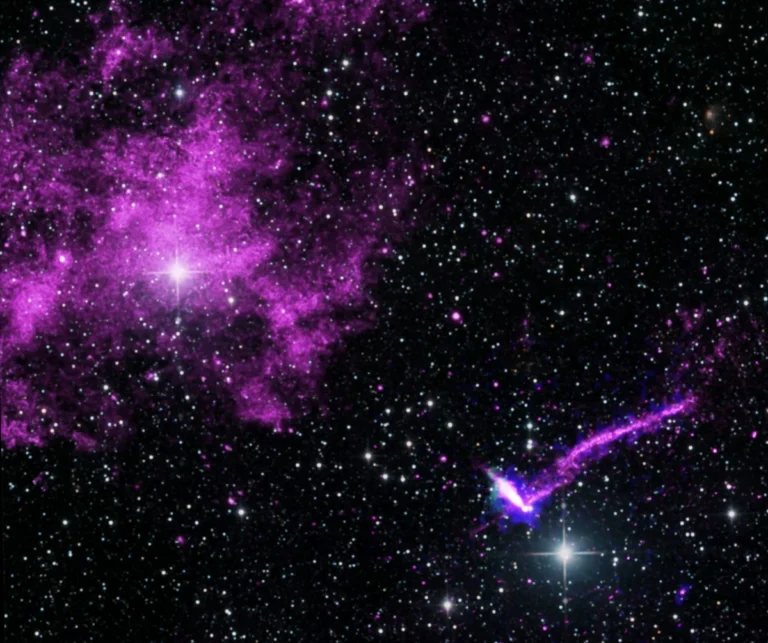



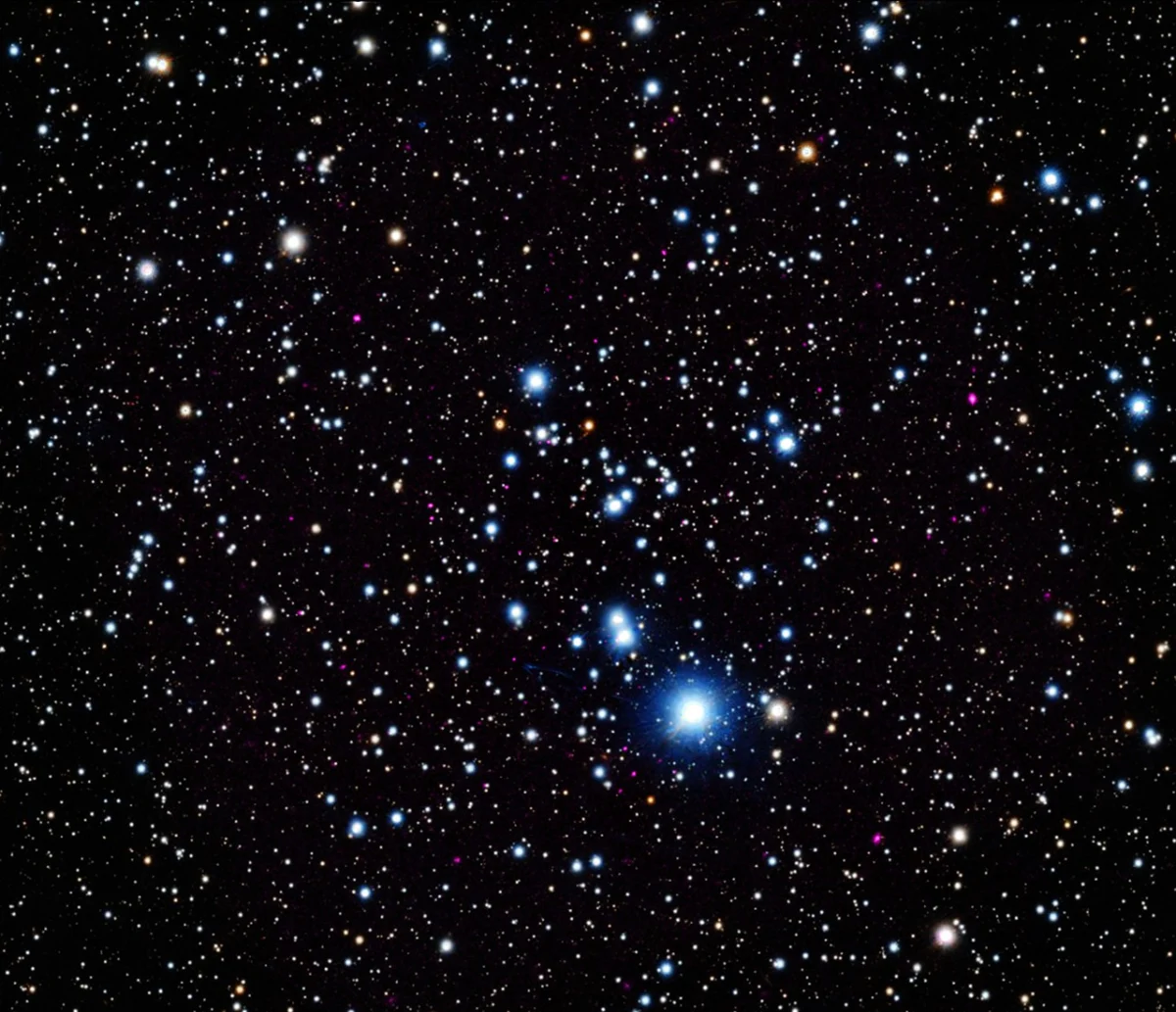
A groundbreaking new study utilizing NASA’s Chandra X-ray Observatory has revealed that the youthful stellar counterparts of our Sun are experiencing a more rapid decline in their X-ray emissions and calming down at a faster pace than previously understood. This significant discovery, detailed in a paper published Monday in The Astrophysical Journal, suggests a profound and unexpectedly positive implication for the potential development of life on planets orbiting these nascent stars. Far from posing a threat, as might be imagined in science fiction narratives like the recent movie "Project Hail Mary" where alien life consumes stellar energy, this natural quieting of young stars offers a beneficial environment for nascent planetary systems.
Unveiling the Early Lives of Sun-like Stars
Astronomers have long grappled with understanding the early, turbulent phases of stellar evolution, particularly how the intense radiation from young stars impacts their fledgling planetary companions. A critical component of this energetic output is high-energy X-rays, which possess the destructive potential to strip away planetary atmospheres, a vital prerequisite for the emergence and sustenance of life as we know it. The duration of this high-energy barrage has been a major unknown, leaving a substantial gap in models of exoplanet habitability.
This latest research endeavors to bridge that gap by scrutinizing eight carefully selected star clusters, spanning a broad age range from a relatively youthful 45 million years to a more mature 750 million years. These clusters serve as stellar nurseries and adolescent playgrounds, offering astronomers a unique opportunity to observe stars at different evolutionary stages. The findings were stark: Sun-like stars within these clusters were found to be unleashing only about a quarter to a third of the X-rays that theoretical models and prior, sparser observations had predicted for their age. This dramatic reduction in X-ray output fundamentally reshapes our understanding of the early environment around nascent solar systems.
Konstantin Getman, the lead author of the study from Penn State University, underscored the distinction between scientific reality and speculative fiction. "While science fiction – like the microbes in Project Hail Mary – imagines alien life that dims stellar output by consuming its energy, our real observations reveal a natural ‘quieting’ of young Sun-like stars in X-rays," Getman explained. "This is not because an outside force is consuming their light, but because their internal generation of magnetic fields becomes less efficient." This explanation points to an intrinsic stellar process rather than an external intervention, making the discovery even more compelling from an astrophysical perspective.
The Astrobiological Boon: A Calmer Cradle for Life
The implications of this newfound stellar serenity are profound, particularly for the field of astrobiology and the ongoing search for extraterrestrial life. The presence of large quantities of X-rays is a formidable obstacle to habitability. Such intense radiation can effectively erode a planet’s delicate atmosphere, preventing the formation and accumulation of complex molecules that are considered essential building blocks for organic life. A planet constantly bombarded by high-energy X-rays would struggle to retain its atmospheric gases, much less foster the intricate chemical reactions necessary for biological evolution.
To contextualize the observed dimming, previous studies have shown that a typical three-million-year-old star with a mass comparable to our Sun can produce approximately a thousand times more X-rays than the Sun does today. Even at 100 million years old, solar-mass stars were estimated to be about 40 times brighter in X-rays than our present-day Sun. The new findings indicate that this period of intense X-ray activity is curtailed much earlier and more sharply than previously modeled, allowing for a potentially more benign environment for planets during their crucial formative stages.
"It’s possible that we owe our existence to our Sun doing the same thing, several billion years ago, that we see these young stars doing now," commented co-author Vladimir Airapetian of NASA’s Goddard Space Flight Center in Greenbelt, Maryland. Airapetian eloquently connected the discovery to our own cosmic origins, suggesting that the early calming of our Sun’s X-ray output might have been a critical factor in Earth’s ability to develop and sustain life. "This real-world dimming echoes the dramatic stellar change in fiction, but it may be even more fascinating because it highlights our own Sun’s actual history."
The research team observed that stars with masses similar to our Sun undergo this rapid quieting relatively early in their lifespan, typically after only a few hundred million years. In contrast, stars with less mass tended to maintain their elevated X-ray emission levels for extended periods. This differentiation suggests that Sun-sized stars, combined with a decrease in the overall energy of the emitted X-rays and the disappearance of energetic particles, are seemingly better suited to host planets with robust atmospheres and potentially blossoming life than astronomers had previously surmised.
The Observational Campaign: A Multi-Wavelength Approach
To achieve these insights, the research team employed a sophisticated multi-telescope approach. The primary instrument was NASA’s Chandra X-ray Observatory, a flagship mission renowned for its unparalleled high-resolution X-ray imaging capabilities. Launched in 1999, Chandra orbits Earth at a high altitude, allowing it to capture X-ray emissions from the hottest and most energetic regions of the universe, including the coronae of young stars. Its sensitive detectors and precise optics were crucial for accurately measuring the relatively faint X-ray outputs of these more distant and dimmer stars.
Beyond Chandra, the study leveraged data from the European Space Agency’s (ESA) Gaia satellite. Gaia, launched in 2013, is a remarkable astrometry mission meticulously charting the positions, distances, and motions of billions of stars in our Milky Way galaxy. For this study, Gaia’s precise measurements were instrumental in identifying which stars were true members of the observed clusters, effectively filtering out foreground or background stars that could contaminate the data. This ensured that the X-ray measurements were accurately attributed to stars within the target age ranges.
Additionally, archival X-ray data from the ROSAT (ROentgen SATellite) mission was incorporated. ROSAT, a German-led X-ray astronomy satellite active in the early 1990s, provided valuable historical context and complementary data for studying the older star clusters.
The researchers meticulously conducted new Chandra observations of five star clusters, specifically targeting those with ages between 45 million and 100 million years, a crucial period for understanding early stellar activity. For the older clusters, ranging from 220 to 750 million years, they supplemented the new Chandra data with existing observations from both Chandra and the ROSAT archives. This comprehensive approach allowed for a robust, multi-epoch analysis of stellar X-ray evolution across a significant portion of a star’s early life.
Filling a Critical Observational Gap
Prior to this study, the X-ray output of stars within this specific age range (tens to hundreds of millions of years) had been notoriously difficult to study in detail. Most astronomers had to rely on relatively sparse data and theoretical models that predicted X-ray emission based on a star’s age and its rotation rate. It was generally understood that older and more slowly rotating stars would be fainter in X-rays. However, the new findings challenge this established paradigm: the team discovered that the X-ray output drops off approximately 15 times more rapidly than these derived relations had predicted during this specific "adolescent" phase of a star’s evolution.
"We can only see our Sun at this current snapshot in time, so to really understand its past we must look to other stars with about the same mass," said co-author Eric Feigelson, also from Penn State University. "By studying X-rays from stars that are hundreds of millions of years old, we have filled in a large gap in our understanding of their evolution." This statement highlights the profound importance of observing stellar analogs to reconstruct the Sun’s own tumultuous youth, offering a rare glimpse into the formative years of our solar system.
The Stellar Dynamo: Unraveling the Mechanism of Quieting
While the rapid dimming is now observationally confirmed, scientists are still actively investigating the precise physical mechanisms driving this unexpected behavior. The leading hypothesis centers on the process that generates magnetic fields within these stars, often referred to as the stellar dynamo. This dynamo effect, driven by the convection of plasma within a star’s interior and its rotation, is responsible for creating the powerful magnetic fields that manifest as starspots, flares, and the superheated corona – the source of much of a star’s X-ray emission.
The current theory suggests that as young Sun-like stars age and mature, the efficiency of this internal magnetic field generation may decrease more rapidly than previously thought. A less efficient dynamo would lead to weaker magnetic fields, which in turn would result in a less active corona and a corresponding reduction in X-ray output. This intrinsic stellar process, rather than any external influence, appears to be the primary driver behind the observed quieting.
Future research will undoubtedly delve deeper into this hypothesis, employing more sophisticated stellar models and continued observations to refine our understanding of the stellar dynamo and its evolution. Investigating other potential causes for the rapid dimming, such as changes in the star’s internal structure or rotational dynamics, will also be crucial in fully elucidating this fascinating aspect of stellar adolescence.
Broader Impact and Future Implications
The implications of this discovery extend far beyond merely refining our understanding of stellar evolution. For astrobiologists, it paints a more optimistic picture for the early habitability of exoplanets around Sun-like stars. If planets can experience a calmer, less hostile radiative environment earlier in their formation, they might have a greater chance of retaining their atmospheres, developing liquid water on their surfaces, and fostering the complex chemistry necessary for life. This could potentially expand the "window of habitability" in stellar systems and broaden the types of planets considered promising targets in the search for extraterrestrial life.
For planetary scientists, this research offers crucial new data for modeling the evolution of planetary atmospheres. Accurate models of stellar X-ray output are essential inputs for simulating how young planets acquire, retain, or lose their atmospheric gases. This could lead to more accurate predictions about the atmospheric compositions of exoplanets and a better understanding of how Earth’s own atmosphere evolved in the face of our young Sun’s early activity.
Ultimately, this study underscores the dynamic and often surprising nature of the cosmos. Our Sun, a beacon of stability for billions of years, was once a turbulent, X-ray-blasting behemoth. Understanding this early phase, through the careful observation of its younger cousins, is not just an academic exercise but a profound journey into our own cosmic origins and the very conditions that allowed life to flourish on Earth. The quest to unravel the universe’s secrets continues, with each new discovery bringing us closer to understanding our place within its grand tapestry.
The Chandra program is managed by NASA’s Marshall Space Flight Center in Huntsville, Alabama. Scientific operations are controlled by the Smithsonian Astrophysical Observatory’s Chandra X-ray Center in Cambridge, Massachusetts, while flight operations are managed from Burlington, Massachusetts.