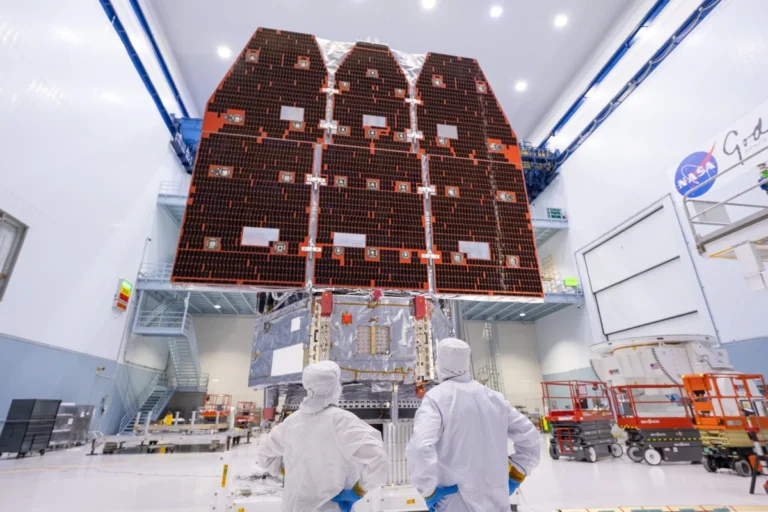


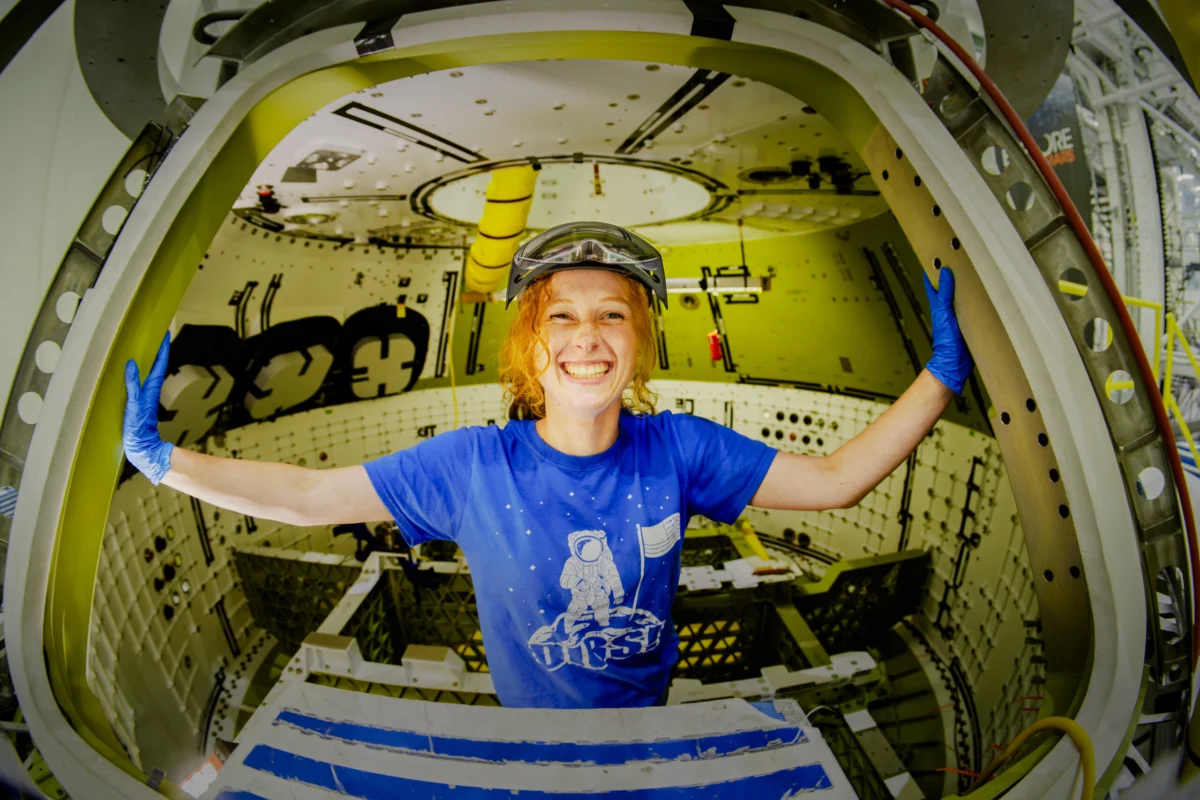
At NASA’s storied Kennedy Space Center (KSC) in Florida, the future of human deep-space exploration is meticulously crafted within the Operations and Checkout Building (O&C). Central to this monumental endeavor is Rebekah Tolatovicz, a mechanical technician lead whose expertise and hands-on dedication have been instrumental in the assembly, integration, and testing of every Orion spacecraft currently in production. As an employee of Arctic Slope Regional Corporation (ASRC Federal), supporting the Orion spacecraft’s prime contractor Lockheed Martin, Tolatovicz embodies the critical human element behind the machines destined to carry humanity back to the Moon and beyond. Her work spans from the intricate preparation of the Orion crew module for the upcoming Artemis II crewed test flight to the foundational development of spacecraft slated for future lunar landings. Her nine-year tenure on the Orion program has seen her evolve from a budding intern to a pivotal leader, directly contributing to missions that are reshaping humanity’s presence in space.
The Artemis Program: A New Era of Lunar Exploration
The Artemis program represents NASA’s ambitious initiative to return humans to the Moon for the first time since the Apollo era, establish a sustainable lunar presence, and ultimately prepare for human missions to Mars. This multi-phase program is designed to push the boundaries of human exploration further than ever before. Artemis I, an uncrewed test flight that launched on November 16, 2022, and successfully splashed down on December 11, 2022, served as a crucial validation of the Space Launch System (SLS) rocket and the Orion spacecraft. This mission demonstrated Orion’s capabilities in deep space, traveling over 40,000 miles beyond the Moon and returning safely. Artemis II, slated to be the first crewed test flight, will carry four astronauts on a lunar flyby, further testing Orion’s systems with humans aboard. Subsequent missions, such as Artemis III, aim to land astronauts on the lunar surface, including the first woman and first person of color, marking a significant step towards long-term lunar habitation and exploration. The overall vision extends to creating a sustained human presence on and around the Moon, utilizing resources, and developing technologies that will enable future voyages to Mars. This long-term strategic approach underscores the complexity and critical importance of every component, every test, and every individual involved in the program, including dedicated professionals like Rebekah Tolatovicz.
The Orion Spacecraft: Humanity’s Deep-Space Vessel
The Orion spacecraft is NASA’s state-of-the-art deep-space exploration vehicle, specifically designed to transport astronauts beyond low-Earth orbit. Comprising a Crew Module (CM) and a Service Module (SM), Orion is engineered to withstand the extreme conditions of space travel, including intense radiation, vacuum, and high-speed atmospheric re-entry. The Crew Module, where astronauts live and work, provides life support, propulsion, and re-entry capabilities. It can accommodate up to four astronauts for missions lasting several weeks. The Service Module, provided by the European Space Agency (ESA), powers and propels the spacecraft, supplying in-space propulsion, power, water, oxygen, and thermal control. Lockheed Martin serves as the prime contractor for the Orion spacecraft, overseeing its design, development, and assembly. This monumental task requires a vast network of suppliers, engineers, and technicians working in concert to ensure every system meets the stringent requirements for human spaceflight. The complexity of Orion, with its millions of individual parts and intricate systems, demands an unparalleled level of precision and expertise from the assembly teams. Each spacecraft represents years of dedicated effort, cutting-edge technology, and the collective ingenuity of thousands of individuals striving towards a common goal of pushing the boundaries of human exploration.
A Day in the Life: Precision and Versatility
For Rebekah Tolatovicz, a typical workday unfolds within the bustling environment of NASA Kennedy’s Operations and Checkout Building, a facility steeped in the history of human spaceflight. As a mechanical technician lead, her responsibilities are multifaceted, blending leadership with hands-on technical work. One moment, she might be coordinating the efforts of a team of technicians, ensuring tasks are aligned with strict timelines and safety protocols. The next, she could be directly engaged in the installation of critical components, her meticulous attention to detail ensuring flawless execution. Her role also necessitates close collaboration with the engineering team, providing crucial feedback from the assembly floor and working together to troubleshoot challenges or refine procedures. This dynamic environment, as Tolatovicz herself articulates, is what she finds most compelling. "What I really like about the area that I’m in is we do so much," she notes, emphasizing the breadth of technical involvement. "From starting with the bare structure and installing giant parts and titanium pieces, to final integration where you’re installing the tiniest little components. I think that’s the coolest part. We don’t do just one technical thing — it’s all the technical things." This statement highlights the unique demands of spacecraft assembly, where technicians must possess a diverse skill set, capable of working on both large-scale structural elements and microscopic, sensitive instruments.
From Bare Structure to Final Integration: The Craft of Assembly
The process of building an Orion spacecraft is a testament to human ingenuity and painstaking craftsmanship. It begins with the fundamental structure of the crew module, often referred to as the "bare structure," which gradually transforms into a fully functional spacecraft through thousands of hours of meticulous labor. Tolatovicz’s hands have contributed to this transformation at every stage. Her work involves the installation of significant mechanical systems, such as the spacecraft’s hatches, which must provide an airtight seal and robust structural integrity for crew safety. She also works on critical propulsion elements like the thrusters and engine components, which are vital for in-space maneuvering, orbital adjustments, and safe re-entry. These installations require not only mechanical aptitude but also an understanding of complex schematics, precise measurements, and adherence to rigorous quality control standards. As the spacecraft progresses, her focus shifts to "final integration," where the smallest, yet equally vital, components are installed. This phase can involve delicate wiring, sensor placement, and the connection of intricate subsystems that ensure the spacecraft’s overall functionality. The contrast between handling massive titanium structures and then working with minute electronic parts underscores the incredible range of skills required. Each step, from the initial structural assembly to the final closeout procedures, is critical, as any error could have catastrophic consequences in the unforgiving environment of deep space.
Artemis Missions: A Chronology of Progress and Preparation
Rebekah Tolatovicz has been intimately involved in the progression of the Artemis program, witnessing its significant milestones and actively preparing for future missions. Her work laid the groundwork for the uncrewed Artemis I mission, which successfully orbited the Moon in late 2022, validating the integrated performance of the SLS rocket and the Orion spacecraft. The data collected from Artemis I was invaluable, providing critical insights into Orion’s systems, thermal performance, and radiation shielding capabilities in deep space.
Currently, Tolatovicz is deeply immersed in the final preparations for the Artemis II crew module. This mission, projected to be the first crewed test flight, will carry four astronauts on a journey around the Moon. Her contributions to the Artemis II spacecraft have included extensive testing, intricate integration of various systems, and the final installation and closeout procedures before the spacecraft is prepared for fueling and stacking atop the powerful SLS rocket. These tasks are paramount to ensuring the safety and success of the astronauts who will embark on this historic voyage. Beyond Artemis II, Tolatovicz continues to work on the Orion crew modules destined for future Artemis missions, including those that will enable humanity’s return to the lunar surface. The continuous cycle of building, testing, and refining these complex vehicles is a testament to the long-term commitment and iterative development approach of NASA and its partners.
Mentorship and Growth: A Journey from Intern to Lead
Rebekah Tolatovicz’s journey to becoming a mechanical technician lead is a testament to dedication, mentorship, and a proactive learning attitude. She began her career as an intern with Lockheed Martin, a pathway facilitated by Eastern Florida State College’s esteemed aerospace technician program. This initial exposure to the aerospace industry placed her directly among veterans of the space program – technicians who had honed their skills during the iconic Space Shuttle era. These experienced individuals, with decades of accumulated knowledge and practical wisdom, became invaluable mentors. Tolatovicz openly acknowledges the initial intimidation of stepping into such a high-stakes environment. "At first I didn’t think I was going to make it," she admitted, reflecting on the steep learning curve. However, her perseverance, coupled with an eagerness to absorb knowledge, proved to be her greatest assets. "But if you come in with a good attitude and want to learn — there’s so much you can learn from these guys, they have decades of knowledge to share. Once I got down on the floor and was working with them hands-on, I knew I could figure it out." This statement underscores the critical role of mentorship in STEM fields, particularly in complex domains like aerospace engineering and manufacturing. The transfer of intergenerational knowledge, from those who built the shuttles to those now building the deep-space vehicles, is a foundational element ensuring continuity and excellence in NASA’s programs. Her nine years on the Orion program since that internship speak volumes about her growth, skill development, and unwavering commitment to her craft.
The Human Element in Spaceflight: Dedication and Impact
While the SLS rocket and Orion spacecraft represent pinnacles of engineering achievement, their success ultimately hinges on the dedication and expertise of the human teams on the ground. Individuals like Rebekah Tolatovicz embody this crucial human element. Her journey from a Maine native to a key contributor in America’s space program highlights the diverse talent pool drawn to these ambitious endeavors. Witnessing her work come to fruition, from the uncrewed Artemis I test flight to the ongoing preparations for the crewed Artemis II mission, is a profound experience. "It’s really amazing for me to be a part of NASA’s history and the next step," Tolatovicz shared, reflecting on the personal significance of her role. Her passion extends beyond the technical challenges; it encompasses a deep appreciation for her colleagues and the collaborative spirit that defines the program. "I just really love my job, the team, and working through challenges." The tangible connection to history and future exploration provides a unique sense of purpose. "You don’t think about it when you’re putting things on, but then you get to tell somebody else that you installed the thrusters for the spacecraft, and you realize — man, that’s pretty cool." This sentiment resonates across the entire ground crew, who, though not traveling to space themselves, are intimately connected to every launch and mission success. Their meticulous work ensures the safety and well-being of the astronauts, making them silent heroes of human spaceflight. NASA leadership and Lockheed Martin executives consistently emphasize that the success of complex missions like Artemis is a direct result of the unwavering commitment and exceptional skill of the entire workforce, from engineers to technicians.
Broader Implications: Shaping the Future of Exploration
The work performed by Rebekah Tolatovicz and her colleagues on the Orion program carries significant broader implications, extending far beyond the immediate goal of lunar exploration. The Artemis program itself is a catalyst for scientific discovery, driving advancements in materials science, life support systems, propulsion technologies, and autonomous operations. The data gathered from lunar missions will deepen humanity’s understanding of planetary geology, the origins of the solar system, and the potential for extraterrestrial resources. Economically, large-scale space programs like Artemis stimulate innovation, create high-tech jobs, and foster collaboration across industries and international partners. The development and production of the Orion spacecraft and SLS rocket support a vast supply chain, contributing to economic growth and technological competitiveness. Furthermore, the visible progress of the Artemis missions serves as a powerful inspiration for future generations. It sparks interest in science, technology, engineering, and mathematics (STEM) fields, encouraging young minds to pursue careers that push the boundaries of human knowledge and capability. The narrative of individuals like Tolatovicz, who started as an intern and rose to a leadership position through hard work and dedication, provides a relatable and aspirational model for aspiring engineers and technicians. The return to the Moon is not merely a repetition of past achievements but a strategic stepping stone, establishing the infrastructure and experience necessary for the audacious goal of human missions to Mars.
Rebekah Tolatovicz’s contributions to the Orion spacecraft fleet at Kennedy Space Center underscore the profound impact of skilled technicians on the success of human spaceflight. Her hands-on expertise, leadership, and dedication are integral to preparing the Orion crew modules for their historic journeys. As the Artemis program continues to unfold, propelling humanity back to the Moon and onward to Mars, the meticulous work performed by professionals like Tolatovicz will remain at the very core of these ambitious endeavors, ensuring that each spacecraft is not just a marvel of engineering, but a meticulously crafted vessel ready to carry humanity’s dreams into the cosmos.