

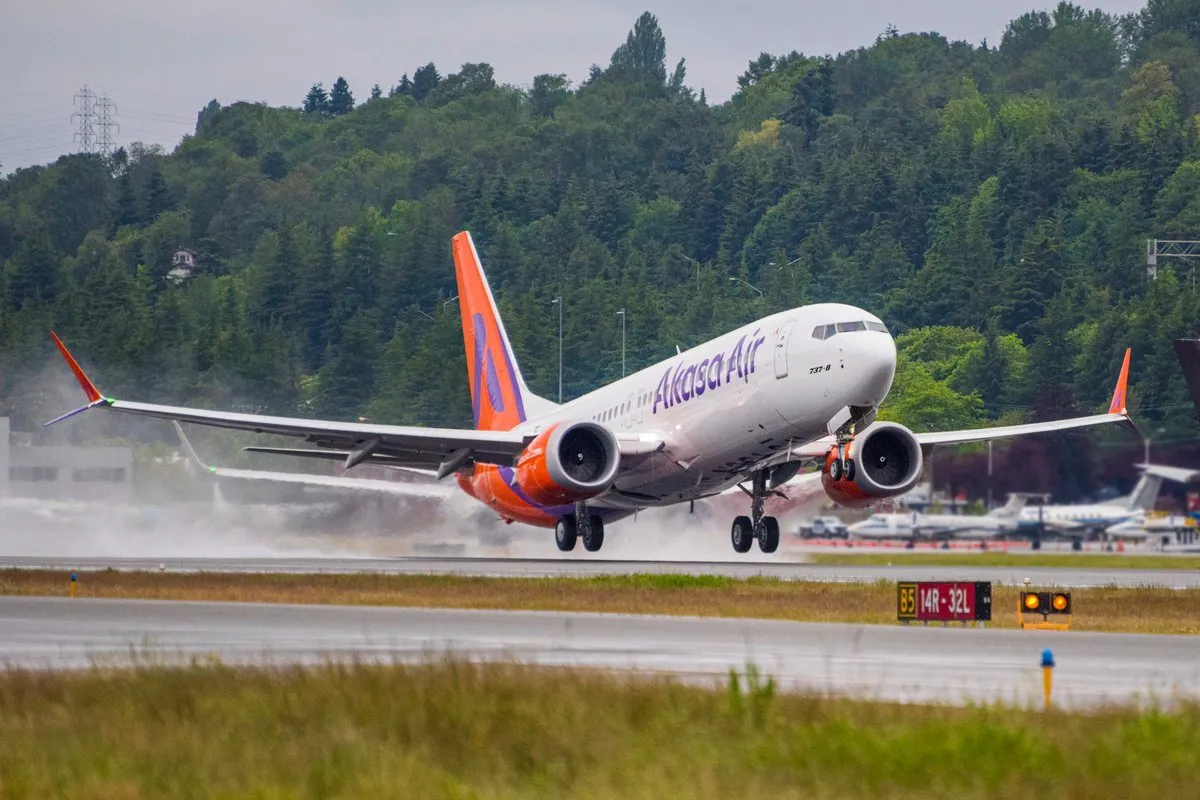
Akasa Air, India’s fastest-growing low-cost carrier, has officially announced its entry into the Vietnamese market with the commencement of direct flight operations between Mumbai and Hanoi starting September 4, 2024. This strategic move marks the airline’s seventh international destination and its second foray into Southeast Asia, following the successful launch of its service to Phuket, Thailand. The new route will feature four weekly non-stop flights, utilizing the carrier’s modern fleet of Boeing 737 MAX aircraft to connect India’s financial capital with the historic capital of Vietnam. This expansion comes at a critical juncture for the airline as it recalibrates its international growth strategy, moving away from a primary reliance on the Middle East toward more stable and rapidly growing corridors in the ASEAN region.
The Strategic Pivot to Southeast Asia
Since receiving government authorization to operate international flights in late 2023, Akasa Air has moved aggressively to establish its footprint beyond Indian borders. Initially, the airline’s roadmap was heavily weighted toward the Gulf Cooperation Council (GCC) countries. To date, Akasa has established routes to Doha (Qatar), Jeddah and Riyadh (Saudi Arabia), Abu Dhabi (United Arab Emirates), and Kuwait City. These destinations were chosen due to the high volume of labor migration, business travel, and religious tourism—particularly the Hajj and Umrah pilgrimages—which provide a steady stream of year-round traffic.
However, the geopolitical landscape in the Middle East has become increasingly complex. Ongoing regional conflicts and the resulting fluctuations in fuel prices and insurance premiums have introduced new layers of risk for carriers heavily exposed to the region. Furthermore, the saturation of the India-Gulf market, dominated by established giants like IndiGo, Air India, Emirates, and Qatar Airways, has made it difficult for newer entrants to secure lucrative time slots and expand their bilateral seat entitlements.
In contrast, Southeast Asia presents a "viable growth corridor" characterized by a burgeoning middle class, easing visa restrictions, and a post-pandemic surge in leisure travel. Vietnam, in particular, has emerged as a top-tier destination for Indian travelers. By launching the Mumbai-Hanoi route, Akasa Air is positioning itself to capture a share of a market that has seen a nearly 300% increase in Indian visitor arrivals compared to pre-pandemic levels.
Chronology of Akasa Air’s International Growth
The journey of Akasa Air from a domestic startup to an international player has been remarkably swift, occurring in less than two years since its inaugural flight in August 2022.
- August 2022: Akasa Air launches domestic operations with a flight from Mumbai to Ahmedabad.
- September 2023: The airline crosses the 20-aircraft threshold required by Indian regulations to fly internationally.
- March 2024: Akasa Air marks its international debut with four weekly flights between Mumbai and Doha.
- May-June 2024: Rapid expansion into the Saudi market with services to Jeddah and Riyadh, followed by the addition of Abu Dhabi and Kuwait City.
- July 2024: The airline ventures into Southeast Asia for the first time with flights to Phuket, Thailand.
- September 2024: Scheduled commencement of the Mumbai-Hanoi service, bringing the total international destination count to seven.
This timeline demonstrates a deliberate "hub-and-spoke" strategy centered on Mumbai, leveraging the city’s status as a primary international gateway to feed its growing overseas network.
Supporting Data: The India-Vietnam Economic and Tourism Corridor
The decision to prioritize Hanoi is backed by robust data indicating a deepening of economic and cultural ties between India and Vietnam. According to the General Statistics Office of Vietnam, India is now among the top ten source markets for tourism in the country. In 2023, Vietnam welcomed over 392,000 Indian tourists, a significant jump from the 169,000 recorded in 2019.
From a trade perspective, India and Vietnam have set a bilateral trade target of $20 billion in the near future. Vietnam’s role as a manufacturing alternative to China has attracted significant Indian investment in sectors such as pharmaceuticals, information technology, and renewable energy. Hanoi, as the political and administrative heart of Vietnam, serves as the primary entry point for business travelers engaging with Vietnamese government ministries and northern industrial zones.
Furthermore, the "China Plus One" strategy adopted by many global corporations has turned Vietnam into a logistics powerhouse. Increased connectivity through carriers like Akasa Air facilitates not just passenger movement but also high-value belly-hold cargo, including electronics and textile samples, which are vital to the trade relationship between the two nations.
Operational Capacity and Fleet Utilization
Central to Akasa Air’s international expansion is its exclusive use of the Boeing 737 MAX 8 and the high-capacity 737 MAX 8-200. As of mid-2024, the airline operates a fleet of 24 aircraft, with a massive backlog of over 200 additional units on order from Boeing. The 737 MAX is particularly well-suited for the Mumbai-Hanoi route, which spans approximately 3,400 kilometers and requires a flight time of roughly five hours.
The fuel efficiency of the MAX—offering a 15% to 20% reduction in fuel consumption and carbon emissions compared to previous generation aircraft—allows Akasa to maintain a competitive cost structure. This is essential for a low-cost carrier (LCC) competing in a price-sensitive market where travelers often weigh the cost of direct flights against cheaper, indirect options via hubs like Bangkok or Singapore.
The airline’s Chief Commercial Officer, Praveen Iyer, has previously emphasized that the airline’s international strategy is built on "operational reliability and cost leadership." By maintaining a young fleet with high daily utilization rates, Akasa aims to offer fares that stimulate demand among first-time international travelers from India’s Tier-1 and Tier-2 cities.
Competitive Landscape and Industry Reactions
Akasa Air’s entry into Vietnam places it in direct competition with both Indian and Vietnamese carriers. Currently, IndiGo and VietJet Air dominate the non-stop market between the two countries. Vietnam Airlines also operates services connecting major metros.
Industry analysts suggest that Akasa’s entry will likely lead to a temporary softening of airfares on the Mumbai-Hanoi route, benefiting consumers. "The addition of a third or fourth player on a specific international city-pair typically results in a 10-15% reduction in average ticket prices as carriers fight for load factors," noted a senior aviation analyst at a Mumbai-based brokerage.
While official statements from competing airlines have been reserved, the general consensus among industry stakeholders is that the India-Vietnam market is far from reaching a saturation point. The demand is currently outstripping supply, particularly during the peak winter tourism season (October to March). Akasa’s four-weekly frequency is seen as a conservative but scalable start, allowing the airline to test the market before committing to daily operations.
Broader Implications for Indian Aviation
The shift in Akasa Air’s focus is emblematic of a broader trend in Indian aviation: the diversification of international networks. For decades, Indian carriers were overly dependent on the "Gulf rush." However, with the Indian government actively negotiating new bilateral air service agreements with ASEAN and European nations, airlines are being encouraged to look eastward and westward simultaneously.
The expansion also highlights the resilience of the Indian LCC model. Despite the high-profile challenges faced by the global aviation industry—including supply chain disruptions at Boeing and engine issues affecting Airbus operators—Akasa Air has managed to maintain a steady growth trajectory. Its ability to pivot from the Middle East to Southeast Asia demonstrates an organizational agility that is necessary to navigate the volatile economics of modern air travel.
Furthermore, the Mumbai-Hanoi route supports the Indian government’s "Act East" policy, which seeks to strengthen economic and strategic relations with Southeast Asian nations. Enhanced air connectivity is a fundamental pillar of this policy, as it fosters people-to-people ties and eases the conduct of international business.
Future Outlook: Beyond Hanoi
Looking ahead to 2025 and 2026, Akasa Air is expected to continue its dual-track expansion. While the Middle East remains a core part of its long-term strategy—with Sharjah and other secondary Gulf cities still in the pipeline—Southeast Asia will likely see more frequent additions. Potential future destinations include Ho Chi Minh City (Vietnam), Kuala Lumpur (Malaysia), and Jakarta (Indonesia).
The airline’s success in Hanoi will serve as a litmus test for its ability to compete in markets where it does not have the "home-field advantage" of a large diaspora, as it does in the Middle East. Success in Vietnam will require a different marketing approach, focusing on lifestyle, tourism, and the burgeoning trade links that define the modern Indo-Pacific economy.
As Akasa Air prepares for its September 4 launch, the aviation industry will be watching closely. The move is more than just a new flight on a map; it is a calculated response to global instability and a bet on the long-term economic integration of Southern and Southeastern Asia. For Akasa, the road to sustainable profitability and international prestige now runs through the vibrant streets of Hanoi.