


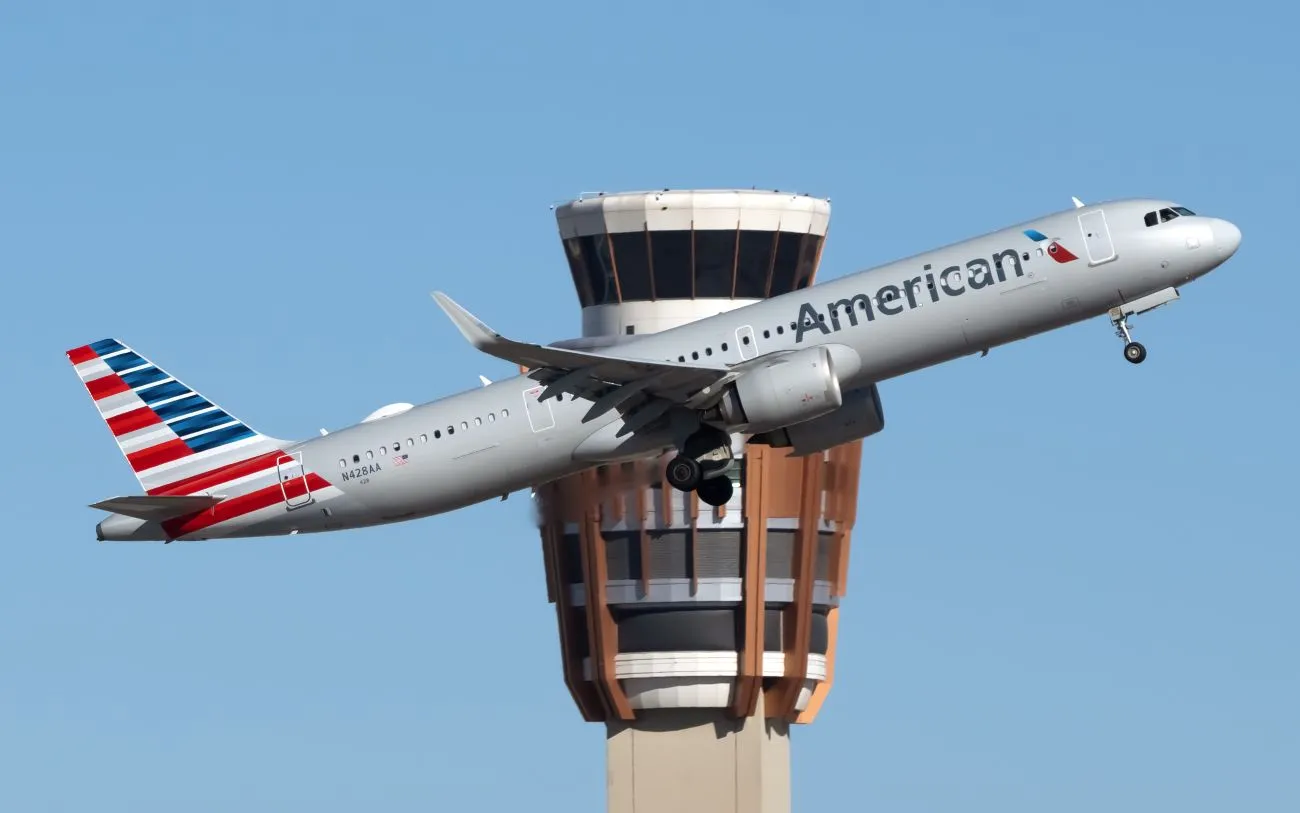
American Airlines officially announced on Friday that it has no interest in pursuing a merger with United Airlines, a definitive statement that comes just days after reports surfaced indicating United CEO Scott Kirby had privately floated the concept to senior government officials. The rejection halts what would have been the most significant transformation of the global aviation landscape in over a decade, effectively shutting down a proposal that aimed to combine two of the "Big Three" legacy carriers in the United States. In a formal statement released to address the growing speculation, American Airlines clarified that it is not engaged with or interested in any discussions regarding a merger with United Airlines, though the carrier acknowledged that the broader airline marketplace is currently facing significant structural challenges that may eventually necessitate industry-wide changes.
The proposal, which was reportedly pitched by Kirby during high-level meetings in Washington, D.C., was framed as a potential solution to the systemic instabilities currently plaguing the domestic aviation sector. According to sources familiar with the matter, the United CEO suggested that a consolidation of the two giants could create a more stable, resilient industry capable of navigating the high-cost environment and infrastructure constraints that have hindered growth since the pandemic. However, the swift and public rebuff from American Airlines suggests a fundamental disagreement between the two carriers regarding the path forward for the industry and the feasibility of such a massive undertaking under the current regulatory climate.
The Scope of a Potential Merger: By the Numbers
To understand the magnitude of what Scott Kirby proposed, one must look at the sheer scale of American Airlines and United Airlines. Both carriers are cornerstone institutions of global travel, and a combination would have created an entity of unprecedented size.
As of the end of 2023, American Airlines operated a mainline fleet of approximately 960 aircraft, while United Airlines maintained a mainline fleet of roughly 950 aircraft. Together, a merged entity would have controlled nearly 2,000 mainline jets, not including the hundreds of regional aircraft operated by their respective subsidiaries and partners like Envoy Air or United Express. In terms of market share, American and United each command approximately 17% to 19% of the U.S. domestic market. A combined carrier would have controlled nearly 40% of all domestic air travel, dwarfing competitors like Delta Air Lines and Southwest Airlines.
Financially, the implications are equally staggering. In 2023, American Airlines reported total revenue of approximately $53 billion, while United Airlines reported roughly $53.7 billion. A combined company would have boasted an annual revenue exceeding $100 billion, creating a corporate juggernaut with a global reach extending to nearly every continent. However, the combined debt loads—which increased significantly during the COVID-19 pandemic—would also have been a critical factor. American Airlines has been aggressively working to pay down its debt, which stood at over $30 billion, while United has focused its capital on its "United Next" strategy, involving massive orders for new Boeing and Airbus narrow-body aircraft.
A History of U.S. Airline Consolidation
The current structure of the U.S. airline industry is the result of a decades-long process of consolidation that transformed a fragmented market into one dominated by four major players: American, United, Delta, and Southwest. Understanding this history is essential to contextualizing why a United-American merger is viewed with such skepticism by regulators and competitors alike.
The modern era of consolidation began in earnest in 2005 when US Airways merged with America West. This was followed by the landmark 2008 merger between Delta Air Lines and Northwest Airlines, which created what was then the world’s largest carrier and set the blueprint for the "mega-mergers" to follow. In 2010, United Airlines merged with Continental Airlines, a move that integrated two massive networks and established the current United hub structure.
In 2011, Southwest Airlines acquired AirTran Airways to bolster its presence in the eastern United States and gain access to the Atlanta market. The final major piece of the puzzle fell into place in 2013, when American Airlines merged with US Airways. This deal was particularly complex, as American was navigating bankruptcy at the time. The 2013 merger was only allowed to proceed after the Department of Justice (DOJ) required the carriers to divest slots and gates at several key airports to maintain competition. Since then, the only significant transaction was Alaska Airlines’ acquisition of Virgin America in 2016.
The timeline of these mergers shows a clear trend toward the "Big Four" controlling over 80% of the domestic market. A merger between United and American would represent a reversal of the regulatory philosophy that has governed the industry for the last decade, which has focused on maintaining at least three global network carriers to ensure consumer choice.
The Regulatory Environment and the Department of Justice
One of the most significant hurdles to any potential United-American tie-up is the current stance of the U.S. Department of Justice and the Department of Transportation (DOT). Under the Biden administration, federal regulators have taken an increasingly aggressive approach toward antitrust enforcement in the aviation sector.
The most recent example of this is the DOJ’s successful block of the proposed $3.8 billion merger between JetBlue Airways and Spirit Airlines. The court ruled in favor of the government’s argument that the merger would harm price-sensitive consumers by eliminating the nation’s largest ultra-low-cost carrier. Furthermore, the DOJ successfully dismantled the "Northeast Alliance" between American Airlines and JetBlue, arguing that the partnership functioned as a de facto merger in the New York and Boston markets, stifling competition and leading to higher fares.
Given this backdrop, the idea of United and American merging—two carriers that already dominate massive hubs in Chicago, Los Angeles, and Washington, D.C.—would likely face insurmountable legal challenges. Industry analysts suggest that the DOJ would view such a merger as a move toward a duopoly or triopoly that would be fundamentally "anti-consumer." The concentration of power at key airports like Chicago O’Hare, where both United and American maintain their primary mid-continent hubs, would be a particular point of contention.
Strategic Motivations: Why Scott Kirby Pitched the Deal
Despite the obvious regulatory challenges, Scott Kirby’s decision to pitch a merger reflects a strategic calculation regarding the future of the industry. Kirby, who previously served as the President of American Airlines before moving to United, possesses a deep understanding of both companies’ operations and cultures.
His motivation likely stems from the desire to create an airline that could definitively surpass Delta Air Lines in terms of profitability and premium market share. Delta has long been the industry leader in operational reliability and financial performance. By combining United’s extensive international network with American’s powerful domestic presence in the "Sunbelt" (hubs like Dallas/Fort Worth, Charlotte, and Miami), Kirby may have envisioned a carrier that would be "too big to fail" and capable of dictating market trends.
Furthermore, the industry is currently grappling with a "two-tier" recovery. While demand for travel is high, legacy carriers are struggling with skyrocketing labor costs, delayed aircraft deliveries from Boeing, and rising fuel prices. Consolidation is often seen by executives as a way to "rationalize" capacity—essentially reducing the number of flights to increase ticket prices and improve margins. From Kirby’s perspective, a merger might have been the only way to achieve the scale necessary to offset these mounting costs.
Official Responses and Industry Reaction
The response from American Airlines was not just a rejection of the deal, but a signal to the market that it intends to remain independent. In their statement, American emphasized that while they believe "changes in the broader airline marketplace may be necessary," they do not believe a combination with United is the answer. This suggests that American may be looking toward other forms of restructuring, perhaps focusing on internal cost-cutting or smaller, less controversial partnerships.
Labor unions, which hold significant power in the airline industry, have also reacted with caution. The Air Line Pilots Association (ALPA), which represents United pilots, and the Allied Pilots Association (APA), which represents American pilots, would have to agree on a combined seniority list—a process that has historically been one of the most contentious aspects of any airline merger. Past mergers, such as the United-Continental deal, were plagued for years by labor integration issues that impacted operational reliability.
Industry analysts have largely characterized the pitch as "dead on arrival." Many believe that even if the airlines were both willing, the political climate makes such a deal impossible. "There is zero appetite in Washington for more airline consolidation," noted one senior industry analyst. "The focus right now is on more competition, not less. Proposing a merger between the two largest carriers in the country is a non-starter in this regulatory environment."
Broader Impact and the Future of the "Big Three"
The fallout from this rejected proposal will likely have long-term implications for how these airlines compete. For United, the rejection means Scott Kirby must find other ways to execute his "United Next" growth plan without the benefit of American’s domestic footprint. United will likely continue to focus on its international expansion and its efforts to capture more of the premium travel market.
For American Airlines, the focus remains on debt reduction and improving its operational efficiency in its core hubs. American has recently pivoted its strategy to focus more on short-haul domestic flying and leveraging its dominant position in the Southeast and Southwest U.S. This "Sunbelt" strategy is designed to capitalize on the population shifts occurring within the United States, focusing on markets where American has a geographic advantage.
The discussion also raises questions about the future of the remaining smaller players in the industry. If the "Big Three" are unable to merge, will we see more attempts at consolidation among mid-tier carriers like Alaska, Hawaiian, or JetBlue? The ongoing attempt by Alaska Airlines to acquire Hawaiian Airlines is currently under regulatory review and will serve as a bellwether for the future of industry consolidation.
Ultimately, the brief flirtation with a United-American merger serves as a reminder of the volatility and ambition that define the aviation sector. While the deal is off the table for now, the underlying pressures that led Scott Kirby to make the pitch—high costs, infrastructure constraints, and intense competition—remain unresolved. The industry continues to search for a path toward sustainable profitability, but for the time being, that path will not involve a merger between the nation’s two largest traditional carriers.