

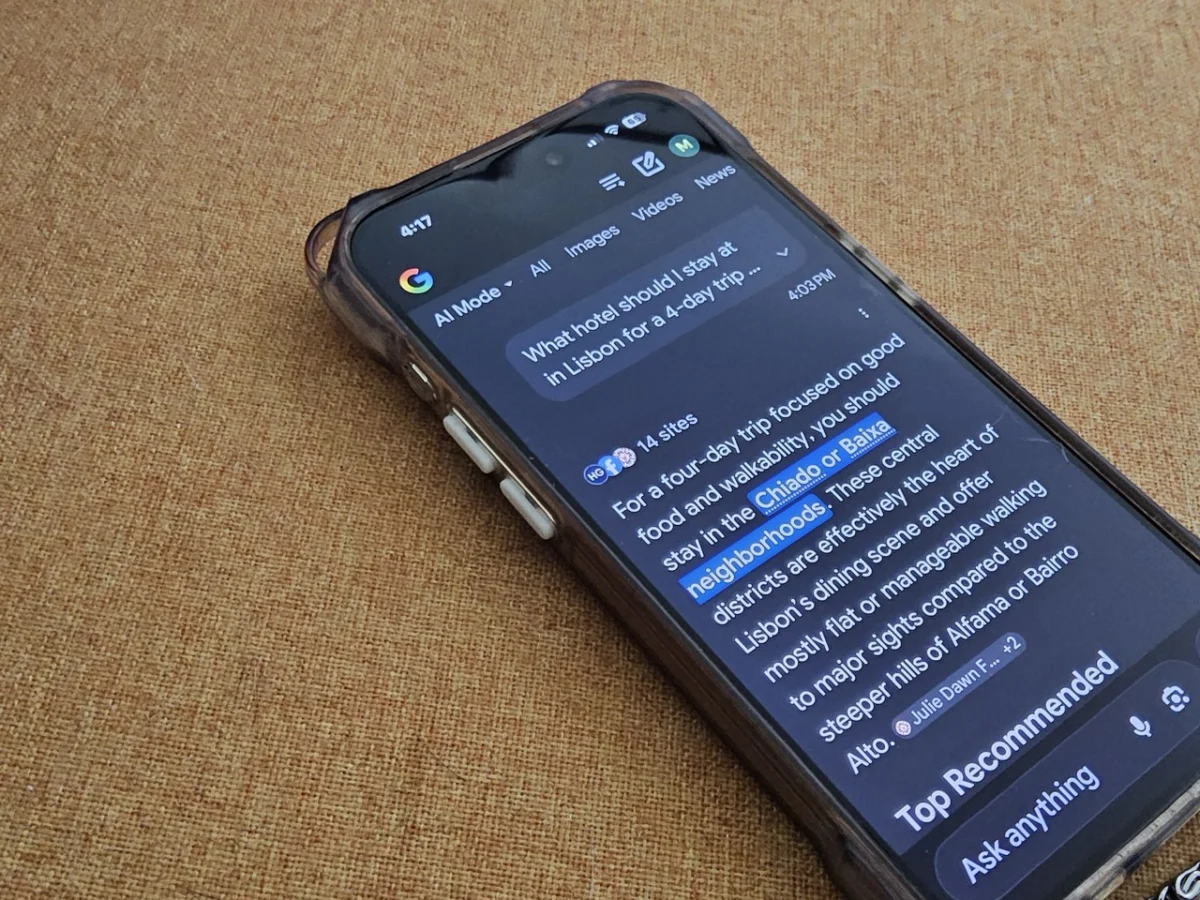
Google has officially announced the expansion of its AI-driven advertising suite, specifically extending the capabilities of Performance Max—often referred to in the industry as AI Max—to travel brands worldwide. This strategic shift, unveiled on Thursday, marks a departure from the traditional keyword-centric advertising model that has defined digital travel marketing for over two decades. By integrating hotel ads, property promotions, and direct booking links into its sophisticated AI-driven search surfaces, Google is fundamentally altering how travel companies interact with potential travelers. The update allows travel-specific formats to appear within AI Overviews and the new "AI Mode," where the search engine provides direct, synthesized answers to complex travel queries.
The transition represents a significant evolution in the relationship between Google and the travel industry. For years, travel marketers relied on granular control over specific keywords—such as "best hotels in London" or "cheap flights to Paris"—to drive traffic. Under the new AI Max framework, Google’s machine learning algorithms interpret user intent from conversational and multi-faceted queries, matching them with the most relevant travel offerings across its entire ecosystem, including Search, YouTube, Display, Maps, and Discover.
The Shift from Keywords to Conversational Intent
For nearly twenty years, the backbone of travel search engine marketing (SEM) was the keyword. Advertisers bid on specific terms, optimized landing pages for those terms, and measured success based on direct clicks from a Search Results Page (SERP). However, the rise of Large Language Models (LLMs) has enabled Google to move toward "intent-based" matching.
With the rollout of AI Overviews (formerly known as the Search Generative Experience), Google is increasingly answering travel questions directly on the results page. A user might ask, "What are the best boutique hotels in Kyoto for a family of four that are near the subway and have traditional breakfast?" Previously, such a query might have yielded a list of links to travel blogs or Online Travel Agencies (OTAs). Now, Google’s AI synthesizes information from across the web to provide a coherent recommendation.
By bringing travel advertisers into the AI Max system, Google is ensuring that commercial content—such as property photos, real-time pricing, and booking buttons—is woven into these AI-generated responses. This ensures that even as organic traffic patterns shift due to AI-generated summaries, travel brands can still maintain visibility by participating in the automated auction system that powers these new surfaces.
A Chronology of Google’s Travel and AI Integration
To understand the magnitude of this shift, it is necessary to look at the timeline of Google’s developments in both the travel sector and artificial intelligence:
- 2010-2011: Google acquires ITA Software, the foundation for Google Flights, signaling its intent to become a primary player in travel discovery.
- 2019: The launch of "Google Travel," a centralized hub for flights, hotels, and vacation rentals, streamlining the user experience.
- 2021: Google introduces Performance Max (PMax), a new goal-based campaign type that allows performance advertisers to access all of their Google Ads inventory from a single campaign.
- May 2023: At the I/O developer conference, Google introduces the Search Generative Experience (SGE), bringing AI-driven summaries to the top of search results.
- March 2024: Google begins testing "Performance Max for Travel Goals," specifically designed to help hoteliers increase direct bookings.
- Late 2024: The current expansion integrates these travel goals into the broader AI Overview ecosystem, removing the reliance on manual keyword bidding in favor of AI-interpreted conversational search.
Supporting Data: The Efficiency of AI-Driven Campaigns
Google’s push toward AI Max is backed by data suggesting that automation outperforms manual campaign management in the current digital landscape. According to internal Google data, advertisers who use Performance Max campaigns see an average increase of 18% in total conversions at a similar cost per action (CPA).
In the travel sector, where the path to purchase is often non-linear and involves multiple touchpoints—from watching a travel vlog on YouTube to checking a location on Maps—the ability of AI to track a user across platforms is a significant advantage. Data from McKinsey & Company suggests that travel consumers now visit an average of 38 sites before booking a trip. AI Max is designed to intercept these users at various stages of the funnel, using "Value-Based Bidding" to prioritize users who are most likely to complete a high-value booking.
Furthermore, Google’s research indicates that conversational queries are growing faster than traditional short-tail keyword searches. Mobile searches for "where to stay" combined with specific activities or amenities (e.g., "where to stay in NYC for marathon runners") have seen a double-digit percentage increase year-over-year. The AI Max system is specifically engineered to capitalize on this long-tail, high-intent traffic that traditional keyword bidding often misses.
The Tradeoff: Transparency for Reach
The primary concern among travel marketers and digital agencies is the "black box" nature of AI Max. In a traditional search campaign, an advertiser can see exactly which keywords triggered their ad, allowing for precise negative keyword lists and budget allocation. With AI Max, Google’s algorithms make these decisions in real-time.
"The price of this increased reach is the loss of keyword control," noted one digital marketing executive from a major European hotel chain. "We are essentially trusting Google’s AI to understand our brand values and our target demographic without the manual levers we’ve used for twenty years."
This loss of control also extends to reporting. While Google provides "Insights" reports, they do not offer the same level of granular data as legacy Search campaigns. For travel brands with strict brand safety requirements or specific niche markets, the transition requires a significant leap of faith in the accuracy of Google’s intent-matching capabilities.
Official Responses and Industry Reactions
While Google’s official stance emphasizes "unlocking new opportunities" and "simplifying the path to booking," the industry reaction has been a mix of cautious optimism and strategic pivot.
In a statement following the announcement, Google representatives emphasized that the new tools are designed to help travel brands "show up where it matters most," particularly as consumer behavior shifts toward more complex, natural language searches. The company also teased upcoming travel-specific tools, including AI-driven creative assets that can automatically generate video and image content based on a hotel’s website to be used across the Google Network.
Online Travel Agencies (OTAs) like Expedia and Booking.com, who are among Google’s largest advertisers, have already begun heavily testing AI-integrated bidding. For these giants, the shift is an opportunity to leverage their massive first-party data sets. By feeding their own customer data into Google’s AI Max system, they can train the algorithm to find users with similar profiles to their most loyal customers.
Conversely, independent hoteliers and smaller travel brands express concern that the "pay-to-play" nature of AI Overviews will favor those with the largest budgets and the most robust data sets, potentially crowding out smaller players who previously relied on savvy SEO and niche keyword targeting.
Broader Impact and Implications for the Travel Ecosystem
The expansion of AI Max into travel carries several long-term implications for the broader digital ecosystem:
1. The Decline of Organic SEO in Travel
As AI Overviews take up more "above-the-fold" real estate on the SERP, organic links are pushed further down the page. This "zero-click" trend means that users can find the information they need—and even start the booking process—without ever visiting a third-party travel blog or a hotel’s own website. For travel publishers, this necessitates a shift toward providing high-value, unique perspectives that AI cannot easily replicate.
2. The Importance of First-Party Data
In an AI-driven advertising world, the "signal" provided by the advertiser is more important than the keyword. Travel brands will need to focus on collecting and organizing their own customer data (stay history, preferences, loyalty status) to feed into Google’s system. This data becomes the "fuel" that allows AI Max to distinguish between a casual browser and a high-value traveler.
3. Creative as the New Variable
With bidding and targeting handled by AI, the primary lever left for advertisers is creative content. The quality of images, the clarity of property descriptions, and the appeal of video assets will become the deciding factors in conversion. Google’s move to provide AI-assisted creative tools suggests that the company wants to lower the barrier to entry for high-quality visual advertising.
4. Integration with the "Travel Concierge"
Google is clearly positioning its search engine to act as an AI travel concierge. By integrating booking links directly into conversational results, Google is shortening the distance between "I want to go somewhere" and "I have booked a room." This puts Google in even more direct competition with OTAs, as it seeks to own the entire discovery and planning phase of the traveler’s journey.
Conclusion
The expansion of AI Max to travel brands is not merely a product update; it is a fundamental restructuring of the digital travel marketplace. By trading keyword control for the predictive power of artificial intelligence, Google is betting that intent-based matching will provide a more seamless experience for users and better returns for advertisers. As the travel industry adapts to this new reality, the focus will shift from manual optimization to data strategy and creative excellence. The era of the keyword is effectively ending, replaced by a sophisticated, AI-mediated dialogue between travelers and the brands that serve them.