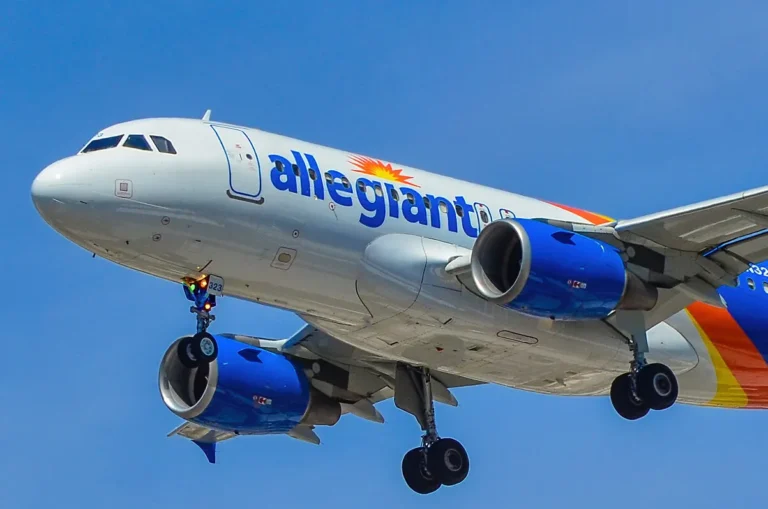



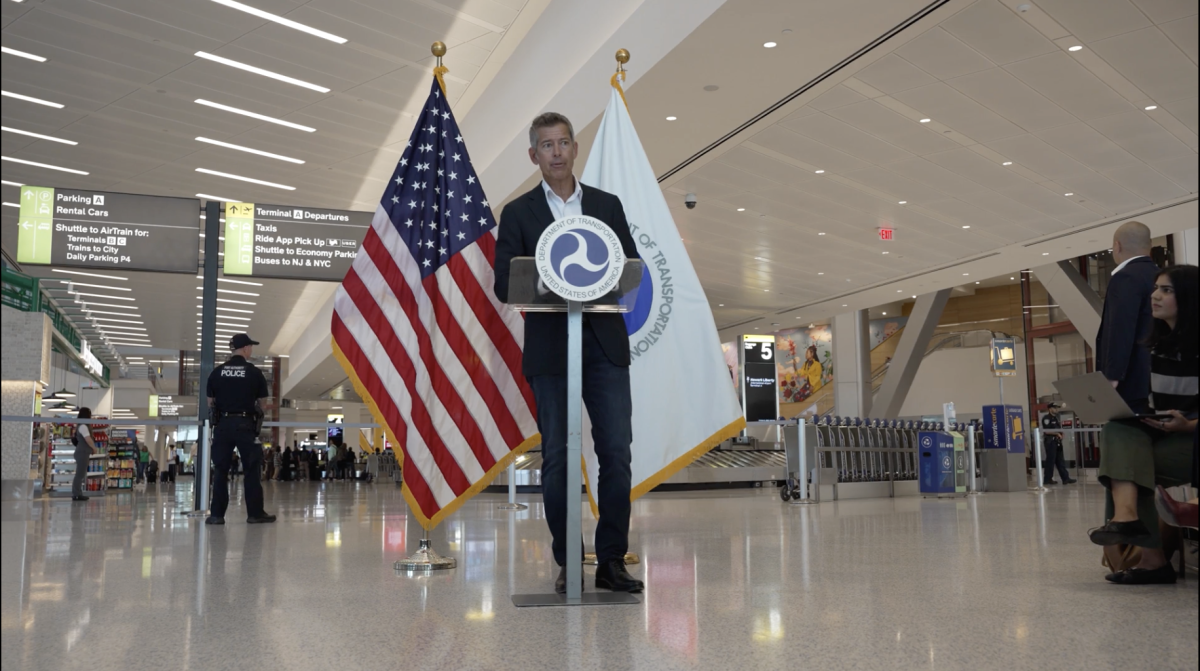
Transportation Secretary Sean Duffy has signaled a firm stance against a federal rescue package for the nation’s struggling low-cost carriers, stating that the government does not currently see a necessity for a multi-billion dollar intervention. Speaking to reporters at Newark Liberty International Airport on Saturday, Duffy addressed the mounting concerns surrounding the stability of the discount aviation sector, just hours after Spirit Airlines—the nation’s largest ultra-low-cost carrier—confirmed it would begin winding down its operations following a failed attempt to restructure its massive debt load. Duffy emphasized that while the Department of Transportation (DOT) remains a "lender of last resort," the administration’s preference is for struggling airlines to seek liquidity through private capital markets rather than taxpayer-funded subsidies.
The Secretary’s comments come at a pivotal moment for the American aviation industry, which is grappling with the first major liquidation of a domestic airline in decades. The collapse of Spirit Airlines has sent shockwaves through the market, prompting the Association of Value Airlines (AVA), an industry trade group representing budget carriers, to intensify its lobbying efforts for a $2.5 billion federal relief fund. The proposed bailout is intended to offset surging fuel costs and operational hurdles that have disproportionately affected carriers with thin profit margins. However, Duffy’s dismissal of the proposal suggests that the Trump administration may lean toward a more laissez-faire approach to airline competition, prioritizing market-driven outcomes over government-managed stability.
The Collapse of Spirit Airlines: A Catalyst for Crisis
The decision by Spirit Airlines to liquidate marks the end of an era for the pioneer of the "unbundled" fare model in the United States. For years, Spirit provided a low-cost alternative for millions of travelers, forcing larger legacy carriers to introduce "basic economy" tiers to remain competitive. However, a series of financial and regulatory setbacks proved insurmountable for the Florida-based carrier.
The primary catalyst for the liquidation was the blocked $3.8 billion merger with JetBlue Airways. In early 2024, a federal judge sided with the Department of Justice, ruling that the acquisition would harm competition and lead to higher fares for price-sensitive consumers. Deprived of the lifeline that a merger would have provided, Spirit was left to manage over $3 billion in debt and looming maturities. The airline’s situation was further exacerbated by a significant recall of Pratt & Whitney Geared Turbofan (GTF) engines, which forced the carrier to ground dozens of its Airbus A320neo aircraft, leading to reduced capacity and increased maintenance costs.
Spirit’s transition from a Chapter 11 bankruptcy filing in November to a full liquidation in December underscores the severity of the financial pressures facing budget carriers. Unlike legacy airlines—Delta, United, American, and Southwest—which have benefited from a surge in premium travel and international demand, low-cost carriers have struggled with an oversupply of domestic seats and a customer base that is increasingly sensitive to inflationary pressures.
The Case for a Federal Bailout: The AVA’s $2.5 Billion Proposal
In response to the deteriorating environment for discount aviation, the Association of Value Airlines has proposed a specific relief package aimed at preserving the "essential connectivity" provided by budget carriers. The group, which represents several smaller and mid-sized airlines, began pitching the administration in April for $2.5 billion in federal support.
According to the terms being discussed, the funds would be restricted exclusively to covering fuel costs, which remain one of the most volatile and significant line items on an airline’s balance sheet. Proponents of the bailout argue that without federal intervention, the "Spirit Effect"—a phenomenon where the presence of a low-cost carrier in a market drives down fares across all airlines—will vanish, leading to a de facto monopoly for the "Big Four" carriers.
The AVA argues that budget airlines serve secondary airports and regional hubs that legacy carriers often overlook. If these airlines fail, millions of Americans in "flyover" states could see a reduction in travel options and a sharp increase in ticket prices. Despite these arguments, Secretary Duffy remained skeptical during his Newark address. "I would say that at this point I don’t think it’s necessary," Duffy stated. "They do have access to cash if they want to come to the U.S. government… if they can find dollars in the private markets, I think that’s better for them."
Chronology of the Budget Airline Decline
The current crisis did not emerge in a vacuum but is the result of a multi-year sequence of economic and regulatory events:
- 2022 – Early 2023: Post-pandemic travel demand surges, but costs for labor and fuel begin to climb sharply. JetBlue announces its intent to acquire Spirit Airlines.
- January 2024: A U.S. District Court judge blocks the JetBlue-Spirit merger on antitrust grounds, leaving Spirit to face its debt obligations alone.
- Mid-2024: Pratt & Whitney engine issues intensify, grounding significant portions of the ultra-low-cost carrier (ULCC) fleet. Carriers like Frontier and Spirit report widening losses despite high load factors.
- November 2024: Spirit Airlines officially files for Chapter 11 bankruptcy protection, initially hoping to restructure its debt and continue flying.
- December 2024: Spirit announces that its restructuring plan has failed to secure the necessary backing, leading to the decision to wind down operations and liquidate assets.
- Present: Secretary Sean Duffy clarifies the government’s position, signaling that a broad industry bailout is not on the immediate horizon.
Financial Data and Market Realities
The financial disparity between the top-tier airlines and the budget sector has reached a historic high. While Delta and United reported record revenues in recent quarters, the ULCC segment has seen its margins evaporate.
- Fuel Volatility: Fuel costs typically account for 25% to 30% of a budget airline’s operating expenses. Unlike legacy carriers, budget airlines often lack the sophisticated hedging strategies or the capital reserves to absorb sudden spikes in kerosene prices.
- Revenue Per Available Seat Mile (RASM): Data from the third quarter of 2024 indicated that while legacy carriers saw RASM growth driven by premium cabin sales, ULCCs experienced a decline in unit revenue due to an oversaturation of economy-class seats in popular markets like Florida and Las Vegas.
- Debt Load: Spirit Airlines entered 2024 with approximately $3.1 billion in long-term debt. Other carriers in the budget space, while not as highly leveraged, are facing higher borrowing costs as credit rating agencies downgrade the sector’s outlook.
Reactions from Industry Stakeholders and Analysts
The Secretary’s comments have drawn a mixed reaction from industry experts and labor groups. The Air Line Pilots Association (ALPA), which represents thousands of pilots at both legacy and budget carriers, has expressed concern over the potential loss of thousands of specialized jobs. The liquidation of Spirit alone puts nearly 13,000 jobs at risk, including pilots, flight attendants, and ground crew.
Consumer advocacy groups have also voiced alarm. "The exit of a major low-cost player like Spirit is a dark day for the American traveler," said a spokesperson for a prominent passenger rights organization. "Secretary Duffy’s reliance on the ‘private market’ ignores the fact that the private market is currently consolidating power into the hands of four dominant players. Without Spirit or a healthy budget sector, the average family will find air travel increasingly unaffordable."
Conversely, some market analysts have praised Duffy’s restraint. "The government shouldn’t be in the business of propping up failing business models," noted a senior transportation analyst. "The ultra-low-cost model in the U.S. is currently broken because it relies on high volume and low costs, both of which have been compromised by inflation and labor shortages. Liquidation is a painful but necessary part of market correction."
Broader Implications for the Aviation Landscape
The liquidation of Spirit Airlines and the government’s refusal to provide a bailout will likely lead to a significant realignment of the U.S. aviation industry. Several key implications are expected to manifest in the coming months:
1. Market Consolidation and Fare Hikes
With Spirit’s exit, its competitors—primarily Frontier Airlines, Southwest, and the legacy carriers—will scramble to acquire its gate leases and takeoff/landing slots at constrained airports like New York-LaGuardia, Newark, and Orlando International. Historically, when a low-fare competitor leaves a route, the remaining carriers increase prices by an average of 15% to 20%.
2. The Future of Secondary Airports
Budget carriers are the lifeblood of secondary airports such as Fort Lauderdale-Hollywood, Atlantic City, and Myrtle Beach. The loss of Spirit’s hub operations in Fort Lauderdale, for instance, could have a devastating impact on local tourism and employment, as Spirit accounted for nearly 30% of the airport’s total traffic.
3. Pressure on Remaining ULCCs
The focus now shifts to other discount carriers like Frontier, Avelo, and Breeze. Investors may become increasingly wary of the sector, making it harder for these airlines to raise capital. If the "lender of last resort" remains the only option, the federal government may eventually be forced to intervene, albeit under much stricter terms than the AVA is currently requesting.
4. Regulatory Scrutiny of Mergers
The Spirit liquidation may serve as a cautionary tale for future antitrust enforcement. While the DOJ blocked the JetBlue merger to "save" competition, the result was the total elimination of a competitor. This outcome may lead to a more nuanced approach to airline mergers, where "failing firm" defenses are given greater weight in judicial proceedings.
Conclusion and Outlook
Transportation Secretary Sean Duffy’s remarks at Newark signify a "wait-and-see" approach from the current administration. By emphasizing the availability of private markets and the role of the government as a last resort, the DOT is challenging the budget airline sector to innovate and find internal solutions to its financial woes.
However, the reality on the tarmac is increasingly grim. As Spirit Airlines begins the process of selling off its yellow-liveried fleet and vacating its gates, the debate over the necessity of a bailout will likely continue. For now, the administration appears content to let the market determine the fate of the remaining discount carriers, even as the "Spirit Effect" that once democratized air travel begins to fade from the American skies. The coming months will be a test of whether the remaining budget airlines can navigate the headwinds of high costs and shifting consumer preferences without a federal safety net.