


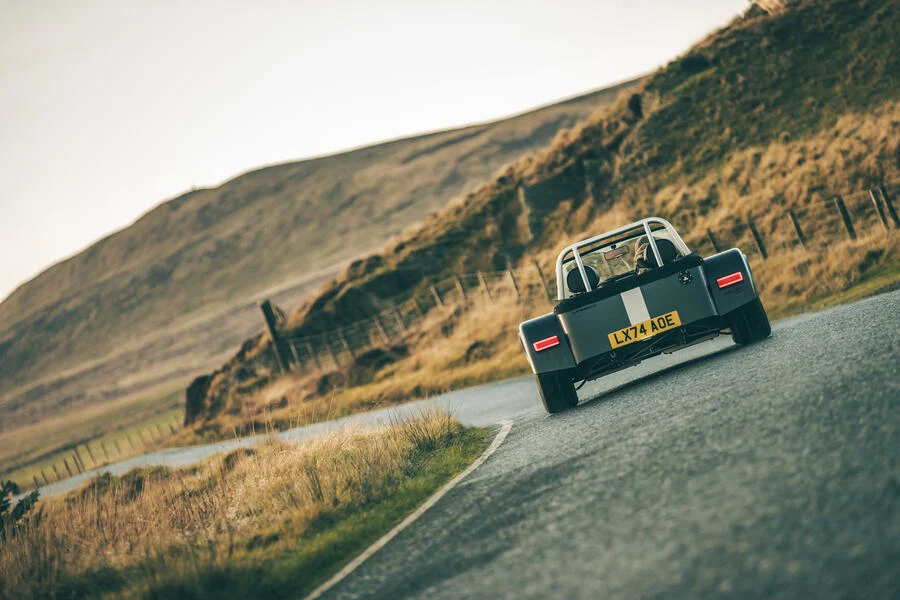
Caterham Cars has officially marked the conclusion of one of its most technically advanced eras with the release of the CSR Twenty, a limited-edition model celebrating 20 years of the CSR chassis. This final iteration of the CSR line represents a significant departure from the traditional Caterham Seven formula, utilizing a more sophisticated suspension architecture and a wider body to bridge the gap between a raw track tool and a more refined grand tourer. Produced in a strictly limited run of 20 units for the UK market, the CSR Twenty serves as a high-specification farewell to a platform that redefined the performance envelope for the Kent-based manufacturer when it first debuted in 2005.
Technical Evolution of the CSR Chassis
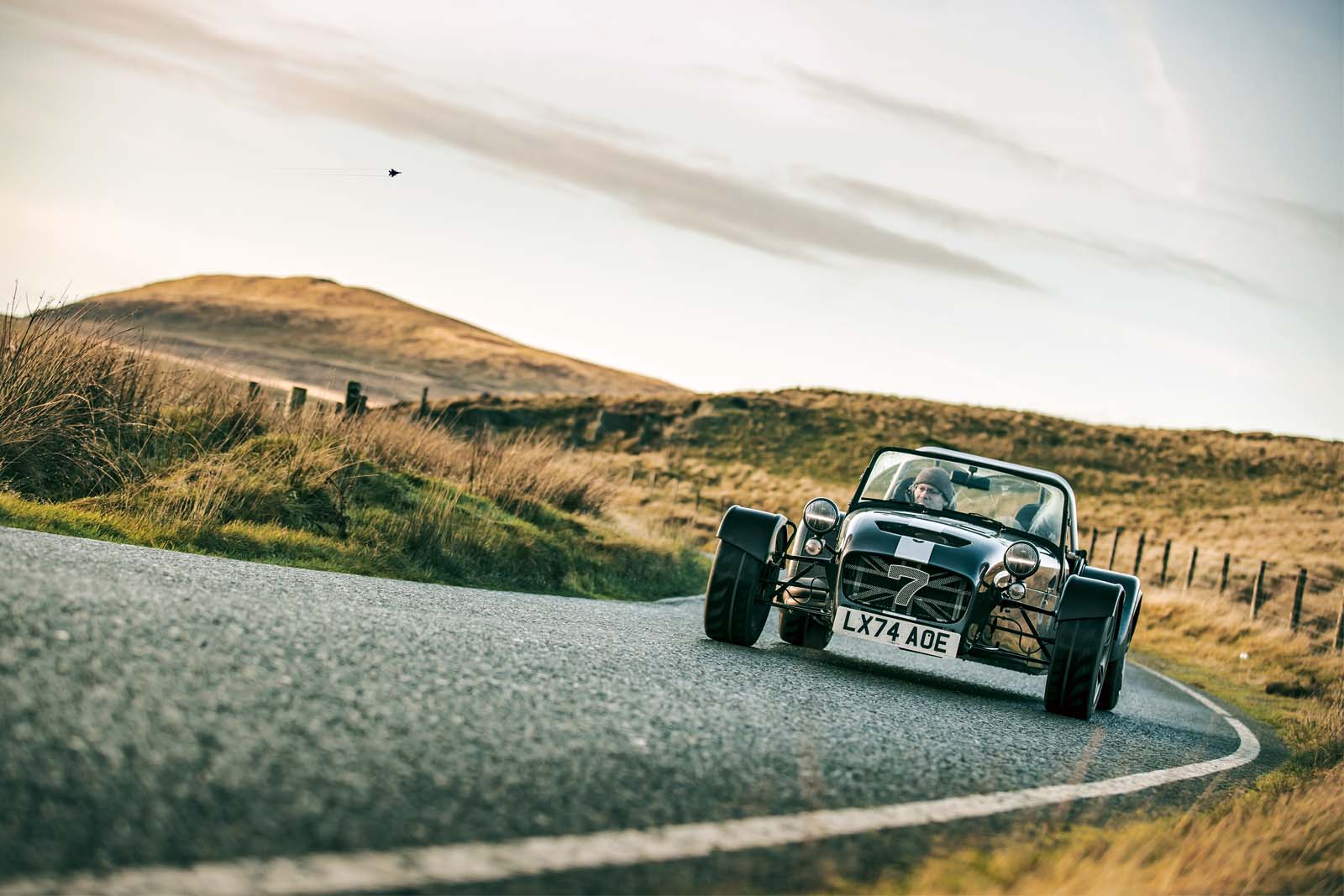
The CSR (Caterham Seven Racing) chassis was originally conceived as a clean-sheet evolution of the Colin Chapman-designed Seven. Unlike the standard "Series 3" or even the enlarged "SV" chassis, the CSR introduced fundamental engineering changes aimed at improving high-speed stability and ride quality. The most notable distinction is the move away from the traditional De Dion rear axle—a staple of the Seven range for decades—in favor of a fully independent double-wishbone rear suspension system.
This independent setup allows for better wheel control over uneven surfaces, significantly reducing the "skittish" behavior often associated with lightweight, live-axle sports cars. At the front, the CSR utilizes an inboard pushrod-operated suspension system, which moves the dampers inside the bodywork to reduce unsprung mass and improve aerodynamic efficiency. These changes necessitated a wider front track and bespoke bodywork, resulting in a vehicle that measures 3360mm in length and 1700mm in width—nearly 230mm wider than a standard Seven 170.
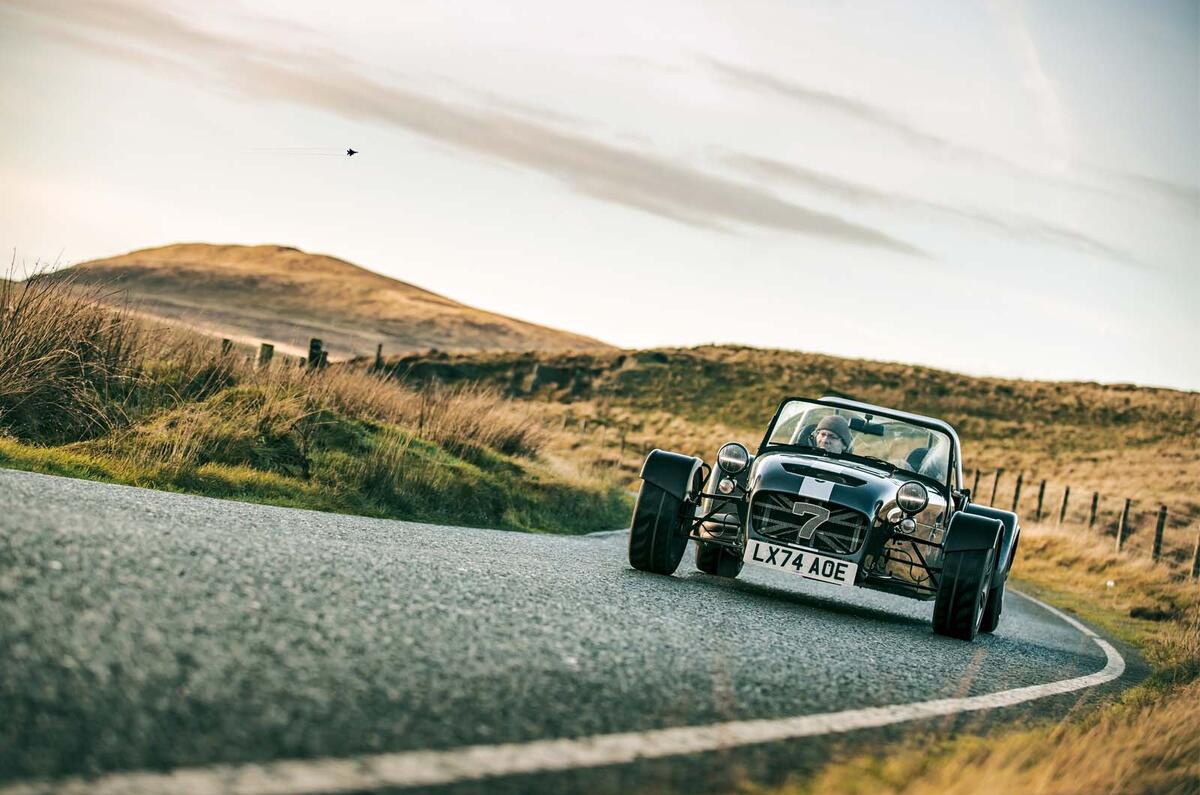
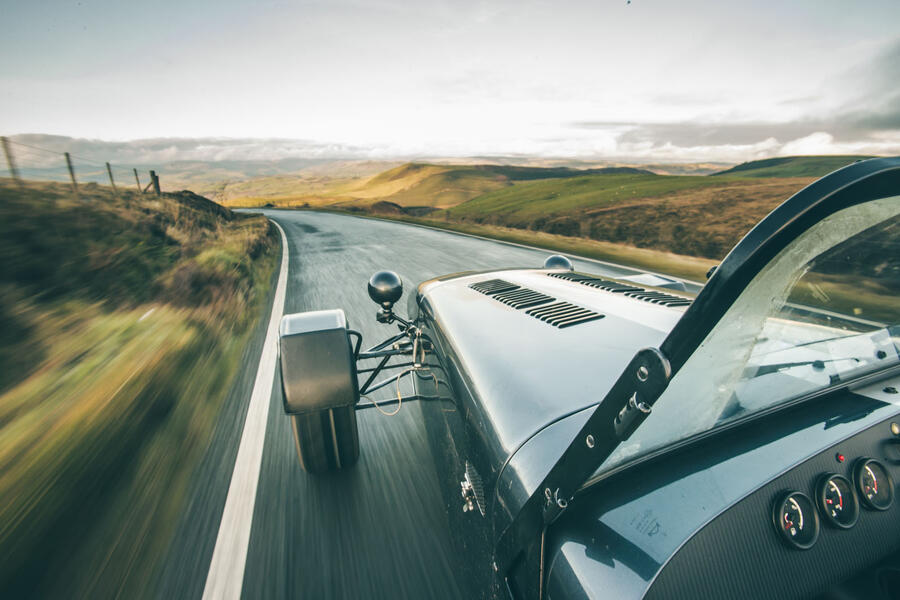
The CSR Twenty maintains these architectural advantages while incorporating modern refinements. The aerodynamic package includes specially profiled front wishbones and cycle wings designed to manage airflow more effectively around the open-wheel configuration. While the drag coefficient of a Seven remains high due to its upright silhouette, these incremental improvements are designed to enhance front-end grip and steering precision at the higher speeds the CSR is capable of achieving.
The Mach Loop: A Synergy of Engineering and Aviation
The choice of the "Mach Loop" in Wales as a proving ground for the CSR Twenty highlights the long-standing cultural connection between the Caterham brand and the aviation community. The Mach Loop, a series of valleys between Dolgellau and Machynlleth, is a designated Low Flying Area (LFA7) used by the Royal Air Force and the United States Air Force for tactical flight training.

The synergy between these two disciplines—low-flying aviation and lightweight motoring—is centered on the concepts of mechanical transparency and environmental exposure. Industry observers have long noted a high crossover between pilots and Caterham owners, a demographic often referred to in the community as "Lowflyers." The CSR Twenty, with its focus on high-speed stability and "fighter jet" levels of responsiveness, is positioned as the automotive equivalent of the tactical aircraft that frequent the Welsh valleys.
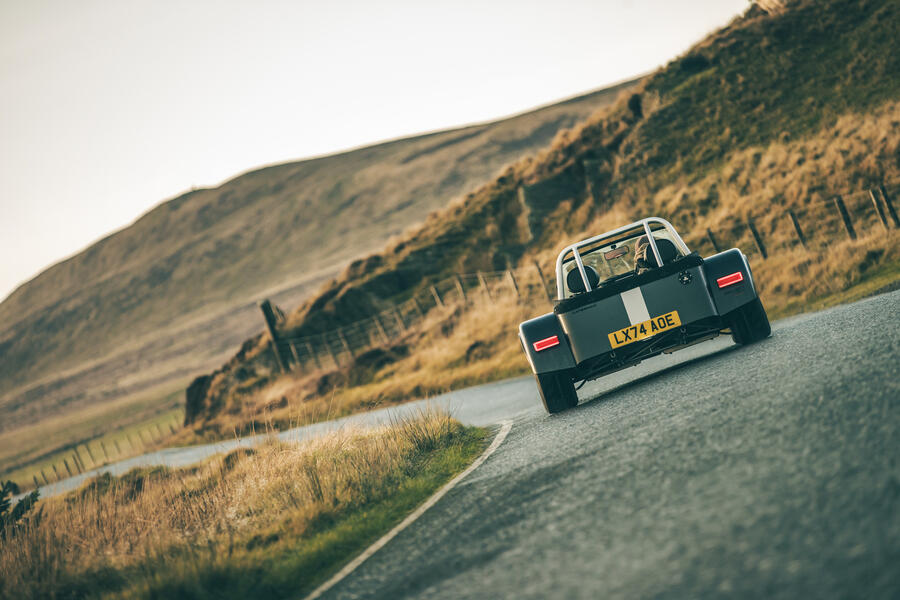
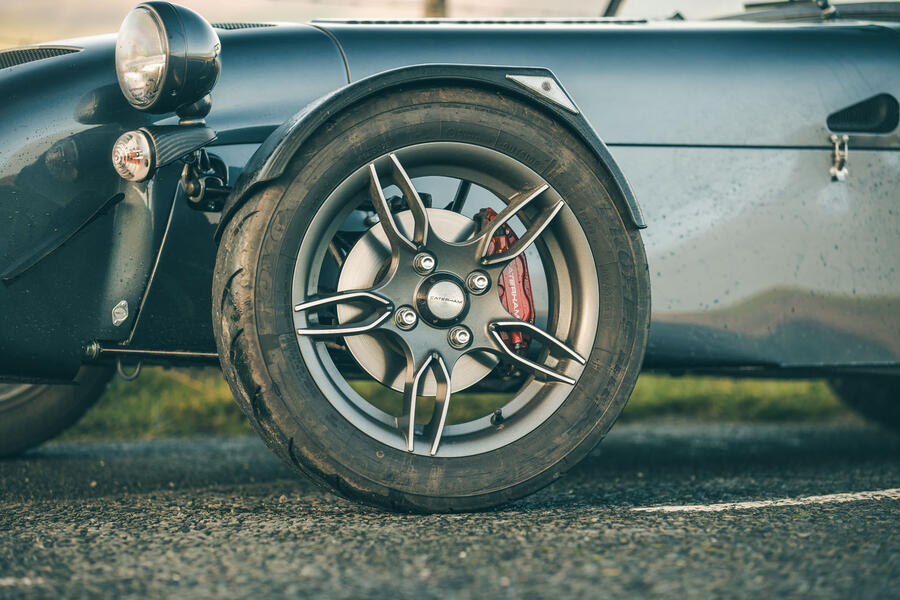
During recent evaluations in the region, the CSR Twenty demonstrated the benefits of its independent suspension on the undulating and often poorly surfaced B-roads of mid-Wales. Despite being equipped with Toyo Proxes R888R semi-slick tires—which are optimized for dry track use—the chassis’s inherent compliance allowed for maintained traction in sub-optimal winter conditions.
Powertrain and Performance Metrics
The CSR Twenty is powered by a 2.0-liter Ford Duratec four-cylinder engine, a naturally aspirated unit that has become a mainstay of the Caterham lineup. In this specific tune, the engine produces 210 brake horsepower (bhp) at 7,600 rpm and 150 lb-ft of torque at 6,300 rpm. While earlier iterations of the CSR featured a 2.3-liter Cosworth-tuned Ford engine producing up to 260 bhp, the current 2.0-liter unit offers a more linear power delivery and improved reliability.
With a kerb weight of just 620kg, the CSR Twenty boasts a power-to-weight ratio of approximately 338 bhp per tonne. This allows the vehicle to achieve a 0-60 mph sprint in under 4.0 seconds. Power is sent to the rear wheels via a five-speed manual gearbox sourced from the Mazda MX-5, a transmission praised for its short throw and mechanical precision.
Notably, the CSR Twenty does not feature a limited-slip differential (LSD) as standard, a decision made by Caterham engineers to prioritize refinement and reduce drivetrain "whine" for what is intended to be a more "touring-focused" Seven. However, the independent rear suspension provides sufficient mechanical grip that the absence of an LSD is only felt under extreme track conditions or on very loose surfaces.
Interior Refinement and Bespoke Craftsmanship
As a "Twenty" anniversary edition, the interior of the vehicle has received a level of attention rarely seen in the minimalist world of Caterham. The cabin features:
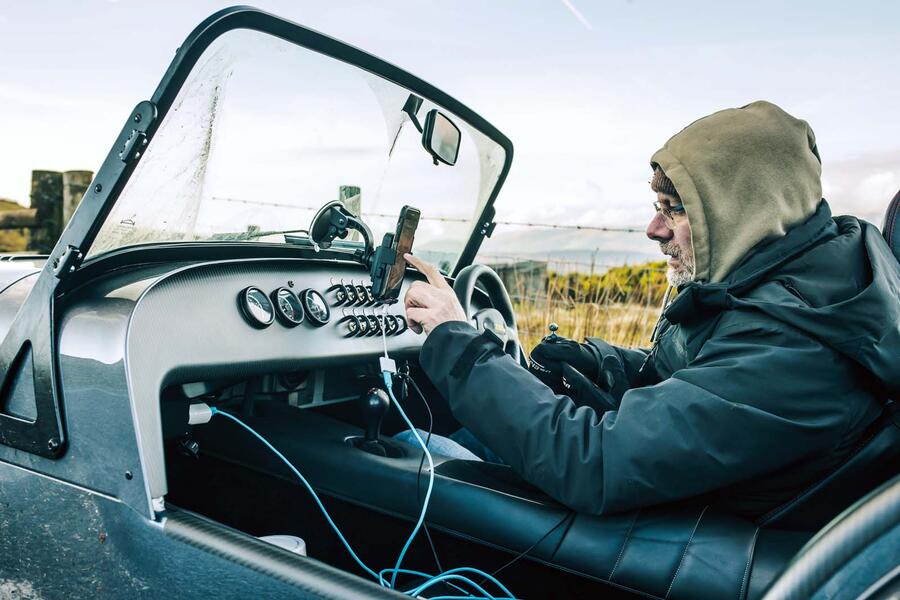
- Premium Materials: The use of Alcantara and high-grade leather throughout the cockpit, including a leather-wrapped center console and a satin-finish carbon fiber dashboard.
- Ergonomic Enhancements: The "large chassis" dimensions provide significantly more legroom and elbow room than the standard Seven, making the CSR the preferred choice for taller drivers.
- Bespoke Detailing: Each of the 20 units features a numbered plaque and unique instrumentation with CSR Twenty-specific graphics.
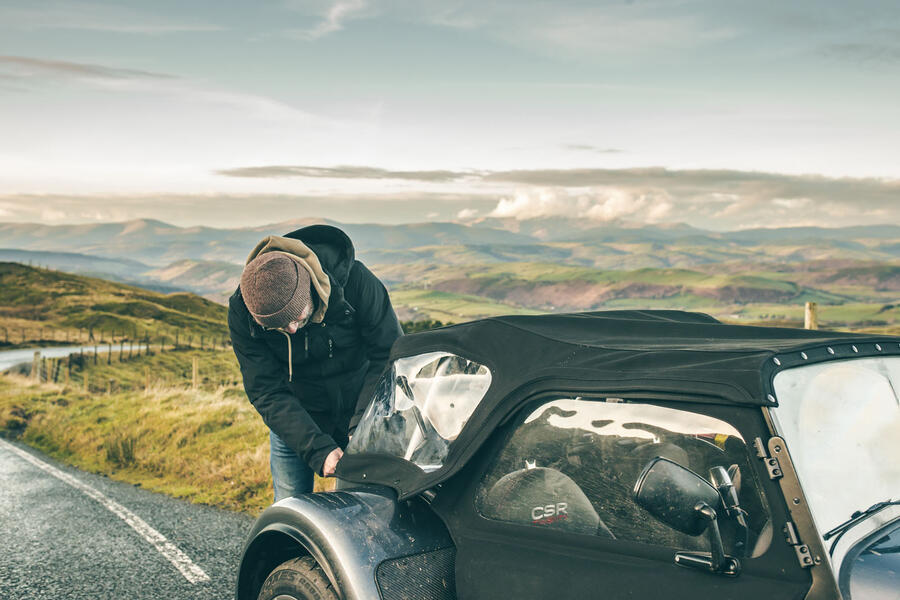
- Weather Protection: A mohair-lined boot and a high-quality hood system are included, though the traditional "popper" fastenings remain a characteristic, if labor-intensive, feature of the model.
Despite these "luxury" additions, the CSR remains a purist’s machine. The mirrors are mounted to the removable doors, the 12V socket is one of the few concessions to modern electronics, and the safety systems are limited to the mechanical grip of the chassis and standard four-point racing harnesses.
Market Context and Pricing Analysis
The Caterham CSR Twenty enters the market at a starting price of £79,995. This represents a significant premium over the entry-level Seven 170, which starts at approximately £29,490 in component form. The pricing reflects Caterham’s shift toward high-value, limited-run collectors’ pieces, a strategy that has seen success under the ownership of Japan-based VT Holdings.
Industry analysts suggest that this pricing model is essential for the sustainability of low-volume manufacturers facing increasing regulatory hurdles. The CSR chassis, which was previously discontinued in the UK due to its higher production costs and complexity, remains a popular choice in mainland Europe because its unique suspension and emissions profile allow it to meet certain regional homologation requirements that the standard De Dion models cannot.
Chronology of the Caterham CSR
- 2005: Launch of the original Caterham CSR 200 and CSR 260, featuring the 2.3-liter Cosworth-Ford engine and the debut of the independent rear suspension.
- 2008-2015: The CSR becomes the flagship of the range, often used for "Superlight" specifications and high-end exports.
- 2016: Caterham streamlines its UK lineup, focusing on the "Series 3" and "SV" chassis, effectively moving the CSR to an export-only or special-order status.
- 2023: Announcement of the CSR Twenty to celebrate the platform’s 20th year and signal the final production run for the UK market.
- 2024: Final deliveries of the 20 bespoke units, marking the end of the CSR’s tenure in the British domestic market.
Broader Impact on the Niche Sports Car Sector
The retirement of the CSR chassis in the UK marks a turning point for Caterham. While the company continues to innovate with projects like the electric Project V coupe, the CSR Twenty serves as a reminder of the brand’s ability to push the boundaries of the traditional open-wheel formula.
The CSR was often criticized by purists for being "too heavy" or "too civilized" compared to the featherweight S3 models. However, its legacy is one of engineering ambition—proving that a Seven could offer genuine long-distance comfort and high-speed composure without sacrificing the "telepathic" steering and lightweight agility that define the brand. As the automotive industry moves toward electrification and increased automation, the CSR Twenty stands as a mechanical analog for a disappearing era of driver-centric engineering.
For the 20 owners of this final edition, the CSR Twenty is more than a sports car; it is a historical bookend to a two-decade experiment in perfecting the "ultimate" Seven. Whether navigating the technical corners of a race circuit or tracing the flight paths of fighter jets through the Welsh valleys, the CSR Twenty remains a unique proposition in the global automotive landscape.