


The Evolution of Repository Intelligence
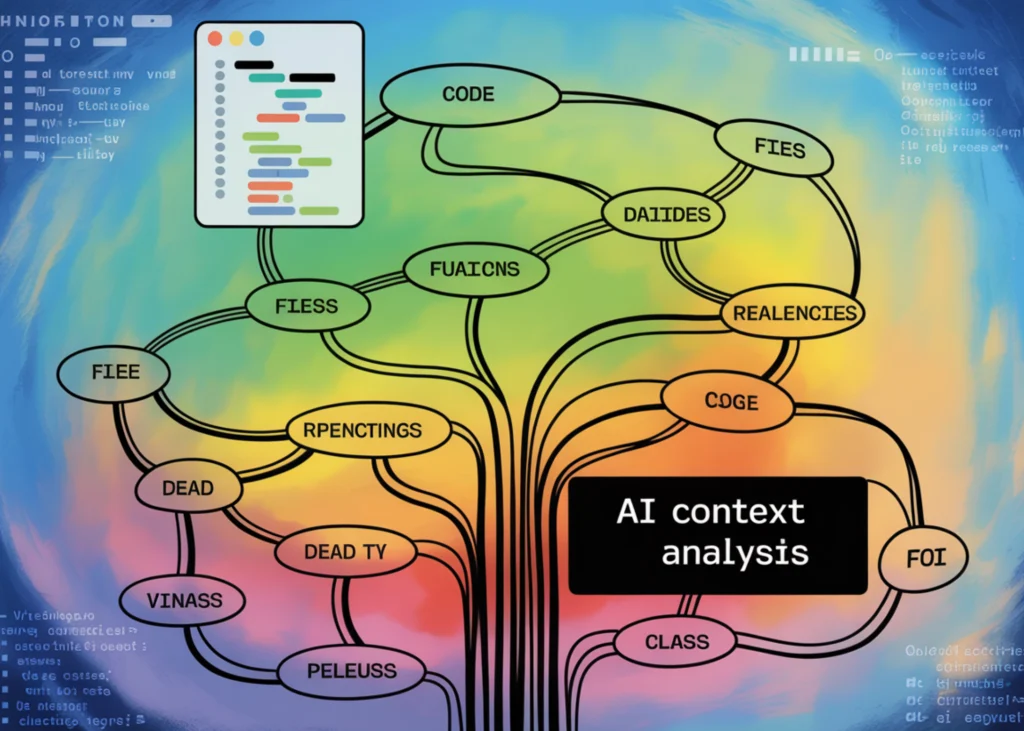
Repository intelligence refers to the capacity of a system to understand the relationships, dependencies, and architectural intent within a software project. Historically, this was the sole domain of senior engineers who maintained "mental maps" of the codebase. However, with the advent of Large Language Models (LLMs) and sophisticated static analysis tools, this intelligence is being externalized. Repowise sits at the intersection of these technologies, providing a framework to index repositories and expose their internal logic to both human developers and AI agents.
The choice of itsdangerous as a target for this demonstration is strategic. As a core component of the Pallets project—the same organization responsible for the Flask web framework—itsdangerous is a mature, stable, and security-sensitive library. Understanding its structure is paramount for any developer looking to implement secure data signing. By applying Repowise to such a project, developers can move beyond simple text searches to understand the "PageRank" of specific modules, identifying which files are the most influential or central to the library’s operations.
Technical Framework and Initialization Procedures
The process of building repository intelligence begins with a rigorous initialization phase. Unlike traditional documentation tools that merely scrape docstrings, Repowise constructs a multi-layered artifact tree within a .repowise directory. The initialization involves configuring LLM providers—such as Anthropic’s Claude or OpenAI’s GPT-4o—to serve as the reasoning engine for the repository.
In a controlled environment, the setup involves defining a configuration file (config.yaml) that specifies the embedding models and reasoning parameters. For instance, the use of voyage-3 for embeddings and claude-sonnet-4-5 for reasoning allows the system to capture the semantic nuances of the code. This configuration also sets thresholds for dead-code detection and budgets for maintenance cascades, ensuring that the intelligence layer is not just descriptive but also prescriptive. When an LLM is not available, the system defaults to an "index-only" mode, which still provides significant value through graph-based analysis and metadata extraction.
Chronology of the Intelligence Building Process
The construction of a repository’s intelligence layer follows a logical progression, starting from raw data ingestion to high-level visualization.
- Environment Setup and Helper Definition: The process begins by establishing a robust execution environment. Using Python-based automation, a
sh()helper function is typically employed to execute CLI commands while capturing exit codes and standard output. This ensures that the indexing pipeline is reproducible and verifiable. - Configuration and LLM Integration: The system detects available API keys for LLM providers. If keys are present, the configuration is optimized for high-fidelity reasoning. If not, a "mock" provider is used to demonstrate the workflow without incurring API costs.
- Indexing and Artifact Generation: The
repowise initcommand triggers the primary indexing engine. This stage scans the file system, parses the code, and generates a series of JSON and GML files. These artifacts represent the "source of truth" for the repository’s structure. - Graph Construction: Using libraries like NetworkX, the generated artifacts are transformed into a directed graph. This graph maps the relationships between modules, functions, and classes, allowing for mathematical analysis of the code’s architecture.
- Intelligence Layer Execution: Once the graph is established, secondary tools for Git intelligence, dead-code detection, and architectural decision tracking are deployed.
- Contextualization for AI Agents: The final step involves generating a
CLAUDE.mdfile, which serves as a specialized manual for AI-assisted IDEs, providing them with the necessary context to make informed suggestions.
Structural Analysis via Graph Intelligence and PageRank
One of the most powerful features of Repowise is its ability to apply social network analysis techniques to source code. By treating files as nodes and imports or function calls as edges, the system can calculate PageRank scores for every component in the repository. In the context of itsdangerous, this analysis frequently reveals that modules like signer.py and serializer.py hold the highest PageRank, indicating they are the most referenced and critical components of the system.
Community detection algorithms, such as greedy modularity communities, further refine this understanding by grouping related files into functional clusters. This is particularly useful for identifying "leaky abstractions" or modules that are becoming too tightly coupled. For itsdangerous, these communities typically align with signing logic, timestamp management, and serialization protocols. By quantifying these relationships, maintainers can prioritize testing and refactoring efforts on the nodes that have the greatest impact on the overall system stability.
Quantifying Code Quality: Dead-Code and Git Intelligence
Beyond structural analysis, Repowise provides actionable data regarding code health. The dead-code detection engine uses a "safe-to-delete" threshold (often set at 0.7 or 70% confidence) to identify functions or variables that are no longer in use. In a security-focused library like itsdangerous, removing dead code is not just about cleanliness; it is a security imperative to reduce the attack surface.

Git intelligence complements this by analyzing the history of commits and co-changes. By tracking which files are frequently modified together, Repowise can warn developers of potential "side-effect" risks. For example, if a change in signer.py historically requires a change in the test suite, the system can flag this dependency even if it isn’t explicitly defined in the code. This temporal analysis provides a layer of insight that static analysis alone cannot achieve.
Architectural Decision Records and AI Contextualization
A common failure point in long-term software maintenance is the loss of "why" behind certain technical choices. Repowise addresses this by integrating Architectural Decision Records (ADRs) directly into the intelligence layer. By inserting specific "DECISION" tags into the source code—such as documenting that signers are stateless by design to facilitate parallelization—developers can ensure that these insights are indexed and searchable.
The integration with the Model Context Protocol (MCP) takes this a step further. MCP-style tools allow developers to query the codebase using natural language. Questions such as "How does the Signer detect tampered payloads?" or "What is risky about changing signer.py?" are answered with high accuracy because the LLM has access to the indexed graph and the architectural decisions. This reduces the cognitive load on developers and accelerates the onboarding of new contributors.
Visualizing Complexity and Maintenance Priorities
The final output of a Repowise-enriched project is often a visual representation of the repository graph. Using tools like Matplotlib, the system can generate plots where node size is proportional to PageRank and edges represent dependencies. This visualization serves as a "map" for the project. In the itsdangerous tutorial, the top 40 nodes by PageRank are visualized to highlight the central role of core modules.
These visualizations are more than just aesthetic; they are diagnostic tools. A highly cluttered graph with many crossing edges might indicate a need for modularization. Conversely, a clean, hierarchical graph suggests a well-architected system. For project stakeholders, these charts provide a high-level overview of technical debt and maintenance priorities without requiring a deep dive into the code itself.
Broader Impact and Industry Implications
The shift toward repository-level intelligence has profound implications for the software development industry. As AI agents become more integrated into the coding process, the quality of the context provided to these agents becomes the primary bottleneck for productivity. Tools like Repowise transform a "black box" repository into a transparent, structured environment where AI can operate with the same level of understanding as a lead architect.
Furthermore, this technology democratizes codebase mastery. In the past, only those who had spent years on a project could navigate its complexities. Now, a junior developer equipped with an intelligence-rich workspace can contribute meaningfully in a fraction of the time. For open-source projects like those in the Pallets ecosystem, this could lead to increased contribution rates and more robust security audits.
In conclusion, the application of Repowise to the itsdangerous project illustrates a future where code is not just read, but indexed, analyzed, and understood through a multi-dimensional lens. By combining the mathematical rigor of graph theory with the reasoning capabilities of modern LLMs, developers can build more resilient, maintainable, and secure software systems. The artifacts created—from PageRank scores to CLAUDE.md context files—represent a new standard for documentation and repository management in the era of AI-assisted engineering.