


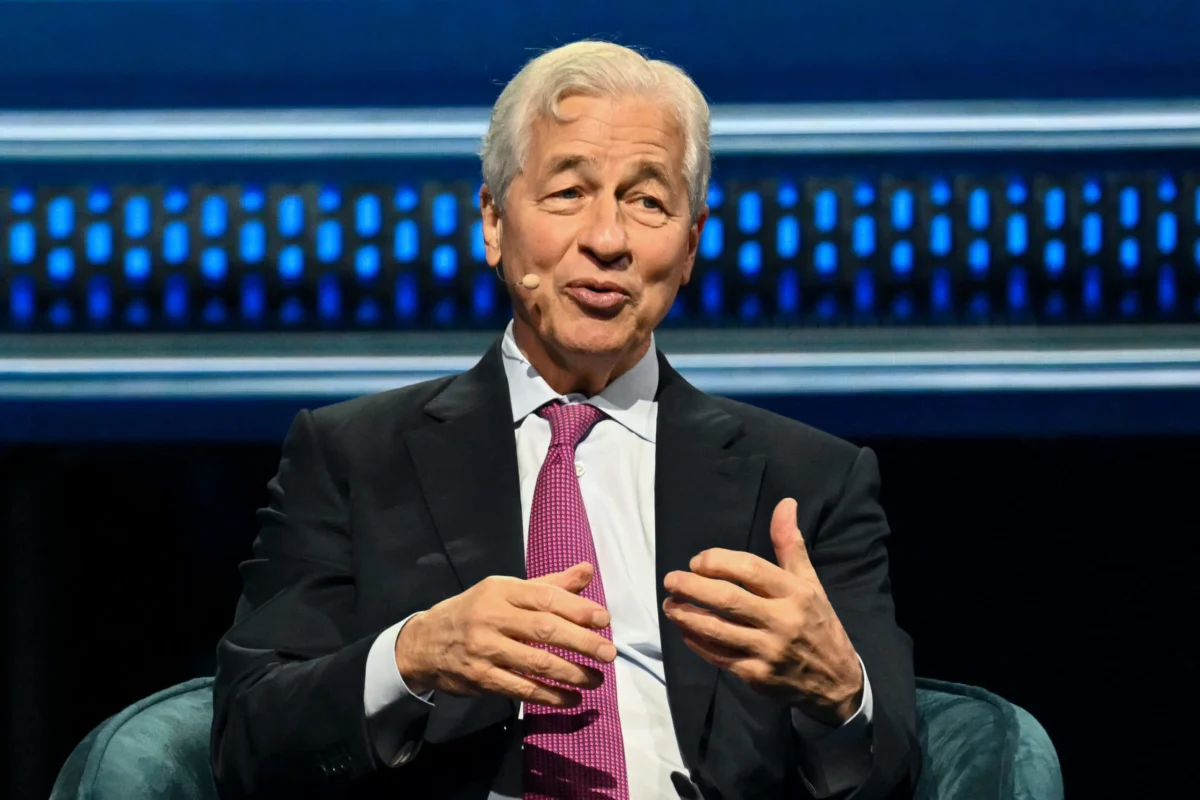
Jamie Dimon, the veteran Chairman and CEO of JPMorgan Chase, revealed on Wednesday that the banking behemoth could allocate a staggering $10 billion to $20 billion towards a significant acquisition in the coming years. This pronouncement, made during a New York financial conference, underscores the bank’s opportunistic yet cautious approach to growth and highlights the complex interplay between strategic expansion and an increasingly stringent regulatory environment. Such a deal would represent the largest acquisition under Dimon’s more than two-decade tenure at the helm of the nation’s largest bank, a move that would undoubtedly test the resolve of federal regulators concerning consolidation within the financial sector.
Dimon’s comments were not a declaration of immediate intent but rather a strategic foresight into potential opportunities, framed with considerable caveats. He emphasized that any such acquisition would be a carefully considered instrument of enhancement rather than a primary driver of growth or a compensatory measure for insufficient organic expansion. "I do think there might be opportunities, and so we are on the lookout," Dimon stated to analysts. "There might be, in the next couple years, a chance to put $10 [billion] or $20 billion to work buying something." This statement signals a readiness to act should a compelling target align with JPMorgan’s rigorous strategic criteria, but crucially, it does not suggest a departure from the bank’s foundational commitment to internal development.
A Philosophy of Prudent Expansion: M&A as a Strategic Tool
Dimon, known for his candid assessments of the banking industry and corporate strategy, articulated a clear philosophy regarding mergers and acquisitions. He cautioned against the pitfalls of relying too heavily on dealmaking as a substitute for organic growth, a common trap he observes in many corporate boardrooms. "You sit around a lot of management meetings, the first thing they do when they’re not doing well in organic growth is they start to bullsh-t about M&A," Dimon asserted, employing his characteristic bluntness. "I don’t want to hear about M&A… What are you doing to grow your business — sales, branches, tech, profits, products, services?" This perspective underscores JPMorgan’s deep-seated belief that sustainable value creation primarily stems from robust internal development across its diverse business lines.
For any acquisition to be considered by JPMorgan, Dimon outlined stringent criteria. The target would need to integrate seamlessly into JPMorgan’s existing operations, align with the bank’s established culture, and critically, enhance core businesses rather than operate as a disparate, standalone unit. "It can’t be just a pie-in-the-sky type of thing," he remarked, indicating a preference for pragmatic, value-accretive transactions over speculative ventures. This disciplined approach reflects a lessons-learned mentality from past experiences, both successful and challenging, ensuring that any significant capital deployment contributes directly to the bank’s long-term strategic objectives and operational efficiency.
JPMorgan’s M&A Chronicle: A History of Crisis-Era Interventions
JPMorgan Chase’s history under Jamie Dimon has been punctuated by several high-profile acquisitions, many of which occurred during periods of significant financial distress within the broader banking system. These deals, while substantial, have largely been characterized by their "FDIC-assisted" nature, implying a governmental impetus to stabilize the financial system.
- Bear Stearns (2008): In the throes of the 2008 financial crisis, JPMorgan acquired the ailing investment bank Bear Stearns in a deal brokered by the Federal Reserve. Initially valued at $2 per share, later revised to $10 per share, the acquisition was a critical intervention to prevent a wider market meltdown. It significantly bolstered JPMorgan’s investment banking capabilities and trading operations, albeit with considerable risk.
- Washington Mutual (2008): Just months after the Bear Stearns acquisition, JPMorgan stepped in again, acquiring the banking operations of Washington Mutual (WaMu) from the FDIC for $1.9 billion. This move, executed during the largest bank failure in U.S. history, dramatically expanded JPMorgan’s retail banking footprint, particularly on the West Coast, adding billions in deposits and hundreds of branches.
- First Republic Bank (2023): The most recent crisis-era acquisition came in May 2023, when JPMorgan acquired the substantial majority of First Republic Bank’s assets in an FDIC-brokered deal, paying $10.6 billion to the regulator. This transaction further solidified JPMorgan’s position as a dominant force in wealth management and private banking, absorbing a significant portion of First Republic’s high-net-worth clientele and deposits.
These crisis-era interventions underscore JPMorgan’s unique capacity and willingness to act as a consolidator when stability is paramount. They also highlight the bank’s proven ability to integrate large, complex entities under challenging circumstances. Beyond these major acquisitions, JPMorgan has also engaged in a string of smaller, often strategic fintech acquisitions to enhance its technological capabilities and expand into nascent financial services. However, this strategy has not been without its challenges, as evidenced by the 2021 acquisition of Frank, a college financial aid platform, for $175 million, which was later revealed to be based on fraudulent data, leading to legal action and a re-evaluation of its fintech M&A strategy. This incident likely reinforces Dimon’s emphasis on thorough due diligence and cultural fit for future targets.
The Regulatory Gauntlet: Navigating a Shifting Landscape
Any multi-billion-dollar acquisition by JPMorgan Chase would face intense scrutiny from federal regulators, who have become increasingly wary of further consolidation among the largest U.S. banks. The "too big to fail" debate, rekindled by recent regional bank failures, remains a potent force shaping regulatory policy. The Biden administration, in particular, has signaled a tougher stance on anti-trust enforcement across various industries, including banking.
Key regulatory bodies such as the Federal Reserve, the Office of the Comptroller of the Currency (OCC), and the Department of Justice (DOJ) would meticulously review any proposed merger of this scale. Their primary concerns would revolve around:
- Systemic Risk: Would the combined entity become "too big to fail" to an even greater degree, posing an unacceptable risk to the broader financial system?
- Competition: Would the acquisition stifle competition in specific markets, leading to fewer choices or higher costs for consumers and businesses?
- Financial Stability: Would the merger introduce new complexities or vulnerabilities that could destabilize the bank or the financial system?
- Fair Access and Consumer Protection: Would the deal impact access to banking services, particularly for underserved communities, or raise concerns about consumer protection?
In recent years, the regulatory environment for large bank M&A has become significantly more challenging. Even smaller, regional bank mergers have faced prolonged review periods and, in some cases, outright opposition. The Federal Reserve, under Chairman Jerome Powell, and other agencies have indicated a desire to ensure that any proposed consolidation demonstrably benefits the public and does not create undue risks. The sheer size of JPMorgan Chase, with a market capitalization often exceeding $500 billion and assets well over $3 trillion, means that any significant expansion is viewed through an exceptionally cautious lens.
JPMorgan’s Financial Prowess and Strategic Capacity
Despite the regulatory headwinds, JPMorgan Chase possesses unparalleled financial strength and operational capacity to execute a large-scale acquisition. The bank consistently reports robust earnings, maintains strong capital ratios (its Common Equity Tier 1 ratio typically well above regulatory minimums), and holds significant liquidity. As of recent financial disclosures, JPMorgan’s net income and revenue streams across its consumer, corporate, and investment banking segments demonstrate a healthy and diversified business model. A $20 billion acquisition, while substantial, represents a manageable proportion of the bank’s overall balance sheet and market valuation.
JPMorgan’s track record of successful integration, particularly with crisis-era acquisitions, also provides a degree of confidence. The bank has demonstrated the ability to absorb vast operations, rationalize costs, and extract value from acquired entities. Its extensive technological infrastructure and global reach mean it has the bandwidth to incorporate new businesses without undue strain on its existing operations, provided the target meets Dimon’s strict integration criteria. The bank’s leadership in technology spending, often exceeding $15 billion annually, ensures that it has the digital backbone to support complex integrations and drive innovation across a larger enterprise.
Potential Targets and Strategic Rationale in a Fragmented Market
While Dimon refrained from specifying potential targets, his criteria offer clues. A target would likely need to:
- Enhance a Core Business: This could mean strengthening its consumer banking presence in underserved geographic markets, bolstering its wealth management capabilities, expanding its payments processing network, or deepening its corporate banking relationships.
- Offer Seamless Integration: This suggests a preference for entities with compatible technology platforms, similar operational structures, or complementary customer bases, minimizing disruption and maximizing synergies.
- Fit the Culture: JPMorgan has a distinct corporate culture, emphasizing risk management, client focus, and operational excellence. Any target would need to align with these values to ensure a smooth transition and retention of talent.
In the current banking landscape, a $10-$20 billion acquisition could encompass a range of possibilities:
- Regional Banks: Despite consolidation, the U.S. still has thousands of regional and community banks. A strategically chosen regional bank could offer JPMorgan a significant deposit base, a broader branch network in key growth areas, or specialized lending expertise that complements its existing offerings. Such an acquisition would be a direct play for scale and market share.
- Specialized Financial Services Firms: This category could include leading asset managers, wealth management firms, or payment processors that offer distinct capabilities or client segments. For example, a large, independent wealth management firm could significantly boost JPMorgan’s assets under management and client relationships, fitting well with its high-net-worth client strategy.
- Infrastructural or Technology Providers: While Dimon prefers organic tech growth, a company providing critical financial infrastructure, cybersecurity solutions, or a unique data analytics platform could be a strategic fit if it offers a clear competitive advantage and integrates cleanly.
Any such move would likely be aimed at either gaining scale in specific profitable segments, expanding geographically in attractive markets, or acquiring specialized capabilities that are difficult or time-consuming to build organically.
Market Reactions and Broader Implications
The financial markets typically react to M&A announcements with a mix of optimism and caution. Investors would likely weigh the potential for increased earnings and synergies against the risks of integration, regulatory hurdles, and potential dilution. Analysts would scrutinize the strategic rationale, the target’s financials, and the projected return on investment. Given Dimon’s reputation, an announcement of a concrete deal would likely be met with an initial surge in confidence, provided the details align with his articulated strategy of prudent, value-accretive growth.
The broader implications for the banking sector would be significant. If JPMorgan, already the largest bank, successfully executes another major acquisition, it could signal a new phase of consolidation, potentially spurring other large banks to seek similar opportunities. This could intensify the debate around the future of regional banking, competition, and the role of government in shaping the financial industry structure. It would also place further pressure on regulators to articulate clear, consistent policies regarding large bank mergers, balancing financial stability with market competitiveness.
In conclusion, Jamie Dimon’s recent comments reveal a strategic preparedness at JPMorgan Chase to seize substantial acquisition opportunities should they arise, provided they align with the bank’s stringent criteria for integration, cultural fit, and enhancement of core businesses. This cautious yet opportunistic stance is characteristic of Dimon’s leadership, aiming for sustainable growth while navigating the complex currents of regulatory scrutiny and market dynamics. As the "coming years" unfold, the banking industry will closely watch whether JPMorgan’s strategic foresight translates into a transformative deal, reshaping not only its own trajectory but potentially the broader landscape of American finance.