
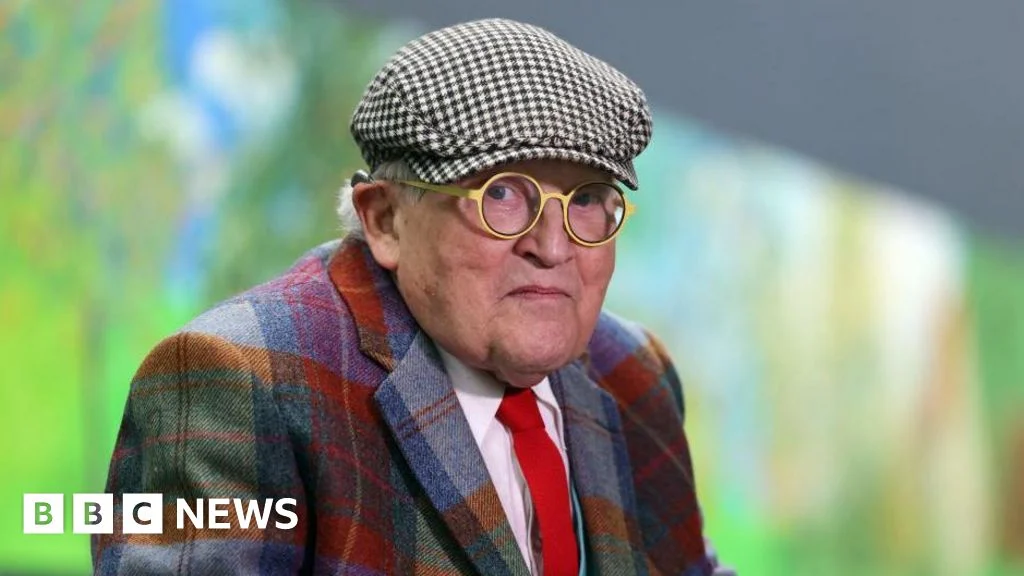
The funeral of David Hockney, one of Britain’s most celebrated and influential artists, has privately taken place, his publicist confirmed, following his passing at the age of 88 earlier this month. The private ceremony, held in London, honoured the wishes of the artist for an intimate farewell, attended only by his partner Jean-Pierre Goncalves de Lima and his great-nephew Richard Hockney, according to his publicist Erica Bolton. This quiet interment precedes a series of significant memorial services planned for the coming year, designed to celebrate a monumental career that spanned more than seven decades and profoundly shaped the landscape of modern art.
A Life Dedicated to Art: The Early Years and Rise to Prominence
Born in Bradford, Yorkshire, in 1937, David Hockney’s journey into the art world began with a scholarship to the Bradford School of Art in 1953, followed by a pivotal period at the Royal College of Art in London from 1959 to 1962. It was during these formative years that Hockney began to forge his distinctive style, challenging conventional artistic norms and embracing a diverse range of influences from Francis Bacon to Walt Whitman. He quickly became a central figure in the burgeoning British Pop Art movement of the 1960s, alongside contemporaries like Richard Hamilton and Peter Blake. Unlike some of his peers who focused on consumer culture, Hockney infused his Pop Art with deeply personal narratives, often exploring themes of identity, sexuality, and the human condition. His early works, such as "We Two Boys Together Clinging" (1961) and "A Rake’s Progress" (1961-63), revealed a nascent talent for storytelling through vivid imagery and a bold, graphic aesthetic. This period laid the groundwork for a career defined by innovation, versatility, and an unwavering commitment to exploring new artistic frontiers.
The California Dream: Sun-Drenched Canvases and Iconic Imagery
Hockney’s move to California in the mid-1960s marked a significant turning point in his artistic output, leading to some of his most recognisable and commercially successful works. Captivated by the perpetual sunshine, the vibrant colours, and the relaxed lifestyle of Los Angeles, Hockney began to produce his iconic series of swimming pool paintings. These works, including "A Bigger Splash" (1967), "The Splash" (1966), and "Portrait of an Artist (Pool with Two Figures)" (1972), transcended mere landscape painting, becoming emblematic of a specific cultural moment and a personal quest for liberation. The meticulous depiction of light refracting through water, the clean lines of modernist architecture, and the sense of tranquil yet subtly charged atmosphere, resonated deeply with audiences worldwide. "Portrait of an Artist (Pool with Two Figures)" achieved particular renown, setting a record for a living artist when it sold for nearly £70 million ($90.3 million) at Christie’s in 2018, underscoring the enduring appeal and significant market value of his work. These Californian canvases not only showcased his mastery of colour and composition but also subtly explored themes of desire, detachment, and the allure of an imagined paradise.
Innovation Across Mediums: From Photography to Digital Art
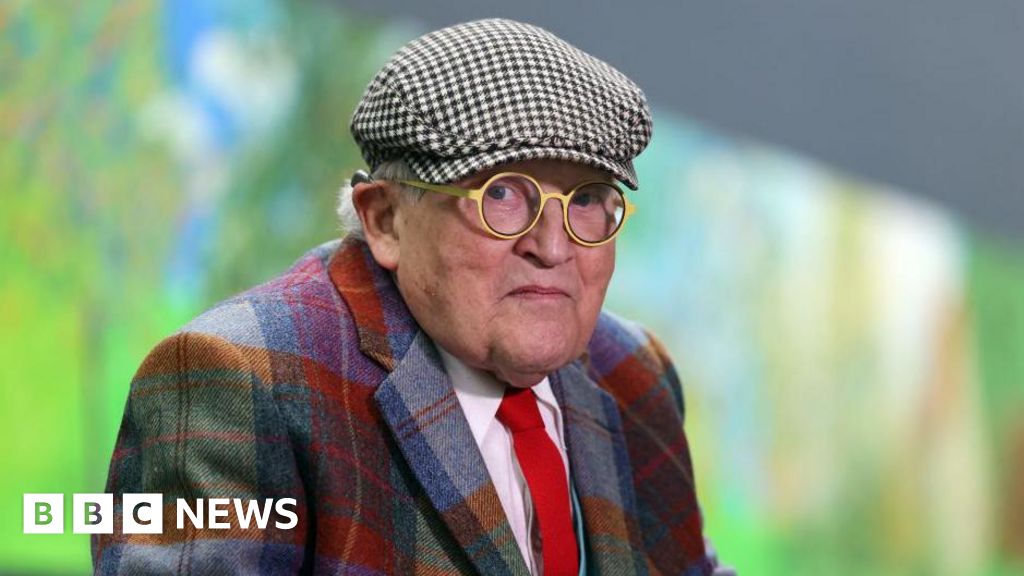
Beyond his celebrated paintings, Hockney was a relentless experimenter, constantly pushing the boundaries of various artistic mediums. His exploration of photography in the 1980s led to his innovative "joiners" – composite photographic collages that pieced together multiple perspectives to create a fractured yet comprehensive view of a scene or person. These works, such as "Pearblossom Hwy., 11-18th April 1986, #2" (1986), offered a cubist-inspired approach to photography, challenging the singular viewpoint traditionally associated with the medium and reflecting his ongoing fascination with perception and perspective.
In later years, Hockney embraced digital technology with characteristic enthusiasm, becoming an early adopter and master of iPad painting. Beginning around 2010, he produced a prolific body of work using digital brushes and screens, capturing the changing seasons of his native Yorkshire and the nuances of everyday life. His exhibition "David Hockney: A Bigger Exhibition" (2012) at the Royal Academy of Arts, featuring hundreds of these iPad drawings, demonstrated his belief in technology as a tool for artistic expression rather than a replacement for traditional methods. His "A Year in Normandy" series, created during the 2020 lockdown, exemplified this, a 91-meter-long digital artwork that captured the subtle shifts of light and climate through the seasons, a testament to his enduring observational skill and adaptability. This embrace of digital tools allowed him to work with an immediacy and fluidity that rekindled the spontaneity of drawing, further cementing his reputation as an artist always looking forward.
A Return to Roots: The Yorkshire Landscapes
Despite his global travels and extended stays in Los Angeles and Paris, Hockney always maintained a deep connection to his Yorkshire roots. In the early 2000s, he returned to live in Bridlington, East Yorkshire, where he embarked on a magnificent series of large-scale landscape paintings. These works, often composed of multiple canvases assembled to create panoramic views, depicted the familiar lanes, woods, and fields of the Yorkshire Wolds with an intensity of colour and light that made the everyday extraordinary. Exhibitions like "David Hockney: A Bigger Picture" (2007) showcased these monumental landscapes, which celebrated the beauty and changing moods of the British countryside, often rendered with a vibrant, almost Fauvist palette. This period reaffirmed his versatility and his ability to find profound artistic inspiration in diverse environments, whether the sun-drenched pools of California or the verdant, often grey-skied, fields of his homeland.
Global Tributes and Royal Condolences
News of Hockney’s passing earlier this month elicited a wave of tributes from across the art world, political spectrum, and even the Royal Family, underscoring his immense cultural impact. King Charles III and Queen Camilla expressed their profound sorrow, describing Hockney as "a giant of the world of art and painting, a Yorkshireman through and through, and a dear friend and inspiration to so many." The King’s personal connection to Hockney was evident, reflecting the artist’s stature as a national treasure.
Fellow artist Dame Tracey Emin, known for her own provocative and personal work, spoke of her privilege in knowing Hockney, hailing him as "a great artist and a wonderful man, who with the power of art changed the perception of Britishness. A proud chain-smoking homosexual, who flew the flag higher than any other British artist." Her statement highlighted Hockney’s courage in openly embracing his identity at a time when it was less accepted, and his role in broadening societal perspectives through his art and public persona. Prime Minister Sir Keir Starmer also conveyed his sadness, acknowledging the loss of "one of Britain’s most celebrated artists," a sentiment echoed by countless figures in the cultural sphere and beyond. These widespread reactions underscored not only his artistic genius but also his significant contribution to British identity and global culture.
Preserving a Prodigious Legacy: Exhibitions and Institutional Donations
In a testament to his enduring influence and in accordance with his wishes, the majority of Hockney’s extensive body of work will be entrusted to foundations and public institutions around the world. This strategic distribution aims to ensure the preservation of his legacy for future generations, guaranteeing public access to his art for study, appreciation, and inspiration. This move is particularly significant given the breadth and depth of his output, spanning diverse mediums and reflecting multiple phases of his artistic evolution.
The global celebration of Hockney’s life and work will continue with a series of memorial services and significant exhibitions. The first memorial is scheduled for spring next year in London, a city that played a crucial role in his early career. Subsequent memorials are planned for Los Angeles and Paris, cities where Hockney also established homes and found profound artistic inspiration, reflecting his international spirit and multifaceted life. A final memorial will be held in Yorkshire, honouring his birthplace and the landscapes that profoundly shaped his later work.
In parallel, the art world is preparing for a series of major exhibitions that will further cement Hockney’s place in art history. The Serpentine Galleries in London’s Kensington Gardens is currently hosting an exhibition of his work until August, offering a contemporary view of his ongoing relevance. Looking ahead, 2027, which would have marked Hockney’s 90th birthday, will see two significant retrospective exhibitions. Tate Modern will stage a multimedia installation, promising an immersive experience into his innovative use of technology and varied approaches. Concurrently, Tate Britain will host a comprehensive exhibition spanning his entire career, providing a chronological and thematic exploration of his artistic journey from his early Pop Art pieces to his late digital landscapes. These exhibitions are poised to attract vast audiences, reaffirming Hockney’s status as a perpetually relevant and universally admired artist.
The Enduring Impact of a Visionary
David Hockney’s passing marks the end of an era, yet his influence on contemporary art and culture is indelible. He was not merely an artist who painted beautiful pictures; he was a profound observer of human experience, a relentless innovator, and a fearless individual who lived and worked on his own terms. His ability to move seamlessly between traditional and digital mediums, his embrace of diverse geographical and emotional landscapes, and his unwavering commitment to his unique vision made him a truly singular figure. His work challenged perceptions, celebrated life in its myriad forms, and consistently invited viewers to look at the world with fresh eyes.
Hockney’s legacy extends beyond his canvases and digital prints; it encompasses his role as a cultural icon, an advocate for artistic freedom, and a pioneer who demonstrated that art can be both intellectually rigorous and immensely popular. The decision to distribute his works to public institutions globally ensures that his vibrant aesthetic and profound insights will continue to inspire and engage audiences for generations to come. As the art world prepares to celebrate his life and achievements through memorials and exhibitions, David Hockney’s spirit of curiosity, innovation, and joyous engagement with the world will undoubtedly continue to resonate, cementing his place as one of the most significant artists of the 20th and 21st centuries. His work remains a vibrant testament to the power of art to capture, interpret, and ultimately enrich the human experience.