


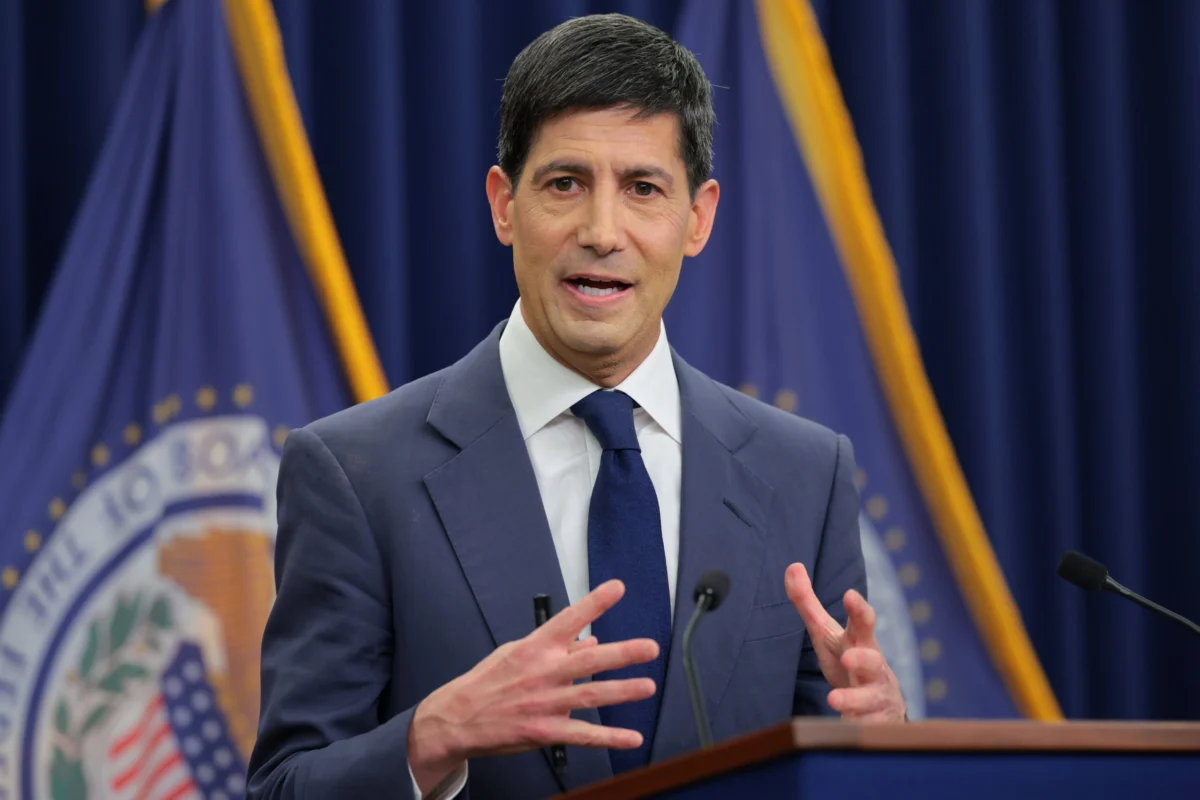
Federal Reserve Chair Kevin Warsh, in his inaugural news conference since assuming leadership of the central bank on June 17, 2026, in Washington, D.C., unveiled a comprehensive and ambitious plan for reform, signaling what many analysts are calling a "quiet revolution" within the institution. The strategy centers around the establishment of five distinct task forces, each charged with a fundamental re-evaluation of virtually every aspect of monetary policy formulation and implementation. This audacious undertaking, unparalleled in recent Fed history for its scope, aims to reshape the central bank’s approach to its core mission.
A New Era for the Federal Reserve
Warsh’s announcement, following his first Federal Open Market Committee (FOMC) meeting at the helm, detailed an expansive endeavor designed to harness both internal Fed expertise and external specialists. These task forces are mandated to scrutinize communications strategies, the economic data utilized for policy decisions, the conceptual framework surrounding inflation and its drivers, the burgeoning impact of advanced technologies such as artificial intelligence (AI) on the economy, and critically, the size and composition of the Fed’s substantial $6.7 trillion balance sheet, alongside a definitive path for its reduction.
"Each task force will serve an objective shared by everyone in the system, shared by everyone around that table that I sat with over the last couple of days: a Federal Reserve that is clear-eyed about its mission, fit for purpose, and focused on the future," Warsh articulated with deliberate emphasis. He underscored the imperative for these groups to "start with first principles, ask hard questions, examine current practice, consider alternatives, and ultimately propose next steps for policymaker consideration." This directive highlights a profound shift from incremental adjustments to a ground-up reconsideration of the institution’s operational philosophy.
The initiative comes at a pivotal time for the Federal Reserve, still grappling with the lingering effects of the post-pandemic inflation surge and the public’s diminished trust following the "transitory" misjudgment of 2021-2022. For five consecutive years, inflation has persistently exceeded the Fed’s 2% target, averaging around 3.8% annually, even after an aggressive cycle of interest rate hikes that saw the federal funds rate peak at 5.75% in early 2025. The economy, while resilient, has shown signs of uneven growth, with GDP growth hovering around 1.5% in the first quarter of 2026 and unemployment stabilizing near 4.1%. The challenge for Warsh is to restore both confidence and effectiveness in a complex economic landscape.
From Critic to Collaborator: A Shift in Rhetoric
Notably, Warsh’s tone during the news conference marked a significant departure from the sharp criticisms he levied against the central bank during his campaign for the chairmanship. In a widely cited CNBC interview in July 2025, Warsh had called for "regime change" at the Fed, citing a "credibility deficit" exacerbated by "incumbents" and an institution perceived as having veered off course. This strong rhetoric had fueled speculation of a potentially contentious transition and internal friction.
However, in his new role, the harsh denunciations were replaced by expressions of admiration. Warsh conveyed being "incredibly impressed" with what he had observed in his initial weeks and praised the recent FOMC meeting as exemplifying "the very best of the Fed’s traditions." This shift signals a strategic move to foster collegiality and build consensus internally, rather than imposing change through confrontation.
Scott Clemons, chief investment strategist at Brown Brothers Harriman, observed this strategic pivot, remarking, "What I think we’re seeing is regime change, but in a velvet glove. The task forces basically are going to review and maybe revise all the working aspects of Fed practice, from communications to data sources to the way they approach the balance sheet to the inflation framework. There’s a lot of potential regime change there, but it’s being introduced through a process of collective examination rather than direct mandate."
This approach resonates with veteran Fed officials, many of whom have expressed support for Warsh’s chosen path. Roger Ferguson, a former central bank Vice Chair, told CNBC, "All those who’ve been in the Fed know that the way change operates is through just what he did, which is create task forces to build consensus. There are some things that one can get rid of that I think would be helpful and there are others where maybe he must be careful." His sentiment underscores the deeply ingrained culture of consensus-building within the Federal Reserve, a necessary component for lasting reform.
Deep Dive into the Task Force Mandates
The five task forces represent a foundational overhaul, each addressing a critical pillar of modern monetary policy.

1. Reimagining Communications:
The first area of immediate visible change, and a key focus for reform, is the Fed’s communication strategy. Warsh’s first post-meeting statement eschewed much of the boilerplate language that had become standard, offering a more succinct view of the committee’s decision and its assessment of economic conditions. Critically, the statement began with the actual rate action—unchanged, as broadly anticipated by markets—a deliberate return to the format used prior to March 2009. For over a decade following the 2008 financial crisis, the Fed had initiated its statements with an economic assessment, often leading to complex and sometimes opaque phrasing.
Loretta Mester, former Cleveland Fed President who served on a communications subcommittee during her nearly 40-year career at the central bank (2014-2024), noted her approval of the format change. "I like the fact that they got rid of a lot of what we would call boilerplate language that really wasn’t serving any purpose anymore," she said. Mester highlighted the Fed’s historical "Hotel California problem," where "once a phrase or sentence got in there, it was very difficult to get it out. So this was a needed sort of purging."
However, the statement also deleted explicit "forward guidance" language, a tool that had become central to the Fed’s communication strategy post-crisis to manage market expectations. Mester suggested that officials may need to address this void by providing more detailed information about the Fed’s "reaction function"—an outline of how and why the Fed intends to adjust its policy stance in response to economic developments. Further reforms under consideration include the potential elimination of the "dot plot," the visual representation of individual FOMC participants’ interest rate forecasts, which has often been criticized for causing market confusion rather than clarity. Adjustments to the format and frequency of the Chair’s news conferences, a practice initiated approximately 15 years ago, are also on the table.
2. Enhancing Data and Analytics:
The task force focused on economic data will undertake a comprehensive review of the metrics the Fed currently employs to gauge the economy. This initiative is expected to explore the integration of more advanced data analytics, including real-time indicators and alternative data sources (e.g., anonymized transaction data, high-frequency labor market statistics, satellite imagery for supply chain monitoring). The objective is to move beyond traditional, often lagging, economic indicators to foster a more nuanced and immediate understanding of economic conditions, potentially leveraging AI-driven predictive models. This reform seeks to mitigate past instances where policy decisions might have been based on an incomplete or delayed understanding of economic shifts.
3. Rethinking the Inflation Framework:
Perhaps one of the most critical and politically sensitive reviews will center on the Fed’s approach to inflation. Following the "erroneous ‘transitory’ call" of 2021-2022, where policymakers initially downplayed persistent price pressures, and with inflation consistently above target for five years, the credibility of the Fed’s inflation-targeting framework has been significantly tested. This task force will examine the causes of recent inflationary episodes, the effectiveness of the current 2% inflation target, and potentially explore alternative frameworks such as price-level targeting or nominal GDP targeting. The goal is to develop a more robust and adaptable framework that can better anticipate and respond to evolving inflation dynamics, especially in a world prone to supply shocks and geopolitical instability.
4. Addressing the Impact of Technology and AI:
A forward-looking task force will specifically address the profound and accelerating impact of technology, particularly artificial intelligence, on the economy. This includes examining how AI might reshape labor markets, influence productivity growth, alter supply chains, and potentially introduce new dimensions to inflation dynamics. The Fed itself, as a data-intensive institution, will also assess how AI tools can enhance its own analytical capabilities, forecasting models, and even its regulatory oversight functions. This acknowledges that the pace of technological change demands a central bank equipped to understand and adapt to future economic structures.
5. Calibrating the Balance Sheet and Quantitative Tightening:
Warsh has long been a vocal critic of the Federal Reserve’s expanded balance sheet, which swelled dramatically during and after the 2008 financial crisis and again during the 2020 COVID-19 pandemic. The balance sheet, primarily composed of Treasury bonds and mortgage-backed securities acquired through Quantitative Easing (QE) programs, reached an all-time high of over $9 trillion in early 2023 before beginning a slow process of Quantitative Tightening (QT). As of June 2026, it stands at $6.7 trillion.
This task force will meticulously examine the optimal size and composition of the balance sheet, considering its implications for market functioning, financial stability, and the transmission of monetary policy. It will also chart a clear, predictable, and sustainable path for its further reduction. Debates around whether the Fed should return to a "lean" balance sheet (pre-2008 levels relative to GDP) or maintain an "ample reserves" framework will be central. The pace and magnitude of QT are critical, as too rapid a reduction could disrupt market liquidity, while too slow a pace could signal a lack of commitment to normalization.
Expert Reactions and Broader Implications
Rick Rieder, BlackRock’s fixed income chief and himself a finalist for the Fed chairmanship that Warsh ultimately secured, lauded the new chairman’s approach as ushering in "a new era of monetary policy in the United States." In a post-meeting note, Rieder stated, "Building a sense of confidence in achieving monetary policy targets will only be enhanced by an impressive consideration of complex subject matter that could be very influential on the economy and Fed targets going forward. So, this time is different, we are hearing about a different philosophy, different tools, and potentially a very different policy ethos."
The undertaking is not without its challenges. Implementing such broad-based reforms within an institution as complex and historically conservative as the Federal Reserve requires not only intellectual rigor but also significant political will and the ability to build and maintain internal consensus. As former Cleveland Fed President Mester highlighted, "It doesn’t have to be numerical, doesn’t have to be very prescriptive, but to get a sense of kind of what are they looking at, what kinds of things are going to persuade them one way or the other. I think that’s something that we want our central bankers to be able to articulate to us. Otherwise it’s sort of ‘trust me,’ and ‘trust me’ is not good communication." The success of these task forces will ultimately hinge on their ability to produce actionable recommendations that policymakers can widely adopt.
The broader implications of Warsh’s "quiet revolution" could be significant. For financial markets, a less prescriptive and more principles-based Fed might introduce an initial period of heightened uncertainty as market participants adjust to a new signaling mechanism. However, if successful, it could lead to greater clarity, predictability, and ultimately, enhanced market stability due to improved Fed credibility. For the economy, a more agile and data-driven central bank, with a clearer understanding of inflation and a well-managed balance sheet, could be better positioned to navigate future economic shocks and foster sustainable growth.
The timeline for these task forces is ambitious, with preliminary reports expected within six to nine months and concrete proposals anticipated by early 2027. This rapid pace suggests Warsh’s determination to swiftly implement fundamental change, aiming to re-establish the Federal Reserve as a clear-eyed, forward-looking institution, fully equipped to meet the economic challenges of the 21st century. The world will be watching closely as Warsh attempts to redefine the very essence of central banking in America.