



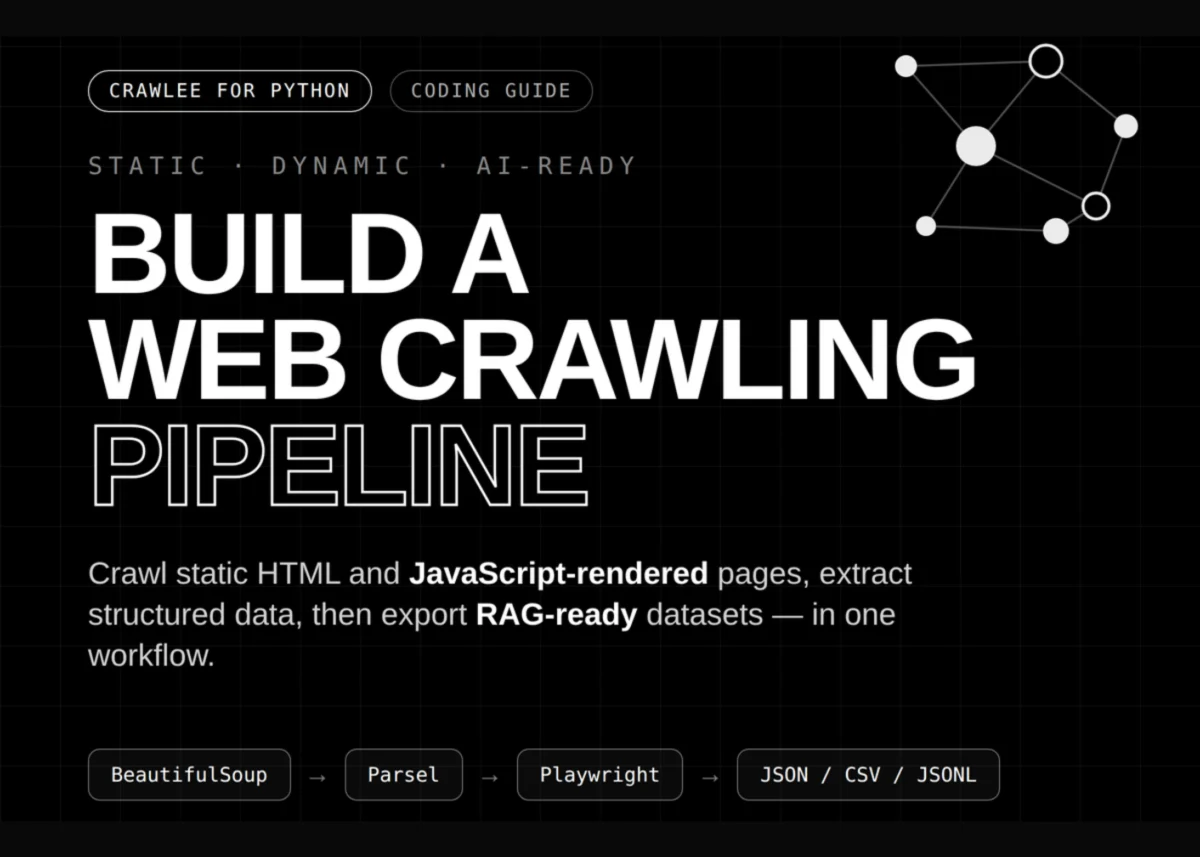
The digital landscape is currently experiencing a profound shift in how information is harvested, processed, and utilized, driven largely by the insatiable data requirements of large language models and the rise of Retrieval-Augmented Generation (RAG) systems. At the center of this transformation is the emergence of sophisticated web crawling frameworks that bridge the gap between raw HTML and structured, AI-ready datasets. Crawlee for Python has emerged as a pivotal tool in this ecosystem, offering a robust, modular approach to web scraping that accommodates everything from high-speed static page parsing to complex, browser-rendered dynamic content. By providing a unified interface for various crawling strategies, Crawlee allows developers to build resilient pipelines that can handle the idiosyncrasies of modern web architecture while maintaining high standards of data integrity and operational efficiency.
The Evolution of Web Data Engineering
Historically, web scraping was often viewed as a fragmented process involving disparate libraries such as Requests for networking, BeautifulSoup for parsing, and Selenium for browser automation. This siloed approach frequently led to brittle codebases that struggled with scalability, error handling, and the maintenance of session states. As the volume of data required for industrial-scale AI applications grew, the industry began demanding more integrated solutions. Crawlee, originally developed for the JavaScript/Node.js environment, was ported to Python to meet this demand, bringing with it a philosophy of "crawling-as-an-engineered-process" rather than a series of ad-hoc scripts. This tutorial-based workflow highlights the transition toward automated, multi-tiered extraction strategies that prioritize reliability and structured output.
Chronology of the Crawlee Pipeline Development
The development of a professional-grade crawling workflow follows a strict chronological sequence designed to minimize runtime errors and maximize data quality. The process begins with the rigorous configuration of the execution environment. In modern Python development, dependency management is critical, particularly when dealing with asynchronous libraries and browser automation tools. The initial phase involves pinning specific versions of Pydantic—a data validation library—to ensure compatibility with Crawlee’s internal schemas. This is followed by the installation of the Playwright browser engine and its associated system dependencies, a step that is essential for rendering the JavaScript-heavy interfaces that characterize the contemporary web.
Once the environment is stabilized, the workflow moves into the simulation phase. Rather than immediately targeting live websites—which can introduce unpredictable variables such as rate limiting or layout changes—the engineered approach utilizes a locally generated demo website. This synthetic environment serves as a controlled laboratory, containing a diverse array of web elements: product catalogs, technical documentation, blog posts, and internal navigation structures. By generating a local site with known metadata and JSON-LD schemas, developers can verify the accuracy of their extraction logic against a "ground truth" before deploying to the open web.
Technical Architecture of Static and Dynamic Crawling
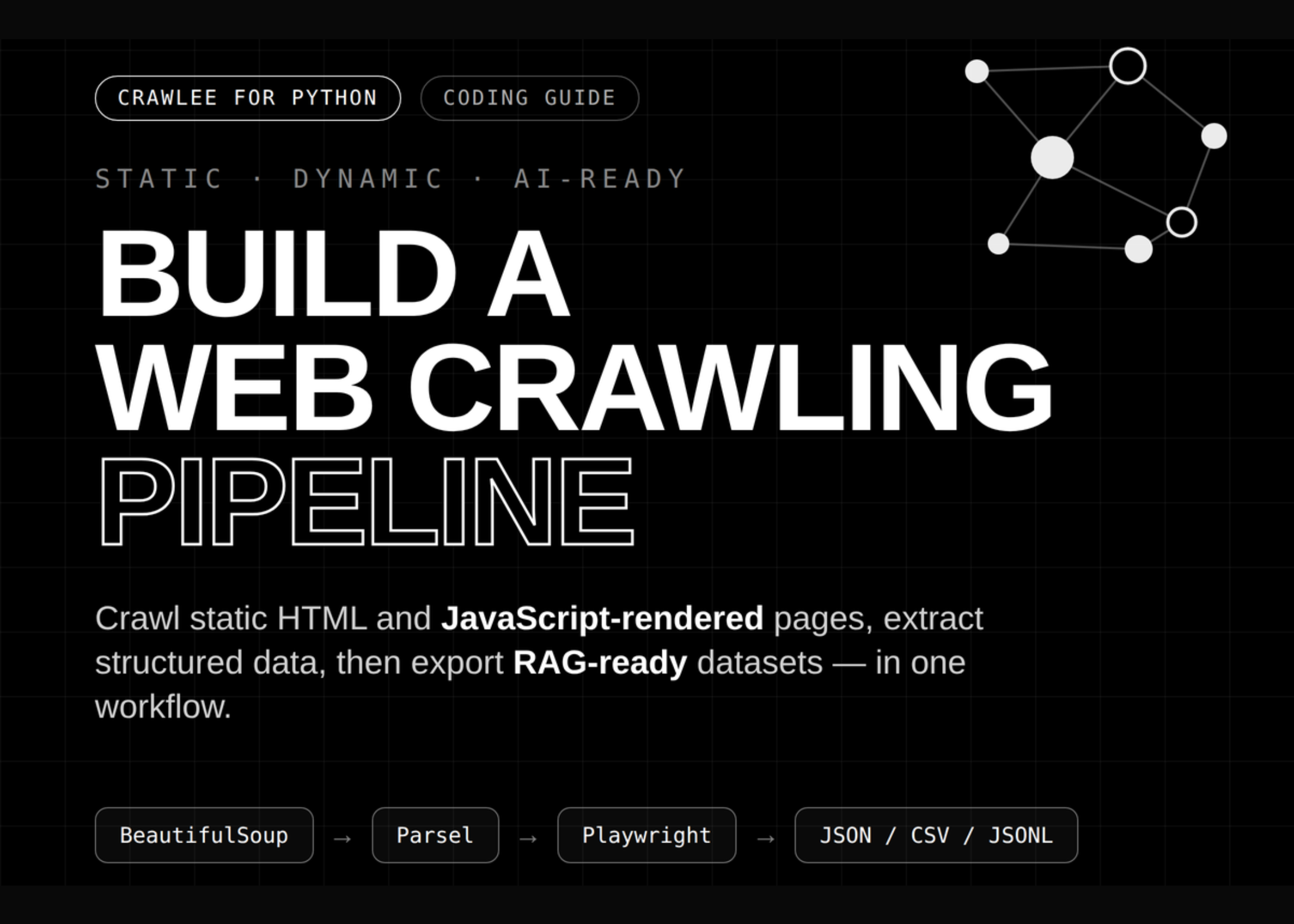
The core of the Crawlee framework lies in its specialized crawler classes, each optimized for specific technical challenges. The first tier of the extraction strategy utilizes the BeautifulSoupCrawler. This tool is designed for maximum efficiency, operating at the HTTP level without the overhead of a full browser engine. It is the primary choice for "static" content—pages where the essential data is present in the initial HTML response. During this stage, the crawler performs recursive discovery, following internal links to map the site’s architecture. Key performance indicators during this phase include concurrency settings, where the system balances speed against the risk of overwhelming the host server.
The second tier introduces the ParselCrawler, which leverages CSS and XPath selectors to achieve surgical precision in data extraction. This is particularly useful for structured product pages where specific attributes—such as Stock Keeping Units (SKUs), price points, and feature lists—must be isolated from the surrounding layout. The ability to switch between BeautifulSoup for broad mapping and Parsel for deep extraction within the same framework is a hallmark of modern data engineering.
The final and most resource-intensive tier is the PlaywrightCrawler. In an era where a significant portion of web content is rendered client-side via JavaScript frameworks like React, Vue, or Angular, standard HTTP crawlers are often insufficient. The PlaywrightCrawler launches a headless Chromium browser, executes the page’s JavaScript, and waits for dynamic elements to manifest in the Document Object Model (DOM). This allows the pipeline to capture data that is otherwise invisible to traditional scrapers, such as inventory levels updated via AJAX calls or reviews loaded upon scrolling.
Data Normalization and the Path to AI Readiness
Raw data extracted from the web is rarely in a format suitable for immediate analysis or machine learning. The post-extraction phase of the pipeline focuses on normalization and structural transformation. Extracted fields—often containing messy strings, currency symbols, or inconsistent date formats—are passed through cleaning functions. Prices are converted to floating-point numbers, text is stripped of excessive whitespace, and slugs are generated for URL consistency.
A significant innovation in this workflow is the preparation of data for RAG (Retrieval-Augmented Generation) workflows. This involves breaking down long-form content, such as documentation or blog posts, into manageable "chunks." Each chunk is assigned a unique identifier (often a hash of its content and source URL) to maintain provenance. This structured approach ensures that when the data is eventually ingested into a vector database, the AI system can retrieve specific, contextually relevant snippets rather than overwhelming the model with irrelevant text.
Supporting Data and Link Analysis
Beyond individual page extraction, a comprehensive crawling operation seeks to understand the relationship between different nodes of information. By building a directed link graph using libraries like NetworkX, developers can visualize the internal hierarchy of a website. This analysis reveals "central" pages—those with high in-degree counts—which often represent the most important content on a site. For a commercial entity, this might be a flagship product page or a central "Getting Started" guide.
Furthermore, the pipeline integrates visual data validation. By capturing full-page screenshots during the dynamic crawling phase, developers can perform visual audits to ensure that the data being extracted matches what a human user would see. This is a critical safety measure in production environments where a small change in a website’s CSS could potentially break extraction logic without triggering a formal code error.
Industry Implications and Official Perspectives
The move toward integrated crawling frameworks has drawn significant attention from data scientists and enterprise architects. Industry experts note that as web platforms become more defensive against scraping, the "reliability" features of tools like Crawlee—such as automatic retries, proxy rotation, and session management—become indispensable. "We are seeing a shift from ‘scraping’ to ‘web data integration,’" says one senior data engineer. "The goal is no longer just to get the text; it’s to build a reliable, repeatable pipeline that feeds directly into the corporate knowledge base."
Furthermore, the emphasis on respecting robots.txt and implementing sensible concurrency limits reflects a growing maturity in the field regarding the ethics and legality of data collection. By building these considerations directly into the crawler’s configuration, organizations can mitigate the risk of being blocked and ensure they are operating as "good citizens" of the web.
Conclusion and Broader Impact
The tutorialized workflow for Crawlee for Python represents a blueprint for the future of web data extraction. By moving away from brittle, script-based approaches and toward modular, multi-tier pipelines, developers can create systems that are both powerful and resilient. The integration of static and dynamic crawling, combined with sophisticated post-processing for AI applications, ensures that the resulting datasets are of the highest possible quality.
As AI continues to permeate every sector of the economy, the ability to efficiently harvest and structure web data will remain a competitive necessity. The methodologies outlined in this framework—from environment stabilization to the generation of RAG-ready JSONL chunks—provide a standard for excellence in data engineering. The ultimate impact of these tools is the democratization of data, allowing researchers, startups, and established enterprises alike to turn the vast, unstructured expanse of the internet into a structured engine for insight and innovation. Through continued refinement of these pipelines, the technical community is ensuring that the data foundation of the next generation of AI is both robust and reliable.