


Researchers at Oregon State University (OSU) have unveiled a groundbreaking experimental strategy that holds significant promise for the treatment of glioblastoma, the most aggressive and notoriously difficult-to-treat form of brain cancer. This devastating disease claims the lives of a vast majority of its victims, with fewer than 30% of patients surviving for two years post-diagnosis. The innovative approach, spearheaded by a team from the OSU College of Pharmacy, including Oleh Taratula, Olena Taratula, and Yoon Tae Goo, directly addresses two of the most formidable obstacles that have historically hampered effective glioblastoma therapies: the formidable blood-brain barrier and the imperative to precisely target cancerous cells while sparing healthy brain tissue.
Overcoming the Blood-Brain Barrier: A Critical Hurdle
The central nervous system, encompassing the brain and spinal cord, is protected by a highly selective physiological barrier known as the blood-brain barrier (BBB). This intricate network of specialized cells, primarily endothelial cells forming the walls of brain capillaries, acts as a stringent gatekeeper. It meticulously regulates the passage of substances from the bloodstream into the brain, safeguarding it from harmful pathogens, toxins, and fluctuations in blood composition. While this protective mechanism is vital for neurological health, it presents a monumental challenge for the delivery of therapeutic agents, including chemotherapy drugs and gene therapies, to brain tumors. Many promising drug candidates are either too large or not designed to efficiently navigate this biological fortress.
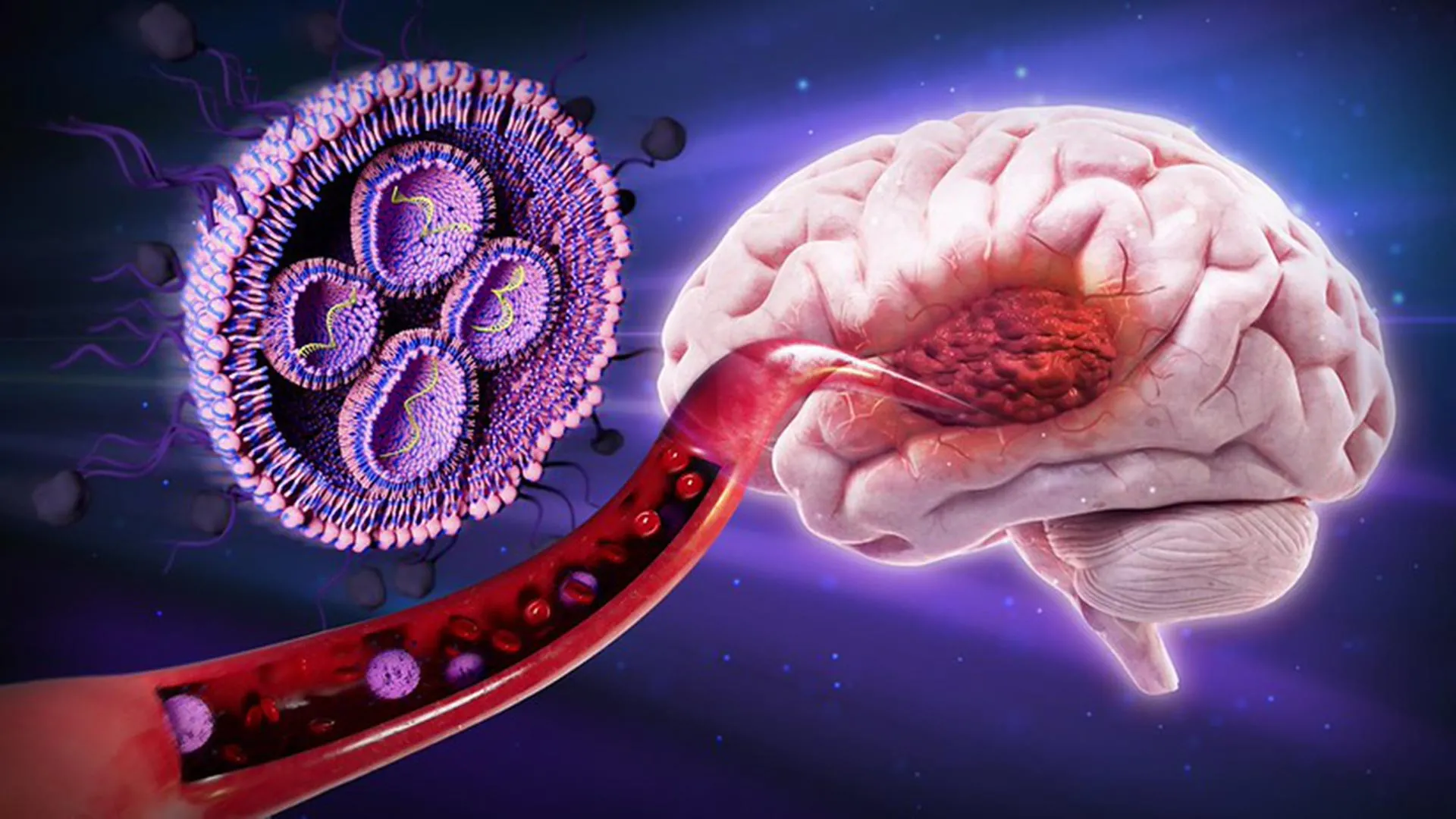
The OSU research team’s strategy is designed to circumvent this critical barrier by ingeniously employing sugar-coated lipid nanoparticles. These microscopic carriers are engineered to encapsulate genetic material, specifically messenger RNA (mRNA), tasked with restoring the body’s inherent ability to suppress tumor growth. The breakthrough lies in the nanoparticles’ outer shell, which is adorned with a coating of mannose, a simple sugar closely related to glucose, the body’s primary energy source.
The Mannose Advantage: Exploiting a Cellular Pathway
The key to the nanoparticles’ ability to penetrate the BBB lies in their interaction with a specific transporter protein found on the cells that line the blood vessels within the brain. This transporter, known as GLUT1 (Glucose Transporter 1), is primarily responsible for facilitating the uptake of glucose from the bloodstream into the central nervous system, fueling neuronal activity. Crucially, GLUT1 also exhibits a remarkable affinity for mannose. This inherent characteristic allows the mannose-coated nanoparticles to effectively "hitch a ride" on the same natural pathway that glucose utilizes to cross the BBB.
"Blood contains relatively high concentrations of glucose, and that’s what the nanoparticles are competing against for GLUT1’s attention," explained Oleh Taratula, a lead researcher on the project. "For the nanoparticles to get it, they need a densely coated sugar surface, and that’s our central innovation. By chemically connecting mannose to cholesterol, a major structural component of the nanoparticles, we improved surface coverage sixfold." This enhanced surface coverage is pivotal, ensuring a sufficient quantity of nanoparticles can bind to GLUT1 and be transported across the BBB, even in the competitive environment of the bloodstream.
Precision Targeting: Concentrating Therapy in Tumors
Beyond crossing the BBB, the OSU team’s innovation offers a dual advantage: concentrating the therapeutic payload within tumor sites. Glioblastoma cells themselves exhibit a unique metabolic characteristic: they produce unusually high levels of GLUT1. This overabundance of GLUT1 on tumor cells acts as a beacon, attracting the mannose-coated nanoparticles with even greater avidity once they have successfully traversed the BBB.
"Glioblastoma is metabolically reprogrammed and expresses GLUT1 at three times the levels of normal brain tissue, so the particles preferentially accumulate in tumor tissue after crossing the blood-brain barrier," stated Olena Taratula, another key researcher. This selective accumulation means that the therapeutic agents are delivered directly to where they are needed most, significantly minimizing exposure to healthy brain tissue and thereby reducing the potential for debilitating side effects often associated with conventional cancer treatments.
Delivering Tumor-Suppressing Power: The PTEN Protein
The genetic material encased within these sophisticated nanoparticles is mRNA engineered to instruct cells to produce PTEN, a critical protein known for its tumor-suppressing capabilities. PTEN plays a vital role in regulating cell growth and division, acting as a natural brake on uncontrolled proliferation. In many glioblastoma tumors, the PTEN gene is either mutated, leading to a non-functional protein, or its expression is silenced altogether, contributing significantly to the aggressive nature of the cancer.
By delivering the mRNA that directs PTEN production, the OSU strategy aims to reawaken this crucial tumor suppressor within the cancer cells, effectively reintroducing a mechanism for controlling their aberrant growth. To ensure the integrity of the mRNA payload during its journey through the bloodstream and across the BBB, the researchers incorporated a positively charged cholesterol derivative. This addition acts as a protective shield, securely encapsulating the delicate genetic material and preventing its premature degradation before it can reach its cellular targets.
Remarkable Results in Preclinical Trials
The efficacy of this novel therapeutic strategy has been rigorously tested in a preclinical setting, utilizing a mouse model of glioblastoma. The findings, published in the prestigious Journal of Controlled Release, demonstrate a compelling improvement in survival rates. In mice treated with the sugar-coated nanoparticles delivering the PTEN-encoding mRNA, the median survival time was increased by an impressive 50%. This significant enhancement in survival underscores the potential of this approach to fundamentally alter the prognosis for glioblastoma patients.
Furthermore, the research team reported that across repeated dosing regimens, the treatment led to noticeable tumor shrinkage without any observable organ toxicity in the animal models. This crucial finding suggests a favorable safety profile, a critical consideration for any therapeutic intervention, particularly for a disease that often affects older individuals.
Glioblastoma: A Persistent and Devastating Challenge
Glioblastoma multiforme (GBM) stands as the most common and aggressive primary malignant brain tumor in adults. Its incidence is estimated to be around 3.19 cases per 100,000 people in the United States annually. The disease exhibits a slight predilection for males, and the median age at diagnosis is approximately 64 years. The grim reality of glioblastoma is reflected in its abysmal survival statistics; over 95% of patients do not survive beyond five years from their diagnosis, and a substantial portion succumbs within months of initial diagnosis.
The aggressive nature of glioblastoma stems from its rapid proliferation, diffuse infiltration into surrounding brain tissue, and its remarkable ability to resist conventional therapies such as surgery, radiation, and chemotherapy. Tumors are often highly heterogeneous, meaning that different cells within the same tumor can have varying genetic mutations and sensitivities to treatment, further complicating therapeutic efforts. The development of resistance mechanisms is also a significant factor in treatment failure.
Timeline and Development: A Path to Innovation
The research leading to this promising strategy has likely involved years of dedicated scientific inquiry, building upon established knowledge in nanomedicine, gene therapy, and cancer biology. While a precise chronological breakdown of the OSU team’s specific research timeline is not detailed in the initial report, the publication in the Journal of Controlled Release signifies a major milestone, indicating that the foundational research, experimental design, data collection, and peer review process have been successfully completed.
The journey from initial concept to a potential clinical application for a novel cancer therapy is typically a protracted one. It involves extensive laboratory research, followed by preclinical studies in animal models to assess safety and efficacy. If these preclinical results are sufficiently promising, the next stage would involve seeking regulatory approval to initiate human clinical trials, which are conducted in multiple phases to evaluate different aspects of the therapy’s safety and effectiveness in patients.
Broader Implications and Future Directions
The implications of this OSU research extend beyond glioblastoma. The fundamental principles of utilizing sugar-coated nanoparticles to navigate the blood-brain barrier and target tissues with high transporter expression could potentially be adapted for the treatment of other neurological disorders, including Alzheimer’s disease, Parkinson’s disease, and stroke, all of which are impacted by the BBB’s restrictive nature.
The success of delivering mRNA for therapeutic purposes also opens doors for a new era of "genetic medicine," where the body’s own cellular machinery can be harnessed to produce beneficial proteins or counteract disease-causing genetic defects. This approach offers a more targeted and potentially less toxic alternative to traditional drug therapies.
However, it is crucial to acknowledge that this is an experimental strategy and further research and rigorous clinical trials are essential to translate these promising preclinical findings into a viable treatment for human patients. The journey from the laboratory bench to the patient’s bedside is complex and requires substantial investment, regulatory scrutiny, and continued scientific innovation.
The collaborative efforts of Vincent Cataldi, Vladislav Grigoriev, Neera Yadav, Tetiana Korzun, Chao Wang, and Adam Alani from the College of Pharmacy at Oregon State University, along with the crucial financial support from the National Cancer Institute of the National Institutes of Health, the Eunice Kennedy Shriver National Child Health and Human Development, and the National Research Foundation of Korea, highlight the significant undertaking and the broad scientific community’s investment in finding solutions for devastating diseases like glioblastoma. This innovative approach represents a beacon of hope, demonstrating the power of scientific ingenuity in the relentless pursuit of better treatments for some of the most challenging cancers faced by humanity.