


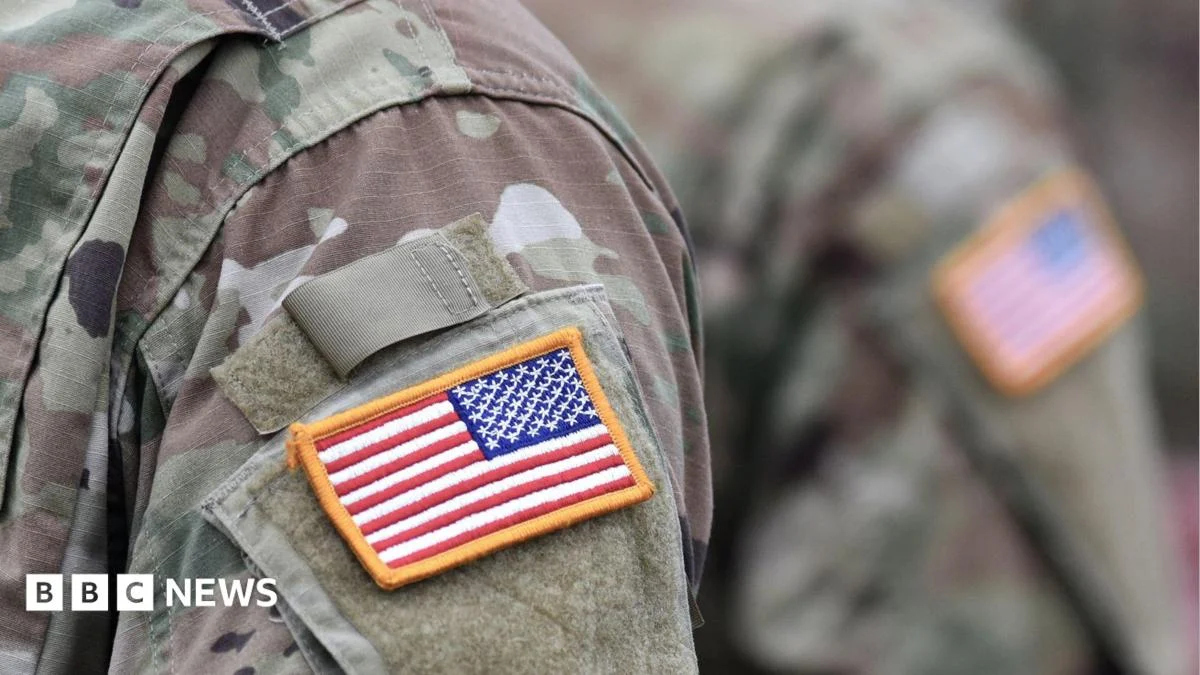
Two US service members were killed and one remains missing following a series of Iranian ballistic missile and drone attacks in Jordan on Friday, military officials confirmed, an incident that has dramatically escalated an already volatile situation in the Middle East and prompted immediate retaliatory air strikes by the United States against Iranian targets. The deadly assault marks a significant turning point in the simmering conflict between Washington and Tehran, pushing both nations closer to a direct confrontation as a recently established preliminary ceasefire has irrevocably collapsed, giving way to renewed hostilities and a rapidly deteriorating security environment across the region.
Chronology of a Collapsed Ceasefire and Renewed Hostilities
The tragic events unfolded against a backdrop of intensifying US-Iran antagonism that had seen a fragile preliminary ceasefire, initiated less than a month prior, completely unravel. This ceasefire, which had offered a brief glimmer of hope for de-escalation, had reportedly involved tacit understandings aimed at reducing military provocations and ensuring the safety of international shipping in critical waterways. However, its breakdown has paved the way for a dangerous resurgence of aggressive actions from both sides.
The immediate catalyst for the current escalation was the Iranian assault on Friday. US Central Command (Centcom) reported that the attacks, involving both ballistic missiles and drones, struck a location in Jordan. While Centcom initially stated four US service members were medically evacuated to Jordanian hospitals and later discharged, the severity of the attack was underscored by the announcement of two fatalities and one missing service member. Officials have, out of respect for the families, withheld the identities of the deceased and the missing, awaiting notification of next of kin. The precise circumstances and the exact location of the incident within Jordan were also not immediately disclosed, adding to the tension and uncertainty surrounding the event.
In a swift and decisive response, the United States launched another round of air strikes against Iran on Saturday night, acting under the direct orders of President Donald Trump. Centcom confirmed these strikes represented the eighth consecutive night of US military action, signaling a sustained and determined campaign. The stated objective of these strikes, according to Centcom, was twofold: to "further degrade Iran’s ability to threaten commercial shipping in the Strait of Hormuz" and to "swiftly punish Islamic Revolutionary Guard Corps forces who launched attacks against American service members in Jordan last night." This direct linkage of the retaliatory strikes to the Jordanian incident underscores the gravity with which Washington views the targeting of its personnel.
Escalating Tensions and Strategic Retaliation
The week leading up to these fatal attacks had already witnessed a dramatic surge in hostilities. Washington had reimposed its comprehensive blockade of Iranian ports, a move designed to cripple Iran’s economy by restricting its maritime trade. Centcom reported that, as of Saturday, this blockade had resulted in the "redirection" of five commercial vessels attempting to access Iranian ports, with one vessel reportedly disabled. This economic pressure was met with an equally defiant response from Tehran, which declared the Strait of Hormuz, a vital global shipping channel, officially closed to traffic. This declaration immediately caused maritime traffic to grind to a halt through the strait, a choke point through which approximately one-fifth of the world’s oil and liquefied natural gas ordinarily passes, sending ripples of concern through global energy markets.
Adding to the economic and strategic volatility, President Trump had, earlier in the week, initially proposed that all vessels transiting the Strait of Hormuz, including those of US allies, would be subject to a 20% fee. This controversial proposal was, however, abandoned on Tuesday, with the President stating it would instead be replaced by new trade deals with Gulf allies. The rapid policy shifts highlighted the administration’s struggle to find an effective strategy to counter Iranian actions without further destabilizing the region or alienating key partners.
Casualties and Wider Conflict Context
The deaths of the two US service members in Jordan bring the total US death toll in the broader, ongoing conflict to 16. This figure notably increased earlier in the week when an American Navy pilot, who had been missing for several days, was officially declared dead, marking the second such increase in the casualty count within a single week. The cumulative toll underscores the sustained human cost of the protracted confrontation in the Middle East, a conflict that often manifests through proxy skirmishes, naval confrontations, and cyber warfare, but which now appears to be entering a more direct and dangerous phase.
In their official statement on Saturday, Centcom articulated the gravity of the situation: "Two US service members in Jordan were killed in action as US Central Command (Centcom) and partner forces defended against Iranian ballistic missile and drone attacks. Additionally, one service member is currently missing." The statement further reiterated the commitment to respecting the privacy of the families, promising to "withhold additional information, including the identities of the fallen warriors, until 24 hours after the next of kin have been notified."
Official Reactions and Accusations
The announcement of the US casualties elicited strong reactions from American leadership. US Defence Secretary Pete Hegseth, responding on the social media platform X, conveyed a solemn message: "Godspeed, heroes. Their sacrifice only stiffens our resolve." This statement signals a firm commitment from the Pentagon to continue military operations and maintain pressure on Iran, suggesting that the deaths will likely lead to an intensification of US efforts rather than a de-escalation.
Meanwhile, Iran’s Islamic Revolutionary Guard Corps (IRGC) offered a starkly different narrative, claiming through Iranian state media that it had destroyed at least two US fighter aircraft early on Saturday at Al-Azraq base in Jordan. When contacted by the BBC regarding this specific report, Centcom declined to provide further details, neither confirming nor denying the IRGC’s assertion. Such conflicting claims are characteristic of the information warfare often accompanying military engagements between the two nations, making it challenging to ascertain the full extent of the damage and success claimed by each side.
From Tehran, Iran’s Supreme Leader Mojtaba Khamenei issued a blistering written statement late on Saturday, directly accusing the United States of undermining any potential for peace. Khamenei, who has not been seen in public since the attack that killed his father at the start of the war, stated that America’s "repeated breaches" of the ceasefire agreement had "laid bare a fundamental truth: the signature of the US president is utterly worthless and devoid of credibility." He further accused the US of seeking to "escalate the conflict" and ominously declared that Iran had "unforgettable lessons in store for it." This rhetoric from the highest echelons of Iranian leadership suggests a firm resolve to retaliate and a rejection of any diplomatic overtures under current conditions, significantly reducing the prospects for de-escalation.
Jordan’s military, in a separate statement, reported that it had successfully intercepted 10 Iranian missiles fired into its airspace overnight, without reporting any damage on its territory. This interception highlights Jordan’s role as a frontline state in the conflict, operating advanced air defense systems to protect its sovereignty and the allied forces stationed within its borders.
International Warnings and Regional Concerns
In a broader security advisory, the US Department of State issued a notice on Saturday advising Americans worldwide, but particularly those in the Middle East, to exercise "increased caution." The travel notice urged those in the region to "monitor the news for breaking developments," adding a stark warning: "Due to heightened tensions in the Middle East, the security environment remains complex with the potential for unforeseen escalation." This advisory reflects the US government’s assessment of a significantly elevated risk to its citizens amidst the escalating military and political tensions.
The Gulf Cooperation Council (GCC), an alliance representing Saudi Arabia, Kuwait, Qatar, Bahrain, the United Arab Emirates, and Oman, also weighed in on the escalating crisis. The council accused Tehran of deliberately targeting civilian infrastructure in the region, a claim that was substantiated by Kuwait. Following Iran’s assertion that it had responded to US strikes by targeting American Gulf allies on Saturday, Kuwait reported that a power plant and a water distillation plant had been hit. Jasem Mohamed Albudaiwi, who leads the GCC, unequivocally stated that such actions amounted to "war crimes."
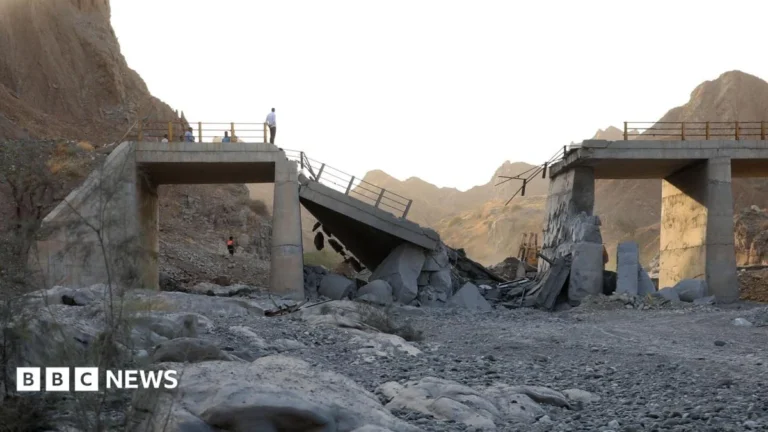
Under established international law, attacking civilians or civilian areas is strictly prohibited. However, the legal framework also acknowledges that in specific circumstances, civilian objects—such as bridges or power plants—can lose their protected status if they are verifiably used to directly support an enemy’s war effort. The GCC’s strong condemnation, however, suggests they view these alleged attacks as indiscriminate or without sufficient military justification, raising serious humanitarian and legal concerns.
Implications and Future Outlook
The killing of US service members in Jordan represents a dangerous escalation in the long-standing shadow war between the United States and Iran. It transforms a conflict often characterized by proxy engagements and indirect confrontations into one with direct casualties, raising the stakes considerably. The immediate US retaliatory strikes signal a clear shift towards a more aggressive posture from Washington, indicating that attacks on American personnel will not be tolerated.
The collapse of the ceasefire and the renewed closure of the Strait of Hormuz carry significant economic implications, particularly for global energy markets. The disruption of such a vital shipping lane could lead to sustained increases in oil and gas prices, impacting economies worldwide. The strategic importance of the strait, coupled with the naval build-up and increased surveillance by both sides, also heightens the risk of accidental encounters or miscalculations that could rapidly spiral into a larger conflict.
Diplomatically, the path forward appears increasingly fraught. Iran’s Supreme Leader’s declaration that the US president’s signature is "worthless" effectively shuts down immediate prospects for renewed negotiations, while President Trump’s threats of further strikes on Iranian infrastructure further harden positions. Regional allies, caught between the two powers, face immense pressure and the increased risk of becoming collateral damage, as evidenced by the reported attacks on Kuwaiti civilian infrastructure.
The ongoing cycle of attack and retaliation underscores the fragility of peace in the Middle East and the profound challenges in de-escalating the US-Iran rivalry. Without clear channels of communication, mutual trust, or a renewed commitment to diplomatic solutions, the region appears poised for continued instability, with the potential for further military confrontations and humanitarian crises remaining acutely high. The international community now watches with bated breath, hoping for a pathway to de-escalation before the situation spirals beyond control, transforming a protracted shadow war into an overt, devastating regional conflict.