


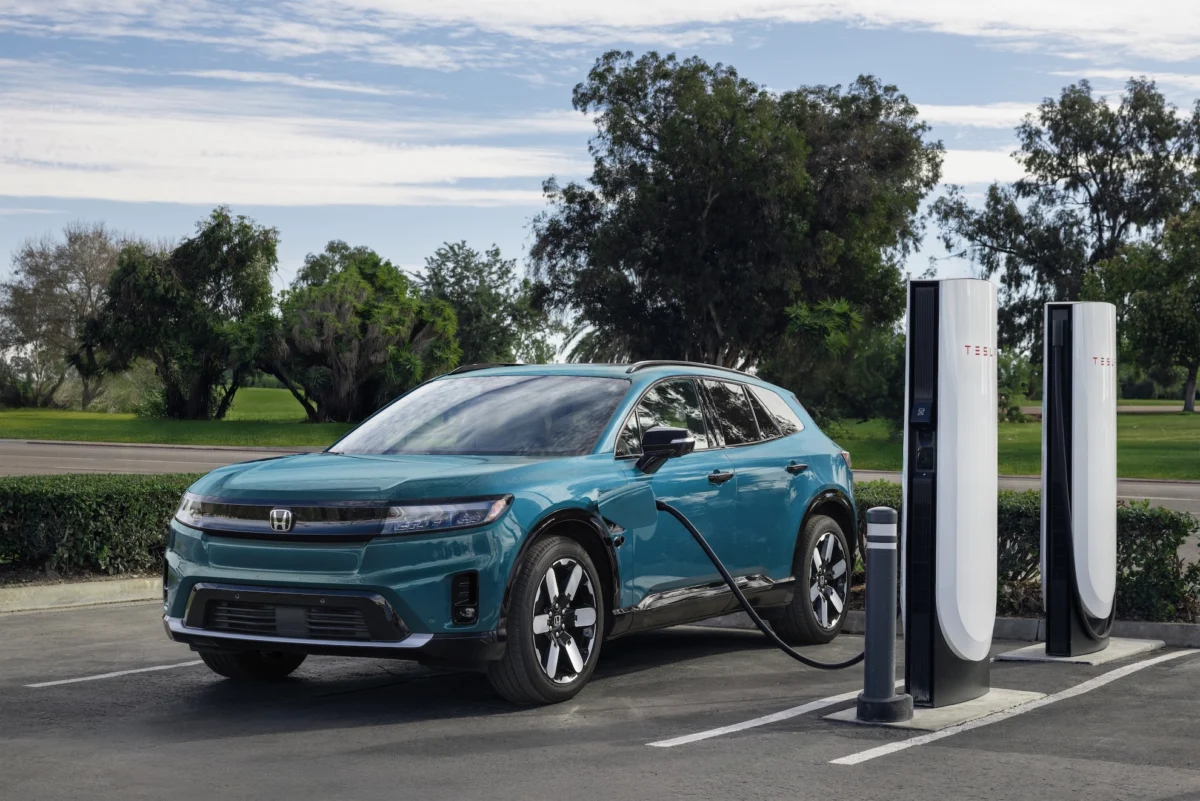
The Honda Prologue, a vehicle once heralded as a cornerstone of Honda’s electric future in North America, has been officially discontinued, a decision confirmed by the company to TechCrunch. This move effectively removes the last all-electric vehicle from the automaker’s U.S. portfolio, marking a significant strategic pivot. The Prologue’s abrupt departure, however, is not an isolated incident; it serves as a stark illustration of a broader and accelerating retreat by major automakers from the U.S. electric vehicle (EV) market, a trend that stands in stark contrast to the robust growth and investment observed in EV markets across much of the rest of the world.
This developing narrative of retrenchment in the American EV landscape prompts a critical examination: which other electric vehicles have exited or are in the process of exiting the U.S. market, and what are the underlying reasons for this widespread reassessment? The answers point to a complex interplay of economic, political, and consumer-driven factors reshaping the automotive industry.
The Shifting Sands of the U.S. EV Market
The American EV market is currently navigating a period of significant turbulence. A major catalyst for the recent slowdown was the expiration of the comprehensive $7,500 federal tax credit in Fall 2025. This incentive had previously played an outsized role in stimulating EV sales, making electric models more financially accessible to a broader consumer base. Its removal created an immediate void, directly impacting affordability and, consequently, demand.

Beyond the tax credit, a confluence of other factors is contributing to the winnowing choices available to American consumers. These include escalating international trade tariffs, particularly impacting vehicles and components from certain regions; evolving and sometimes unpredictable consumer tastes, which often grapple with concerns around range anxiety, charging infrastructure availability, and the initial purchase price of EVs; the inherent high costs associated with EV manufacturing and raw materials; shifting company priorities as automakers re-evaluate their investment strategies amidst a volatile market; and increasingly complex regulatory actions.
According to data compiled in July 2026 by industry analytics firms Kelley Blue Book and Cox Automotive, a total of 247,226 EVs were sold in the second quarter of 2026. While this represented a modest increase from the first quarter of the year, it constituted only about 5.8% of the total U.S. automotive market. More tellingly, current EV sales figures remain notably down from the same period last year, prior to the cessation of the federal tax credit. For instance, Q2 2026 EV sales were 20.5% lower than Q2 2025, and fourth-quarter 2025 sales had plummeted 36% compared to Q4 2024. Although signs of a slow recovery are emerging, with the gap narrowing compared to the dramatic drops seen late last year, the market has yet to regain its previous momentum, signaling a challenging environment for electric vehicle manufacturers.
Despite the headwinds, the U.S. market is not entirely static; new EVs, such as the Rivian R2, continue to enter, indicating ongoing innovation and selective investment. However, the prevailing trend among many established automakers is a cautious pullback, leading to the discontinuation of several EV models. TechCrunch has committed to periodically updating its comprehensive list of electric vehicles that have departed, or are slated to depart, the U.S. market in 2026.
Notable Departures from the U.S. EV Landscape in 2026
The current year has seen a significant culling of EV models, reflecting a broader recalibration of strategies by automakers facing a more demanding American market.

Afeela: A Vision Unfulfilled
The Afeela, a highly anticipated electric vehicle born from a groundbreaking collaboration between Sony and Honda, never quite made it to the starting line. Its journey began with considerable fanfare at the 2020 Consumer Electronics Show (CES), where Sony unveiled the Vision S prototype, a surprising entry from the electronics giant. Honda joined the venture in 2022, forming a joint entity, Sony Honda Mobility. The combined effort yielded an Afeela-branded prototype shown at CES the following year, captivating audiences with its futuristic design and advanced technology.
For months and years thereafter, Afeela seemed omnipresent, featured in marketing campaigns and tech events, including a prominent display at TechCrunch Disrupt. Yet, despite this extensive marketing blitz and the significant resources poured into its development, the Afeela never transitioned from prototype to mass production. In a significant setback announced in March 2026, Sony Honda Mobility officially abandoned its plans for the two Afeela-branded EVs slated for the U.S. market. This decision closely followed Honda’s independent announcement, made just two weeks prior, to cancel three other planned EVs for the U.S. market. The demise of Afeela underscores the immense challenges and financial pressures involved in bringing a new EV to market, even for well-resourced and innovative conglomerates. It highlights that technical prowess alone is insufficient without a viable market strategy and competitive cost structure.
Honda (and Acura!): A Full Retreat from U.S. All-Electrics
Honda’s journey into the U.S. all-electric market has been particularly tumultuous this year, culminating in a complete withdrawal of its EV offerings. Just a few years ago, the Japanese automotive giant had loudly proclaimed its electric ambitions with the unveiling of its "0 Series" at CES 2024, featuring striking concepts like the Saloon and Space-Hub. This was followed by a mid-sized SUV prototype at CES 2025, which was specifically earmarked for production at Honda’s "EV Hub" factory in Ohio and slated for a North American debut in the first half of 2026. Acura, Honda’s luxury division, also had plans for its own EV, the RDX.
However, these grand plans unraveled rapidly. In March 2026, Honda announced a major overhaul of its EV strategy, halting the development of the Acura RDX, Honda 0 sedan, and the highly anticipated SUV. The company cited "U.S. tariffs and Chinese competition" as the primary reasons for this dramatic decision. The competitive pressure from Chinese EV manufacturers, coupled with the increased costs imposed by tariffs on imported components or vehicles, made Honda’s planned U.S.-specific EV lineup economically unviable at the desired price points.
While there was initial speculation, the official confirmation regarding the Honda Prologue came on July 16, when CarBuzz first reported its cancellation, a fact subsequently verified by TechCrunch. The Prologue, unlike the conceptual 0 Series, was a tangible product that had reached consumers. It was a result of a strategic partnership with General Motors, built at GM’s Ramos Assembly Plant in Mexico, and shared foundational elements with the Chevrolet Blazer EV. For a time, it performed adequately, selling approximately 33,000 units in 2024 and 39,000 in 2025. However, following the expiration of the federal tax credit in Fall 2025, sales experienced a significant free fall, signaling that its competitive edge relied heavily on the federal incentive.

Honda’s decision represents more than just a model discontinuation; it’s a strategic retreat from the U.S. all-electric market. While the company may pivot towards hybrid technologies or re-evaluate its EV strategy for a later re-entry, its current actions highlight the intense pressures and the challenging market conditions facing legacy automakers in the American EV space.
Hyundai: Tariff Troubles for the Ioniq 6
The Korean automaker Hyundai has generally been a strong performer in the U.S. EV market, successfully rolling out popular models like the Ioniq 5 and the upcoming Ioniq 9. However, even a successful player like Hyundai has had to make adjustments in response to changing economic realities and regulatory environments.
In March 2026, Hyundai announced its decision to cease sales of the stylish Hyundai Ioniq 6 in the U.S. market. This move was directly linked to the issue of tariffs. Unlike its Ioniq 5 and Ioniq 9 siblings, which are assembled at Hyundai’s rapidly expanding manufacturing facility in Georgia, the Ioniq 6 is manufactured in South Korea and subsequently imported into the U.S. The lack of domestic production meant the Ioniq 6 did not qualify for federal tax credits, and increased tariffs made its pricing less competitive against locally produced or qualifying models.
Interestingly, Hyundai did state that it would continue to import its more expensive, lower-volume N-model variant of the Ioniq 6. This suggests a strategic calculation: for niche, high-performance models where profit margins are higher and sales volumes are inherently lower, the impact of tariffs and the absence of tax credits can be absorbed more effectively. However, for a mainstream EV sedan designed for broader appeal, the economic pressures proved too great. This situation illustrates how government policies, particularly trade tariffs, can directly influence product availability and strategic decisions even for successful global manufacturers.
Nissan: Ariya’s Abbreviated American Adventure
Nissan, a pioneering force in the early EV market with its Leaf hatchback over a decade ago, decided last year not to produce a 2026 model year of its all-electric Ariya SUV for the U.S. market, with no signs of its return. The Ariya was first unveiled with considerable anticipation in 2020, positioned as Nissan’s next-generation all-electric offering, boasting a projected 300-mile range and a modern crossover design. It was slated to begin sales in Japan the following year, with a U.S. launch to follow.

The Ariya was intended to be a significant step forward for Nissan’s EV strategy, building on the legacy of the Leaf. Its effective withdrawal from the U.S. market for the 2026 model year raises questions about its performance, pricing, and Nissan’s overall competitiveness in a rapidly evolving segment. While specific reasons for its discontinuation in the U.S. were not detailed in the original report, it likely points to challenges in meeting sales targets, profitability concerns, or a strategic re-evaluation by Nissan in the face of intense competition from both domestic and international rivals. The company’s future EV strategy in the U.S. remains under scrutiny following this setback.
Polestar: Caught in the Crosshairs of Geopolitical Tensions
The Swedish EV maker Polestar, a performance-oriented brand majority-owned by Chinese automotive giant Geely, has faced a unique and formidable challenge that has effectively forced its retreat from the U.S. market: a ban on Chinese-connected vehicle technology. In June 2026, Polestar was compelled to suspend the import and sale of its new vehicles in the United States, lacking the specific authorization required from the U.S. Department of Commerce to continue operating.
This regulatory action is a direct consequence of rising geopolitical tensions and concerns within the U.S. government regarding data security and potential espionage risks associated with vehicles incorporating Chinese-connected technology. Without the necessary waiver or authorization, Polestar found itself effectively barred from introducing new models. The company stated it would continue to sell its existing stock of Polestar 3 and Polestar 4 vehicles in the U.S. and committed to supporting current customers through its service network. The Polestar 3, notably, had begun assembly at a factory in South Carolina, alongside production in Chengdu, China, highlighting the complexity of its global supply chain.
In a contrasting development that underscores the specificity of these regulations, Volvo Cars—Polestar’s sibling company, also owned by Geely—did receive the necessary authorization from the Trump administration in May 2026 to continue selling its connected cars in the U.S. This disparity suggests that the regulatory scrutiny might be highly granular, focusing on specific technologies, software, or degrees of integration with Chinese systems within each brand’s vehicles. Polestar’s predicament serves as a stark reminder of how broader geopolitical forces and trade policies can directly impact the commercial viability of international automotive brands in key markets.
Tesla Model S and Model X: A Shift Towards AI and Robotics
Tesla, the undisputed pioneer of the modern EV era, made a surprising announcement in January 2026: it would cease production of its flagship Model S sedan and Model X SUV. These vehicles were not just luxury EVs; they were foundational to Tesla’s early success, establishing its brand, showcasing its technological prowess, and paving the way for the broader acceptance of electric vehicles.

The decision to discontinue these iconic models stems from a profound strategic reorientation articulated by Tesla CEO Elon Musk. In Tesla’s view, the future lies not solely in traditional electric vehicles, but in the broader convergence of artificial intelligence, autonomy, and robotics. This vision includes ambitious projects like the "Cybercab" robotaxi service and the Optimus humanoid robots. This strategic pivot reflects Musk’s belief that these emerging technologies represent the next frontier of growth and innovation for the company.
The move was also underpinned by practical market realities. Sales of the Model S and Model X had experienced a steady decline over recent years as consumer preferences shifted towards Tesla’s higher-volume and more affordable offerings, the Model 3 sedan and Model Y SUV. These mass-market vehicles became the primary drivers of Tesla’s growth, making the production of the older, more expensive models less critical to the company’s forward-looking strategy. The last Model S and Model X vehicles rolled off the assembly line in the spring of 2026. Significantly, Tesla wasted no time in reconfiguring its Fremont, California factory; the assembly lines for the S and X were swiftly removed to create space for the accelerated production of its Optimus robots, symbolizing the company’s commitment to its new strategic direction.
Volkswagen: Retooling and Robotaxi Dreams
Volkswagen, a global automotive powerhouse, has also undertaken a significant recalibration of its EV strategy in the U.S., pulling back on models like the ID.4 electric SUV and placing the ID Buzz on a temporary hiatus.
In April 2026, Volkswagen announced it would no longer produce the ID.4 at its U.S. factory in Chattanooga, Tennessee. This decision marked a strategic pivot back towards high-volume internal combustion engine (ICE) vehicles, such as its upcoming gas-powered Atlas SUV. The company indicated that demand for the ID.4 had not met expectations, leading to a reallocation of production resources to more profitable ICE segments. U.S. customers will still be able to purchase the ID.4 until the current inventory is depleted, with VW projecting that existing stock could last well into 2027. This move underscores the challenges European automakers face in adapting their global EV strategies to the unique demands and competitive landscape of the U.S. market.
Concurrently, the much-anticipated ID Buzz, Volkswagen’s retro-styled electric microbus, will not have a 2026 model year, effectively going on a hiatus. While Volkswagen has stated its intention for the ID Buzz to return in 2027, this temporary pause suggests a need for re-evaluation, potential retooling, or adjustments to its market strategy to ensure a more successful relaunch.

Despite these consumer-facing setbacks, Volkswagen’s broader EV and autonomous strategy remains active. Its subsidiary, MOIA America, in partnership with Uber, commenced testing autonomous microbuses – based on the ID Buzz platform – in Los Angeles in April 2026. This initiative is a crucial step towards launching a robotaxi service slated for late 2026. Initially, these self-driving vehicles will operate with human safety operators, highlighting Volkswagen’s dual approach: adjusting its consumer EV offerings while aggressively pursuing advanced autonomous mobility solutions.
Volvo: The EX30’s Early Exit
Volvo, known for its commitment to electrification and safety, made a surprising decision in March 2026 to withdraw its subcompact EX30 and its Cross Country variant from the U.S. market. The company announced that production for the U.S. would cease after the summer, effectively ending the model’s brief American tenure.
The EX30 had generated considerable excitement prior to its official U.S. entry in 2025. Positioned as Volvo’s most affordable all-electric option, it was expected to attract a new segment of buyers to the brand and to the EV market. Its promising start, however, was not enough to secure its long-term viability in the U.S. market. While Volvo did not explicitly detail the reasons for the EX30’s withdrawal, such decisions often stem from a combination of factors, including lower-than-anticipated sales volumes, profitability challenges in the competitive subcompact segment, or a strategic prioritization of larger, higher-margin SUV models like the all-electric EX60 and EX90, which Volvo plans to continue selling in the United States. The EX30’s short lifespan in the U.S. illustrates that even well-received and affordably priced EVs can struggle to gain sufficient traction amidst market volatility and intense competition.
Implications and the Road Ahead for U.S. EVs
The current wave of EV model withdrawals from the U.S. market signifies a critical juncture for the automotive industry. The American market is demonstrating a distinct and divergent trajectory compared to global EV adoption trends, which continue to see robust growth in regions like Europe and China. This divergence is largely attributable to the unique confluence of policy shifts, consumer preferences, and geopolitical factors at play in the United States.

The end of the federal tax credit has unequivocally exposed the price sensitivity of American consumers, who are also grappling with concerns about charging infrastructure reliability and the upfront costs of EVs compared to traditional gasoline or hybrid vehicles. Furthermore, the increasing use of tariffs as a tool of trade policy, particularly against vehicles and components from China, is directly impacting the competitive landscape, making certain imported EVs less viable.
For automakers, this environment necessitates a careful re-evaluation of their U.S. EV strategies. Companies like Honda are retreating entirely from all-electrics for the time being, likely to focus on hybrid technologies or to reassess their approach for a future re-entry. Others, like Hyundai, are adjusting their offerings based on manufacturing origins to circumvent tariffs and qualify for incentives. Polestar’s situation highlights the potent impact of geopolitical tensions on market access, forcing even established brands to exit. Meanwhile, Tesla’s pivot signals a broader evolution within the EV pioneer itself, moving beyond traditional automotive segments into advanced AI and robotics. Even Volkswagen and Volvo, with strong commitments to electrification, are adjusting their U.S. lineups, either temporarily halting production or shifting focus to different segments.
The market is not stagnant, however. The entry of new players and models, such as the Rivian R2, indicates that opportunities still exist, particularly for those who can offer compelling products that address consumer concerns around price, range, and charging, potentially with a strong domestic manufacturing footprint to leverage any future incentives.
In conclusion, the U.S. EV market is undergoing a significant transformation. It’s a challenging environment characterized by a slower adoption curve than initially projected, intense competition, and a strong influence from government policies. Manufacturers are being forced to adapt, often by scaling back ambitious EV plans, re-prioritizing profitability, and carefully selecting which models can thrive in this complex and evolving landscape. For consumers, this means a dynamic but potentially less diverse selection of electric vehicles in the near term, as the market recalibrates for sustainable growth.