


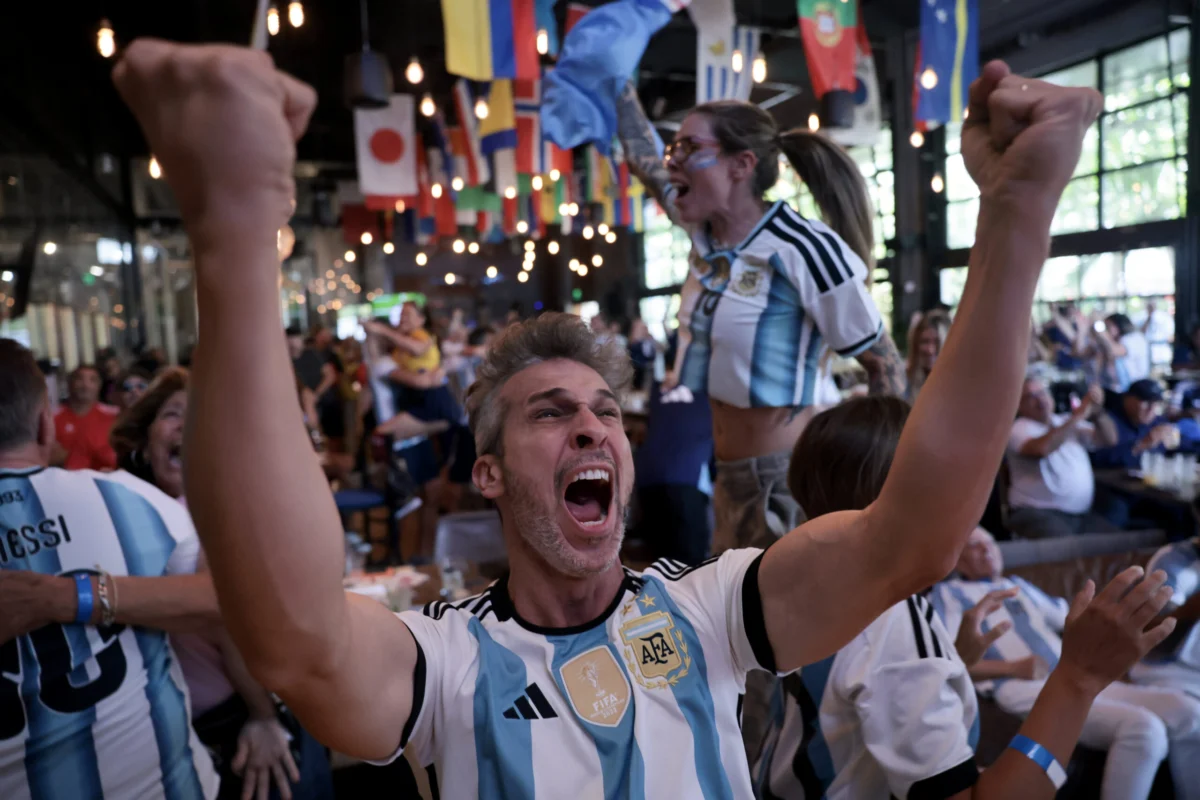
The 2026 FIFA World Cup has concluded, leaving in its wake not only a new world champion, Spain, but also a transformed landscape for prediction markets, with Kalshi emerging as a dominant force. The tournament, culminating in Spain’s victory over Argentina in a hotly contested final, served as an unprecedented catalyst for user acquisition and trading volume on the platform. Kalshi, a regulated exchange for event contracts, recorded an extraordinary influx of 3 million new users during the World Cup, a testament to the power of global sporting events to drive engagement in financial markets. This surge underscores a critical juncture for the burgeoning prediction market industry, as it grapples with rapid expansion while navigating a complex regulatory environment and intense scrutiny.
The sheer scale of activity on Kalshi during the World Cup was staggering. Over $1.2 billion was traded on contracts speculating on the tournament’s winner alone, setting a new record for a singular market on the platform. This monumental figure highlights the appetite among retail and institutional traders alike for engaging with real-world events through a market mechanism. The final match, which saw Spain triumph over Argentina, marked the official closure of this record-breaking market, solidifying Kalshi’s position as a major player in the prediction market ecosystem.
The Global Phenomenon of Prediction Markets: Context and Growth
Prediction markets, which allow users to trade on the outcome of future events, have seen a steady rise in popularity, offering a unique blend of financial speculation and information aggregation. Unlike traditional sports betting, which often focuses on discrete outcomes with fixed odds, prediction markets operate more like financial exchanges, with prices fluctuating based on collective sentiment and information. The Commodity Futures Trading Commission (CFTC), the primary federal regulator for these markets in the United States, views event contracts as derivatives, placing them under its jurisdiction. This regulatory framework distinguishes them from sports wagering, which typically falls under state control.
The appeal of prediction markets extends beyond mere entertainment. Researchers and economists often highlight their potential for accurate forecasting, as market prices aggregate diverse opinions and information. They provide a mechanism for individuals to hedge against future uncertainties or to express their informed beliefs about economic, political, or social events. The global prediction market industry, though still nascent compared to traditional financial markets, has been projected to grow significantly, with some analysts estimating its value in the tens of billions by the end of the decade, driven by technological advancements, increased accessibility, and a growing appetite for alternative investment vehicles.
FIFA World Cup 2026: A Catalyst for Unprecedented Engagement
The FIFA World Cup, held across North America in 2026, proved to be an unparalleled opportunity for prediction markets. As Vijay Viswanathan, an associate dean of integrated marketing communications at Northwestern University, aptly noted, "I don’t think there’s any game like football… It’s played in about every country in the world… so in just terms of the total addressable market, there’s really nothing that comes close to the FIFA World Cup." This global reach, combined with the tournament’s inherent drama, passionate fan bases, and daily news cycles, created fertile ground for prediction market activity.
The 2026 edition, specifically, benefited from heightened interest due to its expanded format, featuring 48 teams for the first time, and its hosting across three diverse nations: the United States, Canada, and Mexico. This expansion not only increased the number of matches but also broadened the geographic and demographic appeal, drawing in new audiences who might not typically engage with financial markets but were captivated by the world’s most popular sporting event. Kalshi strategically leveraged this global fervor, recognizing the World Cup as a singular event capable of transcending traditional market demographics and bringing in a diverse user base.
Kalshi’s Strategic Playbook: A Multi-pronged Marketing Offensive
Kalshi’s remarkable growth during the World Cup was not accidental; it was the result of a meticulously planned and aggressively executed marketing strategy. The company deployed a multi-pronged approach that combined traditional advertising, strategic partnerships, celebrity endorsements, and agile content creation to maximize its visibility and appeal.
Key Partnerships:
Central to Kalshi’s campaign was its partnership with ADI Predictstreet, the official prediction market sponsor of the 2026 FIFA World Cup. This collaboration allowed for co-branded advertisements to be prominently featured in stadiums across the host nations, granting Kalshi unparalleled visibility to millions of in-person spectators and billions of television viewers worldwide. The official designation provided a crucial layer of legitimacy and recognition in a competitive and sometimes misunderstood market.
Adding a cutting-edge technological dimension, Kalshi also forged a partnership with OpenAI. This innovative collaboration ensured that Kalshi’s contract odds were featured directly within ChatGPT whenever users searched for information about World Cup games. This integration tapped into the growing trend of AI-powered information retrieval, making Kalshi’s offerings accessible at the point of inquiry for millions of users seeking real-time insights and predictions. The visibility on such a widely used AI platform provided a novel and highly effective channel for user acquisition, reaching individuals who might not typically seek out prediction market platforms.
Star Power Endorsements:
Kalshi invested heavily in celebrity endorsements, strategically choosing figures who resonated with both core football fans and broader audiences. Croatian soccer maestro Luka Modric and legendary Real Madrid coach José Mourinho were enlisted, lending their immense credibility and global recognition within the football world. These figures directly appealed to the passionate football fan base, signaling Kalshi’s authentic connection to the sport.
Perhaps the most impactful endorsement came through a partnership with the Argentina national team, which famously led to a feature in an Instagram post by superstar Lionel Messi. Messi’s unparalleled global following ensured that Kalshi gained exposure to hundreds of millions of followers, a reach that traditional advertising campaigns could scarcely dream of achieving. This organic integration into a celebrity’s personal brand amplified Kalshi’s message exponentially.
Recognizing the need to diversify its appeal beyond just sports enthusiasts, Kalshi also launched advertisements featuring non-soccer celebrities. A spot with acclaimed actor Timothée Chalamet was released in June, coinciding with his high-profile appearances at New York Knicks games during the NBA Finals, capturing attention from a broader pop culture demographic. This was followed by an advertisement featuring Colombian singer J Balvin in July, further expanding Kalshi’s reach into the global music and entertainment spheres.
Elizabeth Johnson, executive director of the Wharton Neuroscience Initiative at the University of Pennsylvania, commented on this dual strategy: "This is also a way for them to say, ‘oh, but we’re also relevant to all these other people who might not be that interested in sports, too.’ They’re seizing this moment to remind people about the ubiquitousness of what these prediction markets are." This approach aimed to position Kalshi not just as a sports-centric platform, but as a universal market for predicting future events across various domains.
Agile Content Creation:
Speed and responsiveness were critical elements of Kalshi’s marketing strategy. Tarek Mansour, Kalshi CEO, who personally leads the company’s marketing efforts, emphasized this ethos: "Our volumes are where the news is at… It’s a lot of the approach for the World Cup… The most important thing is enable creativity based on what’s happening." An exemplary instance of this agility was an advertisement featuring former professional soccer stars playing a scrimmage, which was conceived, executed, and released within a remarkable 24-hour timeframe. This rapid turnaround allowed Kalshi to capitalize on real-time events and trending discussions, maintaining relevance and capturing fleeting attention in a fast-paced media landscape.
Navigating the Regulatory Minefield: Prediction Markets Under Fire
Despite its impressive growth, Kalshi operates within a challenging and contentious regulatory environment. The legal status of prediction markets, particularly those involving sports events, remains a significant point of contention between federal and state authorities in the United States. States argue that such contracts are functionally equivalent to sports betting, an activity traditionally regulated and taxed at the state level. This stance often stems from concerns over consumer protection, responsible gambling, and the desire to control potential revenue streams.
The Federal vs. State Standoff:
The core of the dispute lies in whether event contracts fall under the purview of the CFTC as legitimate derivatives or under state gambling laws. Kalshi firmly aligns with the federal government’s position, asserting that the CFTC, which regulates swaps and derivatives, possesses the sole authority to regulate prediction markets. This alignment is crucial for Kalshi, as federal oversight provides a more uniform and predictable regulatory framework compared to navigating a patchwork of 50 different state laws. The legal battles are ongoing, with several states actively challenging the CFTC’s jurisdiction, leading to a complex and often litigious landscape for prediction market operators. Industry estimates suggest that states claim to have lost upwards of $1 billion in potential revenue due to the operation of prediction markets outside their regulatory control, intensifying their lobbying efforts.
Industry Perspectives:
Tarek Mansour has consistently dismissed the concerns raised by state regulators, attributing the pressure primarily to incumbent gambling companies. He argues that these established players are worried about losing their dominant market positions to innovative prediction market platforms. "You have gambling companies that have monopolies in various states," Mansour stated in a recent interview, "and they don’t want to see competition from new, regulated financial markets." This perspective frames the regulatory battle as a turf war between traditional gambling interests and a new wave of financial technology.
However, Brian Sung, a partner in the derivatives and digital assets practice groups at Haynes Boone, offers a more nuanced view. While he believes that Kalshi’s advertising strategies may not directly impact how courts ultimately rule on the legality of their contracts, he acknowledges that it significantly influences public and political perception. "It does kind of weaken their perception, in public or politics," Sung observed. "They are trying to push against this idea that they’re really only about sports. I mean, that is where the bulk of their activity is." The heavy emphasis on sports in marketing, while effective for user acquisition, inadvertently reinforces the narrative that these markets are akin to sports betting, making the regulatory distinction harder to maintain in the public eye.
Global Challenges: The Creteil, France Scandal:
The regulatory complexities are not confined to the United States. The prediction market industry faces similar challenges globally. As highlighted by the image caption detailing a "major scandal and $54 million lawsuit concerning bets related to recent strikes in Iran" in Creteil, France, on March 9, 2026, Kalshi and similar platforms are under international scrutiny. While this specific incident appears unrelated to the World Cup, it underscores the diverse and global nature of legal and regulatory challenges prediction markets face. Such high-profile lawsuits, even if originating from specific events or regions, contribute to a broader environment of caution and increased regulatory oversight across the industry. They serve as stark reminders that the innovative nature of prediction markets often outpaces existing legal frameworks, leading to disputes over jurisdiction, legality, and consumer protection.
Beyond the Final Whistle: Kalshi’s Future Trajectory
With the World Cup euphoria now subsiding, Kalshi faces its next significant challenge: converting the 3 million new users acquired during the tournament into recurring, long-term traders. Data from previous major events suggests that trading volumes on days without significant World Cup matches were notably lower than during game days. This indicates a potential "event-driven" user base that might disengage once the primary catalyst is removed.
User Retention: The Next Frontier:
The immediate priority for Kalshi will be to demonstrate the broader utility and appeal of its platform beyond major sporting events. This involves exposing new users to the diverse range of contracts available on Kalshi, which span politics, economics, weather, technology, and various other categories. Educational initiatives, personalized recommendations, and incentive programs will be crucial in encouraging exploration and sustained engagement. The company’s ability to retain a significant portion of its World Cup-era users will be a key metric for its long-term success and valuation.
Diversification and Market Expansion:
Tarek Mansour remains optimistic, drawing parallels to previous cycles of growth. He noted that major events often drive an initial surge in volume, followed by a temporary decline, only for the overall trend to continue upward driven by other newsworthy events. "You have to believe there’s not going to be any news after Sunday," he quipped, referring to the World Cup final. "Maybe… but the more probable thing is that there’s going to be like a bunch of things going on in the world, and Kalshi’s going to be there to service it." This vision underscores Kalshi’s ambition to be a ubiquitous platform for trading on any verifiable future event, transcending specific niches like sports. The company is actively working to expand its offerings, introduce new contract types, and enhance its user experience to appeal to a wider demographic of traders interested in predicting various real-world outcomes.
The 2026 FIFA World Cup has undoubtedly been a landmark event for Kalshi, propelling it into a new league of user engagement and trading volume. As the dust settles on the football pitch, the real game for Kalshi now shifts to the strategic arena of user retention, market diversification, and the ongoing battle for regulatory clarity. The success of its World Cup campaign has provided a powerful springboard, but the path ahead remains fraught with both immense opportunity and formidable challenges in establishing prediction markets as a mainstream and fully accepted financial instrument.
Disclosure: CNBC and Kalshi have a commercial relationship that includes customer acquisition and a minority investment.