



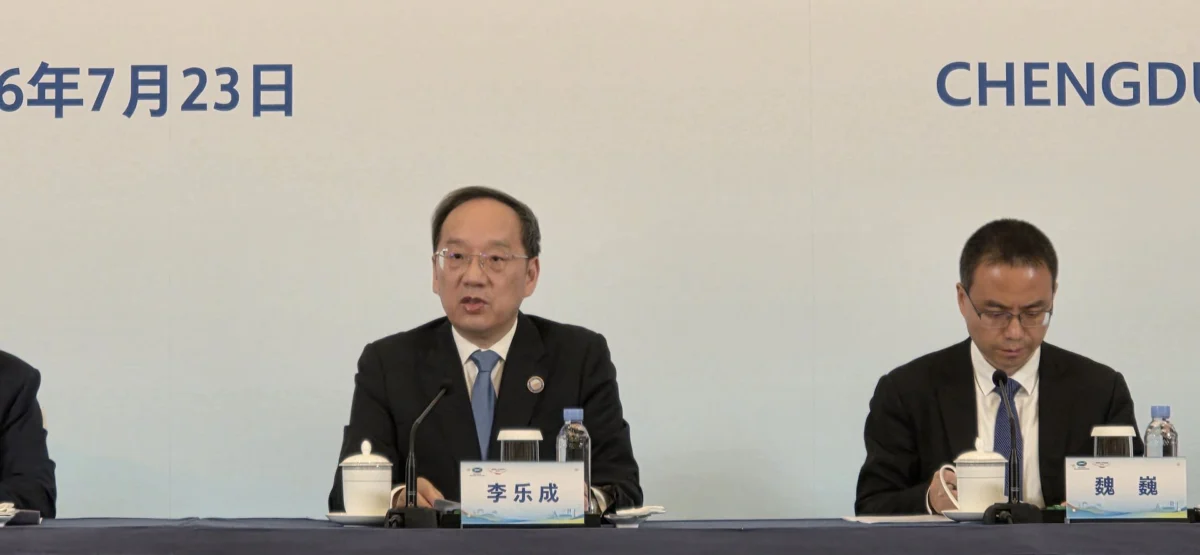
The Asia-Pacific Economic Cooperation (APEC) forum, representing 21 member economies including global technological powerhouses like the United States and China, has issued a landmark "Chengdu Statement on AI," signaling a significant shift in multilateral approaches to artificial intelligence governance. The statement, released on July 24, 2026, following a ministerial meeting during the APEC Digital Weeks in Chengdu, China, underscores a growing governmental desire to exert greater control over AI development, particularly as increasingly powerful open-source models proliferate globally. Chaired by Li Lecheng, China’s Minister of Industry and Information Technology, the meeting convened ministers from across the Asia-Pacific region to deliberate on the complex interplay between technological advancement, economic integration, and regulatory oversight in the digital era.
The Chengdu Statement, a pivotal outcome of the APEC Digital and AI Ministerial Meeting, emphasizes the critical importance of respecting "security, data protection and intellectual property rights," while concurrently advocating for the robust support of open-source development. This dual emphasis reflects a nuanced attempt to harness the collaborative potential of open AI ecosystems while mitigating associated risks. Crucially, the statement also specified support for AI models and projects "that employ strong security assurance through development and deployment." This particular detail is seen by analysts as a key indicator of how the traditionally libertarian ethos of open source is evolving, moving towards a framework that incorporates greater state oversight and accountability.
The Evolving Landscape of Open-Source AI and Geopolitical Dynamics
The discussions in Chengdu unfolded against a backdrop of escalating global competition in AI and a palpable shift in the development paradigm. China, in recent years, has emerged as a significant force in open-source AI, with domestic companies like DeepSeek and GLM releasing powerful, freely accessible and downloadable models. This contrasts sharply with the business models of many leading U.S. AI firms, such as Anthropic, which predominantly offer closed, proprietary, and pay-to-use AI systems. This divergence in approaches has fueled geopolitical tensions, with the U.S. having previously raised concerns about potential intellectual property theft from American technology firms contributing to China’s rapid advancements.
Winston Ma, an adjunct professor of law at New York University and a keen observer of digital economy trends, commented on the statement’s implications, noting its "explicit alignment around open-source ecosystems and compute infrastructure." According to Ma, this confirms a broader trajectory within the Asia-Pacific region, moving away from entirely closed models towards open-weight systems. These systems, he suggests, are increasingly integrated with state-coordinated energy, telecommunications, and digital infrastructure, creating a powerful, interconnected digital ecosystem under governmental purview. The APEC AI statement stands out as the first ministerial-level agreement to explicitly include open-source cooperation, a testament to its growing strategic importance.
APEC’s Role in Shaping Global Digital Governance
APEC, established in 1989, serves as a premier regional economic forum promoting trade, investment, and sustainable economic growth across the Asia-Pacific. Its 21 member economies collectively represent approximately 2.9 billion people, account for over 60% of global GDP, and nearly half of world trade. The APEC Digital Weeks, an annual series of meetings and events, focuses on advancing the digital economy agenda, covering areas such as digital transformation, cybersecurity, data governance, and the ethical implications of emerging technologies like AI. Chengdu, a rapidly expanding technological hub in western China, provided a fitting venue for these discussions, symbolizing the region’s dynamic role in the global digital landscape. The selection of Chengdu also subtly highlights China’s increasing influence in shaping international norms and standards for digital technologies.
The timing of the Chengdu Statement is particularly salient, coinciding with a period of intense global debate and legislative activity surrounding AI governance. Jurisdictions worldwide, from the European Union with its pioneering AI Act to the G7’s Hiroshima Process and ongoing discussions at the United Nations, are grappling with how to regulate AI responsibly. APEC’s consensus-driven approach offers a unique platform for dialogue between diverse economies, including both developed nations with mature regulatory frameworks and developing economies eager to leverage AI for growth while navigating its risks. Minister Li Lecheng underscored this collaborative spirit, noting that all parties acknowledged the inherent risks of AI and encouraged robust dialogue across government, the private sector, and academia. Such cross-sectoral engagement is deemed crucial for sharing vital information on cybersecurity threats, ensuring supply chain resilience for critical AI components, and combating the proliferation of online scams exacerbated by advanced AI capabilities.
Defining "Trusted Open-Source AI": A New Paradigm
The concept of "strong security assurance" within the context of open-source AI is central to the Chengdu Statement. Wei Sun, principal analyst for artificial intelligence at Counterpoint Research, highlighted the strategic importance of this phrasing. "Getting 21 economies, including both China and the United States, to recognize trusted open-source AI as something worth supporting is meaningful," Sun stated. She further elaborated that "The phrase ‘strong security assurance’ gives more security-conscious economies room to support open models while still demanding testing, transparency, data protection and deployment controls." This signifies a maturation of the open-source debate, moving beyond a simplistic "open vs. closed" dichotomy towards a more complex inquiry: "who can now build an open ecosystem that is also trusted enough for governments and enterprises to deploy."
This emphasis on "trusted" AI reflects a broader global concern about the potential for malicious use, bias, lack of transparency, and privacy violations in AI systems, regardless of their developmental model. For open-source AI, "trusted" implies rigorous auditing, verifiable security protocols, transparent development processes, and clear governance mechanisms to ensure that the models are not easily exploitable or compromised. This necessitates significant investment in security research, ethical guidelines, and international cooperation on standards for AI safety and reliability. The statement thus sets a precedent for a more regulated and secure open-source environment, potentially leading to new certifications or accreditation processes for open-source AI models that meet specific security and ethical benchmarks.
Implications for Global AI Development and Geopolitics
The Chengdu Statement carries significant implications for the future trajectory of global AI development and the geopolitical landscape. By explicitly endorsing open-source cooperation while simultaneously calling for stringent security assurances, APEC aims to foster an environment where innovation can thrive without compromising national security or individual privacy. This delicate balancing act is particularly challenging given the rapid pace of technological advancement.
For China, the statement solidifies its position as a key proponent and developer of open-source AI, while also demonstrating a willingness to engage in multilateral governance frameworks. This approach could help legitimize its open-source initiatives on the global stage, potentially countering some of the U.S. criticisms regarding data security and intellectual property. For the U.S., its participation in this consensus reflects a recognition of the inevitability and strategic importance of open-source AI, even as it seeks to shape the terms of its development and deployment to align with its own security interests. The shared commitment to "strong security assurance" provides a common ground for cooperation, even amidst ongoing technological rivalry.
Moreover, the statement signals to the global AI industry that future success may hinge not just on technological prowess, but also on the ability to demonstrate trustworthiness and adherence to evolving governmental expectations. Companies developing open-source models will likely face increased scrutiny and pressure to implement robust security measures, conduct thorough risk assessments, and collaborate with regulatory bodies. This could lead to a bifurcation within the open-source community, distinguishing between truly "trusted" models developed with rigorous oversight and those that might fall short of these new international standards.
Anticipating the Quantum Era: A Forward-Looking Challenge
Even as APEC ministers grappled with the immediate challenges of AI governance, the discussions in Chengdu also cast an eye towards future technological disruptions. Janet De Silva, chair of the APEC Business Advisory Council Digital and Innovation working group, issued a prescient warning earlier during the event, urging ministers to prepare for the quantum computing era. Her remarks underscored the profound impact quantum technologies are expected to have on cybersecurity and economic competitiveness.
Quantum computing, with its immense processing power, poses a significant threat to current cryptographic standards that underpin global financial systems and secure digital communications. The ability of quantum computers to break existing encryption algorithms could destabilize critical infrastructure and compromise sensitive data on an unprecedented scale. De Silva emphasized the urgent need for "trusted encryption to ensure the security of our entire financial system," advocating for proactive development and deployment of quantum-resistant cryptography. Beyond the security imperative, she also highlighted quantum computing’s potential as "an opportunity to bring competitiveness," suggesting that nations and businesses that master quantum technologies could gain a significant economic and strategic advantage.
The integration of quantum computing into the AI governance discourse highlights the ever-accelerating pace of technological change and the constant need for adaptive regulatory frameworks. AI systems themselves, particularly those involved in sensitive applications, will need to be secured against quantum threats, and AI could also play a role in accelerating quantum research or in developing quantum-resistant solutions. This forward-looking perspective reinforces the idea that AI governance is not a static endeavor but an ongoing, dynamic process requiring continuous anticipation and adaptation to emerging technologies.
In conclusion, the APEC Digital and AI Ministerial Statement from Chengdu represents a pivotal moment in the global effort to govern artificial intelligence. By forging a multilateral consensus that simultaneously champions open innovation and demands robust security, data protection, and intellectual property rights, APEC has laid down a sophisticated framework for navigating the complex future of AI. The statement acknowledges the diverse interests and geopolitical realities of its member economies, offering a pathway for collaborative development amidst competition. As technology continues to evolve at an unprecedented rate, the principles enshrined in the Chengdu Statement will undoubtedly serve as a crucial reference point for policymakers, industry leaders, and researchers worldwide striving to build an AI-powered future that is both innovative and secure.