
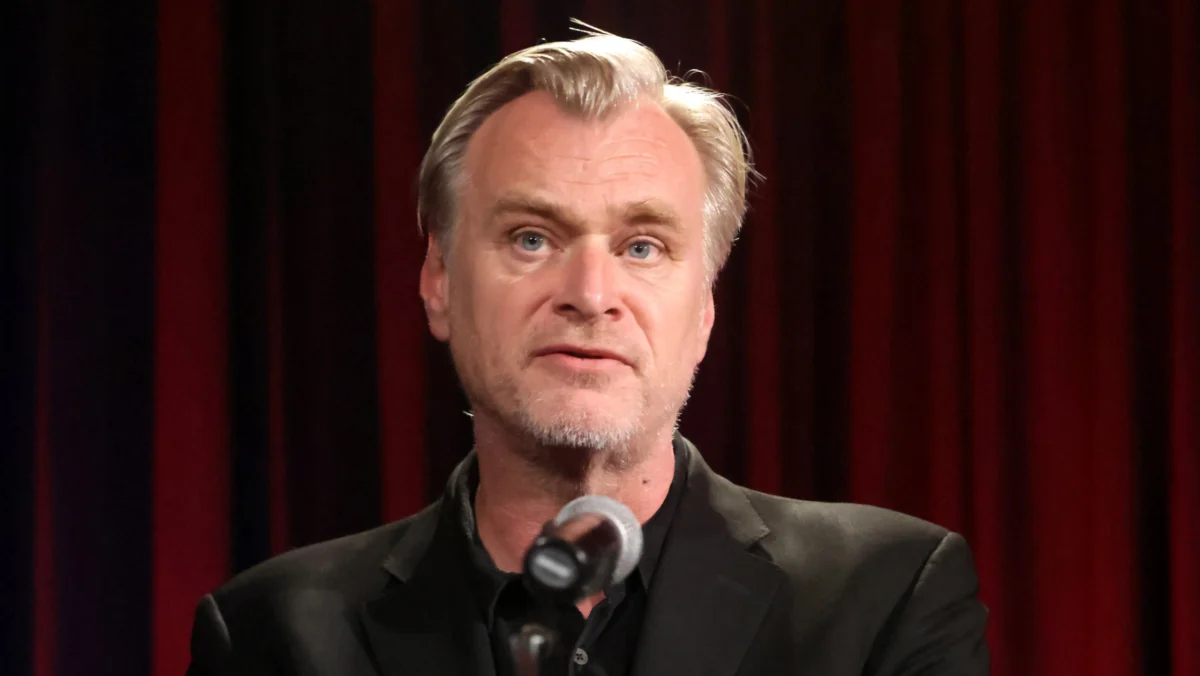
Filmmaker Christopher Nolan, a celebrated architect of complex narratives and visually stunning blockbusters, has fearlessly navigated genres ranging from mind-bending science fiction epics like Interstellar and Inception to the stark realities of historical dramas such as Dunkirk and the biographical intensity of Oppenheimer. His directorial prowess extends to the intricate mysteries of The Prestige and Memento, and the iconic, gritty superhero sagas of The Dark Knight trilogy. Yet, in a surprising revelation during his recent appearance on The Tonight Show Starring Jimmy Fallon, the Oscar-winning director confessed that one particular genre fills him with profound apprehension: romantic comedies.
Nolan’s candid admission came amidst a discussion about his latest ambitious project, an adaptation of Homer’s ancient Greek epic The Odyssey. The filmmaker revealed the extraordinary lengths to which his team went to capture this monumental story on 70mm IMAX cameras, marking a significant technical achievement as the first feature film to employ this specific format for such a narrative. It was during this conversation, when host Jimmy Fallon lightheartedly inquired if Nolan might consider a less demanding project for his next endeavor, specifically posing the question, "How about a Christopher Nolan rom-com?", that the director unveiled his deep-seated trepidation.
The Labyrinth of Laughter: Why Rom-Coms Terrify Nolan
"I think doing a rom-com would be incredibly difficult," Nolan stated plainly, a stark contrast to the often gravity-defying feats he orchestrates on screen. He elaborated on his admiration for the genre, acknowledging, "I love watching those movies." However, his personal inclination toward helming such a project remains firmly rooted in avoidance. Nolan’s reasoning delves into the fundamental challenge of eliciting genuine laughter from an audience, a task he regards as one of the most demanding in filmmaking. "But, no, I think people who direct comedy, people who do comedy, I think that’s one of the hardest things in the world to make people laugh that way," he explained.
His apprehension is amplified by the inherent vulnerability involved in comedic filmmaking. Nolan articulated this by drawing a parallel to his own work. "Particularly the risk they take," he emphasized. "When you make a film… you know, if I show a film to people and maybe they don’t respond to bits of it, I’m like, ‘Ah, they don’t get it. Whatever.’ There’s no hiding behind that when you do comedy." This sentiment suggests that in his preferred genres, he feels a certain degree of creative latitude in audience interpretation, a luxury he perceives as absent in comedy, where a missed joke or an unearned laugh can be a critical blow. Consequently, Nolan concluded his thoughts on the subject with a definitive statement: "I would be terrified of doing anything like that."
A Glimpse into Nolan’s Genre Landscape
Nolan’s filmography demonstrates a consistent exploration of complex themes and intricate plotting. From the temporal distortions of Tenet to the existential weight of Oppenheimer, his works often demand significant intellectual engagement from the viewer. This preference for layered narratives and profound subject matter naturally steers him away from the lighter, more emotionally direct terrain of romantic comedies.
The technical ambition evident in his IMAX endeavors, such as the recent The Odyssey adaptation, underscores his commitment to pushing cinematic boundaries. The decision to shoot The Odyssey on 70mm IMAX cameras, a format typically reserved for visually immersive experiences, speaks to his desire to transport audiences directly into the heart of the narrative, whether it be the vastness of space or the turbulent journey of Odysseus. This meticulous approach to visual storytelling and thematic depth appears to be at odds with the more character-driven, dialogue-centric nature of romantic comedies, where the primary vehicle for connection is often emotional resonance and wit.
Horror’s Allure: A Genre Nolan is Eager to Explore
While romantic comedies remain firmly off Nolan’s directorial plate, another genre, horror, presents a starkly different prospect. In a recent interview with The Hollywood Reporter, Nolan was queried about whether the supernatural and terrifying elements within The Odyssey might have ignited a desire to venture into the horror genre. His response was unequivocally affirmative: "It very much whets my appetite for more."
However, Nolan’s interest in horror is not a casual one. He stressed the importance of a conceptually robust foundation for any horror film he might undertake. "But I’ve always believed that horror as a genre has to be approached very carefully from a conceptual point of view. In other words, you have to have an amazing idea," he stated. He cited examples of films that excel in this regard, emphasizing that the success of a horror film hinges on its core premise rather than mere technical execution. "When you go see a film like Obsession, that’s an amazing idea. That movie works like a motherfucker. It’s not about the technical side. It’s not about what technical itches I would have to scratch. It’s about story. So I’m always looking." This suggests that for Nolan, horror offers a potent canvas for exploring deep-seated human fears and societal anxieties, provided the underlying concept is as compelling as the execution.
The Odyssey: A Testament to Nolan’s Vision and Technical Prowess
The current cinematic release, The Odyssey, stands as a testament to Nolan’s unwavering commitment to cinematic innovation. The film, which has garnered significant attention for its ambitious technical specifications, features a star-studded cast including Matt Damon, Tom Holland, and Anne Hathaway. The decision to utilize 70mm IMAX for this particular adaptation was not merely a stylistic choice but a deliberate effort to imbue the ancient epic with a visceral, immersive quality. This approach aims to allow audiences to experience the perilous journey of Odysseus with an unparalleled sense of scale and immediacy, a hallmark of Nolan’s filmmaking philosophy.
The film’s critical reception and box office performance will undoubtedly be closely watched, not only as an indicator of the audience’s appetite for epic narratives presented with cutting-edge technology but also as a reflection of Nolan’s continued influence on the landscape of contemporary cinema. His ability to consistently attract top talent and significant investment for projects that push the boundaries of filmmaking solidifies his position as one of the industry’s most visionary directors. The ongoing discourse surrounding his creative choices, from his aversion to romantic comedies to his burgeoning interest in horror, offers a fascinating insight into the mind of a filmmaker who continues to challenge himself and redefine cinematic possibilities. The success of The Odyssey in translating a millennia-old story to the modern cinematic stage, utilizing the most advanced tools available, is a narrative in itself, one that speaks volumes about Nolan’s dedication to the art and craft of filmmaking. His exploration of diverse genres, even those he professes to fear, ultimately serves to broaden the cinematic conversation and inspire future generations of filmmakers to think beyond conventional boundaries.