



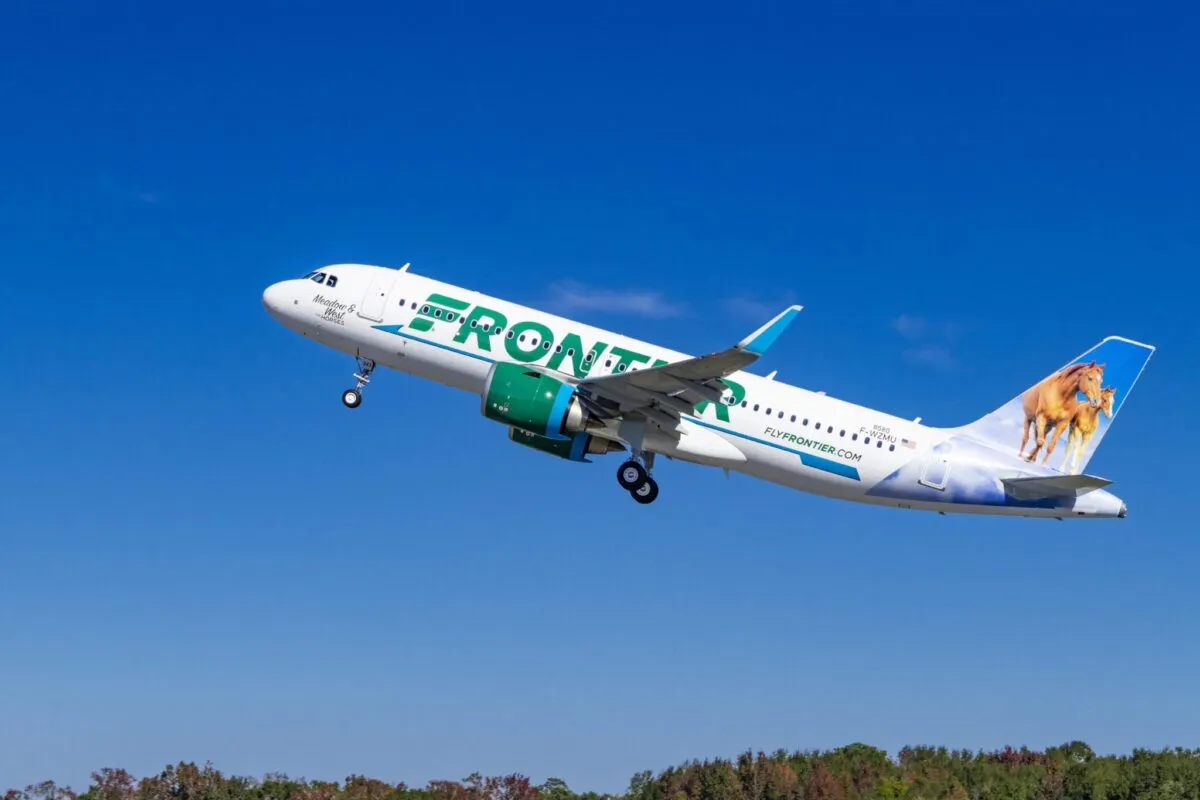
Frontier Airlines has reported a record-breaking $1.3 billion in quarterly revenue, marking a significant 38% increase from the previous year and signaling a potential turning point for the ultra-low-cost carrier (ULCC) sector. This financial milestone comes as the Denver-based airline undergoes a fundamental transformation of its business model, moving away from the "bare bones" service that once defined the budget travel industry in favor of a more sophisticated, tiered pricing strategy. The carrier’s recent performance, highlighted by a 28% surge in revenue per available seat mile (RASM), suggests that Frontier is successfully navigating a volatile aviation landscape characterized by fluctuating fuel costs and shifting consumer preferences.
The record figures were unveiled during a recent call with analysts, where Frontier executives detailed how the airline is leveraging "pricing power" to counteract the inflationary pressures that have plagued the industry since the post-pandemic travel boom began. While the ULCC model traditionally relied on ultra-low base fares supplemented by aggressive ancillary fees, Frontier’s new approach emphasizes a "constructive" fare environment where demand remains resilient even as ticket prices rise. Chief Commercial Officer Bobby Schroeter emphasized that the current demand environment is exceptionally strong, allowing the carrier to optimize its yield management in ways that were previously unattainable in the cutthroat discount market.
A Strategic Shift in the Ultra-Low-Cost Paradigm
For decades, the ultra-low-cost model pioneered by carriers like Spirit and Frontier was predicated on a single philosophy: stimulate demand by offering the lowest possible entry price. However, as legacy carriers like Delta, United, and American introduced "Basic Economy" products, the competitive advantage of ULCCs began to erode. In response, Frontier has spent the last year re-engineering its product offering. This transition, internally referred to as the "New Frontier," focuses on transparency, bundled options, and a more premium experience for those willing to pay for it.
The centerpiece of this strategy is the introduction of bundled fare classes—Basic, Economy, Premium, and Business—which include perks such as carry-on bags, seat assignments, and no change fees. By simplifying the purchasing process and reducing the "nickel and diming" reputation of the brand, Frontier has managed to attract a broader demographic of travelers, including small business owners and families who previously avoided the carrier due to its complex fee structure. This shift is directly reflected in the 28% RASM growth, a metric that indicates the airline is generating significantly more value from every seat it flies.
Financial Performance and Operational Metrics
The $1.3 billion revenue achievement is supported by a robust set of operational data. Frontier reported that its capacity, measured in available seat miles (ASMs), has stabilized as the airline focuses on high-utilization routes. While many competitors have struggled with overcapacity in certain domestic markets, Frontier has aggressively pruned its network, exiting underperforming markets and refocusing on "out-and-back" operations.
Key financial highlights from the most recent reporting period include:
- Total Operating Revenue: $1.3 billion (38% year-over-year increase).
- Revenue per Available Seat Mile (RASM): Increased by 28% compared to the same quarter in the previous year.
- Ancillary Revenue: Remained a cornerstone of the business, though it is now being integrated into bundled pricing rather than standalone fees.
- Cost per Available Seat Mile (CASM): While labor and fuel costs have risen, the airline’s focus on fuel-efficient Airbus A321neo aircraft has helped mitigate the impact on the bottom line.
Frontier’s leadership noted that the airline’s "pricing power" is not merely a result of higher ticket prices but a reflection of better inventory management. By using advanced data analytics to predict peak demand periods, the carrier has been able to fill planes at higher average fares without sacrificing its industry-leading load factors.
Chronology of Transformation: From 2022 to Present
The path to this record revenue has not been without obstacles. To understand the significance of Frontier’s current financial standing, it is necessary to look at the timeline of the airline’s recent evolution:
- Early 2022: Frontier announced plans to merge with Spirit Airlines in a deal intended to create a national ULCC powerhouse.
- Mid-2022: The merger was derailed after JetBlue launched a hostile takeover bid for Spirit, leading Frontier to walk away from the deal and focus on an independent growth strategy.
- 2023: The airline faced significant headwinds as domestic overcapacity led to a "fare war" that depressed yields across the industry. Frontier began a comprehensive review of its network and cost structure.
- Early 2024: Frontier launched "The New Frontier" initiative, eliminating most change and cancellation fees and introducing "UpFront Plus," a new seating option that provides more legroom and a guaranteed empty middle seat.
- Mid-2024: The airline reported its record-breaking $1.3 billion revenue, validating the pivot toward a more consumer-friendly, high-yield model.
Executive Perspectives and Market Sentiment
During the analyst call, Frontier’s executive team expressed a high degree of confidence in the airline’s trajectory. Chief Executive Officer Barry Biffle has been vocal about the need for the ULCC industry to adapt or face obsolescence. Biffle noted that the "New Frontier" strategy was designed to bridge the gap between the budget traveler and the value-conscious traveler who still expects a level of service and reliability.
"The demand environment is strong. The fare environment is constructive," Bobby Schroeter, Frontier’s Chief Commercial Officer, stated during the call. Schroeter’s comments highlight a shift in the industry narrative. For much of 2023, the narrative was one of "travel fatigue" and "yield degradation." Frontier’s results suggest that travelers are still willing to fly in record numbers, provided the price-to-value ratio is clearly communicated.
Industry analysts have reacted positively to the data, noting that Frontier appears to be distancing itself from the financial struggles currently facing Spirit Airlines. While Spirit has faced challenges related to engine recalls and debt restructuring, Frontier’s younger fleet and more aggressive network optimization have allowed it to capitalize on the current market conditions.
Network Optimization and the "Out-and-Back" Model
A critical component of Frontier’s financial success is its operational redesign. Historically, ULCCs used "linear" routing, where a plane might fly from Denver to Orlando, then Orlando to Philadelphia, and so on, with crews staying in hotels across the country. Frontier has shifted toward an "out-and-back" model, where aircraft return to their home bases every night.
This change has several benefits:
- Cost Reduction: It significantly reduces expenses related to crew hotels and transportation.
- Operational Reliability: If a delay occurs, it is easier to contain the disruption within a single hub rather than having it ripple across the entire national network.
- Crew Satisfaction: Pilots and flight attendants are able to return home more frequently, which aids in recruitment and retention in a tight labor market.
Furthermore, Frontier has moved capacity away from oversaturated markets like Florida and Las Vegas, where "fare wars" have historically destroyed profitability. Instead, the airline is focusing on underserved secondary airports and transcontinental routes where it can offer a competitive advantage without engaging in a "race to the bottom" on pricing.
Broader Implications for the Aviation Industry
Frontier’s record revenue serves as a case study for the evolution of the low-cost carrier. The success of its "pricing power" suggests that the traditional ULCC model—characterized by hidden fees and minimal service—may be reaching its limit. In its place, a "Value Carrier" model is emerging, where low costs are maintained through operational efficiency rather than a degraded passenger experience.
The implications for the broader market are significant. If Frontier can continue to generate record revenue while increasing fares, it puts pressure on legacy carriers to justify their higher price points. It also provides a roadmap for other struggling discount airlines. The industry is watching closely to see if Frontier’s RASM growth is sustainable or if it is a temporary byproduct of a particularly strong summer travel season.
Furthermore, Frontier’s focus on the Airbus A321neo—the most fuel-efficient aircraft in its class—positions the airline well for future environmental regulations and potential fuel price spikes. By maintaining one of the youngest and most fuel-efficient fleets in the United States, Frontier is able to keep its CASM (Cost per Available Seat Mile) lower than its competitors, allowing for higher profit margins even when ticket prices remain competitive.
Conclusion: A New Chapter for Frontier
The reporting of $1.3 billion in revenue is more than just a financial milestone; it is a validation of Frontier Airlines’ pivot toward a more sustainable and consumer-centric business model. By embracing transparency in pricing and optimizing its network for efficiency rather than just scale, Frontier has demonstrated that there is still a highly profitable path forward for discount carriers in the modern era.
As the airline enters the next fiscal quarter, the focus will remain on maintaining this "constructive" fare environment while continuing to refine the "New Frontier" product. With a strong demand backdrop and a clear operational strategy, Frontier appears well-positioned to lead the next generation of value-based travel, proving that even in an industry defined by thin margins, strategic pricing power can drive record-breaking results.