

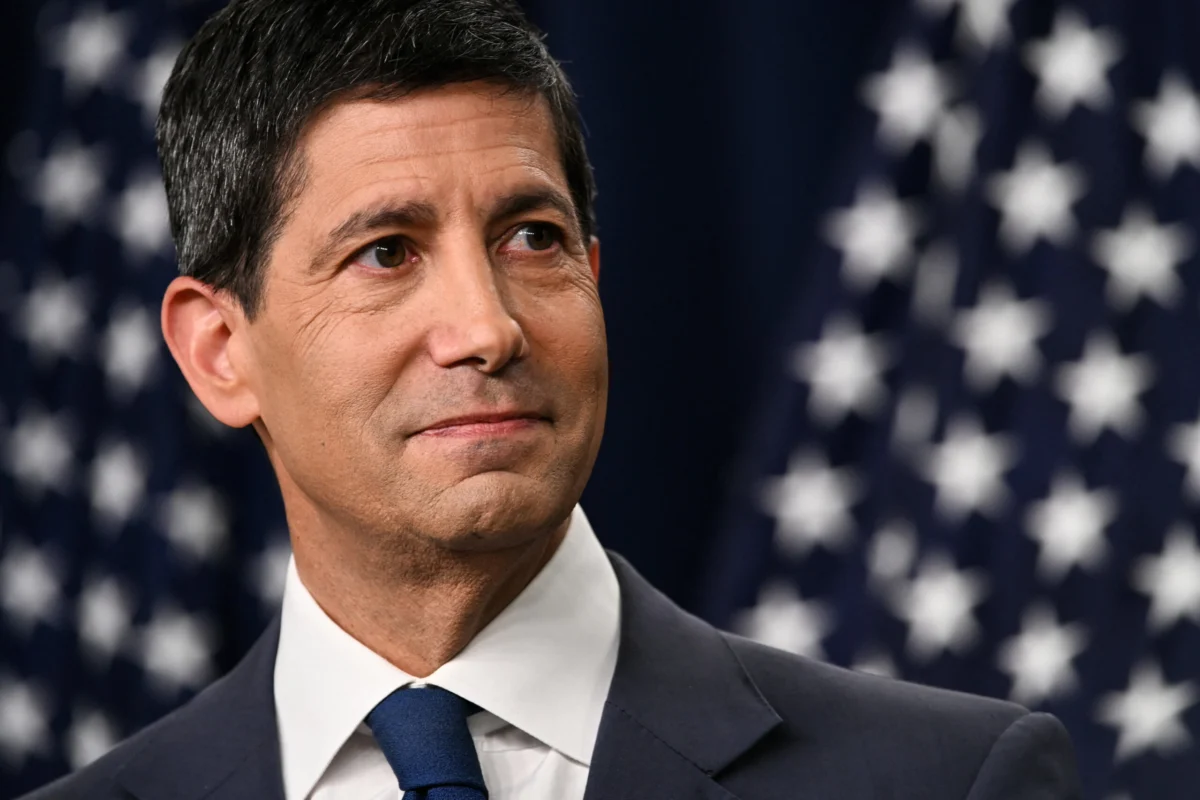
Federal Reserve Chairman Kevin Warsh is reportedly contemplating a significant reduction in the frequency of Federal Open Market Committee (FOMC) meetings, a move that would further solidify his ongoing efforts to diminish the central bank’s pervasive influence on financial markets. This potential change, currently discussed in hypothetical terms among Fed sources, could introduce both heightened volatility and novel trading opportunities for investors navigating a less-guided monetary policy landscape. The proposition marks another bold departure from decades of established Fed culture, which has increasingly prioritized aggressive transparency in communicating its policy intentions and economic outlook.
A Shift in Central Bank Philosophy: The Warsh Doctrine Takes Hold
Since assuming the chairmanship in May 2026, Kevin Warsh has embarked on a systematic overhaul of the Federal Reserve’s operational ethos, particularly concerning its public communication strategy. His tenure, though brief, has been characterized by a determined reversal of the "Fedspeak" era, where policymakers often provided intricate signals about future rate trajectories. Among his initial reforms, Warsh has notably curtailed "forward guidance," the practice of offering explicit indications of the Fed’s anticipated future rate moves. Post-meeting statements have been dramatically shortened, eschewing the detailed prose that once accompanied policy decisions. Furthermore, during his two news conferences to date, Warsh has adopted a notably cryptic and often evasive posture when pressed for his personal views on monetary policy, leaving analysts and markets to decipher his intent from fewer, more ambiguous clues.
The discussion around reducing the long-held schedule of eight annual FOMC meetings represents the latest frontier in this "Warsh doctrine." Such a reduction, from the current bimonthly schedule, would further constrict the official communication channels from the central bank, potentially leading to a period of recalibration and uncertainty for global stock and bond markets accustomed to a steady stream of information.
George Catrambone, head of fixed income for the Americas at DWS Group, articulated a common concern among market participants: "Certainly, it’s going to increase volatility. Having less transparency forces market participants to hedge or have a wider dispersion of outcomes." This sentiment underscores a fundamental tension in Warsh’s approach: the trade-off between market stability, often fostered by clear guidance, and a desire for markets to operate more autonomously, reacting to economic fundamentals rather than central bank pronouncements.
The Historical Precedent: Evolution of FOMC Meetings and Transparency
The Federal Reserve’s meeting schedule has not always been fixed. Historically, the FOMC’s frequency has evolved in response to economic conditions and the prevailing philosophy of its leadership. Prior to the early 1980s, the committee often met on a near-monthly basis, reflecting a more hands-on approach to monetary management. It was under the chairmanship of Paul Volcker, beginning in 1979, that the current schedule of eight meetings per year was largely institutionalized. This period coincided with a concerted effort to tame rampant inflation, and a more structured, though still somewhat opaque, approach to policy communication was deemed appropriate.
The move towards aggressive transparency truly gained momentum in the aftermath of the 2008 global financial crisis. Under Chairmen Ben Bernanke, Janet Yellen, and Jerome Powell, the Fed embraced a strategy of "aggressive communication" designed to enhance the effectiveness of monetary policy, particularly during periods of unconventional measures like quantitative easing and near-zero interest rates. This involved detailed forward guidance, expanded post-meeting statements, quarterly Summary of Economic Projections (SEP) including the "dot plot" of individual officials’ rate expectations, and regular press conferences. The rationale was that clearer communication would help anchor market expectations, reduce uncertainty, and amplify the impact of policy actions, thereby making monetary policy more effective and predictable.
Chairman Warsh’s current direction represents a direct challenge to this established paradigm, advocating for a central bank that acts more as an economic steward and less as a market oracle. While the Fed retains the inherent flexibility to convene emergency meetings at any time, such an unscheduled gathering typically signals acute market stress or an unforeseen economic crisis, carrying substantial implications for investor confidence.
Expert Perspectives on Reduced Meeting Frequency
The idea of re-evaluating the FOMC meeting schedule has garnered varied reactions from current and former Fed officials. Minneapolis Fed President Neel Kashkari, in a Wednesday interview with CNBC, expressed an open-minded stance. "I don’t think there’s any magic number about eight or 10 or six. You know, we always have the ability to call emergency meetings if things happen, but that’s a big event," he stated. Kashkari acknowledged the powerful signal an emergency meeting sends, indicating a significant concern. This perspective suggests that while the regular schedule might be flexible, the ultimate backstop of crisis response remains intact, albeit with heightened psychological impact.
Philadelphia Fed President Anna Paulson echoed similar sentiments on Tuesday, telling CNBC, "It’s healthy to have a good discussion about that." These comments from regional Fed presidents indicate a willingness within certain segments of the central bank to explore alternative structures, possibly reflecting an internal debate about the optimal level of communication.
Academic experts also weigh in on the utility of the current schedule. Bill English, who served as the Fed’s former head of monetary affairs during Warsh’s initial stint at the central bank and is now a Yale professor, observed, "There’s nothing magical about eight meetings." English highlighted the costs associated with frequent meetings, including the logistical burden and the potential for "noise" in communications. However, he also cautioned against too few meetings, which could impede the Fed’s ability to act in a timely manner when economic conditions demand swift intervention. English himself once proposed a six-meeting annual schedule, but with the caveat that each meeting should be accompanied by a news conference and an update to the Summary of Economic Projections, ensuring a baseline level of informational output. Despite his openness to fewer meetings, English ultimately views eight as "close to the right number" and voiced greater concern about Warsh’s broader strategy to communicate less. "I really don’t like this effort to communicate much less," he said, emphasizing the importance of explaining policy decisions to help the public understand, anticipate, and make monetary policy more effective, while also enhancing the Fed’s accountability.
Market Response: Initial Muted Reactions and Underlying Currents
Remarkably, financial markets have, so far, largely absorbed Warsh’s unconventional approach without significant upheaval. Since Warsh succeeded now-Governor Jerome Powell on May 22, 2026, the Dow Jones Industrial Average has climbed approximately 3,500 points, or 7%. Bond yields have seen a modest, rather than dramatic, increase; the policy-sensitive 2-year Treasury yield is up around 8 basis points (0.08 percentage points), and the benchmark 10-year yield has risen by a similar margin.
This relatively muted reaction could be attributed to several factors. Some analysts suggest that markets are granting Warsh the "benefit of the doubt," hopeful that a less interventionist Fed might foster healthier, more data-driven market dynamics. Others point to the prevailing geopolitical landscape, which may be dominating investor attention and overshadowing internal Fed policy shifts. Mark Hackett, chief market strategist at Nationwide, noted, "He’s kind of getting away with it. Warsh is really the first Fed official that I’ve seen explicitly say he wants the Fed to have less direct impact on market movement."
Indeed, Warsh has been explicit in his directive to market participants: they should react to economic data, not the often-nuanced and sometimes ambiguous "vagaries of Fedspeak." During his most recent news conference, Warsh declared, "Market participants are learning to play the ball, not the referee — and market prices will continue to respond in the direction and magnitude they see fit. This is, in my view, a change for the better — and we are just getting started." This statement encapsulates his core philosophy: decentralize market interpretation of economic signals and empower market forces.
However, not all investors view Warsh’s strategy without apprehension. Dario Perkins, head of global macroeconomics at TS Lombard, warned in a recent note that Warsh’s approach risks ushering in "a regime of continuous market repricing," implying more frequent and potentially sharper adjustments in asset values. Perkins emphasized that "Investors have to get used to FOMC meetings at which they don’t know the outcome ahead of time," a stark contrast to the prior era of carefully managed expectations. While acknowledging the inherent risks, Perkins also highlighted the flip side: "That will also provide new trading opportunities. It goes without saying that this may well be what Warsh has wanted all along." This perspective suggests that while volatility may increase, skilled investors might find enhanced alpha generation opportunities in a less predictable environment.
Potential Ramifications for Markets and Policy
The concerns surrounding reduced transparency extend beyond just meeting frequency. Warsh’s skepticism towards explicit forward guidance and his loosely defined "reaction function"—the set of economic conditions that would trigger a Fed policy response—have already created an information vacuum. His critical stance on the Fed’s "dot plot," a graphical representation of individual officials’ interest rate projections, culminated in his decision to withhold his own dot from the June SEP update. This move further diminished a key source of insight into the committee’s collective thinking.
Adding fewer FOMC meetings to this mix exacerbates the challenge for a market that has, for decades, meticulously scoured Fed communications for cues. "Obviously, if the dot plot changes or if guidance changes, I don’t think that’s the end of the world," said Mark Hackett. "If you stop having less meetings, that’s a different level, and that could be seen as disruptive." The risk is that markets, deprived of regular official guidance, will be forced to "guess" at policy, potentially leading to mispricings and overreactions to economic data.
One significant potential consequence of reduced meetings and diminished guidance, as posited by Komal Sri-Kumar, president of Sri-Kumar Global Strategies, is the emergence of a "bear steepener" in the bond market. This scenario involves longer-term yields rising faster than shorter-term rates. The implication for fixed income investors is that if the Fed is perceived as holding short-term rates artificially low without clear communication on future tightening, inflation expectations could rise unchecked, leading investors to demand higher compensation for holding longer-duration bonds.
Sri-Kumar articulated the bondholders’ perspective: "Bondholders are not babies trying to have their hands held. The bondholders are saying, ‘Please don’t make my life more difficult by introducing even more uncertainty.’" This sentiment highlights the practical impact on institutional investors managing vast portfolios sensitive to interest rate fluctuations.
The implications extend to the federal government’s fiscal health. A substantial spike in bond yields, particularly longer-term rates, would significantly escalate the financing costs for the nation’s colossal $31.1 trillion in outstanding Treasury debt held by the public. Treasury Secretary Scott Bessent faces an already challenging task, with interest on the debt projected to be the second-largest government outlay this year, estimated at $1.3 trillion. If investors become more wary of government debt due to increased policy uncertainty and higher inflation expectations, Bessent’s job of managing the national debt will become even more arduous.
In a Tuesday CNBC appearance, Secretary Bessent described the Warsh approach as a "detox" for markets, suggesting that while the process might be uncomfortable, it could ultimately lead to a healthier, more resilient financial system less reliant on central bank intervention.
The Broader Debate: Transparency, Accountability, and Market Efficiency
Warsh’s initiatives ignite a broader, long-standing debate within central banking circles: what is the optimal level of transparency? Proponents of aggressive transparency argue that it enhances central bank credibility, anchors inflation expectations, and improves market efficiency by reducing information asymmetry. It also fosters accountability, allowing the public and elected officials to better understand the Fed’s decisions and their rationale.
Conversely, Warsh’s school of thought suggests that excessive communication can create an unhealthy dependency, leading markets to overreact to every utterance from Fed officials, rather than focusing on underlying economic fundamentals. This "hand-holding" approach, critics argue, can stifle genuine price discovery and foster moral hazard. A less communicative Fed, by this logic, would force market participants to become more sophisticated in their own economic analysis, leading to more robust and self-reliant markets. The challenge lies in finding the delicate balance where markets are informed enough to function efficiently without becoming unduly reliant on the central bank’s every word.
Looking Ahead: Jackson Hole and the Future of Fed Communications
With the end of August fast approaching, all eyes will turn to the Federal Reserve’s annual gathering in Jackson Hole, Wyoming. This prestigious symposium has historically served as a critical platform for Fed chairmen to unveil major policy shifts or articulate new strategic frameworks. Given Warsh’s transformative agenda, his address at Jackson Hole is anticipated with heightened expectation. It will be a pivotal moment for him to elaborate on his vision for a less interventionist, less communicative central bank and to further define the contours of the "Warsh doctrine."
As George Catrambone of DWS Group aptly put it, "Warsh is trying to undertake a very large change in terms of how to communicate the data and how to interpret it. I would say we should also provide a little bit of grace." The financial world stands at a crossroads, poised to witness a profound experiment in central bank governance, the full implications of which will only unfold over time. The "detox" is underway, and its long-term effects on market behavior, stability, and the very role of the Federal Reserve in the global economy remain to be seen.