Scientists utilizing NASA’s Imaging X-ray Polarimetry Explorer (IXPE) have conducted an unprecedented observational campaign targeting the magnetar 1E 1547-5408, gathering over 140 hours of data between March and April 2025. These meticulous observations have yielded compelling evidence suggesting that empty space, when subjected to the mind-boggling magnetic fields of a magnetar, may behave precisely as predicted by quantum electrodynamics (QED) nearly a century ago. This potential confirmation of vacuum birefringence in an astrophysical setting marks a monumental achievement, bridging theoretical physics with direct cosmic observation and opening new frontiers in our understanding of the universe’s most fundamental properties.
The Enigmatic Magnetars: Cosmic Powerhouses
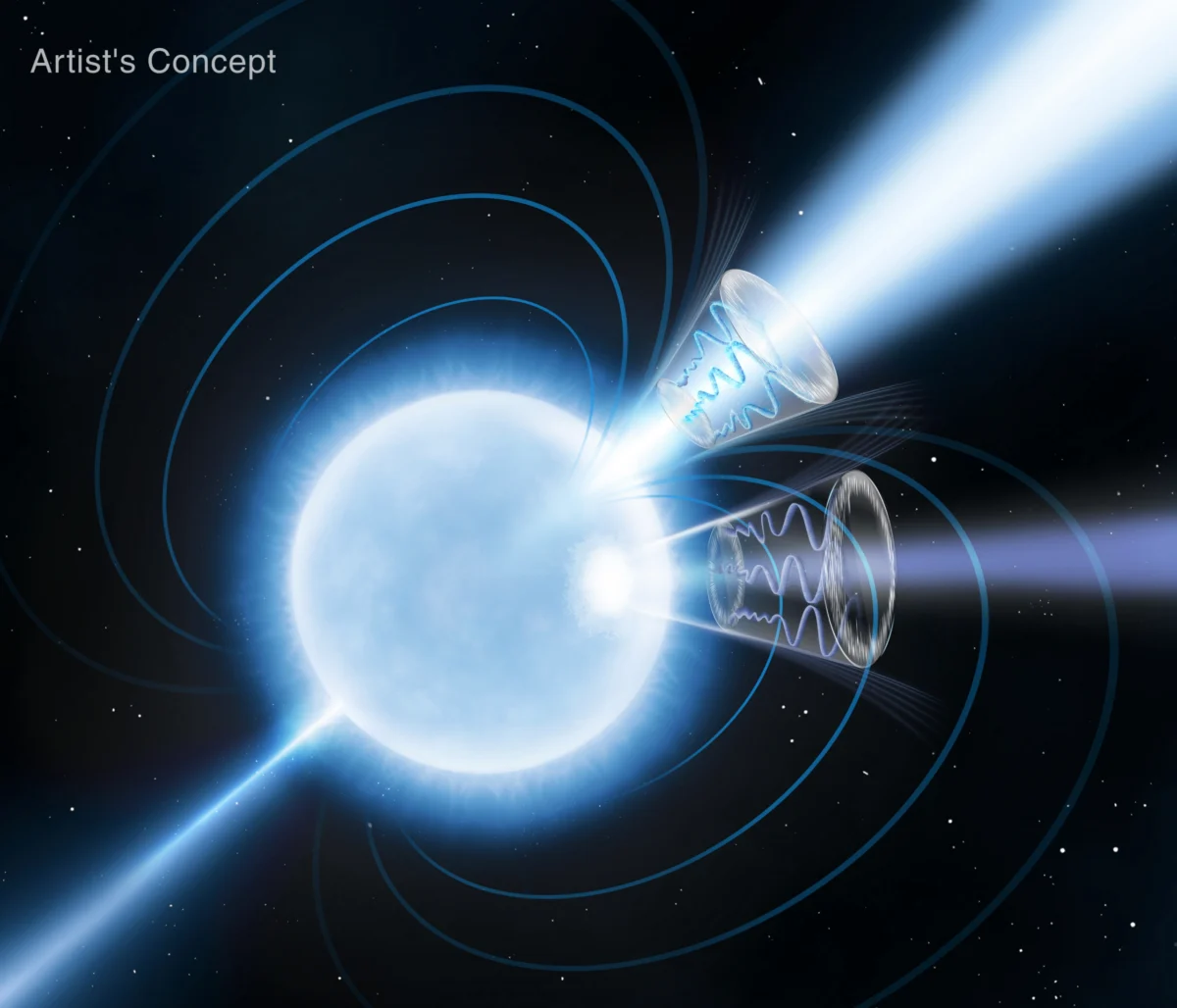
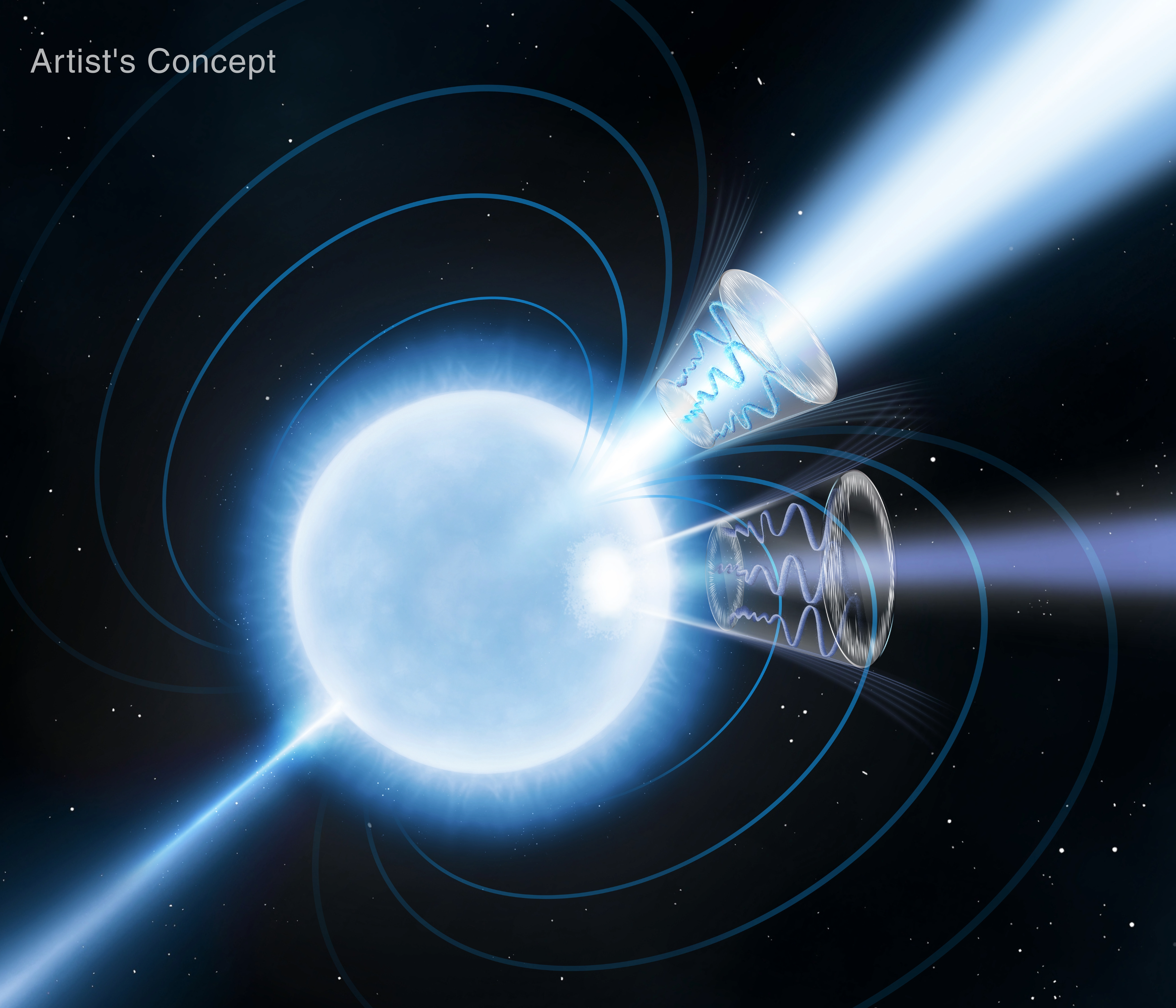
Magnetars represent a particularly exotic and extreme class of neutron stars, the ultra-dense remnants of massive stars that have undergone supernova explosions. While all neutron stars possess strong magnetic fields, magnetars distinguish themselves with fields of truly colossal magnitude – on the order of a quadrillion (10^15) Gauss, or even higher, near their surfaces. To put this into perspective, the strongest permanent magnets ever created on Earth barely reach 100,000 Gauss, making a magnetar’s field a trillion times more powerful. These fields are so intense they could easily strip information from a credit card located halfway to the Moon.
The magnetar 1E 1547-5408, the focus of IXPE’s observations, is located approximately 18,000 light-years from Earth in the constellation Norma. Discovered in 2008, it is known for its erratic behavior, including occasional outbursts of X-rays and gamma-rays, which are thought to be caused by "starquakes" in its crust or reconfigurations of its magnetic field lines. Like all neutron stars, 1E 1547-5408 is incredibly dense; a teaspoon of its material would weigh billions of tons. Its rapid rotation, combined with its immense density and a complex dynamo mechanism, is believed to generate and sustain its unparalleled magnetic strength, making it an ideal natural laboratory for testing the most extreme predictions of physics.
The 90-Year-Old Prediction: Vacuum Birefringence
The theory potentially confirmed by IXPE traces its roots back to 1936, when German physicists Werner Heisenberg and Hans Euler, pioneers in quantum mechanics, predicted a peculiar effect known as vacuum birefringence. According to their work, based on the principles of quantum electrodynamics (QED) – the quantum theory describing how light and matter interact – empty space is not truly empty. Instead, it is teeming with "virtual" particles, such as electron-positron pairs, constantly flickering into and out of existence.
In the presence of an extraordinarily powerful magnetic field, this quantum vacuum behaves like a birefringent crystal. Just as a crystal can split a beam of light into two components with different polarizations that travel at different speeds, a super-strong magnetic field should cause the vacuum itself to become polarized. This means that X-rays passing through such a magnetized vacuum would experience a rotation in their polarization plane, with the degree of rotation dependent on the strength and orientation of the magnetic field. For decades, this phenomenon remained purely theoretical, as the magnetic fields required to induce such an effect are far beyond anything achievable in terrestrial laboratories. Experiments like PVLAS (Polarization of Vacuum with Laser) in Italy and HERCULES (High Energy Resonant Cavity for Unambiguous Light Efficacy Search) have attempted to detect vacuum birefringence using high-intensity lasers and powerful magnets, but the effects are incredibly subtle and have yet to yield definitive results. This underscores the necessity of observing the universe’s most extreme environments, such as those surrounding magnetars, to test these fundamental predictions.
NASA’s IXPE: A New Eye on the X-ray Sky
The Imaging X-ray Polarimetry Explorer (IXPE) mission, a collaborative effort between NASA and the Italian Space Agency (ASI), was specifically designed to investigate the polarization of X-rays from cosmic sources. Launched in December 2021, IXPE represents a revolutionary step in X-ray astronomy, offering a new dimension of observation that had largely been inaccessible. Previous X-ray telescopes could measure the intensity and energy of X-rays, but IXPE’s unique capability lies in its ability to measure the polarization – the orientation of the electric field oscillations – of incoming X-ray light.
The observatory comprises three identical telescopes, each equipped with a mirror module assembly and a state-of-the-art Gas Pixel Detector. These detectors are highly sensitive to the polarization of X-rays, allowing scientists to discern the angles at which the X-ray photons are vibrating. For phenomena like vacuum birefringence, X-ray polarization is not just useful, but absolutely essential. As X-rays emanate from the surface of a magnetar and traverse the intense magnetic field lines surrounding it, their polarization signature would be subtly yet measurably altered if the quantum vacuum is indeed behaving as predicted by Heisenberg and Euler. By carefully analyzing these changes in polarization, scientists can infer the properties of the magnetic field and the medium through which the X-rays have traveled, including the "empty" space itself.
The Landmark Observation Campaign
The decision to target 1E 1547-5408 with IXPE for such an extended period – over 140 hours during March and April 2025 – was a strategic one, driven by the magnetar’s extreme magnetic field strength and its known X-ray emission. Scientists meticulously planned the observation windows to maximize data collection and minimize interference. The data collected during this campaign is unprecedented in its depth and quality, providing a rich dataset for polarization analysis.
The initial findings, though still undergoing rigorous peer review and further analysis, indicate a deviation in the X-ray polarization signature of 1E 1547-5408 that is consistent with the predictions of vacuum birefringence. Specifically, the observed rotation in the plane of polarization and the degree of linear polarization appear to align with theoretical models that account for the QED effect within the magnetar’s environment. While the phrase "may have captured" reflects the cautious scientific approach – emphasizing that definitive proof requires ruling out all other possible explanations – the consistency with predictions from a fundamental theory dating back 90 years is exceptionally compelling. This observed alteration in polarization is distinct from what would be expected if the X-rays were merely interacting with plasma or other conventional matter surrounding the magnetar. It strongly suggests an interaction with the quantum vacuum itself, mediated by the magnetar’s unparalleled magnetic field.
Reactions and Scientific Consensus
The scientific community has reacted with a mixture of excitement and prudent anticipation to these preliminary results. Dr. Roberto Soria, an astrophysicist not directly involved with the IXPE team but familiar with the mission’s objectives, commented, "To potentially observe a quantum effect predicted almost a century ago, not in a lab but in the extreme crucible of a magnetar, is nothing short of breathtaking. It would be a monumental validation of quantum electrodynamics in a regime previously unimaginable."
Dr. Silvia Zane, a theoretical astrophysicist specializing in neutron stars and a co-investigator on the IXPE mission, stated, "Our data analysis for 1E 1547-5408 shows intriguing features in the X-ray polarization that align remarkably well with theoretical predictions for vacuum birefringence. This is a complex phenomenon, and we are working diligently to ensure all alternative astrophysical explanations are thoroughly investigated. However, the current evidence is exceptionally strong and points towards a groundbreaking discovery."
NASA Administrator Bill Nelson emphasized the broader impact, remarking, "This potential discovery, made possible by the ingenuity of our IXPE mission, exemplifies NASA’s commitment to pushing the boundaries of human knowledge. It’s a testament to how peering into the cosmos can illuminate the most profound questions about the very fabric of reality." While formal confirmation awaits extensive peer review and potentially further observations, the scientific community recognizes the profound implications of these findings.
Profound Implications for Fundamental Physics
The potential direct observation of vacuum birefringence in an astrophysical setting carries profound implications for fundamental physics and our understanding of the universe:
- Validation of Quantum Electrodynamics (QED): This would provide the strongest evidence yet for QED in an extreme environment, far beyond the capabilities of Earth-based laboratories. QED is one of the most precisely tested theories in physics, but its predictions concerning the quantum vacuum in the presence of extreme fields have remained elusive to direct observation. This discovery would solidify its predictive power across an even wider range of physical conditions.
- Understanding the Quantum Vacuum: It would offer direct insight into the nature of the quantum vacuum, confirming its dynamic and interactive properties rather than it being a mere void. This has implications for understanding particle physics and the fundamental constituents of reality.
- Bridging Quantum Mechanics and Gravity: While not a direct observation of quantum gravity, confirming QED effects in such extreme gravitational and magnetic environments provides a crucial stepping stone. Neutron stars, and especially magnetars, are objects where both quantum mechanics and general relativity play dominant roles. Observing QED effects here helps to probe the interplay between these two pillars of modern physics.
- New Insights into Magnetar Physics: Beyond validating QED, these observations offer a new diagnostic tool for studying magnetars themselves. The way X-ray polarization is altered can provide unique information about the precise geometry and strength of the magnetar’s magnetic field, its internal structure, and the emission mechanisms of its X-rays, which are currently not fully understood. It could help differentiate between various models for magnetar atmospheres and crusts.
- Future Astronomical Research: This success will undoubtedly spur further X-ray polarimetry observations of other magnetars and extreme cosmic objects. It establishes X-ray polarization as an indispensable tool for exploring high-energy astrophysics and fundamental physics.
The Path Forward: Future Observations and Research
While the initial data from IXPE is highly compelling, the scientific process demands thorough verification. The next steps will involve continued detailed analysis of the existing data, potentially combined with theoretical refinements to models of magnetar emission and magnetic field configurations. Scientists will also look for opportunities to conduct additional observations of 1E 1547-5408 or other similar magnetars with IXPE, to build an even more robust dataset and confirm the initial findings. The possibility of observing similar effects in other high-magnetic-field objects would further strengthen the case.
The confirmation of vacuum birefringence would not only validate a decades-old theory but also open entirely new avenues of research into the nature of space, matter, and energy at their most fundamental levels. It underscores the profound ability of astrophysics to serve as a cosmic laboratory, testing theories that are beyond the reach of terrestrial experimentation.
This potential discovery by NASA’s IXPE mission is a testament to human ingenuity and our relentless quest to understand the universe. By observing the subtle shifts in X-ray light from a distant magnetar, scientists may have finally caught a glimpse of the quantum fabric of space itself behaving in a way predicted long ago, transforming a theoretical curiosity into an observed cosmic reality. The implications resonate across disciplines, from particle physics to cosmology, promising to reshape our understanding of the fundamental laws governing the cosmos.