

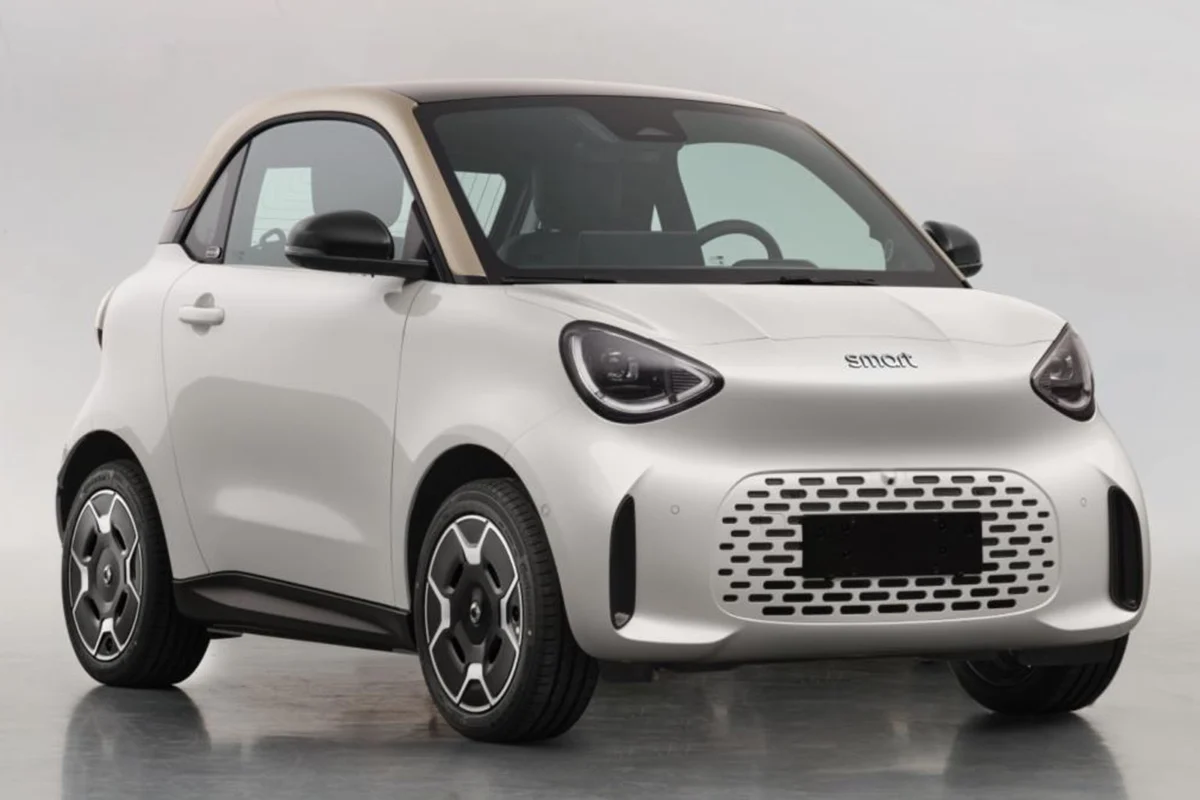
The production-ready design of the highly anticipated Smart #2, the official electric successor to the iconic Fortwo, has been revealed through regulatory filings in China ahead of its scheduled world premiere at the Paris Motor Show in October. This emergence marks a pivotal moment for the Smart brand, which has recently focused its efforts on a new generation of larger electric crossovers, including the #1, #3, and the recently unveiled #5. The return to the ultra-compact city car segment signifies a strategic move to reclaim the brand’s original identity while adapting to the modern demands of global urban electrification.
The new filings, submitted to China’s Ministry of Industry and Information Technology (MIIT), provide an exhaustive look at the vehicle’s exterior and core technical specifications. While the official unveiling was intended to be the highlight of the autumn automotive calendar, these documents offer a comprehensive preview of what consumers can expect when the vehicle arrives in European and UK dealerships next year. The #2 represents the fourth model in the revamped Smart lineup under the joint venture between Mercedes-Benz and Geely, blending German design sensibilities with Chinese engineering and manufacturing prowess.
Design Philosophy and Aesthetic Evolution
The Smart #2 retains the distinctive, "stubby" silhouette that defined its predecessor, the Fortwo, but introduces a modernized design language consistent with the newer #1 and #3 models. Mercedes-Benz, which maintains leadership over the brand’s design direction, has opted for a more aggressive facial expression. The front fascia features "scowling" LED headlights connected by a slim light bar, a hallmark of the contemporary Smart aesthetic.
At the rear, the design departs from the previous generation’s squared-off lights in favor of rounded, minimalist units that emphasize the car’s width and stance. Despite its diminutive length of just 2.75 meters, the #2 manages to look more substantial than the outgoing model. This is achieved through flared wheel arches and a "floating" roof effect created by darkened A-pillars.
Inside, the cabin is expected to move significantly upmarket. Although the MIIT filings focus primarily on the exterior, previous concept disclosures and industry intelligence suggest a high-tech interior featuring a central touchscreen and premium materials. Notably, Smart has opted for a bench-seat configuration rather than two individual chairs, a decision aimed at maximizing the perception of space and providing greater lateral flexibility for occupants within the narrow cabin. Kai Sieber, Head of Smart Design at Mercedes-Benz, has noted that the design intent for the #2 was to create a vehicle that "sparks joy" through its proportions and clever use of interior volume.
Technical Specifications and Architecture
While the original Smart Fortwo was built on a platform shared with the Renault Twingo, the Smart #2 utilizes a bespoke architecture developed by Geely. This platform is specifically engineered for ultra-compact electric vehicles, allowing for optimized battery placement and interior packaging.
According to the MIIT data, the Smart #2 is powered by a rear-mounted electric motor producing 80bhp (60kW). This power output is tailored for urban environments, prioritizing immediate torque for "stop-and-go" traffic rather than high-speed cruising. The vehicle utilizes a lithium-iron-phosphate (LFP) battery pack, a chemistry known for its durability, safety, and cost-effectiveness compared to traditional nickel-manganese-cobalt (NMC) batteries.
Weight management has been a critical factor in the development of the #2. The vehicle tips the scales at 1,130kg, which is remarkably light for a modern electric vehicle, though heavier than the original combustion-engine Fortwo. This weight includes the battery pack, which supports a projected range of approximately 186 miles (300km) on the CLTC or WLTP cycle. This range represents a significant leap forward from the final electric versions of the previous Fortwo, which struggled to exceed 80 miles in real-world conditions.
Furthermore, the Smart #2 will feature advanced charging capabilities. Smart has confirmed that the vehicle can charge from 10% to 80% in less than 20 minutes when connected to a compatible DC fast charger. In a move to increase utility, the #2 also incorporates vehicle-to-load (V2L) technology, allowing the car’s battery to power external devices such as laptops, camping equipment, or electric bicycles.
Maneuverability and Urban Capability
The defining characteristic of the Smart brand has always been its ability to navigate congested city streets and park in spaces inaccessible to conventional cars. The #2 doubles down on this heritage. It boasts a turning circle of just 6.95 meters, a figure that outperforms even the famous London black cabs, which are legally required to have a turning circle of 7.6 meters.
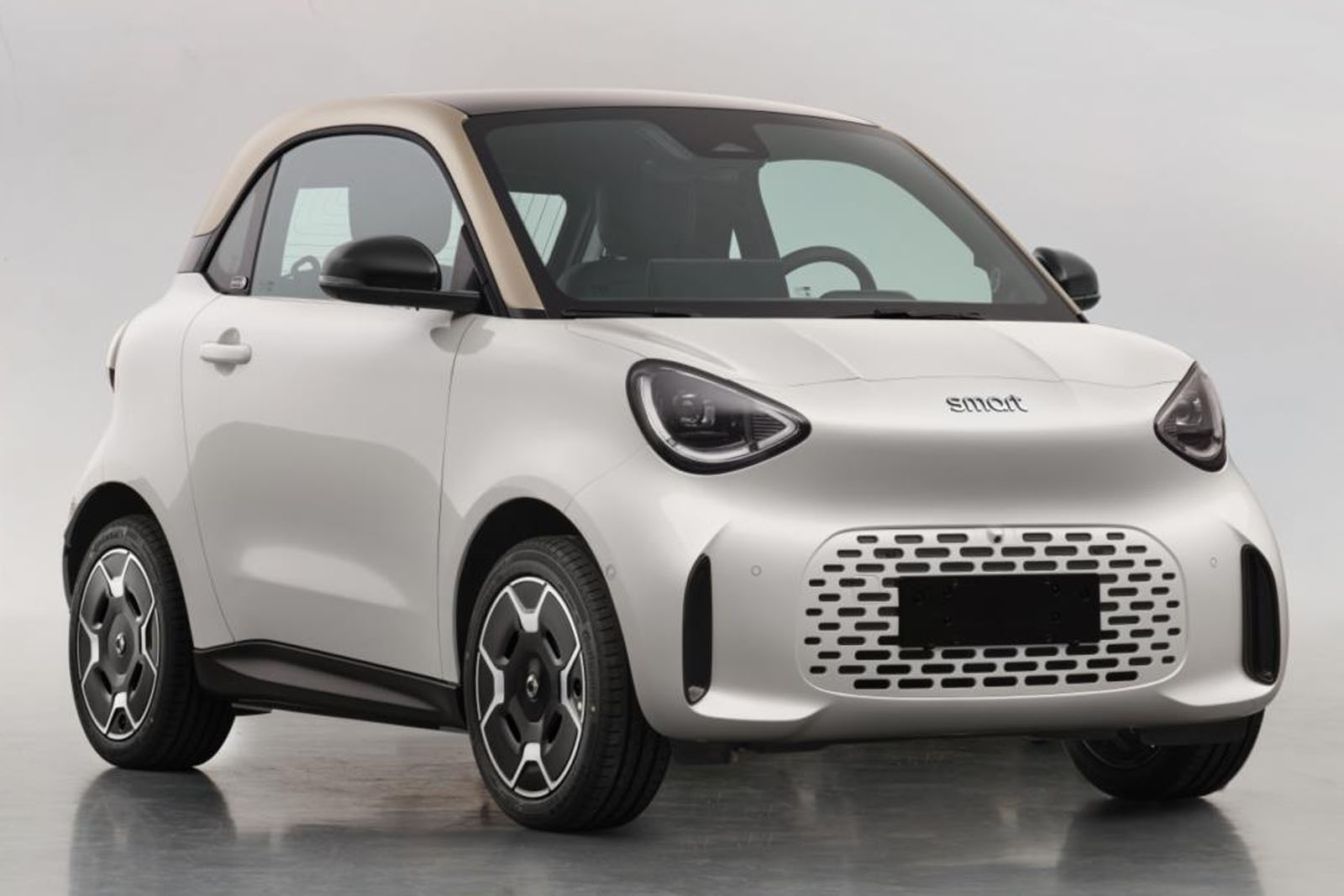
This agility is central to what Smart describes as "uncompromised urban capability." By maintaining a length of 2.75 meters, the #2 remains the smallest passenger car on sale in many markets, occupying a unique niche between micro-mobility solutions and full-sized hatchbacks. While it shares a similar footprint with quadricycles like the Citroën Ami and Fiat Topolino, the Smart #2 is a fully-fledged M1-category passenger car, meaning it meets much more stringent crash safety and performance standards, allowing it to be driven on motorways and high-speed arterial roads.
A Chronology of the Smart Brand Transformation
The journey to the Smart #2 has been one of radical corporate and philosophical change. To understand the significance of this new model, one must look at the timeline of the brand’s evolution:
- 1994-1998: Smart is founded as a joint venture between Micro Compact Car (MCC) and Swatch, eventually becoming a wholly-owned subsidiary of Daimler-Benz. The original City-Coupé (later Fortwo) launches in 1998.
- 2019: Daimler (now Mercedes-Benz Group) and Zhejiang Geely Holding Group announce a 50/50 joint venture to transform Smart into a premium electric-only brand. Production shifts from Hambach, France, to Xi’an, China.
- 2022-2023: The brand launches the Smart #1 and Smart #3, transitioning from city cars to B-segment and C-segment crossovers to ensure financial viability and broader market appeal.
- Early 2024: The final units of the third-generation Smart Fortwo (W453) roll off the assembly line, leaving a vacuum in the ultra-compact city car market.
- August 2024: MIIT filings reveal the production-ready #2, confirming the brand’s return to its roots.
- October 2024: Scheduled global debut at the Paris Motor Show.
- 2025: Expected market launch in China, followed by the UK and Europe.
Market Positioning and Competitive Landscape
The Smart #2 enters a market that is increasingly bifurcated between expensive, large EVs and affordable, small-range city cars. However, the #2 occupies a "premium micro" segment that has few direct competitors.
On one side are the electric quadricycles, such as the Fiat Topolino and the Microlino. These vehicles are cheaper and lighter but are restricted in terms of top speed and safety equipment. On the other side are full-sized electric hatchbacks like the Dacia Spring and the Fiat 500e. The Dacia Spring offers more doors and utility but lacks the premium interior and advanced tech of the Smart. The Fiat 500e is perhaps the closest rival, but it is considerably larger and lacks the #2’s specialized "park-anywhere" dimensions.
Industry analysts suggest that the Smart #2 is positioned to capture urban professionals and "empty nesters" who prioritize ease of parking and brand prestige over outright cargo capacity. By offering a range of 186 miles, Smart is also addressing "range anxiety" in a way that previous city cars failed to do, making the #2 a viable primary vehicle for city dwellers rather than just a secondary "runabout."
Strategic Implications for the Mercedes-Geely Partnership
The development of the #2 highlights the synergy between its two parent companies. Mercedes-Benz provides the brand equity and design language necessary to justify a premium price point, while Geely provides the manufacturing scale and battery technology required to make a small EV profitable.
Small cars have historically been difficult to produce profitably due to high development costs and slim margins. By utilizing Geely’s Sustainable Experience Architecture (SEA) derivatives, Smart can share components across its larger models, driving down the cost per unit. This partnership is seen as a blueprint for how traditional European manufacturers can survive the transition to electrification by collaborating with Chinese tech giants.
The decision to reveal the car in China first via the MIIT is also indicative of the brand’s new center of gravity. While Smart remains "designed in Germany," its heart is firmly rooted in the Chinese supply chain, which currently leads the world in LFP battery production and EV integration.
Anticipated Pricing and Availability
While Smart has not officially confirmed the pricing for the #2, industry expectations suggest it will command a premium over the previous model. The final iterations of the electric Fortwo were priced at approximately £22,000 in the UK. Given the #2’s significantly larger battery, more powerful motor, and upgraded interior technology, a starting price in the region of £25,000 to £28,000 is anticipated.
This pricing would place it above the Dacia Spring but below the more expensive variants of the Fiat 500e and the Mini Cooper Electric. For many urban buyers, the premium will be justified by the vehicle’s unique dimensions and the prestige of the Mercedes-Benz design influence.
Following its debut in Paris this October, the Smart #2 is expected to enter production in late 2024, with the first deliveries reaching UK and European customers by mid-2025. As cities worldwide continue to implement low-emission zones and tighten parking regulations, the arrival of the Smart #2 could provide a timely solution for the future of urban mobility.