



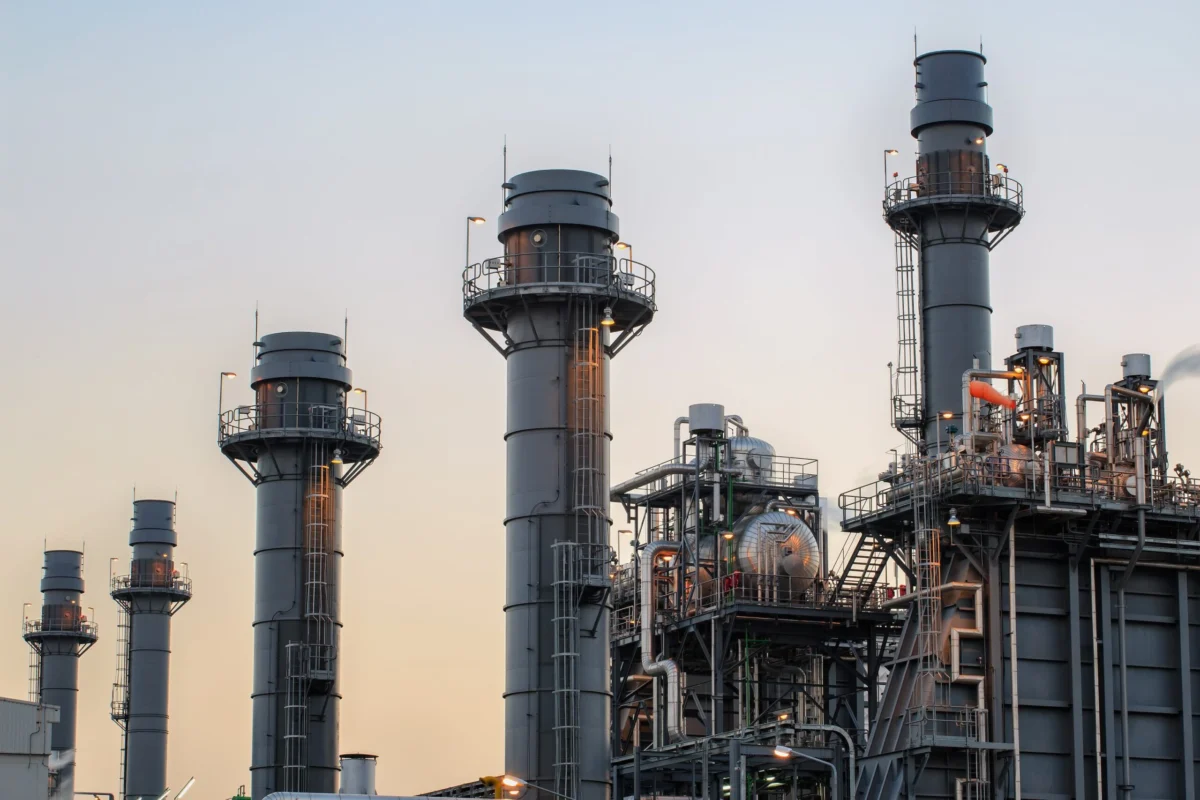
A proposed data center development by Amazon in Pecos County, Texas, includes plans for an on-site natural gas power plant that, according to a report by The New York Times on August 8, 2026, is projected to become the single largest source of climate pollution in the United States. This revelation has ignited a significant debate regarding the tech giant’s environmental commitments and the broader energy demands of the burgeoning artificial intelligence (AI) industry. The plant is permitted to release an staggering 33 million tons of carbon dioxide annually, a figure that surpasses the emissions of any other existing power plant in the U.S., casting a long shadow over Amazon’s publicly stated climate goals.
The Pecos County Project: A New Benchmark for Emissions
The sheer scale of the Pecos County power plant’s projected emissions has drawn immediate scrutiny from environmental organizations, climate policy experts, and the public. To put 33 million tons of CO2 into perspective, this figure is roughly equivalent to the annual emissions of several small countries or the emissions from nearly 7 million passenger vehicles driven for a year. It represents a substantial increase in the national carbon footprint, particularly from a single industrial source. The decision to power such a critical facility with a natural gas plant of this magnitude directly contradicts the global scientific consensus on the urgent need to transition away from fossil fuels to mitigate the most severe impacts of climate change.
Pecos County, located in West Texas, is part of the Permian Basin, a region renowned for its oil and gas production. While the economic development associated with a major Amazon data center and power plant could be seen as a boon for the local economy, creating jobs and stimulating ancillary services, the environmental trade-offs are profound. The region’s air quality, already subject to emissions from the extensive fossil fuel industry, could face additional pressures, raising concerns for public health and local ecosystems.
Amazon’s Climate Pledge Under Scrutiny
This development comes at a particularly sensitive time for Amazon, a co-founder of "The Climate Pledge" in 2019. This ambitious initiative commits signatory companies to achieve net-zero carbon emissions across their operations by 2040, a full decade ahead of the Paris Agreement’s target. Amazon’s own commitment explicitly states a goal to power its operations with 100% renewable energy by 2025 and reach net-zero carbon by 2040. The construction of a massive natural gas plant, projected to be the nation’s largest polluter, presents a stark contradiction to these public declarations and raises serious questions about the feasibility and sincerity of the company’s long-term environmental strategy.
Indeed, Amazon’s carbon footprint has already been trending in the wrong direction. The company reported a 16% increase in its carbon emissions last year, a significant setback for a corporation of its size and influence that had previously made strides in integrating renewable energy into its operations. This increase was, in part, attributed to the escalating energy demands of its cloud computing services, Amazon Web Services (AWS), which are increasingly supporting AI workloads. The Pecos project suggests that this upward trend in emissions, driven by infrastructure growth, is set to accelerate rather than decelerate.
The Insatiable Energy Appetite of AI and Data Centers
The driving force behind the unprecedented energy demand, and consequently the need for a plant of this scale, is the exponential growth of artificial intelligence. AI models, particularly large language models (LLMs) and complex machine learning algorithms, require immense computational power for both training and inference. This processing power translates directly into massive electricity consumption by data centers. Modern data centers are already known as energy hogs, consuming vast amounts of electricity not only for servers but also for crucial cooling systems necessary to prevent hardware overheating.
Industry estimates suggest that the energy consumption of AI could grow by orders of magnitude in the coming years. Training a single advanced AI model can consume as much electricity as hundreds of homes for months. As tech companies like Amazon, Google, Microsoft, and Meta race to develop and deploy more sophisticated AI applications, the physical infrastructure—primarily data centers—needed to support these operations is expanding at an alarming rate. This expansion, if not powered by truly clean energy sources, threatens to undermine global climate efforts.
The problem is exacerbated by the concept of Power Usage Effectiveness (PUE), a metric used to determine the energy efficiency of a data center. While many data centers strive for lower PUEs (closer to 1.0, meaning all energy goes to computing), the sheer volume of computing tasks now demanded by AI means that even highly efficient data centers still consume colossal amounts of power. The choice of natural gas for the Pecos plant underscores a growing trend among tech companies, where the immediate need for reliable, dispatchable power to fuel AI workloads is, in some instances, seemingly taking precedence over long-term decarbonization goals.
Official Response and the "New World" Justification
In response to the New York Times report, an Amazon spokesperson confirmed the data center’s reliance on "new on-site generation." The spokesperson attempted to frame this decision as beneficial, stating that it "won’t raise electricity costs for Texas families." This claim addresses a significant point of contention regarding data centers, which have faced growing political opposition in various regions due to their perceived impact on local electricity grids and utility rates. Large industrial consumers like data centers can indeed strain existing power infrastructure, potentially leading to higher costs for residential users or necessitating expensive grid upgrades. By building an on-site power plant, Amazon aims to mitigate this specific criticism, effectively creating its own energy island for the facility.
However, the spokesperson’s subsequent remarks revealed a broader strategic shift: "The world looks different now than when we co-founded the climate pledge," they stated, while simultaneously asserting, "Our commitment hasn’t changed." This two-part statement is open to interpretation. While the world has indeed changed, with the rapid acceleration of AI development and the geopolitical landscape affecting energy markets, the core scientific understanding of climate change and the urgency of decarbonization have only intensified. The implication that new circumstances might necessitate a departure from previous strategies, even while maintaining a "commitment," suggests a recalibration of priorities where operational necessity and market demands for AI processing power might temporarily supersede immediate decarbonization efforts.
Broader Industry Trends and Challenges
Amazon is not alone in grappling with the energy demands of AI. Other major tech companies, including Google and Microsoft, have also been investing in or exploring the development of natural gas plants to power their expanding data center fleets. This trend highlights a critical bottleneck in the transition to a green economy: the difficulty of scaling renewable energy infrastructure quickly enough to meet the explosive growth in demand from energy-intensive sectors like AI.
Texas, with its deregulated energy market (ERCOT grid) and abundant natural gas resources, presents a unique operating environment. While Texas is also a leader in wind power generation, the intermittency of renewables still poses challenges for facilities requiring constant, uninterrupted power—a characteristic essential for data centers. Natural gas plants offer a reliable, "baseload" power source that can be quickly ramped up or down, making them attractive for industries with fluctuating but high power demands. However, this reliability comes at a significant environmental cost.
Implications and Future Outlook
The Pecos County project carries profound implications on multiple fronts:
- For Amazon’s Reputation and Climate Pledge: The decision severely tests the credibility of Amazon’s climate leadership. Environmental groups are likely to intensify their scrutiny and advocacy against the company, potentially impacting consumer perception and investor confidence in its sustainability claims. The 2040 net-zero target now appears significantly more challenging, if not entirely undermined, by such a substantial investment in fossil fuel infrastructure.
- For the Tech Industry’s Green Transition: The project serves as a stark warning sign for the entire tech industry. If leading companies resort to building massive fossil fuel plants to power AI, it could derail collective efforts to achieve global climate targets. It underscores the urgent need for innovation in energy storage, grid modernization, and the development of truly scalable, dispatchable renewable energy solutions.
- For Climate Policy and Regulation: The sheer scale of the Pecos plant could prompt calls for stricter regulatory oversight of data center energy consumption and emissions. Policymakers might consider mandating higher renewable energy percentages for new data center developments or imposing carbon taxes on such large-scale emitters.
- For Energy Markets: The move highlights the tension between energy security, cost-effectiveness, and environmental sustainability. While the plant aims to stabilize electricity costs for Amazon’s operations and potentially for Texas families, it locks in a long-term reliance on fossil fuels, potentially delaying the transition to a fully renewable grid.
The Pecos County development underscores a critical juncture where technological advancement—specifically in AI—collides with urgent climate imperatives. As the world grapples with escalating climate crises, the choices made by global corporate giants like Amazon in powering their operations will have far-reaching consequences, determining whether the promise of technological progress can be realized without sacrificing the planet’s future. The challenge for Amazon and the broader tech sector is to demonstrate that innovation and sustainability can indeed go hand-in-hand, rather than being mutually exclusive pursuits.