



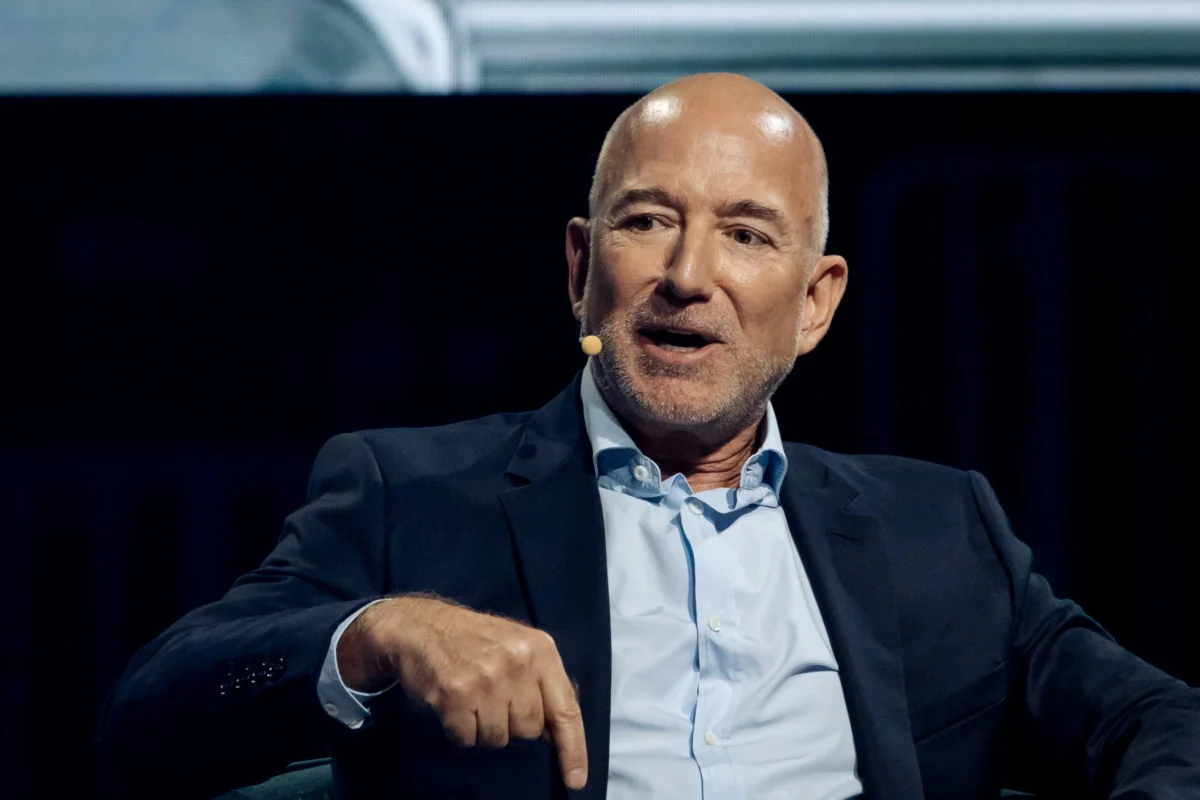
Jeff Bezos, the visionary founder of Amazon.com Inc., has filed plans to divest approximately 15 million of his Amazon shares, a transaction valued at roughly $4.1 billion. This significant sale comes on the heels of the dominant e-commerce and cloud computing platform reporting stronger-than-expected earnings, which propelled its stock to an unprecedented record high and pushed its market capitalization beyond the monumental $3 trillion mark. The filing detailing this planned sale under a Rule 10b5-1 trading plan, adopted on November 14, 2025, indicates the sales were executed on Monday through Morgan Stanley. Following the disclosure, Amazon’s stock experienced a more than 2% decline on Tuesday, reflecting typical market reactions to large insider sales, even when pre-planned.
Details of the Strategic Divestment
The Form 144, submitted to the Securities and Exchange Commission (SEC), explicitly states Bezos’s intent to sell 15 million common shares. Based on Monday’s closing price, the aggregate market value of this block of shares stands at approximately $4.07 billion. A notable detail within the filing specifies that these particular shares were acquired as "founder stock" in 1994, the year Amazon was established. This indicates a strategic offloading of long-held assets that have seen an astronomical appreciation over three decades.
This latest transaction aligns with Bezos’s established pattern of periodically monetizing his Amazon holdings, often through prearranged trading plans designed to provide an affirmative defense against insider trading allegations. Despite these regular sales, Bezos remains one of Amazon’s largest individual shareholders, a testament to his enduring stake in the company he built from the ground up. The filing also revealed a philanthropic component to his recent activities, noting a donation of 220,200 shares to nonprofit organizations in May, which may have subsequently been sold by those entities within the preceding three months.
Amazon’s Ascendant Trajectory and the $3 Trillion Milestone
The context for Bezos’s substantial share sale is Amazon’s remarkable recent performance. The company’s stock had touched an all-time high on Monday, extending a powerful rally ignited by its stellar second-quarter 2026 earnings report, released last week. These quarterly results showcased robust growth across its diverse business segments, critically underscored by a stronger-than-expected expansion in its highly profitable cloud computing division, Amazon Web Services (AWS). This performance has significantly reinforced investor confidence, signaling that Amazon’s substantial investments in artificial intelligence (AI) are beginning to translate into accelerating demand and tangible revenue growth.
Amazon’s journey to a $3 trillion market capitalization is a landmark achievement, reflecting its unparalleled dominance across multiple sectors. From its humble beginnings as an online bookstore in 1994, the company has relentlessly innovated and expanded, transforming into a global behemoth encompassing e-commerce, cloud services, digital advertising, entertainment, and logistics. This milestone places Amazon in an elite club of companies, underscoring its immense influence on the global economy and technological landscape. For perspective, only a handful of companies globally have achieved such a valuation, including Apple, Microsoft, and Nvidia, each representing a pinnacle of technological innovation and market leadership.
The Power of Cloud and AI: Driving Future Growth
The robust second-quarter earnings report for 2026 served as a powerful catalyst for Amazon’s stock surge. While its core e-commerce business continues to evolve and adapt to changing consumer behaviors, AWS remains the undisputed profit engine. Analysts had been closely monitoring AWS’s growth, especially amid increased competition and a broader economic landscape that saw some enterprises temper their cloud spending in previous quarters. The reported acceleration in AWS growth not only surpassed market expectations but also validated Amazon’s strategic focus on infrastructure and enterprise solutions.
Crucially, the earnings call highlighted the increasing integration and impact of artificial intelligence across Amazon’s offerings. From optimizing logistics and personalizing shopping experiences to powering advanced machine learning services within AWS, AI is becoming a fundamental driver of Amazon’s operational efficiency and innovation pipeline. The company’s significant capital allocation towards AI research, development, and infrastructure, including specialized chips and talent acquisition, is now evidently yielding returns. Investors are increasingly valuing companies that demonstrate clear pathways to monetize AI capabilities, and Amazon’s performance suggests it is successfully navigating this critical technological frontier.
Year-to-date, Amazon’s shares have rallied approximately 20%, significantly outpacing the broader market’s performance, with the S&P 500 recording a gain of about 12% over the same period. This outperformance underscores investor optimism regarding Amazon’s long-term growth prospects, particularly in the burgeoning fields of cloud computing and artificial intelligence.
Bezos’s Strategic Financial Moves and Philanthropy
Jeff Bezos’s decision to sell shares, even substantial amounts, is not unprecedented. Since stepping down as CEO in July 2021 to assume the role of Executive Chairman, Bezos has increasingly focused his time and capital on other ventures, most notably his aerospace company Blue Origin, and various philanthropic initiatives through the Bezos Earth Fund. His share sales have historically been linked to funding these ambitious projects, which require significant capital injections.
In prior years, Bezos executed similarly large sales. For instance, in 2020, he sold Amazon shares worth approximately $10 billion across several tranches. These sales are meticulously planned and disclosed, typically utilizing Rule 10b5-1 plans, which allow corporate insiders to set up pre-scheduled trades in advance. This mechanism helps them avoid accusations of trading on material non-public information, as the selling parameters (such as price, volume, and date) are established when the insider is not in possession of such information.
Bezos’s personal wealth, largely tied to his Amazon stake, positions him among the world’s richest individuals. While the exact ranking fluctuates with market movements, his net worth has consistently been in the hundreds of billions of dollars. Diversifying his portfolio and liquidating portions of his Amazon holdings is a prudent financial strategy for an individual with such a concentrated asset base, allowing him to fund new ventures, pursue philanthropic endeavors, and manage personal financial liquidity. The recent donation of shares to nonprofit organizations further illustrates his increasing commitment to charitable giving, a trend that has become more prominent since his transition from the daily operational leadership of Amazon.

Understanding Rule 10b5-1 Plans
The Rule 10b5-1 trading plan under which Bezos executed this sale is a critical regulatory instrument. Introduced by the SEC in 2000, it provides an affirmative defense against insider trading charges for corporate insiders who buy or sell company stock. To qualify for this defense, the plan must be established when the insider is not aware of material non-public information. Once established, trades are executed automatically according to predefined parameters, such as a specific price, amount, or date, or through a formula for determining these.
The adoption of Bezos’s plan on November 14, 2025, indicates that the framework for this significant sale was put in place well in advance of Amazon’s recent earnings report and subsequent stock surge. This foresight underscores the strategic, rather than opportunistic, nature of the divestment. Such plans are commonplace among senior executives and founders of public companies, providing a systematic way to manage their equity holdings without raising red flags concerning the use of privileged information.
Market Reaction and Analyst Perspectives
The immediate market reaction to the filing was a dip in Amazon’s stock price, falling more than 2% on Tuesday. This is a common phenomenon when a major insider, especially a founder of Bezos’s stature, liquidates a large block of shares. Investors sometimes interpret such sales as a signal, even if unwarranted, that the insider might believe the stock has peaked or that there are concerns not yet public.
However, market observers and analysts generally view Bezos’s sales, particularly those under Rule 10b5-1 plans, as a regular part of his long-term financial management strategy rather than a reflection of diminishing confidence in Amazon’s future. Industry analysts widely acknowledged that Amazon’s underlying business fundamentals, especially the performance of AWS and the promising trajectory of its AI investments, remain robust. The slight pullback could be attributed to profit-taking by short-term traders or a temporary re-evaluation by some investors, but it did not fundamentally alter the positive sentiment surrounding Amazon’s recent earnings and future outlook.
Many analysts reiterated their "buy" ratings on Amazon stock, citing its continued leadership in cloud computing, its dominant position in e-commerce, and its growing strength in digital advertising. They project sustained growth, particularly as AI innovations become more deeply embedded across its ecosystem, driving both efficiency and new revenue streams.
Broader Implications for Amazon and the Tech Sector
Bezos’s continued diversification of his personal wealth has broader implications. While he remains Executive Chairman, his shift away from day-to-day operations allows him to pursue other passions and make substantial capital commitments to projects like Blue Origin, which aims to make space accessible for various purposes. This transition mirrors similar moves by other tech titans who, after building monumental companies, pivot to focus on long-term, often high-risk, high-reward ventures or large-scale philanthropy.
For Amazon, the sale does not alter its operational strategy or leadership under CEO Andy Jassy. The company’s strategic direction remains firmly focused on innovation, customer obsession, and continued expansion across its core businesses. The $3 trillion valuation is not just a numerical milestone but a powerful symbol of Amazon’s enduring relevance and capacity for growth, especially in a technology landscape increasingly defined by cloud infrastructure and artificial intelligence.
The performance of Amazon, particularly its AWS division, also serves as a bellwether for the broader tech sector. Strong results from AWS signal robust enterprise spending on cloud services, which benefits other cloud providers and the entire ecosystem of software and service companies built on top of these platforms. Similarly, Amazon’s success in translating AI investments into tangible results offers an optimistic outlook for other companies heavily investing in artificial intelligence, reinforcing the narrative that AI is a transformative force capable of driving significant economic value.
A Legacy of Innovation and Philanthropy
Jeff Bezos’s journey with Amazon is one of the most compelling narratives in modern business history. From pioneering online retail to establishing the foundational infrastructure of cloud computing, his leadership has consistently pushed the boundaries of what is possible. Even in his current role as Executive Chairman, his influence and vision continue to shape Amazon’s strategic trajectory.
His increasing engagement in philanthropy, particularly environmental initiatives through the Bezos Earth Fund, signifies a growing commitment to addressing global challenges with the same innovative spirit that built Amazon. The donation of shares, alongside the planned sales, reflects a multifaceted approach to managing his wealth, balancing personal financial strategy with broader societal contributions.
Looking Ahead
As Amazon navigates the competitive landscape of global commerce and technology, its strategic emphasis on AWS and AI is expected to continue yielding significant returns. The company’s ability to consistently innovate, adapt to market dynamics, and expand into new sectors has been its hallmark. While large insider sales like Bezos’s can cause temporary market jitters, the fundamental strength of Amazon’s business model, its robust financial performance, and its strategic positioning for future growth drivers like AI suggest a continued upward trajectory. The company’s path forward will undoubtedly involve further advancements in automation, logistics, personalized customer experiences, and the ongoing expansion of its global digital footprint, all underpinned by its formidable cloud infrastructure and burgeoning AI capabilities.