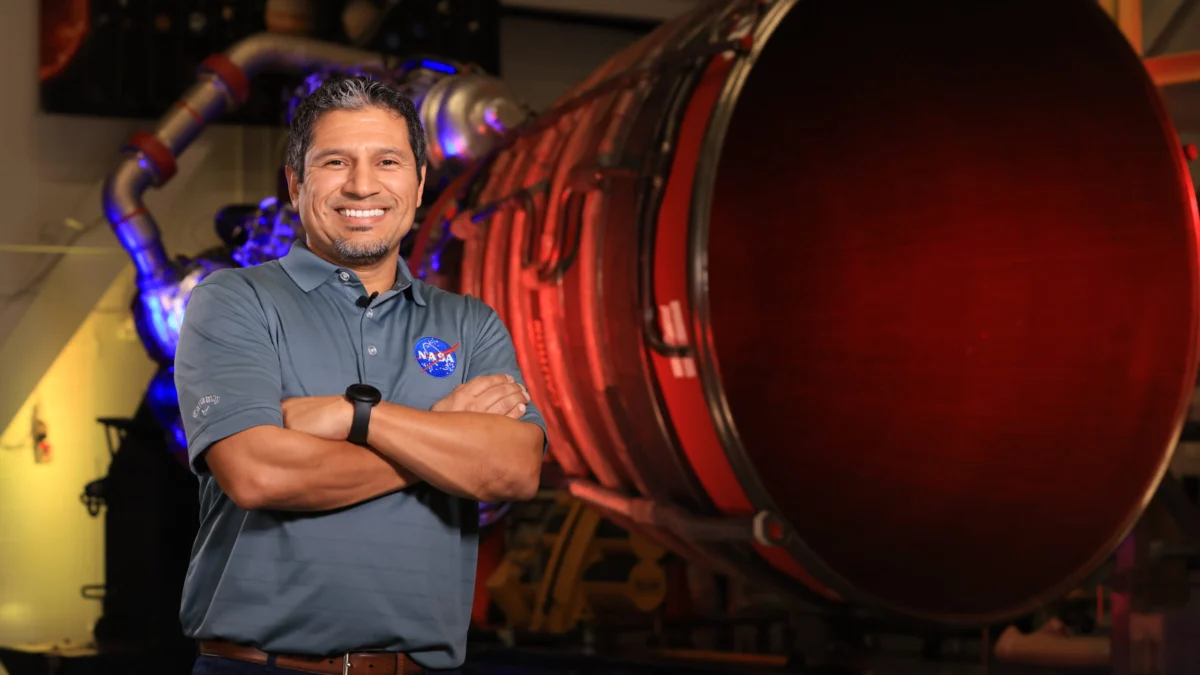
As NASA embarks on its ambitious agenda for sustained human exploration of the Moon and eventually Mars, the agency is significantly increasing the operational tempo and complexity of its Artemis missions. Central to realizing these monumental goals is the seamless integration of critical hardware, particularly the Human Landing Systems (HLS) that will transport astronauts to and from the lunar surface. Spearheading this intricate effort is Tom Percy, manager of systems engineering and integration for NASA’s Human Landing System Program, whose extensive experience and meticulous oversight are proving indispensable to the future of deep space exploration.
The Imperative of Integration: Orchestrating a Complex Lunar Endeavor
Percy’s role is multifaceted and pivotal, positioning him as a central figure in a dynamic collaboration between NASA and its commercial partners, SpaceX and Blue Origin. He serves as the primary conduit, meticulously working with these providers to accelerate and streamline every facet of the HLS development cycle: from initial systems designs to rigorous manufacturing, exhaustive testing, and final certification. The core mandate of his team is to guarantee that the sophisticated crewed landers being developed by SpaceX and Blue Origin are not only engineered, constructed, and tested to the highest standards but also that they will operate flawlessly and safely in conjunction with NASA’s broader exploration architecture. This includes ensuring compatibility with the Orion spacecraft, the Gateway lunar orbital outpost, specialized spacesuits, and an array of ground support systems.
"You might say that all human landing system integration work lands on my desk," Percy stated, underscoring the breadth of his responsibilities. "And with the rest of my talented, hard-working systems engineering and integration team, we’re working to make it all happen." This declaration highlights the immense coordination required to meld disparate commercial designs into a cohesive, flight-ready system capable of safely delivering astronauts to an alien world. The success of Artemis hinges on this precise integration, transforming individual components into a unified, reliable exploration vehicle.
Artemis Program: A New Era of Lunar Exploration
The Artemis program represents NASA’s audacious return to the Moon, building upon the legacy of the Apollo era but with a distinctly modern, sustainable approach. Unlike the short-duration flag-and-footprint missions of the past, Artemis aims for a long-term human presence on the lunar surface, fostering scientific discovery, leveraging economic benefits, and ultimately serving as a critical proving ground for the first crewed missions to Mars. The program envisions a series of increasingly complex missions, each building on the technological and operational lessons learned from its predecessor.
The journey began with Artemis I in late 2022, an uncrewed test flight of the Space Launch System (SLS) rocket and Orion spacecraft, which successfully demonstrated the capabilities of the hardware designed to carry humans far beyond Earth orbit. This mission, a 25-day odyssey that orbited the Moon, validated key systems and procedures, paving the way for future crewed missions. Artemis II, slated for late 2024, will carry a crew of four astronauts on a lunar flyby, pushing the boundaries of human deep space endurance and further testing the Orion spacecraft’s life support and navigation systems. Following this, Artemis III, currently targeted for 2026, is poised to make history by returning humans to the lunar surface for the first time in over half a century, utilizing the Human Landing System at the heart of Percy’s integration efforts. Subsequent missions, Artemis IV and V, will continue to expand the lunar presence, establish the Gateway station as a permanent orbital outpost, and deploy more advanced landers and surface habitats.
The "increasing cadence" of these missions is a strategic imperative. It reflects NASA’s commitment to accelerating the pace of exploration, driven by both the scientific desire to unlock lunar secrets and the strategic goal of establishing a robust infrastructure for future deep space endeavors. This acceleration places significant demands on all program elements, especially those responsible for integrating complex, commercially developed systems like the HLS.
Commercial Partnerships: The Backbone of Lunar Access and Innovation
A defining characteristic of the Artemis program, and a stark departure from the Apollo model, is NASA’s reliance on commercial industry partners. Through programs like the Human Landing System (HLS), NASA is leveraging the innovation, agility, and cost-effectiveness of the private sector to develop key components of its deep space architecture. This strategy, first proven successful with the Commercial Crew Program that now ferries astronauts to the International Space Station, allows NASA to act as a customer, setting performance requirements and safety standards, while industry partners design, develop, and operate the hardware.
The HLS program began with initial contracts awarded in 2020, leading to SpaceX being selected in 2021 to develop the Starship HLS for Artemis III. This monumental contract, initially valued at $2.89 billion, tasked SpaceX with adapting its Starship vehicle into a lunar lander capable of transporting crew from lunar orbit to the surface and back to Orion. In 2023, Blue Origin was awarded a subsequent contract, valued at $3.4 billion, to develop its Blue Moon lander as a second HLS provider for a future Artemis mission, likely Artemis V. This multi-provider approach fosters competition, reduces reliance on a single system, and encourages innovation, ultimately enhancing the robustness and resilience of NASA’s lunar exploration plans.
Percy’s role is particularly crucial in this commercial partnership model. He acts as the technical bridge between NASA’s stringent safety and operational requirements and the engineering realities of the commercial developers. This involves navigating proprietary designs, coordinating development timelines, and ensuring that all systems—from propulsion and life support to navigation and communications—will seamlessly interact with NASA-owned assets like the Orion spacecraft and the Gateway. The technical complexity of integrating two distinct commercial lander designs into a standardized NASA architecture, while maintaining aggressive schedules, is immense, demanding a deep understanding of systems engineering principles and a collaborative approach.
Tom Percy’s Journey: From Moonbuggy Dreams to Lunar Reality
Tom Percy’s path to becoming a pivotal figure in NASA’s lunar ambitions is a testament to persistent dedication and a profound passion for space exploration, nurtured from his early academic experiences. A native of North Easton, Massachusetts, Percy embarked on his engineering journey at the Rochester Institute of Technology (RIT) in Rochester, New York, where he earned a bachelor’s degree in mechanical engineering. It was during his undergraduate years that Percy first gained hands-on experience that would serendipitously align with NASA’s sustainable lunar architecture vision.
As president of RIT’s chapter of the American Society of Mechanical Engineers, Percy sought practical, real-world engineering challenges. This led him and his team to participate in the Great Moonbuggy Race, a collegiate competition now known as the Human Exploration Rover Challenge. This annual event, hosted at NASA’s Marshall Space Flight Center in Huntsville, Alabama, challenges students to design, build, and race human-powered rovers across a simulated extraterrestrial terrain.
"At the time, I had never heard of Marshall Space Flight Center," Percy recounted, reflecting on his initial unfamiliarity with one of NASA’s most historic and vital centers. "But our student team designed and built a rover and traveled to Huntsville for the race. That’s when I learned about some of the projects in Marshall’s diverse portfolio that the center works for NASA. And that’s when I began planning to make my way to NASA Marshall for my career." This formative experience provided Percy with a crucial insight into the tangible applications of engineering in space exploration and ignited a clear career aspiration. The exposure to Marshall’s extensive contributions, from propulsion systems to life support and advanced manufacturing, solidified his resolve to join the agency.
Following his undergraduate studies, Percy pursued advanced education, moving south to earn a master’s degree in aerospace engineering from the Georgia Institute of Technology in Atlanta. His graduate research delved into advanced propulsion concepts, while his coursework focused on space systems design. This culminated in a spacecraft design course that offered a unique opportunity: direct collaboration with engineers at Marshall Space Flight Center, further cementing his connection to the institution that had first captured his imagination.
Since officially joining Marshall in 2003, Percy’s career trajectory has been marked by a consistent focus on human deep space exploration. He was deeply involved in evaluating various transportation architecture options, including the complex logistics of landing astronauts on both the Moon and Mars. His expertise grew to encompass a broad spectrum of space transportation disciplines, including advanced propulsion technology development, intricate trajectory analysis for interplanetary missions, and the conceptualization of novel spacecraft and mission designs. Demonstrating a continuous commitment to expanding his knowledge, Percy further enhanced his academic credentials by earning a doctorate in aerospace systems engineering from the University of Alabama in Huntsville, a program renowned for its strong ties to NASA Marshall. This comprehensive academic and professional background, spanning mechanical and aerospace engineering, advanced propulsion, and systems integration, uniquely positions him for his current demanding role.
Ensuring Safety and Success: The Technical Nuances of HLS Integration
The technical challenges inherent in integrating Human Landing Systems are profound. Percy and his team must address a myriad of complex interfaces and ensure seamless interoperability across diverse systems. This includes the propulsion systems, which must provide precise control for lunar descent and ascent; robust life support systems to sustain astronauts in a hostile environment; reliable power generation and distribution; sophisticated communication links to Earth and other lunar assets; and highly accurate navigation and landing technologies to ensure safe touchdown at scientifically significant sites.
The rigorous testing and certification processes managed by Percy’s team are paramount. This involves extensive ground testing of hardware, software simulations of mission profiles, and comprehensive verification and validation of every component and subsystem. Every bolt, every circuit, and every line of code must be meticulously scrutinized to mitigate risks and ensure astronaut safety. The inherent risks of spaceflight demand an unparalleled level of attention to detail and a proactive approach to identifying and resolving potential issues long before launch. This includes managing interface control documents (ICDs) between NASA and its providers, defining common data protocols, and establishing joint testing campaigns that span multiple facilities and organizations.
Beyond the Moon: Laying the Groundwork for Mars
While the immediate focus of the Artemis program is the Moon, the overarching vision extends far beyond our celestial neighbor. The lunar missions are not merely ends in themselves but critical precursors for the eventual human journey to Mars. Every technology developed, every operational procedure refined, and every lesson learned on the Moon will directly inform and enable future Martian expeditions.
The Human Landing Systems, for instance, are developing capabilities for autonomous landing, in-situ resource utilization (ISRU) concepts for extracting water ice, and advanced life support systems that will be essential for the much longer and more challenging missions to Mars. Establishing an enduring human presence on the Moon will provide an invaluable testbed for habitation modules, radiation shielding, long-duration human health protocols, and closed-loop environmental control systems—all critical for sustaining life on a multi-year journey to the Red Planet. NASA’s "Moon to Mars" strategy is a deliberate and integrated approach, with individuals like Tom Percy ensuring that the foundational elements for humanity’s multi-planetary future are robustly integrated and ready for the next giant leap.
Implications and Future Outlook
The work spearheaded by Tom Percy and his team has far-reaching implications across multiple domains.
Scientific Discovery: A sustainable human presence on the Moon will unlock unprecedented opportunities for scientific research. Geologists can explore previously untouched lunar regions, studying volcanic features, polar ice deposits, and the Moon’s seismic activity. Astronomers can leverage the lunar far side as an unparalleled platform for radio astronomy, shielded from Earth’s interference. The HLS will enable access to diverse terrains, facilitating the collection of unique samples that could revolutionize our understanding of planetary formation and the early solar system.
Economic Benefits: The Artemis program is a significant catalyst for the burgeoning commercial space economy. The HLS contracts alone represent billions of dollars in investment, stimulating innovation and job creation within the private sector. Furthermore, the establishment of lunar infrastructure could pave the way for lunar resource extraction, tourism, and other commercial ventures, creating entirely new economic sectors. The development of reusable landers, a key feature of the HLS designs, promises to reduce the cost of access to the lunar surface, making commercial operations more viable.
Technological Advancement: The extreme demands of lunar exploration push the boundaries of engineering and materials science. Innovations in propulsion, robotics, artificial intelligence, advanced manufacturing (including 3D printing in space), closed-loop life support, and radiation protection will inevitably lead to spin-off technologies benefiting life on Earth. Percy’s work in integrating these complex systems ensures that these advancements are realized in a functional, safe manner.
Global Leadership and Cooperation: The Artemis program is not solely a U.S. endeavor. It invites international partners to collaborate, strengthening diplomatic ties and pooling resources for common goals. The success of HLS integration contributes directly to demonstrating U.S. leadership in deep space exploration, inspiring future generations and fostering a global commitment to peaceful space utilization.
Challenges Remain: Despite the optimism, significant challenges persist. Sustained political will and consistent funding are crucial for the long-term success of Artemis. Technical hurdles, particularly those related to developing and integrating cutting-edge technologies on aggressive timelines, will continue to demand ingenuity and adaptability. The sheer complexity of human spaceflight, especially beyond Earth’s protective embrace, requires a relentless focus on risk mitigation and safety.
In essence, Tom Percy’s role as the manager of systems engineering and integration for NASA’s Human Landing System Program is far more than a technical coordination task; it is a critical enabler of humanity’s next chapter in space. By meticulously orchestrating the integration of advanced lunar landers, he and his team are not only making the Artemis missions possible but are also laying the precise, stable groundwork for a future where humanity lives and works on the Moon and, eventually, journeys to Mars. The accelerating cadence of Artemis is a testament to this commitment, propelled forward by the dedication of individuals like Percy, who bridge the gap between ambitious vision and engineering reality.